Kirjojen hintavertailu – 12 903 725 kirjaa ja 27 kauppaa

Kirjailija

James P. Ronda

Kirjat ja teokset yhdessä paikassa: 10 kirjaa, julkaisuja vuosilta 1986–2025, suosituimpiin kuuluu The Chisholm Trail Volume 3. Vertaile teosten hintoja ja tarkista saatavuus suomalaisista kirjakaupoista.

10 kirjaa

Kirjojen julkaisuvuodet: 1986–2025.

The Chisholm Trail Volume 3

The Chisholm Trail Volume 3

James E. Sherow; James P. Ronda

UNIVERSITY OF OKLAHOMA PRESS
2025
nidottu
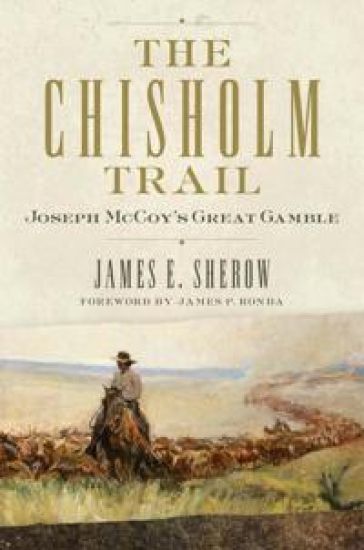
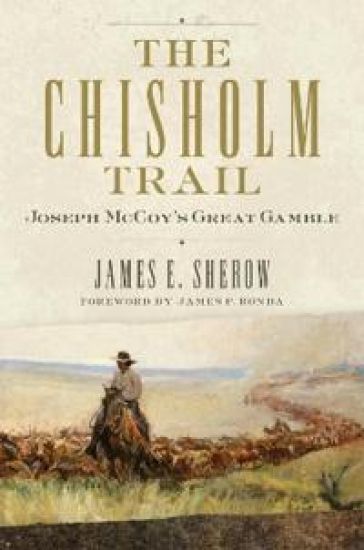
One hundred fifty years ago the McCoy brothers of Springfield, Illinois, bet their fortunes on Abilene, Kansas, then just a slapdash way station. Instead of an endless horizon of prairie grasses, they saw a bustling outlet for hundreds of thousands of Texas Longhorns coming up the Chisholm Trail—and the youngest brother, Joseph, saw how a middleman could become wealthy in the process. This is the story of how that gamble paid off, transforming the cattle trade and, with it, the American landscape and diet. The Chisholm Trail follows McCoy’s vision and the effects of the Chisholm Trail from post–Civil War Texas and Kansas to the multimillion-dollar beef industry that remade the Great Plains, the American diet, and the national and international beef trade. At every step, both nature and humanity put roadblocks in McCoy’s way. Texas cattle fever had dampened the appetite for longhorns, while prairie fires, thunderstorms, blizzards, droughts, and floods roiled the land. Unscrupulous railroad managers, stiff competition from other brokers, Indians who resented the usurping of their grasslands, and farmers who preferred growing wheat to raising cattle all threatened to impede the McCoys’ vision for the trail. As author James E. Sherow shows, by confronting these obstacles, McCoy put his own stamp upon the land, and on eating habits as far away as New York City and London. Joseph McCoy’s enterprise forged links between cattlemen, entrepreneurs, and restaurateurs; between ecology, disease, and technology; and between local, national, and international markets. Tracing these connections, The Chisholm Trail shows in vivid terms how a gamble made in the face of uncontrollable natural factors indelibly changed the environment, reshaped the Kansas prairie into the nation’s stockyard, and transformed Plains Indian hunting grounds into the hub of a domestic farm culture.
The Chisholm Trail Volume 3

The Chisholm Trail Volume 3

James E. Sherow; James P. Ronda

University of Oklahoma Press
2018
sidottu
One hundred fifty years ago the McCoy brothers of Springfield, Illinois, bet their fortunes on Abilene, Kansas, then just a slapdash way station. Instead of an endless horizon of prairie grasses, they saw a bustling outlet for hundreds of thousands of Texas Longhorns coming up the Chisholm Trail - and the youngest brother, Joseph, saw how a middleman could become wealthy in the process. This is the story of how that gamble paid off, transforming the cattle trade and, with it, the American landscape and diet. The Chisholm Trail follows McCoy's vision and the effects of the Chisholm Trail from post-Civil War Texas and Kansas to the multimillion-dollar beef industry that remade the Great Plains, the American diet, and the national and international beef trade. At every step, both nature and humanity put roadblocks in McCoy's way. Texas cattle fever had dampened the appetite for longhorns, while prairie fires, thunderstorms, blizzards, droughts, and floods roiled the land. Unscrupulous railroad managers, stiff competition from other brokers, Indians who resented the usurping of their grasslands, and farmers who preferred growing wheat to raising cattle all threatened to impede the McCoys' vision for the trail. As author James E. Sherow shows, by confronting these obstacles, McCoy put his own stamp upon the land, and on eating habits as far away as New York City and London. Joseph McCoy's enterprise forged links between cattlemen, entrepreneurs, and restaurateurs; between ecology, disease, and technology; and between local, national, and international markets. Tracing these connections, The Chisholm Trail shows in vivid terms how a gamble made in the face of uncontrollable natural factors indelibly changed the environment, reshaped the Kansas prairie into the nation's stockyard, and transformed Plains Indian hunting grounds into the hub of a domestic farm culture.
Visions of the Tallgrass

Visions of the Tallgrass

James P. Ronda; Geoffrey Standing Bear

University of Oklahoma Press
2018
sidottu
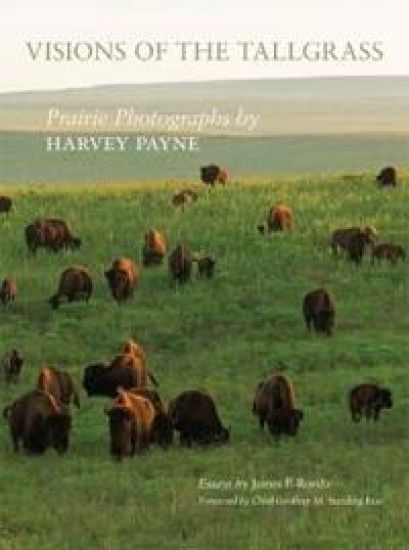
In centuries long past, a vast swath of grassland swept down the center of North America, from Canada's Prairie Provinces to central Texas. This once-plentiful prairie has now all but disappeared. Humans have grazed, mowed, and plowed the plains, dammed the rivers, and imposed their will on the land and its creatures. Fortunately, some remnants have survived, including the Joseph H. Williams Tallgrass Prairie Preserve in northeastern Oklahoma. In this visually stunning volume, wildlife photographer Harvey Payne and historian James P. Ronda offer an intimate look at and into one of America's Last Great Places. Spanning nearly 40,000 acres in Oklahoma's Osage County, the Preserve is a living witness to a world that once existed. But the Osage prairie is not a museum or theme park - and it is not frozen in time. Under the stewardship of The Nature Conservancy, which has overseen its restoration, the Preserve lives on as a fully functioning ecosystem. And for twenty-five years, Payne and Ronda have explored these lands, together and in solitude. Rendered here in brilliant color and paired with Ronda's informative yet deeply personal commentary, Payne's photographs open our eyes to the ever-changing world of the Tallgrass Preserve. In chapters focused on grass, sky, birds, bison, and fire, Ronda and Payne reveal that the ""Big Empty"" is, in fact, teeming with life. Through interwoven images and words, Visions of the Tallgrass shows that our nation's grasslands are sacred ground, a priceless piece of our American past - and future.
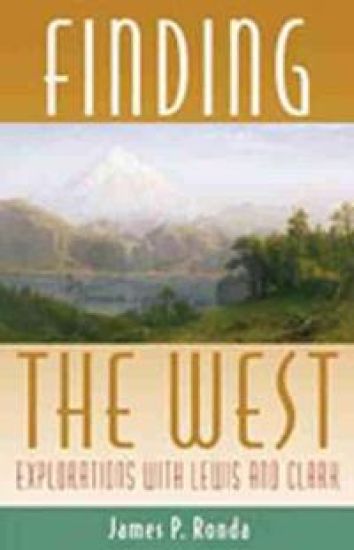
Finding the West

Finding the West

James P. Ronda

University of New Mexico Press
2006
nidottu
One of the foremost historians of Lewis and Clark, Ronda grounds ""Finding the West"" in the insights and reflections he has gleaned from some twenty years of research and writing about this pivotal era. But above all else, Ronda's book is centred on stories and storytellers. The beginning of the nineteenth century represents a time when America passed into a headlong rush for empire and when 'the West' loomed large as a dream for some and a nightmare for others, an era that irrevocably shaped the new American nation in the two hundred years that followed. Whoever the storyteller in the aftermath of that encounter - native or newcomer - the stories all soon revolved around a common theme: the coming of the winds of change. Ronda's masterful interpretation of the young Republic's fascination with the West is written with grace, narrative sweep, and a conviction that history should, above all else, engage and inform us.
Prologue to Lewis and Clark

Prologue to Lewis and Clark

W. Raymond Wood; James P. Ronda

University of Oklahoma Press
2005
nidottu
To follow the journeys made by Mackay and Evans up the Missouri and across the plains in 1795-97 is to begin to appreciate the kind of world Lewis and Clark found when they voyaged up the river in 1804. . . . Of all those waterways, none has captured the American imagination more than the Missouri. . . . It is a river of promise, of dreams, and of dreams denied."" -James P. Ronda, from the ForewordWhen Mackay and Evans returned to Spanish St. Louis in 1797, they were hailed as ""the two most illustrious travelers in the northern parts of this continent."" Ironically, though the findings of Mackay and Evans were responsible for much of the early success of Lewis and Clark in their expedition, the adulation that followed Lewis and Clark's successful return completely eclipsed Mackay and Evans's reputations. In Prologue to Lewis and Clark, W. Raymond Wood narrates the history of this long-forgotten but important expedition up the Missouri River. The Mackay and Evans expedition was more than an exploratory mission. It was the last effort by Spain to gain control over the Missouri River basin in the decade before the United States purchased the Louisiana territory. In that respect, it failed. But the expedition was successful as a journey of exploration. The maps and documents they created later provided the Lewis and Clark expedition with invaluable information for its first full year. Consolidating a collection of eighteen contemporary documents relating to the Mackay and Evans expedition as well as his own research and analysis, Wood provides an in-depth examination of the expedition's background, execution, and final results. Volume 79 in the American Exploration and Travel Series
Prologue to Lewis and Clark

Prologue to Lewis and Clark

W. Raymond Wood; James P. Ronda

University of Oklahoma Press
2003
sidottu
To follow the journeys made by Mackay and Evans up the Missouri and across the plains in 1795-97 is to begin to appreciate the kind of world Lewis and Clark found when they voyaged up the river in 1804. . . . Of all those waterways, none has captured the American imagination more than the Missouri. . . . It is a river of promise, of dreams, and of dreams denied."" -James P. Ronda, from the ForewordWhen Mackay and Evans returned to Spanish St. Louis in 1797, they were hailed as ""the two most illustrious travelers in the northern parts of this continent."" Ironically, though the findings of Mackay and Evans were responsible for much of the early success of Lewis and Clark in their expedition, the adulation that followed Lewis and Clark's successful return completely eclipsed Mackay and Evans's reputations. In Prologue to Lewis and Clark, W. Raymond Wood narrates the history of this long-forgotten but important expedition up the Missouri River. The Mackay and Evans expedition was more than an exploratory mission. It was the last effort by Spain to gain control over the Missouri River basin in the decade before the United States purchased the Louisiana territory. In that respect, it failed. But the expedition was successful as a journey of exploration. The maps and documents they created later provided the Lewis and Clark expedition with invaluable information for its first full year. Consolidating a collection of eighteen contemporary documents relating to the Mackay and Evans expedition as well as his own research and analysis, Wood provides an in-depth examination of the expedition's background, execution, and final results. Volume 79 in the American Exploration and Travel Series
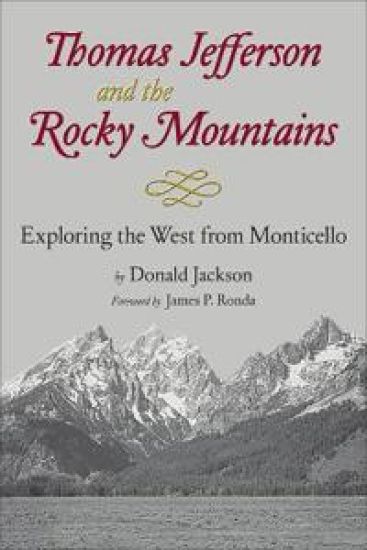
Thomas Jefferson and the Rocky Mountains

Thomas Jefferson and the Rocky Mountains

Donald C. Jackson; James P. Ronda

University of Oklahoma Press
2002
nidottu
Recounts Thomas Jefferson's role in advocating and shaping the exploration, settlement and development of the trans-Mississippi West. Jackson argues that although he did not travel farther inland than the slopes of the Appalachians, Jefferson must take his place alongside the pioneers.
Lewis and Clark Among the Indians

Lewis and Clark Among the Indians

James P. Ronda

Bison Books
2002
pokkari
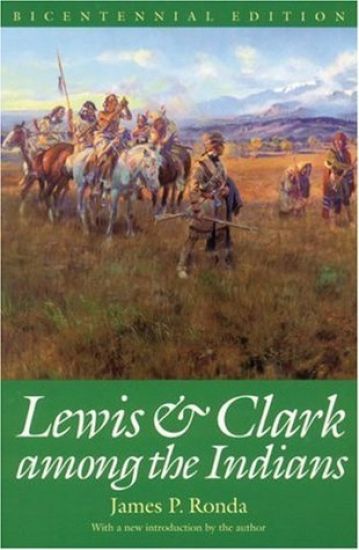
"Particularly valuable for Ronda's inclusion of pertinent background information about the various tribes and for his ethnological analysis. An appendix also places the Sacagawea myth in its proper perspective. Gracefully written, the book bridges the gap between academic and general audiences."-Choice
Astoria and Empire

Astoria and Empire

James P. Ronda

University of Nebraska Press
1993
pokkari
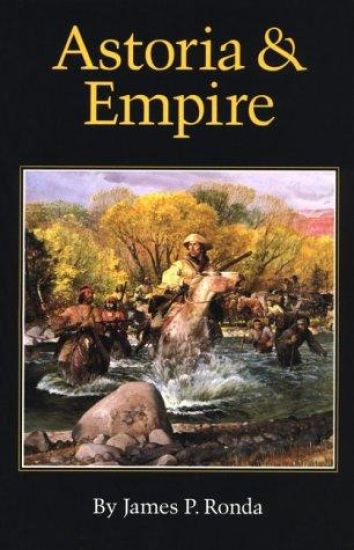
In his 1836 account Washington Irving immortalized Astoria, but it has been a footnote to the history of western expansion—a doleful reminder of John Jacob Astor's failed attempt to establish a fur-trading empire at the mouth of the Columbia from 1810 to 1813. Now James P. Ronda makes clear the importance of the Astoria venture in large and complex struggle for national sovereignty in the Northwest. Astoria and Empire is the first modern account and assessment of Astor's enterprise and the first ever to unravel the tangled skein of Astoria's international connections. "On the Columbia," Ronda writes, "lines of national rivalry, personal ambition, and cultural diversity intersected to shape a larger continental destiny." In examining the ways in which Astor's Pacific Fur Company attempted to create the first American empire west of the Rockies, Ronda offers new interpretations of Astoria's origins, of Astor's role as an imperial strategist who negotiated with the Russian American Company and fought with the archrival North West Company, and of his intricate schemes to save Astoria from ruin during the War of 1812. Astoria and Empire draws on important archival sources only recently discovered, including Duncan McDougall's journal, which allows the reconstruction of daily life at Astoria. If the book is a study of rival empires, it is also a social history of exploration and the fur trade. Richly detailed, it teems with Indians of many tribes and international cast of traders, naval officers, diplomats, and rogues. They act on a historical stage stretching from Russia and the Orient to North America and from New York, Washington, and St. Louis to Astoria, the crossroads of an empire.
The American Fur Trade of the Far West, Volume 1

The American Fur Trade of the Far West, Volume 1

Hiram Martin Chittenden; James P. Ronda

Bison Books
1986
pokkari
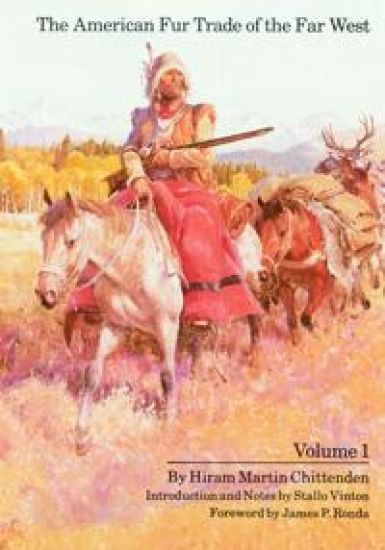
Epic in sweep and reach, strongly written and superbly researched, The American Fur Trade of the Far West is a classic if there ever was one. Its publication in 1902 made clear how much the fur trade was "indissolubly connected to the history of North America." Chittenden brought to this enduring work an appreciation of geography and a feeling for the lives and times of colorful trappers and mountain men like Manuel Lisa, William H. Ashley, the Sublette brothers, Jedediah Smith, Jim Bridger, and Kenneth McKenzie. He provided a comprehensive view of the fur trade that still remains sound. Volume 1 of the Bison edition includes the organization and financing of the fur trade and a detailed history of the major American companies operating in the trans-Mississippi West to the year 1843.