Kirjojen hintavertailu – 12 859 826 kirjaa ja 27 kauppaa
Kirjailija
James Powell
Kirjat ja teokset yhdessä paikassa: 28 kirjaa, julkaisuja vuosilta 2005–2023, suosituimpiin kuuluu Managing Distribution Retention Time to Improve Water Quality. Vertaile teosten hintoja ja tarkista saatavuus suomalaisista kirjakaupoista.
Key topics for AQA A-level Economics, revised and up to date with new and revised material including refreshed case studies, exam-style questions and study tips.
A successful middle-aged businessman, Mark Landry has not fared so well in his interpersonal relationships. The angry scars of his childhood keep tripping him up. The mountains of New Mexico seem like a great place to escape his past and those aspects of life that have not gone well for him. His big yellow dog, Gus, and his Appaloosa gelding, Sinjun, go along for the ride and ultimately play major roles in the story that unfolds. The spectacular mountain wilderness, with its abundant wildlife, suits Mark well, but his efforts to lose himself in it doesn't quite work out. Much to his surprise and dismay, he finds himself caught in the middle of a situation involving the FBI and a group of militant radicals. The quagmire he falls into culminates in a desperate race and a fight for his life. Most importantly, it serves as a vehicle to carry him to a place where the scars of his youth can begin to heal. This personal journey is aided by a big, gruff, Jewish cop, a wise Native American woman, her deceased husband, and a Mountain Lion...an unlikely cast of characters, indeed. A cruel brute of a man helps clear things up for Mark as well. Look for the words: "Everyone has a story, Mark, even guys like me."
Reinforce your understanding throughout the course with clear topic summaries and sample questions and answers to help students target higher grades. This new edition Student Guide has been fully updated for 2020 and covers Theme 2: The national and international economy (topics 9 - 14). With clear topic summaries of content needed for the exams, knowledge-check questions and samples of exam-style questions and answers throughout, this guide will help you prepare for exams with confidence.- Identify key content for the exams with our concise summary of topics- Find out what examiners are looking for with our Questions and Answers section- Test your knowledge with rapid-fire questions and answers- Avoid common pitfalls with clear definitions and exam tips throughout- Reinforce learning with bullet-list summaries at the end of each section
Reinforce understanding throughout the course with clear topic summaries and sample questions and answers to help students target higher grades. This new edition Student Guide has been fully updated for 2020 and covers Theme 1: Introduction to markets and market failure (topics 1 - 8). With clear topic summaries of content needed for the exams, knowledge-check questions and samples of exam-style questions and answers throughout, this guide will help you prepare for exams with confidence.- Identify key content for the exams with our concise summary of topics- Find out what examiners are looking for with our Questions and Answers section- Test your knowledge with rapid-fire questions and answers- Avoid common pitfalls with clear definitions and exam tips throughout- Reinforce learning with bullet-list summaries at the end of each section
As his health begins to fail, a historian in the year 2084 sets out to document the irreparable damage climate change has wrought on the planet over the course of his life. He interviews scientists, political leaders and ordinary people all around the world who have suffered its catastrophic effects, from devastating floods and mass droughts to war and famine. In a series of short chapters, we learn that much of New York has been abandoned, 50 million Bangladeshis are refugees and half of the Netherlands is under water. This is all fiction. But it is rooted in scientific fact. Written by a professor of geochemistry, James Lawrence Powell, The 2084 Report accurately chronicles the future we will face if nothing is done to address the climate crisis. A vivid portrait of climate change and its tangible impact on our lives, The 2084 Report is a powerful prophecy and urgent call to action.
It's kids vs. monsters in this collection of scary comics for young readers House of Fear is the perfect comic collection for monster hunters young and old. It's Scooby-Doo meets Tales from the Crypt Devour these terrifying tales if you dare Welcome to the House of Fear, your new home for scary comics Boyle, the creepy caretaker, presents five frightening tales of startling suspense and thrilling adventure. These chilling comics will engross even the bravest of young readers--and empower them with themes of conquering fear and saving the day. Witness the cold terror of rampaging snow giants set on destroying a local park...and anyone who stands in their way A wickedly evil Tooth Fairy wielding her waning powers to vanquish two tricky, quick-witted siblings A pile of autumn leaves that poses a far more sinister threat than a couple of brothers realize A mean and frosty old ghost with an unnatural hatred for trees who plans to end an age-old quarrel once and for all A swamp monster that threatens to turn a group of young campers into a midnight snack
Based on practical, clinically proven, and tried-and-testedapproaches, A PracticalGuide to Family Psychologylooks at fifteen major problems that are typicallyencountered by families. A Practical Guide to FamilyPsychology provides workable solutions based on experiences that crosscultural boundaries. This Practical Guide is a valuable resource to help childcarers - from single parents to grandparents - deal with the difficulties thatcan arise when bringing up a child.
Exam Board: AQA, Edexcel, OCRLevel: A-levelSubject: EconomicsFirst teaching: September 2015First exams: Summer 2017Master the skills you need to set yourself apart and hit the highest grades; this year-round course companion develops the higher-order thinking skills that top-achieving students possess, providing step-by-step guidance, examples and tips for getting an A grade. Written by experienced author and teacher James Powell, Aiming for an A in A-level Economics:- Helps you develop the 'A grade skills' of analysis, evaluation, creation and application- Takes you step by step through specific skills you need to master in A-level Economics, so you can apply these skills and approach each exam question as an A/A* candidate- Clearly shows how to move up the grades with sample responses annotated to highlight the key features of A/A* answers- Helps you practise to achieve the levels expected of top-performing students, using in-class or homework activities and further reading tasks that stretch towards university-level study- Perfects exam technique through practical tips and examples of common pitfalls to avoid - Cultivates effective revision habits for success, with tips and strategies for producing and using revision resourcesSupports the major exam boards, outlining the Assessment Objectives for reaching the higher levels under the AQA, Edexcel and OCR specifications.
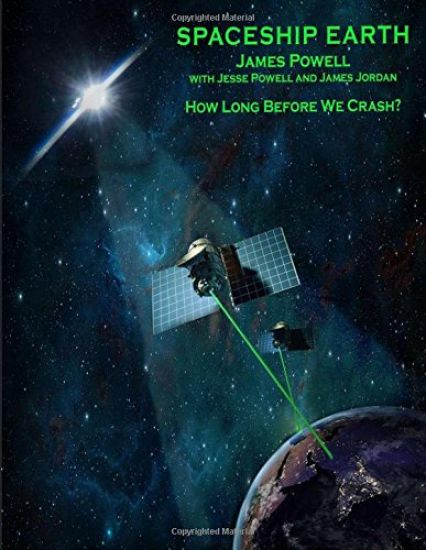
Earth, our wonderful planet that nourishes humanity and keeps us alive as we hurtle through space, is in danger. Without Spaceship Earth, humans would just be tiny particles of cosmic dust drifting aimlessly through the universe. The danger we face? The Sixth Mass Extinction. Over the last Billion years, Earth has experienced 5 Mass Extinctions caused by enormous asteroid impacts, massive volcanic eruptions, and other events. Each of the 5 extinctions wiped out most of Earth's life forms, leaving only a small fraction that survived. The 5th Extinction 60 million years ago, caused by an asteroid 10 miles in diameter impacting the Earth, wiped out the dinosaurs, leaving our ancestors, a few small mammals, to take over the planet. The Sixth Extinction, if it occurs, will be very different. Instead of some natural event, humans will be the cause. It is inevitable if we keep burning fossil fuels, dumping carbon dioxide into the atmosphere. The planet is already warming, sea levels rising, droughts and crop failures, deadly heat waves, etc. By 2100 we will be deep into the Sixth Extinction and Billions of humans will die. Spaceship Earth describes 3 new critical technologies that can prevent the 6th Extinction, provided we implement them. The first technology is beamed clean energy to Earth from Space Solar Power Satellites in orbit. Using StarTram Maglev to launch payloads into orbit at 1/100th the cost of rockets. Beamed solar power is unlimited, 24/7, and much cheaper that power from fossil fuels. The second is desalination of hundreds of billions of gallons of very low cost fresh water using ocean thermal energy to evaporate sea water. The ICE/DESAL process can provide ample fresh water for food crops and people in drought areas. The third is an economically practical system that can remove Billions of tons of carbon dioxide from Earth's atmosphere and bury it underground, preventing global warming and the 6th Mass Extinction.
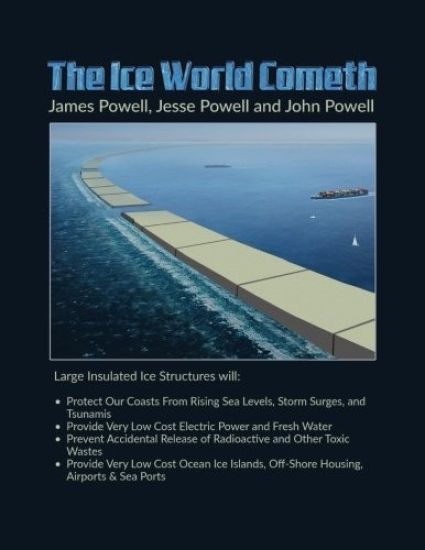
Many millions of years ago, humanity's distant ancestors crawled out of Earth's oceans, evolving to become our present amazing civilization. The Ice World Cometh describeshow humanity will soon go back to the oceans, creating an even more wondrous World. Building large thermally insulated ice islands, we will live on beautiful very low cost floating ocean cities, able to go anywhere in the World. Ice Islandswill generate clean cheap, renewable electric power and fresh water for everybody on Earth. For those who choose to remain on land, insulated high coastal ice barrierswill protect them from rising sea levels and hurricanes. The Ice World Cometh describes how large ice structures will be built, how they will be thermally insulated, how muchthey will cost, and their many application
70,000 years ago, there were only 7,000 homo sapiens -wise man" - in the world. Today, there are 7 Billion "wise men". 30 years from now, potentially 9 Billion, 80 years from now, at the end of the 21st century, 11 Billion. Are we wise enough to survive? Given our present course - climate change, increasing droughts and crop failures, depleting fossil fuels, etc, probably not. Modern civilization rests on 3 fundamental pillars to maintain long-term sustainability: -Massive energy input-Ample food and water-Fast, cheap, efficient transportation7 Big Projects describes 3 new technologies that will ensure that modern civilizations and Billions of people will continue to grow an even better World and life:1. Provide unlimited, clean, very low cost beamed power from space solar satellites, eliminating fossil fuels, avoiding environmental catastrophe, the solar satellites would be launched into orbit, using StarTram, a Maglev launch system much cheaper than rockets.2. Desalinate ocean water to massive supplies of clean, very cheap freshwater regions, enabling large healthy food crops, the new technology uses large thermally insulated very low cost floating ice islands and ocean thermal energy to generate electric power and fresh water. Large insulated ice islands can also provide low-cost floating cities, as well as protective barriers for coastal cities against hurricanes and rising sea levels.3. Magnetically levitated transport (Maglev) 2nd Generation technology can provide very low cost, 300 mph energy efficient transport for passengers, cars and heavy freight trucks. The 30,000 mile U. S. National Maglev Network described in 7 Big Projects will save 10's of thousands of American lives per year, now lost on U. S. highways, plus hundreds of Billions of dollars annually. Also described in the Global Maglev Network that will connect North America, South America, Africa, Europe, and Asia into a network that will carry people, vehicles, and cargo.
Silent Earth describes what humanity must do to prevent global catastrophe from our massive consumption of fossil fuels. Silent Earth warns, if we do not soon transition to non-fossil energy sources, Earth will pass the Trigger Point where global warming will runaway, even if we stop using fossil fuels. There are immense amounts of carbon - much more than now in the atmosphere - stored as decomposing organic matter in the warming Arctic permafrost and barely stable frozen methane hydrates in the warming ocean beds. At the Trigger Point, the process will become self-sustaining and global temperatures will increase exponentially, even if humanity stops consuming fossil fuels. The environmental effects will be catastrophic When will this Trigger Point happen? We don't know. Sadly, nobody is trying to find out. Most likely, humanity won't know until after it happens. Our only hope is to transition to non-fossil fuel energy sources, and be more energy efficient, as soon as possible. So far, there has been some limited efforts to transition to non-fossil energy sources and to increase energy efficiencyFossil fuels power our electricity, transport, industries, homes, and commerce. The ONLY way to stop using fossil fuels is to develop and implement new and practical non-fossil energy sources that are cheaper both in investment and operation, than fossil fuels. Otherwise, people and nations will continue to burn fossil fuels. Human civilization, and very possibly humanity itself, is not survivable, if we continue to burn fossil fuels. Silent Earth reviews the non-fossil energy possibilities? and finds most alternatives are not practical to reach the scale required. For example: Nuclear? It would take 6,500 reactors, each 1,000 megawatt capacity to supply 54,000 million Megawatt hours in 2050 AD. And more than double that amount to supply our other energy needs for transport, industrial purposes, etc. Today, we have 437 reactors in the World. We would have to build 600 reactors every year. Would the public accept that? Probably not. Clearly, new technologies are required. Silent Earth, describes how Superconducting Maglev, a new transport technology, can enable passenger, truck, and logistics transport at much lower cost and much greater energy efficiency, can store very large amounts of electrical energy at very low cost to meet time varying energy demands, and launch space solar satellites into orbit that can beam down electric power 24/7 to any spot on Earth at very low cost. Low-cost power beamed from space can be used to manufacture a wide range of products, including hydrocarbon fuels for transport and other applications, using the decades old Fischer-Tropsch process. Combining carbon dioxide extracted from the atmosphere with hydrogen generated by electrolyzing water: gasoline, diesel, jet fuels, and other hydrocarbons can be manufactured at acceptable cost. Superconducting Maglev was invented 50 years ago by Gordon Danby and the author, James Powell, when they were scientists at Brookhaven National Laboratory, located on Long Island, New York. Gordon Danby, James Powell and their colleagues have continued working on Maglev to evolve Maglev to a 2nd Generation transport system that can transport trucks and freight as well as passengers on 300 mph networks, that can be built at lower cost than other high speed surface transport and also perform 2 new applications - storage of electric energy from intermittent renewable energy sources, like windmills and ground solar farms at very low cost, and launch payloads into orbit at 1/100th the cost of chemical rockets making it possible to create very cheap solar electricity the foundation of the future world economy.
Exam Board: AQALevel: AS/A-levelSubject: EconomicsFirst Teaching: September 2015First Exam: June 2016Build knowledge of Economics through active learning with the latest Powell textbook, featuring quantitative skills practice and brand new case studies. This textbook has been fully revised to reflect the 2015 AQA A-level specification, giving you up-to-date material that supports your teaching and will enable your students to:- Develop subject knowledge with topic-by-topic support from Ray Powell and James Powell, who both have extensive experience in teaching and examining- Demonstrate awareness of current issues in Economics through brand new case studies that also help build analytical and evaluative skills- Use the language of economics to explain important concepts and issues effectively, with key terms identified throughout the text and glossaries for both microeconomics and macroeconomics- Build quantitative skills with worked examples- Stretch and challenge their knowledge with extension materials- Prepare for exams with practice questions and activities throughout
Graphs are about connections, and are an important part of our connected and data-driven world. A Librarian's Guide to Graphs, Data and the Semantic Web is geared toward library and information science professionals, including librarians, software developers and information systems architects who want to understand the fundamentals of graph theory, how it is used to represent and explore data, and how it relates to the semantic web. This title provides a firm grounding in the field at a level suitable for a broad audience, with an emphasis on open source solutions and what problems these tools solve at a conceptual level, with minimal emphasis on algorithms or mathematics. The text will also be of special interest to data science librarians and data professionals, since it introduces many graph theory concepts by exploring data-driven networks from various scientific disciplines. The first two chapters consider graphs in theory and the science of networks, before the following chapters cover networks in various disciplines. Remaining chapters move on to library networks, graph tools, graph analysis libraries, information problems and network solutions, and semantic graphs and the semantic web.
Exam Board: AQALevel: AS/A-levelSubject: EconomicsFirst Teaching: September 2015First Exam: June 2016Build knowledge of Economics through active learning with the latest Powell textbook, featuring quantitative skills practice and brand new case studies. This textbook has been fully revised to reflect the 2015 AQA A-level specification, giving you up-to-date material that supports your teaching and will enable your students to:- Develop subject knowledge with topic-by-topic support from Ray Powell and James Powell, who both have extensive experience in teaching and examining- Demonstrate awareness of current issues in Economics through brand new case studies that also help build analytical and evaluative skills- Use the language of economics to explain important concepts and issues effectively, with key terms identified throughout the text and glossaries for both microeconomics and macroeconomics- Build quantitative skills with worked examples- Stretch and challenge their knowledge with extension materials- Prepare for exams with practice questions and activities throughout
"I have done many things most people have only seen on television. But while my world has been filled with contrasts I have never thought of it as a world of contradictions. I was no less a Christian because I was a police officer; conversely, I was no less a police officer because I was a Christian." The stories in this book are a merging of experiences from the author's life as a policeman and as a pastor coupled with lessons taught as a Bible teacher. The reader is carried from the patrol car to the Bible and back again. Fasten your seatbelt - you are about to be involved in some very arresting stories.
Modern science is under the greatest and most successful attack in recent history. An industry of denial, abetted by news media and "info-tainment" broadcasters more interested in selling controversy than presenting facts, has duped half the American public into rejecting the facts of climate science-an overwhelming body of rigorously vetted scientific evidence showing that human-caused, carbon-based emissions are linked to warming the Earth. The industry of climate science denial is succeeding: public acceptance has declined even as the scientific evidence for global warming has increased. It is vital that the public understand how anti-science ideologues, pseudo-scientists, and non-scientists have bamboozled them. We cannot afford to get global warming wrong-yet we are, thanks to deniers and their methods. The Inquisition of Climate Science is the first book to comprehensively take on the climate science denial movement and the deniers themselves, exposing their lack of credentials, their extensive industry funding, and their failure to provide any alternative theory to explain the observed evidence of warming. In this book, readers meet the most prominent deniers while dissecting their credentials, arguments, and lack of objectivity. James Lawrence Powell shows that the deniers use a wide variety of deceptive rhetorical techniques, many stretching back to ancient Greece. Carefully researched, fully referenced, and compellingly written, his book clearly reveals that the evidence of global warming is real and that an industry of denial has deceived the American public, putting them and their grandchildren at risk.
Industrial communications are a multidimensional, occasionally confusing, mixture of fieldbuses, software packages, and media. The intent of this book is to make it all accessible. When industrial controls communication is understood and then installed with forethought and care, network operation can be both beneficial and painless. To that end, the book is designed to speak to you, whether you're a beginner or interested newbie, the authors guide you through the bus route to communication success. However, this is not a how-to manual. Rather, think of it as a primer laying the groundwork for controls communication design, providing information for the curious to explore and motivation for the dedicated to go further.
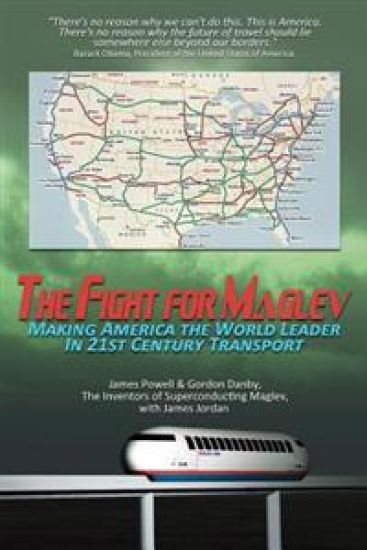
The Fight for Maglev tells how Maglev, the first new transport mode since the airplane, will soon transform transportation in America and the World. 300 mph magnetically levitated and propelled vehicles have no engine, do not burn oil, do not emit pollutants and greenhouse gases, and are very quiet and comfortable. They carry passengers, personal autos, highway trucks, and freight without weather or congestion delays, at much lower cost than driving or flying, saving every American $1000 dollars per year. The book tells how the authors, James Powell and Gordon Danby, invented Maglev in 1966 and why the US failed to develop it. Their 1st generation Maglev now operates in Japan. The authors describe how their new, more capable 2nd generation Maglev system, built as a 29,000 mile National Maglev network, will provide millions of new manufacturing jobs and billions of dollars in exports, while greatly reducing highway deaths and injuries and oil imports, if the U. S. acts to implement it. Otherwise another country will become the World leader in Maglev. For Science and Technology Readers: The authors describe the catastrophic global warming "tipping points" that threaten human survival and suggest large-scale experiments that will predict when these tipping points will occur. The authors show how humanity can avoid becoming part of the ongoing 6th extinction if we implement Maglev in place of our present fossil fueled transport path. For Public Policy Readers: James Jordan, with over 30 years' experience on Capitol Hill narrates the Inside Story of why the Congress and the Executive Branch have ignored this technology and not made the modest investment to develop and demonstrate the American invented 2nd generation superconducting Maglev technology the way that the German and Japanese governments did with 1st generation Maglev transport systems. Congress can overcome the special interests who lobby to kill Maglev technology if it hears a thoughtful and solid protest from the American people. Thus this book. Don't miss this story, America's economic, environmental, and energy future and the quality of life of every American is at stake.