Kirjojen hintavertailu – 12 903 725 kirjaa ja 27 kauppaa

Kirjailija

James Ryan

Kirjat ja teokset yhdessä paikassa: 30 kirjaa, julkaisuja vuosilta 1996–2024, suosituimpiin kuuluu Cultural Turns/Geographical Turns. Vertaile teosten hintoja ja tarkista saatavuus suomalaisista kirjakaupoista.

30 kirjaa

Kirjojen julkaisuvuodet: 1996–2024.

Lenin's Terror

Lenin's Terror

James Ryan

Routledge
2014
nidottu
This book explores the development of Lenin’s thinking on violence throughout his career, from the last years of the Tsarist regime in Russia through to the 1920s and the New Economic Policy, and provides an important assessment of the significance of ideological factors for understanding Soviet state violence as directed by the Bolshevik leadership during its first years in power. It highlights the impact of the First World War, in particular its place in Bolshevik discourse as a source of legitimating Soviet state violence after 1917, and explains the evolution of Bolshevik dictatorship over the half decade during which Lenin led the revolutionary state. It examines the militant nature of the Leninist worldview, Lenin’s conception of the revolutionary state, the evolution of his understanding of "dictatorship of the proletariat", and his version of "just war". The book argues that ideology can be considered primarily important for understanding the violent and dictatorial nature of the early Soviet state, at least when focused on the party elite, but it is also clear that ideology cannot be understood in a contextual vacuum. The oppressive nature of Tsarist rule, the bloodiness of the First World War, and the vulnerability of the early Soviet state as it struggled to survive against foreign and domestic opponents were of crucial significance. The book sets Lenin’s thinking on violence within the wider context of a violent world.

It's Hard to Believe

It's Hard to Believe

James Ryan

Mereo Books
2013
nidottu
James Ryan was brought up on Humberside between the wars. After post-war army service in Germany he embarked on a career in signals intelligence which took him to Cyprus for three tours and then to Hong Kong for another two tours. On demob leave from the army he met a girl called Barbara, and they are still happily married 62 years on, with five children, 18 grandchildren and two greatgrandchildren. 'It's Hard To Believe' is the Ryans' story.
Lenin's Terror

Lenin's Terror

James Ryan

Routledge
2012
sidottu
This book explores the development of Lenin’s thinking on violence throughout his career, from the last years of the Tsarist regime in Russia through to the 1920s and the New Economic Policy, and provides an important assessment of the significance of ideological factors for understanding Soviet state violence as directed by the Bolshevik leadership during its first years in power. It highlights the impact of the First World War, in particular its place in Bolshevik discourse as a source of legitimating Soviet state violence after 1917, and explains the evolution of Bolshevik dictatorship over the half decade during which Lenin led the revolutionary state. It examines the militant nature of the Leninist worldview, Lenin’s conception of the revolutionary state, the evolution of his understanding of "dictatorship of the proletariat", and his version of "just war". The book argues that ideology can be considered primarily important for understanding the violent and dictatorial nature of the early Soviet state, at least when focused on the party elite, but it is also clear that ideology cannot be understood in a contextual vacuum. The oppressive nature of Tsarist rule, the bloodiness of the First World War, and the vulnerability of the early Soviet state as it struggled to survive against foreign and domestic opponents were of crucial significance. The book sets Lenin’s thinking on violence within the wider context of a violent world.

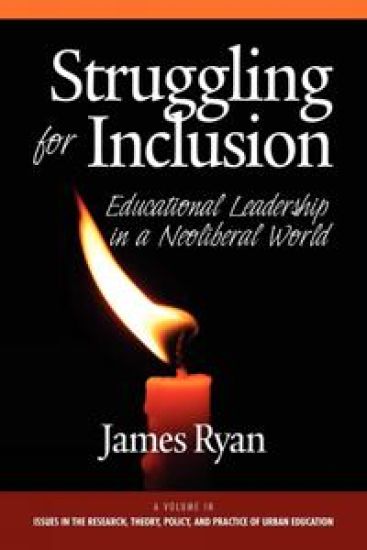
Struggling for Inclusion

Struggling for Inclusion

James Ryan

Information Age Publishing
2012
sidottu
This book describes the struggles in which inclusive-minded administrators find themselves when they promote equity initiatives. Administrators routinely struggle when they attempt to include all members of their school communities – teachers, students, and parents – in the various aspects of schooling. Given the presence of a host of obstacles, setting right the injustices associated with racism, classism, sexism, ableism, homophobia, and other exclusive practices is not an easy thing to do. Resistance from colleagues who fail to recognize exclusive practices when they see them, and from others who do recognize them but see no harm, too few resources, exclusive policies, personal uncertainties or insecurities, and conflicted priorities are just a few of the phenomena that get in the way of these efforts. This book explores these struggles. It looks at the contexts within which these encounters occur, the various challenges that inclusive-minded administrators encounter, and the strategies that they employ to meet these tests. Employing the results of original empirical studies, surveys of current research, recent theoretical literature and personal experiences, this book seeks to provide school leaders with a sense of what it is like to promote inclusion and equity in the contemporary neoliberal context. Among other things, it looks to provide educators of an understanding of the obstacles that stand in the way of inclusion, the nature of the struggles that await them, and ideas for what they might do. Among other things, the book concludes that in relation to the pursuit of inclusion: (1) exclusion continues to be part of contemporary schools and communities; (2) struggles for inclusion transcend individual educators, students and parents; (3) administrators are sometimes part of the problem of exclusion; (4) administrators struggle with issues of difference; (5) administrators struggle with circumstances they inherit, people with whom they work, and with themselves; and (6) administrators have resources to employ in their struggles for inclusion.
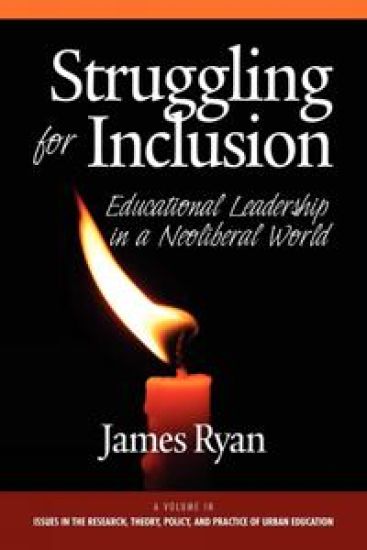
Struggling for Inclusion

Struggling for Inclusion

James Ryan

Information Age Publishing
2012
nidottu
This book describes the struggles in which inclusive-minded administrators find themselves when they promote equity initiatives. Administrators routinely struggle when they attempt to include all members of their school communities – teachers, students, and parents – in the various aspects of schooling. Given the presence of a host of obstacles, setting right the injustices associated with racism, classism, sexism, ableism, homophobia, and other exclusive practices is not an easy thing to do. Resistance from colleagues who fail to recognize exclusive practices when they see them, and from others who do recognize them but see no harm, too few resources, exclusive policies, personal uncertainties or insecurities, and conflicted priorities are just a few of the phenomena that get in the way of these efforts. This book explores these struggles. It looks at the contexts within which these encounters occur, the various challenges that inclusive-minded administrators encounter, and the strategies that they employ to meet these tests. Employing the results of original empirical studies, surveys of current research, recent theoretical literature and personal experiences, this book seeks to provide school leaders with a sense of what it is like to promote inclusion and equity in the contemporary neoliberal context. Among other things, it looks to provide educators of an understanding of the obstacles that stand in the way of inclusion, the nature of the struggles that await them, and ideas for what they might do. Among other things, the book concludes that in relation to the pursuit of inclusion: (1) exclusion continues to be part of contemporary schools and communities; (2) struggles for inclusion transcend individual educators, students and parents; (3) administrators are sometimes part of the problem of exclusion; (4) administrators struggle with issues of difference; (5) administrators struggle with circumstances they inherit, people with whom they work, and with themselves; and (6) administrators have resources to employ in their struggles for inclusion.
Five Miles Away, A World Apart

Five Miles Away, A World Apart

James Ryan

Oxford University Press Inc
2010
sidottu
How is it that half a century after Brown v. Board of Education--and in spite of increased funding for urban schools and programs like No Child Left Behind--educational opportunities for blacks and whites in America still remain so unequal? In Five Miles Away, A World Apart, James Ryan provides a sobering answer to this question by tracing the fortunes of two schools in Richmond, Virginia--one suburban, relatively affluent, and mostly white, and the other urban, relatively poor, and mostly black. Ryan shows how court rulings against desegregation in the 1970s laid the groundwork for the massive disparities between urban and suburban public school districts that persist to this day. The Nixon administration, intent on shoring up its base in the "silent majority," allowed suburbs to lock nonresidents out of their school systems. Urban schools, whose student bodies were becoming increasingly poor and black, simply received more funding, a panacea that has proven largely ineffective, while the academic independence (and superiority) of suburban schools was held sacrosanct. Drawing on compelling interviews with students, teachers, and principals, including one who has been a principal at both schools featured in the book, Ryan explains how certain policies--school finance, school choice, and standardized testing--not only fail to bridge the performance gap between students at urban and suburban schools but actually perpetuate segregation across the country. Ryan closes by suggesting innovative reforms that would bring greater diversity into our schools by shifting the emphasis from racial to socioeconomic integration. An incisive critique of exactly how and why our educational policies have gone wrong, Five Miles Away, A World Apart will interest all those who wish to see our educational system heal the divide between rich and poor and live up to our highest democratic ideals.
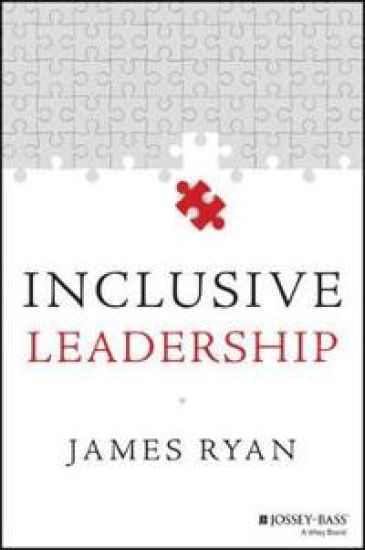
Inclusive Leadership

Inclusive Leadership

James Ryan

Jossey-Bass Inc.,U.S.
2005
nidottu
Inclusive Leadership draws on James Ryan's groundbreaking research to present a powerful new idea - leadership as an intentionally inclusive practice that values all cultures and types of students in a school. This important book shows that inclusion must encompass all types of difference in students, teachers, and parents - from the single mother to the new immigrant, from the parents working night jobs, to the homeless child, to issues of race, religion, gender, and sexual orientation. In four fascinating chapters, James Ryan sketches out the dimensions of exclusion, analyzes the research on inclusive leadership, and offers practical suggestions for promoting and practicing inclusive leadership. This book is a volume in the Jossey-Bass Leadership Library in Education—a series designed to meet the demand for new ideas and insights about leadership in schools.
Camerone

Camerone

Rosemary Rohmer; James Ryan

Praeger Publishers Inc
1996
sidottu
The first detailed account in English of the battle that defined the elite unit's fidelity to the mission. The battle was fought at Camerone, some 40 miles west of Vera Cruz, Mexico, on April 30, 1863; the opponents were the half-strength 3d Company, 1st Battalion, of the Legion opposed by more than 2,000 Mexican regulars and guerrillas. After several fights against the Mexican lancers just beyond the deserted La Trinidad Hacienda at Camerone, the 3d took cover behind the old walls of the hacienda. There, for ten hours the Legion withstands repeated assaults from a Mexican force that grew to more than 2,000 men. Finally, the surviving officer and four men of the 3d charge into the midst of the massed juaristas. The officer is mortally wounded, two men are killed, the other two captured. The Legion has never regarded Camerone as a defeat but rather as the prime example of fidelity to the mission. Annually, on April 30, Legion units, whether in peace or war, commemorate the gallantry of the 3d of the 1st.