Kirjojen hintavertailu – 12 859 819 kirjaa ja 27 kauppaa

Kirjailija

James S. Ackerman

Kirjat ja teokset yhdessä paikassa: 8 kirjaa, julkaisuja vuosilta 1986–2024, suosituimpiin kuuluu Origins, Imitation, Conventions. Vertaile teosten hintoja ja tarkista saatavuus suomalaisista kirjakaupoista.

8 kirjaa

Kirjojen julkaisuvuodet: 1986–2024.

Origins, Imitation, Conventions

Origins, Imitation, Conventions

James S. Ackerman

MIT PRESS LTD
2024
pokkari
Twelve studies by eminent art historian James S. Ackerman. This collection contains studies written by art historian James Ackerman over the past decade. Whereas Ackerman's earlier work assumed a development of the arts as they responded to social, economic, political, and cultural change, his recent work reflects the poststructural critique of the presumption of progress that characterized Renaissance and modernist history and criticism. In this book he explores the tension between the authority of the past--which may act not only as a restraint but as a challenge and stimulus--and the potentially liberating gift of invention. He examines the ways in which artists and writers on art have related to ancestors and to established modes of representation, as well as to contemporary experiences. The "origins" studied here include the earliest art history and criticism; the beginnings of architectural drawing in the Middle Ages and Renaissance; Leonardo Da Vinci's sketches for churches, the first in the Renaissance to propose supporting domes on sculpted walls and piers; and the first architectural photographs. "Imitation" refers to artistic achievements that in part depended on the imitation of forms established in practices outside the fine arts, such as ancient Roman rhetoric and print media. "Conventions," like language, facilitate communication between the artist and viewer, but are both more universal (understood across cultures) and more fixed (resisting variation that might diminish their clarity). The three categories are closely linked throughout the book, as most acts of representation partake to some degree of all three.
The Villa

The Villa

James S. Ackerman

PRINCETON UNIVERSITY PRESS
2023
pokkari
A classic account of the villa—from ancient Rome to the twentieth century—by “the preeminent American scholar of Italian Renaissance architecture” (Architect’s Newspaper)In The Villa, James Ackerman explores villa building in the West from ancient Rome to twentieth-century France and America. In this wide-ranging book, he illuminates such topics as the early villas of the Medici, the rise of the Palladian villa in England, and the modern villas of Frank Lloyd Wright and Le Corbusier. Ackerman uses the phenomenon of the “country place” as a focus for examining the relationships between urban and rural life, between building and the natural environment, and between architectural design and social, cultural, economic, and political forces. “The villa,” he reminds us, “accommodates a fantasy which is impervious to reality.” As city dwellers idealized country life, the villa, unlike the farmhouse, became associated with pleasure and asserted its modernity and status as a product of the architect’s imagination.
The Architecture of Michelangelo

The Architecture of Michelangelo

James S. Ackerman

Hassell Street Press
2021
sidottu
This work has been selected by scholars as being culturally important and is part of the knowledge base of civilization as we know it. This work is in the public domain in the United States of America, and possibly other nations. Within the United States, you may freely copy and distribute this work, as no entity (individual or corporate) has a copyright on the body of the work. Scholars believe, and we concur, that this work is important enough to be preserved, reproduced, and made generally available to the public. To ensure a quality reading experience, this work has been proofread and republished using a format that seamlessly blends the original graphical elements with text in an easy-to-read typeface. We appreciate your support of the preservation process, and thank you for being an important part of keeping this knowledge alive and relevant.
The Architecture of Michelangelo

The Architecture of Michelangelo

James S. Ackerman

Hassell Street Press
2021
nidottu
This work has been selected by scholars as being culturally important and is part of the knowledge base of civilization as we know it. This work is in the public domain in the United States of America, and possibly other nations. Within the United States, you may freely copy and distribute this work, as no entity (individual or corporate) has a copyright on the body of the work. Scholars believe, and we concur, that this work is important enough to be preserved, reproduced, and made generally available to the public. To ensure a quality reading experience, this work has been proofread and republished using a format that seamlessly blends the original graphical elements with text in an easy-to-read typeface. We appreciate your support of the preservation process, and thank you for being an important part of keeping this knowledge alive and relevant.
On the Good Ship Lollipop

On the Good Ship Lollipop

Horst Bredekamp; James S. Ackerman; Irving Lavin

Birkhauser
2019
sidottu
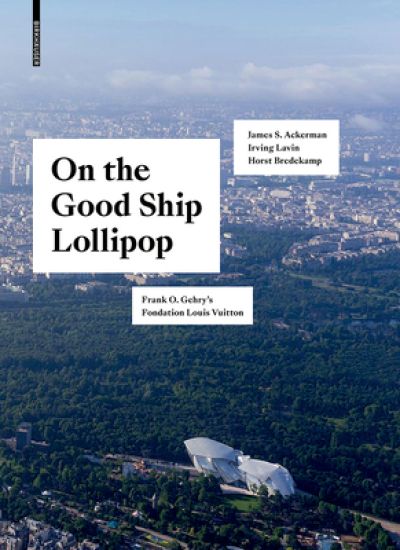
The Fondation Louis Vuitton by Frank O. Gehry rises from the Bois de Boulogne as a new landmark in the Parisian skyline. Gehry’s dynamic architecture is both glittering and multifaceted: is it a sailing vessel, an iceberg, or a sea monster? It fascinates with its wealth of references and, at the same time, escapes any clear-cut definition. Three outstanding representatives of different generations of art history, James S. Ackerman (†), Irving Lavin, and Horst Bredekamp have together paid a visit to the Fondation Louis Vuitton. They explore the building in three richly illustrated essays that try to fathom the floating architecture of the "magician" Gehry in the context of both art and architectural history.
Origins, Invention, Revision

Origins, Invention, Revision

James S. Ackerman

Yale University Press
2016
sidottu
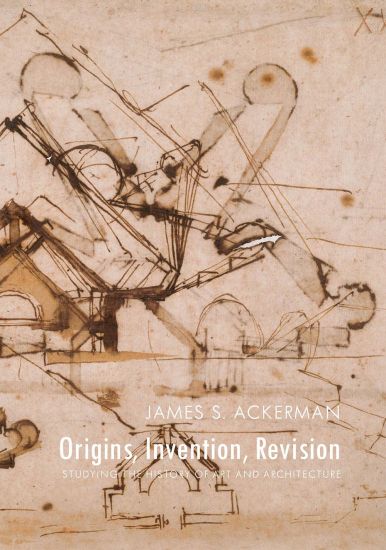
An illuminating collection of essays from the preeminent scholar of architectural history and theory One of the most distinguished scholars in the fields of architectural history and theory today, James Sloss Ackerman is best known for his work on Italian masters such as Palladio and Michelangelo. In this collection of essays, Ackerman offers insight into his formation and development as a scholar, as well as reflections on a range of topics. Concise, lucid, and original, this book presents deep syntheses alongside innovative approaches and a broadening geographical and chronological reach. Ackerman’s enduring fascination with architecture was one unforeseen consequence of his military service in World War II, and the collection includes a revealing account of his part in the liberation of Milan as a soldier in the Fifth American Regiment. These essays represent a unique, personal journey—from the Italian Renaissance to the classical architecture of India and the work of Frank Gehry at the new museum of the Fondation Louis Vuitton in Paris.
The Villa: Form and Ideology of Country Houses

The Villa: Form and Ideology of Country Houses

James S. Achermsn; James S. Ackerman

Bollingen
1993
nidottu
A classic account of the villa--from ancient Rome to the twentieth century--by "the preeminent American scholar of Italian Renaissance architecture" (Architect's Newspaper) In The Villa, James Ackerman, author of classic studies of Palladio and Michelangelo, discusses villa building in Western countries at various times and places from ancient Rome to twentieth-century France and America. In this wide-ranging book, he illuminates such topics as ancient Roman villas, the early villas of the Medici, the Palladian villa in England, and the modern villas of Frank Lloyd Wright and Le Corbusier. Ackerman uses the phenomenon of the "country place" as a focus for examining the relationships between urban and rural life, between building and the natural environment, and between architectural design and social, cultural, economic, and political forces. "The villa," he reminds us, "accommodates a fantasy which is impervious to reality" through the ages it has been pleasure that has distinguished the villa estate from the farm. Since their earliest representation in Roman literature, the coveted country delights of relaxation, healthy living, hunting, reading, and conversation with friends have been an ideological construct of those who could afford to escape the city, often by expropriating rural land. Farmers and peasants usually don't see the country as an idyllic location, but city dwellers have frequently idealized country life and wanted to own property where it could be enjoyed. Hence the villa--which, unlike the farmhouse, typically asserts its modernity and its status as a product of the architect's imagination.
The Architecture of Michelangelo

The Architecture of Michelangelo

James S. Ackerman

University of Chicago Press
1986
nidottu
In this widely acclaimed work, James Ackerman considers in detail the buildings designed by Michelangelo in Florence and Rome—including the Medici Chapel, the Farnese Palace, the Basilica of St. Peter, and the Capitoline Hill. He then turns to an examination of the artist's architectural drawings, theory, and practice. As Ackerman points out, Michelangelo worked on many projects started or completed by other architects. Consequently this study provides insights into the achievements of the whole profession during the sixteenth century. The text is supplemented with 140 black-and-white illustrations and is followed by a scholarly catalog of Michelangelo's buildings that discusses chronology, authorship, and condition. For this second edition, Ackerman has made extensive revisions in the catalog to encompass new material that has been published on the subject since 1970.