Kirjailija
James S. Olson
Kirjat ja teokset yhdessä paikassa: 23 kirjaa, julkaisuja vuosilta 1986–2018, suosituimpiin kuuluu Encyclopedia of the Industrial Revolution in America. Vertaile teosten hintoja ja tarkista saatavuus suomalaisista kirjakaupoista.
Nimi esiintyy myös muodoissa: James S Olson
23 kirjaa
Kirjojen julkaisuvuodet: 1986–2018.
This volume serves as an invaluable guide to key political, social, and cultural concepts of the 1950s. This volume covers the entire decade of the 1950s, from the uneasy peace following World War II to the beginnings of cultural discontent that would explode in the 1960s. It highlights key historical, social, and cultural elements of the period, including the Cold War and perceived communist threat; the birth of the middle class and establishment of consumer culture; the emergence of the civil rights movement; and the normalization of youth rebellion and rock and roll. An introduction presents the historical themes of the period, and an alphabetical encyclopedic entries relating to period-specific themes comprises the core reference material in the book. The book also contains a range of primary documents with introductions and a sample Documents Based Essay Question. Other features are a list of "Top Tips" for answering Documents Based Essay Questions, a thematically tagged chronology, and a list of specific learning objectives readers can use to gauge their working knowledge and understanding of the period.
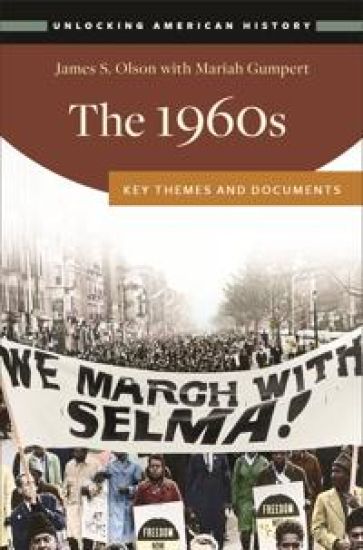
This volume serves as an invaluable study guide covering all of the key political, social, and cultural concepts of the turbulent 1960s. The 1960s were a polarizing decade, beginning brightly and with hope but ending in disappointment and disarray. By the end, traditional values had been subverted, political institutions had been overturned, and marginalized groups had battled their own government to win equal rights and freedoms. The clear-cut foreign policies of the postwar era brought mixed results, and the world's mightiest nation became mired in a war it could not win. This overview of the 1960s covers all of the key political, social, and cultural concepts of the decade through topical and biographical entries, primary documents, a sample document-based essay question and top tips, and period-specific learning objectives. The book contains an Introduction that presents the historical themes of the period. Alphabetical encyclopedic entries relating to the period specific themes comprise the core reference material in the book. The book also contains a range of primary documents with their own introductions and a sample document-based essay question. Other features include a list of "Top Tips," a thematically tagged chronology, and a list of specific learning objectives readers can use to gauge their working knowledge and understanding of the period.
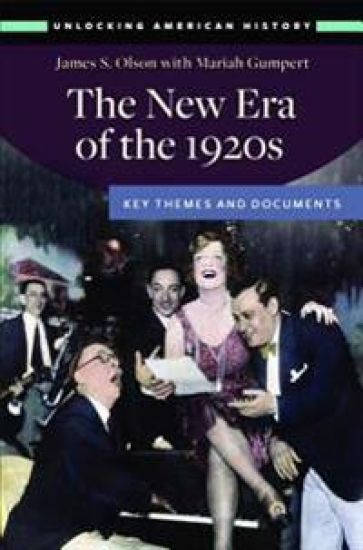
This invaluable resource covers all aspects of 1920s political, artistic, popular, and economic culture in America, supporting the AP U. S. history curriculum through topical and biographical entries, primary documents, sample documents-based essay questions, and period-specific learning objectives. The 1920s, despite President Harding's "return to normalcy," were a time of both great cultural and social advancement as well as various forms of oppression in the United States. Bookended in history by two world wars, this period saw the rise of tabloid journalism and mass media; the banning and reinstatement of alcohol; the advent of voting rights for women and Native Americans; movements such as the Red Scare, labor strikes, the Harlem Renaissance, and racial protests; and the global reorganization that occurred as the major powers fumbled their way through postwar foreign policy and the League of Nations. Almost no element of U. S. society was untouched. The New Era of the 1920s: Key Themes and Documents provides high school students taking the Advanced Placement (AP) U. S. history course and undergraduates taking a lower level American history survey course with an invaluable study guide and targeted test preparation material. Much more than just an AP test-taking study guide, this new title in ABC-CLIO's Unlocking American History series is a true reference source for the societal, political, and economic history of a specific period covered in the AP U. S. history course. Readers will also benefit from features designed for student exam preparation, such as a sample documents-based essay question and period-specific learning objectives that are in alignment with the 2014 AP U. S. History Curriculum Framework.
The Great Depression and the New Deal
James S. Olson; Mariah Gumpert
Greenwood Press
2017
sidottu
Halvin toimitettuna 71,70 €
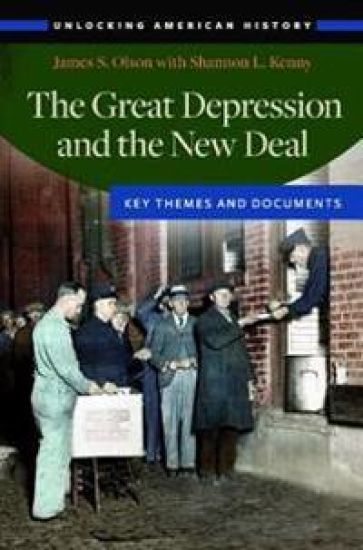
Intended for AP-focused American history high school students, this book supplies a complete quick reference source and study aide on the Great Depression and New Deal in America, covering the key themes, events, people, legislation, economics, and policies. The Great Depression and the New Deal remain key topics in American History that come up often as testing subject material. This book—comprising an introduction, encyclopedic A–Z entries, a chronology, thematic tagging, more than a dozen primary sources, Advanced Placement (AP) exam resources, and a bibliography—provides a complete resource for studying the themes, events, people, legislation, economics, and policy of the Great Depression and New Deal in America. It is ideally suited as a study resource for high school students studying to take the AP U. S. history course as well as undergraduates taking an introductory U. S. History survey course. The Great Depression and the New Deal: Key Themes and Documents supplies an easy-to-use guide to the central concepts, themes, and events of a pivotal era in American history that presents the Great Depression and New Deal in 10 thematic categories. While the focus of this book is on the AP course content itself rather than on the exam, it also features exam preparation-specific content, such as a sample documents-based essay question, a list of "Top Tips" for answering documents-based essay questions, and period-specific learning objectives that are in alignment with the new fall 2014 AP U. S. History curriculum framework.
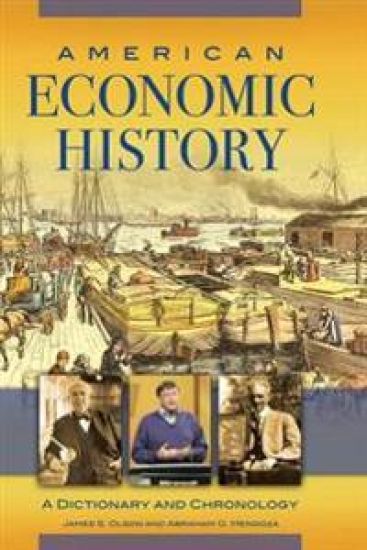
Covering figures, events, policies, and organizations, this comprehensive reference tool enhances readers' appreciation of the role economics has played in U. S. history since 1776. A study of the U. S. economy is important to understanding U. S. politics, society, and culture. To make that study easier, this dictionary offers concise essays on more than 1,200 economics-related topics. Entries cover a broad array of pivotal information on historical events, legislation, economic terms, labor unions, inventions, interest groups, elections, court cases, economic policies and philosophies, economic institutions, and global processes. Economics-focused biographies and company profiles are featured as sidebars, and the work also includes both a chronology of major events in U. S. economic history and a selective bibliography. Encompassing U. S. history since 1776 with an emphasis on recent decades, entries range from topics related to the early economic formation of the republic to those that explore economic aspects of information technology in the 21st century. The work is written to be clearly understood by upper-level high school students, but offers sufficient depth to appeal to undergraduates. In addition, the general public will be attracted by informative discussions of everything from clean energy to what keeps interest rates low.
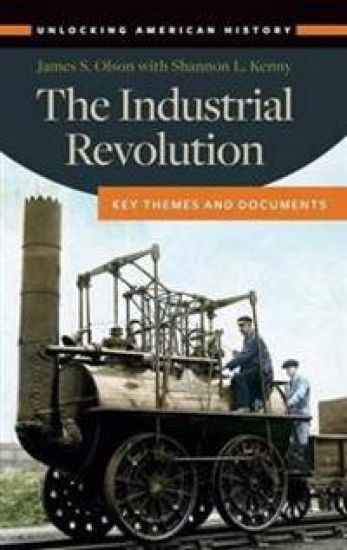
This concise guide zooms in on the period of American history known as the Industrial Revolution, from its earliest beginnings in the mid-18th century to just after the First World War. This book is a concise reference source on the era in American history known as the Industrial Revolution—a period characterized by urbanization, mass immigration, organization of labor, and an immense gap between wealthy industrialists and the poor. It serves as an ideal resource for students preparing to take the AP U. S. history exam as well as being useful to undergraduates and anyone interested in this important period. Using encyclopedic entries on important events, key people, and trends of the time, the era is examined through the exploration of key themes such as agriculture, business, economy, finance, labor, and politics. Other features of the book include sample documents-based essay questions, rigorous thematic tagging of encyclopedic entries, a detailed chronology, and primary source documents—all of which guide readers through the material and aid in their comprehension of the Industrial Revolution's historical significance. Content covers factories, mass production, the progressive movement, muckrakers, populists, laissez-faire economics, social Darwinism, and robber barons, among other topics.
Where the Domino Fell
James S. Olson; Randy W. Roberts
Wiley-Blackwell (an imprint of John Wiley Sons Ltd)
2013
nidottu
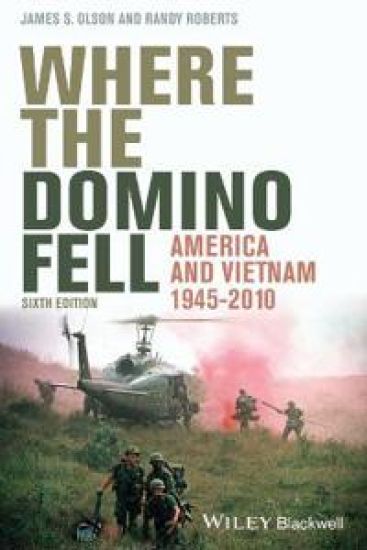
This updated, expanded edition of Where the Domino Fell recounts the history of American involvement in Vietnam from the end of World War II, clarifying the political aims, military strategy, and social and economic factors that contributed to the participants' actions. Revised and updated to include an examination of Vietnam through the point of view of the soldiers themselves, and brings the story up to the present day through a look at how the war has been memorializedA final chapter examines Vietnam through the lens of Oliver Stone's films and opens up a discussion of the War in popular cultureWritten with brevity and clarity, this concise narrative history of the Vietnam conflict is an ideal student textA chronology, glossary, and a bibliography all serve as helpful reference points for studentsAn important contribution not only to the study of the Vietnam War but to an understanding of the larger workings of American foreign policy
The Ethnic Dimension in American History
James S. Olson; Heather Olson Beal
Wiley-Blackwell (an imprint of John Wiley Sons Ltd)
2010
nidottu
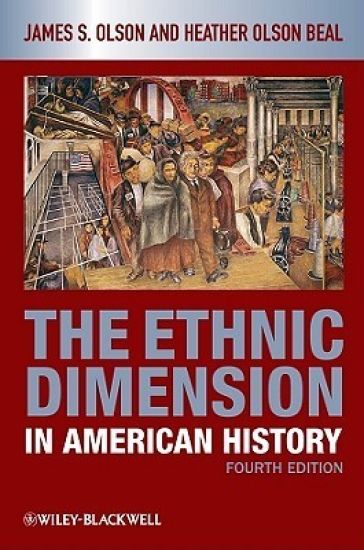
The Ethnic Dimension in American History is a thorough survey of the role that ethnicity has played in shaping the history of the United States. Considering ethnicity in terms of race, language, religion and national origin, this important text examines its effects on social relations, public policy and economic development. A thorough survey of the role that ethnicity has played in shaping the history of the United States, including the effects of ethnicity on social relations, public policy and economic developmentIncludes histories of a wide range of ethnic groups including African Americans, Native Americans, Jews, Chinese, Europeans, Japanese, Muslims, Koreans, and LatinosExamines the interaction of ethnic groups with one another and the dynamic processes of acculturation, modernization, and assimilation; as well as the history of immigrationRevised and updated material in the fourth edition reflects current thinking and recent history, bringing the story up to the present and including the impact of 9/11
The history of the M. D. Anderson Cancer Center vividly reveals how cancer treatment in America-and our attitudes toward the disease-has changed since the middle of the twentieth century. One of the preeminent cancer centers in the world, M. D. Anderson is also one of the first medical institutions devoted exclusively to caring for people with cancer and researching treatments and cures for the disease. Historian James S. Olson's narrative relates the story of the center's founding and of the surgeons, radiologists, radiotherapists, nurses, medical oncologists, scientists, administrators, and patients who built M. D. Anderson into the world-class institution it is today. Through interviews with M. D. Anderson's leaders and patients, Olson brings to life the struggle to understand and treat cancer in America. A cancer survivor who has himself been treated at the center, Olson imbues this history with humor, passion, and humanity.
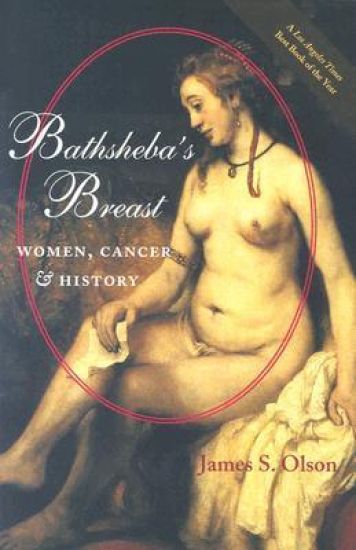
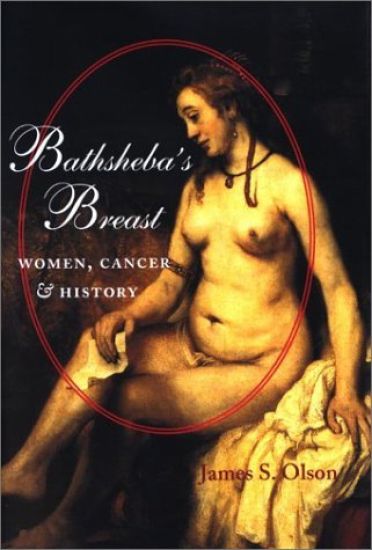
"Breast cancer may very well be history's oldest malaise, known as well to the ancients as it is to us. The women who have endured it share a unique sisterhood. Queen Atossa and Dr. Jerri Nielsen-separated by era and geography, by culture, religion, politics, economics, and world view-could hardly have been more different. Born 2,500 years apart, they stand as opposite bookends on the shelf of human history. One was the most powerful woman in the ancient world, the daughter of an emperor, the mother of a god; the other is a twenty-first-century physician with a streak of adventure coursing through her veins. From the imperial throne in ancient Babylon, Atossa could not have imagined the modern world, and only in the driest pages of classical literature could Antarctica-based Jerri Nielsen even have begun to fathom the Near East five centuries before the birth of Christ. For all their differences, however, they shared a common fear that transcends time and space." -from Bathsheba's Breast In 1967, an Italian surgeon touring Amsterdam's Rijks museum stopped in front of Rembrandt's Bathsheba at Her Bath, on loan from the Louvre, and noticed an asymmetry to Bathsheba's left breast; it seemed distended, swollen near the armpit, discolored, and marked with a distinctive pitting. With a little research, the physician learned that Rembrandt's model, his mistress Hendrickje Stoffels, later died after a long illness, and he conjectured in a celebrated article for an Italian medical journal that the cause of her death was almost certainly breast cancer. A horror known to every culture in every age, breast cancer has been responsible for the deaths of 25 million women throughout history. An Egyptian physician writing 3,500 years ago concluded that there was no treatment for the disease. Later surgeons recommended excising the tumor or, in extreme cases, the entire breast. This was the treatment advocated by the court physician to sixth-century Byzantine empress Theodora, the wife of Justinian, though she chose to die in pain rather than lose her breast. Only in the past few decades has treatment advanced beyond disfiguring surgery. In Bathsheba's Breast, historian James S. Olson-who lost his left hand and forearm to cancer while writing this book-provides an absorbing and often frightening narrative history of breast cancer told through the heroic stories of women who have confronted the disease, from Theodora to Anne of Austria, Louis XIV's mother, who confronted "nun's disease" by perfecting the art of dying well, to Dr. Jerri Nielson, who was dramatically evacuated from the South Pole in 1999 after performing a biopsy on her own breast and self-administering chemotherapy. Olson explores every facet of the disease: medicine's evolving understanding of its pathology and treatment options; its cultural significance; the political and economic logic that has dictated the terms of a war on a "woman's disease"; and the rise of patient activism. Olson concludes that, although it has not yet been conquered, breast cancer is no longer the story of individual women struggling alone against a mysterious and deadly foe.

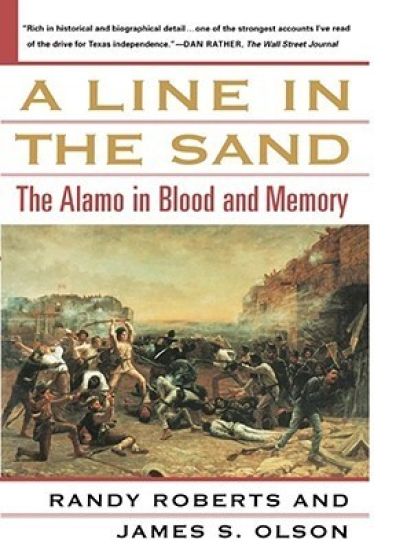
San Antonio, Texas, 1836. A Mexican army led by Santa Anna attacks a small fort called the Alamo. Disputes still rage over exactly what happended, why it happened, and how it should be remembered. Indeed, the battles fought over the memory of the Alamo have been almost as fierce as their subject. In a riveting combination of history and cultural analysis, historians Randy Roberts and James N. Olson blend a rich narrative of the battle, told from the perspectives of both the Anglo and Mexican troops, drawing from a wide range of sources, including newly released documents from Mexican military archives and just-discovered pages of the famous de la Pena diary. Still controversial after all these years, the events at the Alamo pose some fascinating questions: Did Crockett really die a hero, or did he surrender before a summary execution? And why have Americans built a shrine for an event that lasted no more than ninety minutes, and inflated it into one of the country's biggest tourist attractions? A full explanation of the San Antonio encounter requires a peeling back of many layers. With powerful writing, Roberts and Olson retell the story of a great American myth, and show how and why it endures. This original volume is sure to change the way readers remember the Alamo.
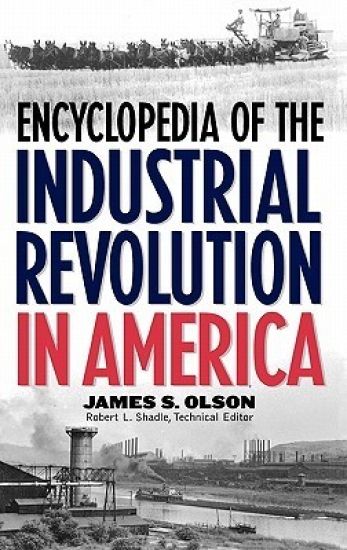
The Industrial Revolution changed the course of American history, accelerated the American economy, and affected the way people lived. This ready-reference encyclopedia offers in-depth coverage of the economic, political, and social developments of the Industrial Revolution in the United States from 1750 to 1920. More than 200 substantial entries cover key individuals--among them entrepreneurs, inventors, captains of industry, and robber barons--significant technologies, inventions, court cases, companies, political institutions, economic events, and legislation. Highlights of the work include numerous entries on developments in water and rail transportation, agriculture, manufacturing, mass production, the labor movement, big government, and the key inventions that changed the American economy. Entries on the social implications of the Industrial Revolution will help students to understand how the Industrial Revolution affected the social fabric of the nation. Each entry is placed in economic, political or social context to show how it contributed to the great changes that were occurring in the United States, such as how the development of new technologies altered agriculture, manufacturing, trade, and even patterns of immigration. Each entry is followed by a short list of suggested reading for further study. A comprehensive, engagingly written introduction traces the history of the Industrial Revolution in the United States. A timeline of important events in the history of the Industrial Revolution in the United States and a topically organized bibliography are important research aids. More than fifty historical illustrations and photos enliven the text. This curriculum-related reference work will supplement the American history course and is ideal for student research.
Historical Dictionary of the Great Depression, 1929-1940
James S. Olson
Greenwood Press
2001
sidottu
Today when most Americans think of the Great Depression, they imagine desperate hoboes riding the rails in search of work, unemployed men selling pencils to indifferent crowds, bootleggers hustling illegal booze to secrecy-shrouded speakeasies, FDR smiling, or Judy Garland skipping along the yellow brick road. Hard times have become an abstraction. But there was a time when economic suffering was real, when hunger stalked the land, and Americans tried to forget their troubles in movie theaters or in front of a radio. From the stock market crash of October 1929 to Germany's invasion of Norway, France, and the Low Countries in 1940, the Great Depression blanketed the world economy. Its impact was particularly deep and direct in the United States. This was the era when the federal government became a major player in the national economy and Americans bestowed the responsibility for maintaining full employment and stable prices on Congress and the White House, making the Depression years a major watershed in U. S. history. In more than 500 essays, this book provides a ready reference to those hard times, covering the diplomacy, popular culture, intellectual life, economic problems, public policy issues, and prominent individuals of the era.
Since Deng Xiaoping's economic reforms began in the early 1980s, the People's Republic of China has rejoined global politics as a world power. The country is likely to become more open and its internal politics will no doubt affect the rest of the world. With more than 1.2 billion people divided into hundreds of ethnic groups, all dominated by the Han people, China's politics and its foreign policy are bound to be affected by ethnicity and ethnic rivalry. This book is designed to give librarians, students, scholars, and educated readers a ready reference for background information of interpreting ethnic events in China. Generally defining ethnicity in terms of language, this book provides individual essays on hundreds of Chinese ethnic groups, including ethnic groups living in the Republic of China on Taiwan. The book also includes a chronology, bibliography, and a breakdown of the People's Republic of China's ethnic political subdivisions.
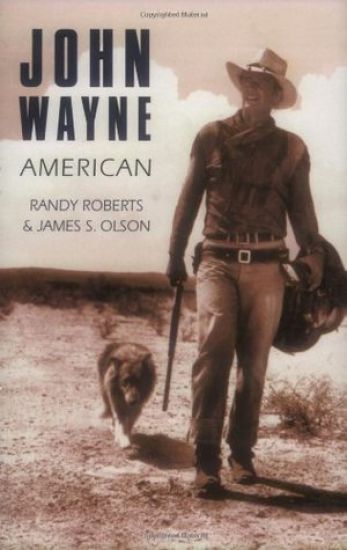
"John Wayne remains a constant in American popular culture. Middle America grew up with him in the late 1920s and 1930s, went to war with him in the 1940s, matured with him in the 1950s, and kept the faith with him in the 1960s and 1970s. . . . In his person and in the persona he so carefully constructed, middle America saw itself, its past, and its future. John Wayne was his country's alter ego." Thus begins John Wayne: American, a biography bursting with vitality and revealing the changing scene in Hollywood and America from the Great Depression through the Vietnam War. During a long movie career, John Wayne defined the role of the cowboy and soldier, the gruff man of decency, the hero who prevailed when the chips were down. But who was he, really? Here is the first substantive, serious view of a contradictory private and public figure.
This is a scholarly assessment of broad-ranging research on the Vietnam War over the last seventeen years by the editor of the prize-winning Dictionary of the Vietnam War. James Olson and his contributors offer fascinating insights as they evaluate the significant literature, films, and TV programs, offering different perspectives on the historical background; strategy and conduct of the war; the perspectives of Americans, the Indochinese, women, minorities, and veterans; the impact of the war on the homefront; and major problems and issues in the aftermath of the war. This one-volume major reference covers all genres of literature, primary and secondary sources, personal narratives and oral histories, fiction and non-fiction, popular accounts, expert studies of military strategy and operations, Indochinese studies, books about the involvement and role of women and blacks, and discussions about Indochinese refugees, prisoners of war, those missing in action, veterans and post-traumatic shock. Films, TV programs, comic books and studies pointing to the effect of the war on the homefront and on others make up an important part of the book. A full index makes the volume easily accessible to students, scholars, and professionals in military studies, American and world history, American studies and popular culture, political science and international relations--an important acquisition for libraries of all kind.
Financial news today is front-page news. Americans are showered daily with stories about the stock market, the savings and loan scandal, banking catastrophes, trade imbalances, government deficits, inflation, international financial crises, unemployment, poverty, urban plight, junk bonds, and taxes. This book provides a handy reference for those who want to locate information about issues and events in American economic history. The volume includes concise essays on more than 1,200 topics. Numerous entries provide biographies of prominent businessmen and businesswomen, union leaders, intellectuals, politicians, and government officials. Others cover historical events, legislation, economic terms, labor unions, corporations, interest groups, elections, and economic institutions. The work also includes a chronology of major events in U. S. economic history and a selective bibliography. Cross-references and a subject index are also provided. The work will be valuable to reference librarians in schools, colleges, and public libraries and to individuals teaching economics, economic history and American history.
At a juncture in history when much interest and attention is focused on Central and South American political, ecological, social, and environmental concerns, this dictionary fills a major gap in reference materials relating to Amerindian tribes. This one-volume reference collects important information about the current status of the indigenous peoples of Central and South America and offers a chronology of the conquest of the Amerindian tribes; a list of tribes by country; and an extensive bibliography of surviving American Indian groups. Historical as well as contemporary descriptions of approximately 500 existing tribes or groups of people are provided along with several bibliographic citations at the conclusion of each entry. The focus of the volume is on those Indian groups that still maintain a sense of tribal identity. For the vast majority of his entries, James S. Olson draws material from the Smithsonian Institution's seven-volume Handbook of South American Indians as well as other classic resources of a broad, general nature. Much attention is also focused on the complicated question of South American languages and on the definition of what constitutes an Indian. Olson's introduction cites dozens of valuable reference works relating to these topics. Following the introduction, this survey of surviving Amerindians is divided into sections that contain entries for each existing tribe or group; an appendix listing tribes by country; the Amerindian conquest chronology; and a bibliographical essay. This unique reference work should be an important item for most public, college, and university libraries. It will be welcomed by reference librarians, historians, anthropologists, and their students.
In Winning Is the Only Thing, Randy Roberts and James Olson take a hard look at the dark side of American sports. The scandals. The role of organized crime. How politicians and businessmen exploit the Olympics. Who gets rich and who goes broke. Why the fitness craze has nothing to do with fitness. And how TV sports czars like Roone Arledge-inventor of the "instant replay"-actually dictate how games are played.