Kirjojen hintavertailu – 12 903 725 kirjaa ja 27 kauppaa

Kirjailija

James Scott Johnston

Kirjat ja teokset yhdessä paikassa: 11 kirjaa, julkaisuja vuosilta 2008–2021, suosituimpiin kuuluu John Dewey's Earlier Logical Theory. Vertaile teosten hintoja ja tarkista saatavuus suomalaisista kirjakaupoista.

11 kirjaa

Kirjojen julkaisuvuodet: 2008–2021.

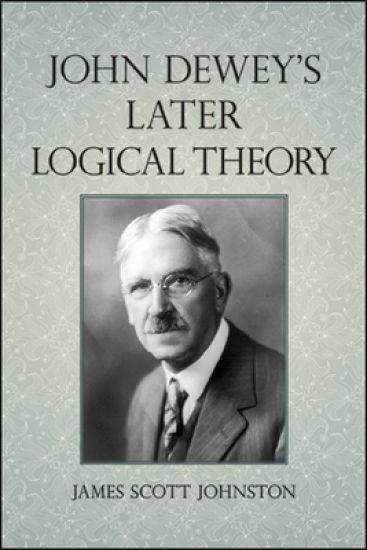
John Dewey's Later Logical Theory

John Dewey's Later Logical Theory

James Scott Johnston

State University of New York Press
2021
pokkari
A study of the development of Dewey's logic from 1916-1937 leading up to his final 1938 book on the subject. By 1916, Dewey had written two volumes on logical theory. Yet, in light of what he would write in his 1938 Logic: The Theory of Inquiry, much remained to be done. Dewey did not yet have an adequate account of experience suitable to explain how our immediate experiencing becomes the material for logical sequences, series, and causal relations. Nor did he have a refined account of judging, propositions, and conceptions. Above all, his theory of continuity-central to all of his logical endeavors-was rudimentary. The years 1916–1937 saw Dewey remedy these deficiencies. We see in his published and unpublished articles, books, lecture notes and correspondence, the pursuit of a line of thinking that would lead to his magnum opus. John Dewey's Later Logical Theory follows Dewey through his path from Essays in Experimental Logic to the publication of Logic: The Theory of Inquiry, and complements James Scott Johnston's earlier volume, John Dewey's Earlier Logical Theory.
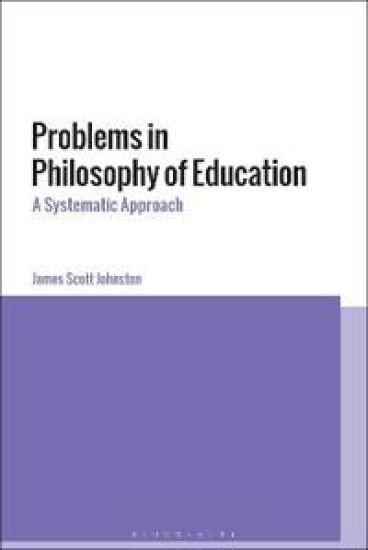
Problems in Philosophy of Education

Problems in Philosophy of Education

James Scott Johnston

Bloomsbury Academic
2020
nidottu
Problems in Philosophy of Education canvasses several of the leading issues in philosophy of education. These include the disconnect between the disciplines of philosophy and philosophy of education, the strained relationship between educational practice and philosophy of education, the role of educational research in philosophy of education, and the lack of an independent scholarship for philosophy of education. James Scott Johnson argues for a philosophy of education separate and distinct from both the disciplines of philosophy and education and claims that philosophy of education should raise and address its own questions and concerns. Supporting this is a model of how philosophy of education should originate basic questions, together with a set of philosophic presuppositions regarding the model’s logic, ethics, politics, and relationship to science and social science.
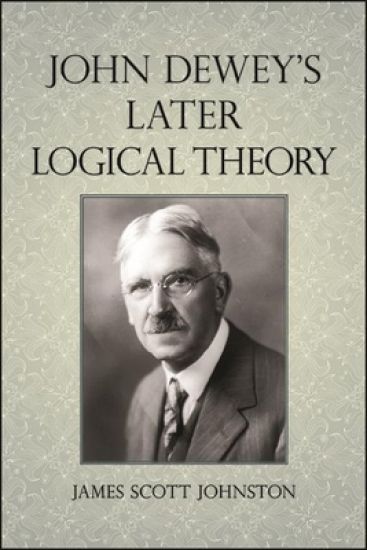
John Dewey's Later Logical Theory

John Dewey's Later Logical Theory

James Scott Johnston

State University of New York Press
2020
sidottu
A study of the development of Dewey's logic from 1916-1937 leading up to his final 1938 book on the subject. By 1916, Dewey had written two volumes on logical theory. Yet, in light of what he would write in his 1938 Logic: The Theory of Inquiry, much remained to be done. Dewey did not yet have an adequate account of experience suitable to explain how our immediate experiencing becomes the material for logical sequences, series, and causal relations. Nor did he have a refined account of judging, propositions, and conceptions. Above all, his theory of continuity-central to all of his logical endeavors-was rudimentary. The years 1916–1937 saw Dewey remedy these deficiencies. We see in his published and unpublished articles, books, lecture notes and correspondence, the pursuit of a line of thinking that would lead to his magnum opus. John Dewey's Later Logical Theory follows Dewey through his path from Essays in Experimental Logic to the publication of Logic: The Theory of Inquiry, and complements James Scott Johnston's earlier volume, John Dewey's Earlier Logical Theory.
Problems in Philosophy of Education

Problems in Philosophy of Education

James Scott Johnston

Bloomsbury Academic
2019
sidottu
Problems in Philosophy of Education canvasses several of the leading issues in philosophy of education. These include the disconnect between the disciplines of philosophy and philosophy of education, the strained relationship between educational practice and philosophy of education, the role of educational research in philosophy of education, and the lack of an independent scholarship for philosophy of education. James Scott Johnson argues for a philosophy of education separate and distinct from both the disciplines of philosophy and education and claims that philosophy of education should raise and address its own questions and concerns. Supporting this is a model of how philosophy of education should originate basic questions, together with a set of philosophic presuppositions regarding the model’s logic, ethics, politics, and relationship to science and social science.
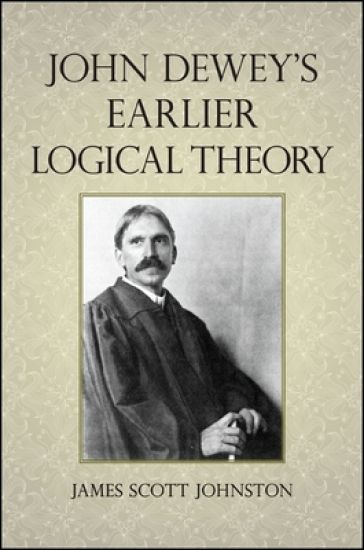
John Dewey's Earlier Logical Theory

John Dewey's Earlier Logical Theory

James Scott Johnston

State University of New York Press
2015
pokkari
Analysis of Dewey's pre-1916 work on logic and its relationship to his better-known 1938 book on the topic. When John Dewey's logical theory is discussed, the focus is invariably on his 1938 book Logic: The Theory of Inquiry. His earlier logical works are seldom referenced except in relation to that later work. As a result, Dewey's earlier logical theory is cut off from his later work, and this later work receives a curiously ahistorical gloss. Examining the earlier works from Studies in Logical Theory to Essays in Experimental Logic, James Scott Johnston provides an unparalleled account of the development of Dewey's thinking in logic, examining various themes and issues Dewey felt relevant to a systematic logical theory. These include the context in which logical theory operates, the ingredients of logical inquiry, the distinctiveness of an instrumentalist logical theory, and the benefit of logical theory to practical concerns-particularly ethics and education. Along the way, and complicating the standard picture of Dewey's logic being indebted to Charles S. Peirce, William James, and Charles Darwin, Johnston argues that Hegel is ultimately a more important influence.
John Dewey's Earlier Logical Theory

John Dewey's Earlier Logical Theory

James Scott Johnston

State University of New York Press
2014
sidottu
Analysis of Dewey's pre-1916 work on logic and its relationship to his better-known 1938 book on the topic. When John Dewey's logical theory is discussed, the focus is invariably on his 1938 book Logic: The Theory of Inquiry. His earlier logical works are seldom referenced except in relation to that later work. As a result, Dewey's earlier logical theory is cut off from his later work, and this later work receives a curiously ahistorical gloss. Examining the earlier works from Studies in Logical Theory to Essays in Experimental Logic, James Scott Johnston provides an unparalleled account of the development of Dewey's thinking in logic, examining various themes and issues Dewey felt relevant to a systematic logical theory. These include the context in which logical theory operates, the ingredients of logical inquiry, the distinctiveness of an instrumentalist logical theory, and the benefit of logical theory to practical concerns-particularly ethics and education. Along the way, and complicating the standard picture of Dewey's logic being indebted to Charles S. Peirce, William James, and Charles Darwin, Johnston argues that Hegel is ultimately a more important influence.
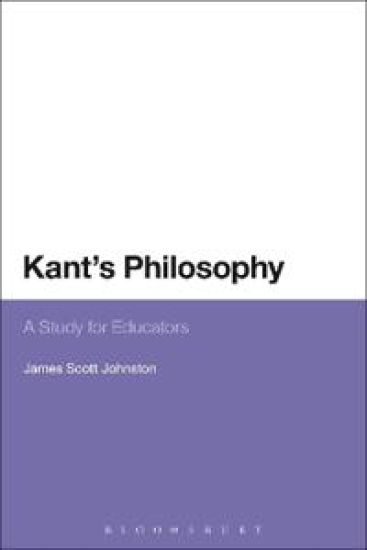
Kant's Philosophy

Kant's Philosophy

James Scott Johnston

Bloomsbury Academic USA
2014
nidottu
James Scott Johnston's incisive study draws on a holistic reading of Kant: one that views him as developing and testing a complete system (theoretical, practical, historical and anthropological) with education as a vital component. As such, the book begins with an extensive overview of Kant's chief theoretical work (the Critique of Pure Reason), and from that overview distils crucial discussions (the role of practical reason; the claims of the third antinomy) for his moral theory. An extended discussion of Kant's moral and political theories and the place of pedagogy in it follow, with attention to all of Kant's important moral works as well as his chief religious work, Religion within the Bounds of Mere Reason. A discussion of culture and character follows, chiefly through a discussion of Kant's Critique of the Power of Judgment and Anthropology from a Pragmatic Standpoint, together with certain lectures and published essays on history and politics. Finally, an extensive discussion of Kant's published works on education, together with only recently published letters and announcements (in English), is provided. This culminates in Johnston's estimation of what a Kantian education, systematically conceived, might look like: an education that is attentive to theoretical, moral, cultural-historical, and pedagogic domains of Kant's thinking.
Kant's Philosophy

Kant's Philosophy

James Scott Johnston

Bloomsbury Academic USA
2013
sidottu
James Scott Johnston's incisive study draws on a holistic reading of Kant: one that views him as developing and testing a complete system (theoretical, practical, historical and anthropological) with education as a vital component. As such, the book begins with an extensive overview of Kant's chief theoretical work (the Critique of Pure Reason), and from that overview distils crucial discussions (the role of practical reason; the claims of the third antinomy) for his moral theory. An extended discussion of Kant's moral and political theories and the place of pedagogy in it follow, with attention to all of Kant's important moral works as well as his chief religious work, Religion within the Bounds of Mere Reason. A discussion of culture and character follows, chiefly through a discussion of Kant's Critique of the Power of Judgment and Anthropology from a Pragmatic Standpoint, together with certain lectures and published essays on history and politics. Finally, an extensive discussion of Kant's published works on education, together with only recently published letters and announcements (in English), is provided. This culminates in Johnston's estimation of what a Kantian education, systematically conceived, might look like: an education that is attentive to theoretical, moral, cultural-historical, and pedagogic domains of Kant's thinking.
Democracy and the Intersection of Religion

Democracy and the Intersection of Religion

Rosa Bruno-Jofré; James Scott Johnston; Gonzalo Jover

McGill-Queen's University Press
2010
sidottu
How are ideas about education and democracy configured and reconfigured as they travel? Democracy and the Intersection of Religion looks at the work of John Dewey, the renowned philosopher, psychologist, and educational reformer, and the ways in which his educational ideas and democratic ideals have been configured and reconfigured, adopted, and interpreted in different historical and cultural spaces.
Democracy and the Intersection of Religion

Democracy and the Intersection of Religion

Rosa Bruno-Jofré; James Scott Johnston; Gonzalo Jover

McGill-Queen's University Press
2010
nidottu
How are ideas about education and democracy configured and reconfigured as they travel? Democracy and the Intersection of Religion looks at the work of John Dewey, the renowned philosopher, psychologist, and educational reformer, and the ways in which his educational ideas and democratic ideals have been configured and reconfigured, adopted, and interpreted in different historical and cultural spaces.