
Kirjojen hintavertailu – 12 859 829 kirjaa ja 27 kauppaa

Kirjailija

James Stavridis

Kirjat ja teokset yhdessä paikassa: 22 kirjaa, julkaisuja vuosilta 2017–2026, suosituimpiin kuuluu Lethal Autonomy. Vertaile teosten hintoja ja tarkista saatavuus suomalaisista kirjakaupoista.

22 kirjaa

Kirjojen julkaisuvuodet: 2017–2026.

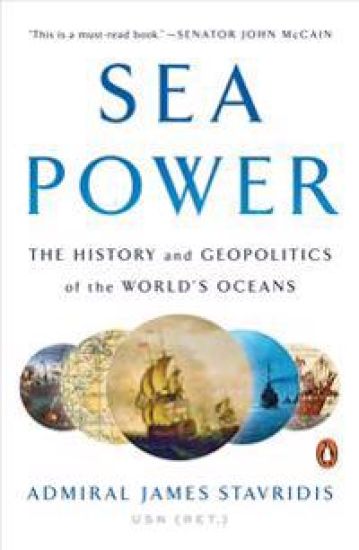
Sea Power: The History and Geopolitics of the World's Oceans

Sea Power: The History and Geopolitics of the World's Oceans

James Stavridis

PENGUIN BOOKS
2018
nidottu

Halvin toimitettuna 21,40 €

From one of the most admired admirals of his generation--and the only admiral to serve as Supreme Allied Commander at NATO--comes a remarkable voyage through all of the world's most important bodies of water, providing the story of naval power as a driver of human history and a crucial element in our current geopolitical path. From the time of the Greeks and the Persians clashing in the Mediterranean, sea power has determined world power. To an extent that is often underappreciated, it still does. No one understands this better than Admiral Jim Stavridis. In Sea Power, Admiral Stavridis takes us with him on a tour of the world's oceans from the admiral's chair, showing us how the geography of the oceans has shaped the destiny of nations, and how naval power has in a real sense made the world we live in today, and will shape the world we live in tomorrow. Not least, Sea Power is marvelous naval history, giving us fresh insight into great naval engagements from the battles of Salamis and Lepanto through to Trafalgar, the Battle of the Atlantic, and submarine conflicts of the Cold War. It is also a keen-eyed reckoning with the likely sites of our next major naval conflicts, particularly the Arctic Ocean, Eastern Mediterranean, and the South China Sea. Finally, Sea Power steps back to take a holistic view of the plagues to our oceans that are best seen that way, from piracy to pollution. When most of us look at a globe, we focus on the shape of the of the seven continents. Admiral Stavridis sees the shapes of the seven seas. After reading Sea Power, you will too. Not since Alfred Thayer Mahan's legendary The Influence of Sea Power upon History have we had such a powerful reckoning with this vital subject.
Nixon's Back Channel to Moscow

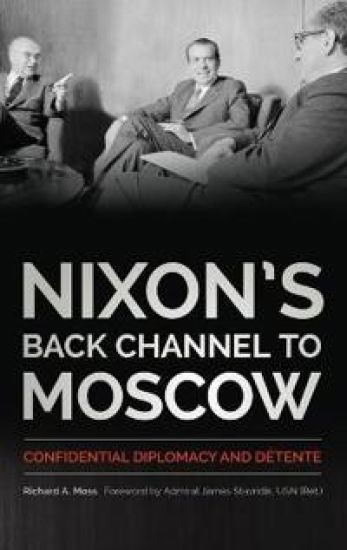
Nixon's Back Channel to Moscow

Richard A. Moss; James Stavridis

The University Press of Kentucky
2017
sidottu
Most Americans consider détente -- the reduction of tensions between the United States and the Soviet Union -- to be among the Nixon administration's most significant foreign policy successes. The diplomatic back channel that national security advisor Henry Kissinger established with Soviet ambassador Anatoly Dobrynin became the most important method of achieving this thaw in the Cold War. Kissinger praised back channels for preventing leaks, streamlining communications, and circumventing what he perceived to be the US State Department's unresponsive and self-interested bureaucracy. Nixon and Kissinger's methods, however, were widely criticized by State Department officials left out of the loop and by an American press and public weary of executive branch prevarication and secrecy. Richard A. Moss's penetrating study documents and analyzes US-Soviet back channels from Nixon's inauguration through what has widely been heralded as the apex of détente, the May 1972 Moscow Summit. He traces the evolution of confidential-channel diplomacy and examines major flashpoints, including the 1970 crisis over Cienfuegos, Cuba, the Strategic Arms Limitations Talks (SALT), US dealings with China, deescalating tensions in Berlin, and the Vietnam War. Moss argues that while the back channels improved US-Soviet relations in the short term, the Nixon-Kissinger methods provided a poor foundation for lasting policy. Employing newly declassified documents, the complete record of the Kissinger-Dobrynin channel -- jointly compiled, translated, annotated, and published by the US State Department and the Russian Foreign Ministry -- as well as the Nixon tapes, Moss reveals the behind-the-scenes deliberations of Nixon, his advisers, and their Soviet counterparts. Although much has been written about détente, this is the first scholarly study that comprehensively assesses the central role of confidential diplomacy in shaping America's foreign policy during this critical era.