Kirjailija
James Taylor
Kirjat ja teokset yhdessä paikassa: 227 kirjaa, julkaisuja vuosilta 1995–2027, suosituimpiin kuuluu James Taylor: Cut Short. Vertaile teosten hintoja ja tarkista saatavuus suomalaisista kirjakaupoista.
227 kirjaa
Kirjojen julkaisuvuodet: 1995–2027.
An integrated, strategic approach to higher-value analytics Leaders and Innovators: How Data-Driven Organizations Are Winning with Analytics shows how businesses leverage enterprise analytics to gain strategic insights for profitability and growth. The key factor is integrated, end-to-end capabilities that encompass data management and analytics from a business and IT perspective; with analytics running inside a database where the data reside, everyday analytical processes become streamlined and more efficient. This book shows you what analytics is, what it can do, and how you can integrate old and new technologies to get more out of your data. Case studies and examples illustrate real-world scenarios in which an optimized analytics system revolutionized an organization's business. Using in-database and in-memory analytics along with Hadoop, you'll be equipped to improve performance while reducing processing time from days or weeks to hours or minutes. This more strategic approach uncovers the opportunities hidden in your data, and the detailed guidance to optimal data management allows you to break through even the biggest data challenges. With data coming in from every angle in a constant stream, there has never been a greater need for proactive and agile strategies to overcome these struggles in a volatile and competitive economy. This book provides clear guidance and an integrated strategy for organizations seeking greater value from their data and becoming leaders and innovators in the industry. Streamline analytics processes and daily tasksIntegrate traditional tools with new and modern technologiesEvolve from tactical to strategic behaviorExplore new analytics methods and applications The depth and breadth of analytics capabilities, technologies, and potential makes it a bottomless well of insight. But too many organizations falter at implementation—too much, not enough, or the right amount in the wrong way all fail to deliver what an optimized and integrated system could. Leaders and Innovators: How Data-Driven Organizations Are Winning with Analytics shows you how to create the system your organization needs to dramatically improve performance, increase profitability, and drive innovation at all levels for the present and future.

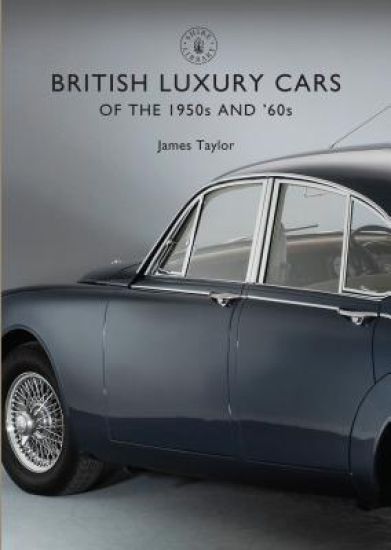
In the 1950s and 1960s, luxury car buyers, from government ministers to captains of industry, almost invariably bought British. These were stately, dignified, and grand vehicles, with many featuring leather interiors and wood trim. Unfortunately, that market has now largely disappeared and, with it, so have the car-makers themselves. This new book covers cars in the over-3-litre class from the biggest names in British luxury motoring including Alvis, Daimler, and Lagonda, and high-end models from Austin, Rover, and Jaguar. It examines the features and characteristics of these classic cars, as well as explaining why they fell from prominence in the 1970s. Replete with beautiful photography throughout, this book is a loving portrait of the British luxury car, a dearly missed saloon defeated by foreign imports.
Paralysis and Other Diseases of the Nervous System in Childhood and Early Life
James Taylor
Palala Press
2016
sidottu
Jaguar Mks 1 and 2, S-Type and 420
James Taylor
The Crowood Press Ltd
2016
sidottu
Halvin toimitettuna 31,00 €
A history of all four generations of compact Jaguar, and their Daimler equivalents, tracing the gradual development of Sir William Lyons' original idea over a period between 1955 and 1969. From the powerful, luxury MK 1 and 2 cars to the 4.2-litre 420, this book covers design, development and styling; special-bodied variants; racing performance; buying and owning a compact Jaguar saloon model and, finally, specifications and production figures.
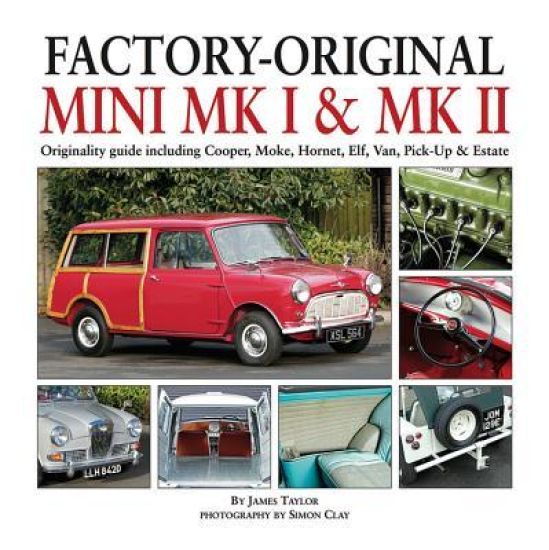
Originality guide including Cooper, Moke Hornet, Elf, van, pick up and estateNo car has had such a profound impact on the motoring scene as the original Mini. Designed in response to petrol shortages in the late 1950s, it was introduced in 1959 in both Austin and Morris guises, with either basic or De Luxe trim levels. Success came swiftly, and before long its makers at BMC were introducing van, pick-up and estate versions, high-performance Mini Coopers and higher equipment levels on the Mini Super. Right through the 1960s, the success story continued, and the original formula proved so right that the updated Mk II models of 1967 were instantly recognisable as versions of the original and much-loved car. These early Minis are as much admired and sought-after today as ever, offering their own unique blend of nimble driving pleasure with readily affordable running costs. They are also increasingly the subject of detailed, part-number-perfect restorations, and this book is designed to help all those who aim to restore one of these early British-built Minis to their correct specification. Within these pages, respected classic car historian James Taylor gives each major model of Mini its own section. These sections provide full details of specifications and examine individual areas of each model in depth. They are backed up by colour photography of outstanding examples that illustrate the way these cars looked when they were new. Body panels, external trim and badging, paint colours, interior trim, dashboard, instruments and controls, under-bonnet components, engine and transmission, lights - all this and more is comprehensively covered for both Mk I and Mk II Minis. For rapid reference to vital information, this formula has proved to be the most useful one for restorers. With more than 300 specially commissioned colour photographs, Factory-Original Mini will delight and enthral the restorer and the more casual Mini enthusiast alike.
The Battle of Britain, 1940, was one of the most famous air battles in the history of warfare and it is a story of ruthless organisation, brilliant control and command. But at its heart is one particular figure, a legend ever since - the RAF fighter pilot. And one particular plane - a piece of machinery that has almost mythic historical glamour - the Supermarine Spitfire. Spitfire Ace reintroduces the few that flew in the Battle of Britain and includes interviews with many of the surviving veteran Spitfire pilots. Combined with a historical narrative of the events surrounding the Battle of Britain, you will learn for the first time what it was really like to fly a Spitfire and to experience combat flying at its most visceral. Fully illustrated with 16 pages of photographs and contemporary archive material, Spitfire Ace provides a vivid portrait of the fighter boys and their finest hour, their planes (including Spitfires, Hurricanes and Messerchmitts) and Fighter Command - RAF versus the Luftwaffe.
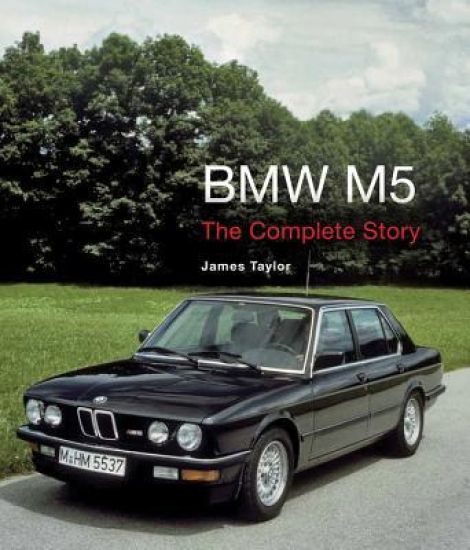
BMW's M5 was a simple concept: a production 5 Series saloon re-developed for high performance by the Motorsport division. The M5 was the car that really initiated the legend of the M-cars from BMW. The letter M has been applied to a high-performance BMW as early as 1978, but that year's M1 was an exotic supercar. It had the right image, but the M1 was never going to bring in major profits. The M5 was much simpler in concept. It was and remains a production 5 Series saloon, redeveloped for ultra-high performance. Manufacturing costs were minimized, allowing BMW to price the car more attractively and still bring in healthy profits. This new book charts the development of the M5 across five generations. For all fans of the BMW M5, this book provides essential background. It is packed with the facts and details that make the M5 legend come alive.
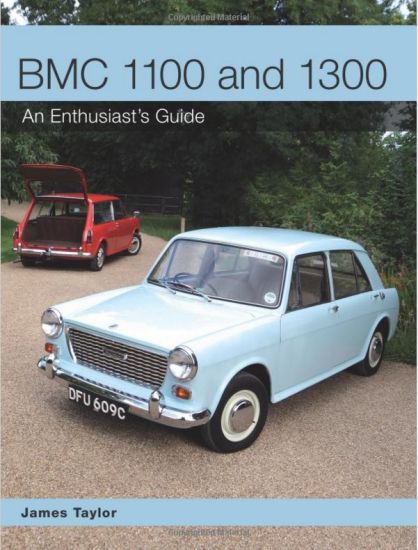
The British Motor Corporation's 1100 and 1300 model range was amongst the most successful in the Corporation's history, selling more than 2.1 million of all types between its introduction in 1962 and its demise in 1974. World-wide, it was sold under eight different marque names and in two-door saloon, four-door saloon, two-door estate, and five-door hatchback forms - and very nearly as a van as well. In Britain, it was the country's best-selling car between 1962 and 1971, being beaten just once (in 1967) by the Ford Cortina. BMC 1100 and 1300 looks at the design and development of a model range that at the time confirmed BMC as a pioneer of new automotive ideas and had a profound impact on other manufacturers. It covers not only the full standard model range, but special conversions, cars built abroad, and owning and running the cars today.
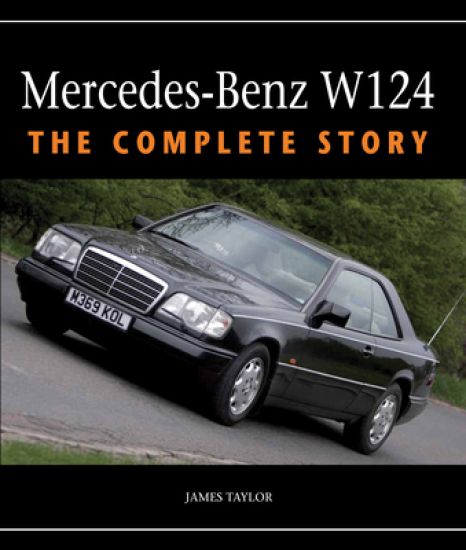
Designed by Mercedes's head of design Bruno Sacco, the W124 range immediately became the benchmark by which medium-sized car models were judged in the late 1980s due to its engineering excellence and high build quality. There was a model to suit every would-be-buyer, from the taxi driver through the family motorist and on to those who were willing and able to pay for luxury and performance. This book covers: design, development and manufacture of all models of W124 including estates, cabriolets and the stylish coupe range; engines and performance; special editions and AMG models and, finally, buying and owning a W124 today.
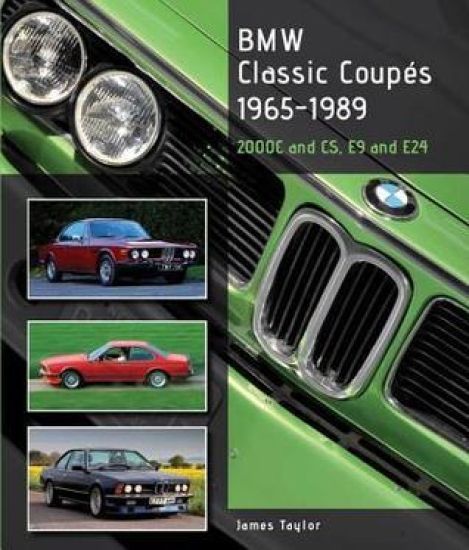
A definitive guide to BMW's high-performance classic coupes, tracking their rising success from 1965 to 1989. After the doldrums of the post-war years, BMW had felt the need for a flagship grand touring coupe. The 507 of the late 1950s and the 3200 CS that replaced it in the early 1960s may not have made much money for the company, but they were a reminder of its aspirations. Then in 1964, a striking new coupe emerged from the building blocks of the latest saloon car range. The 2000 and 2000 CS, with their feisty 2-litre 4-cylinder engines, were the affordable foundation on which BMW was able to build its next generation of coupes - and what formidable machines those were! This definitive guide covers BMW's high-performance classic coupes, tracking their rising success from 1965 to 1989 and includes full specification guides, production histories and original photography. Topics covered include: BMW's hand-built coupes of the 1950s and the first volume-built models; the mainstream E9 range, with new engines and revised front-end styling; racing success for the 'Batmobile' CSLs, including six wins at the European Touring Car Championship from 1973 to 1979; engineering and development of the luxury E24 range, and finally tuned and modified coupes, including the rare custom convertibles.
The MicroGuide to Process and Decision Modeling in BPMN/DMN: Building More Effective Processes by Integrating Process Modeling with Decision Modeling
James Taylor
Createspace Independent Publishing Platform
2014
nidottu
The most complete and integrated coverage of BPMN 2.0 and DMN, including authoritative frameworks for integrating decision and process modeling. In this third edition of the successful Microguide to BPMN, James Taylor joins Tom Debevoise to create an integrated guide to process and decision modeling in BPMN/DMN. Starting with the basics and progressing to a comprehensive framework for modeling decision-responsive processes, the Microguide uses simple language aided with concrete use cases and scenarios to teach the user how to properly use these powerful notations. Business process management helps organizations achieve many of their operational goals and deliver on their business models. It creates visibility, allowing fine-grained monitoring and control of day to day operations. Creating process models in BPMN is a critical aspect of BPM, helping discover, optimize, execute and manage an organization's business processes. Many organizations use decision management to improve process outcomes by focusing on the way decisions are made within and across those processes. With the addition of the Decision Model and Notation standard, DMN, organizations now have a rigorous way to graphically model decisions. Moreover, DMN decision models can be combined with BPMN process models for unparalleled synergy. Covering important topics related to business process and decision modeling: the Microguide is the only authoritative book that addresses these topics and more. The Book covers: -Quick guides to OMG's BPMN 2.0 and DMN 1.0 notation -Common Patterns based on proven design -Decision modeling patterns -Event processing patterns -Most comprehensive framework for integrating decision, event and process modeling -Process and decision discovery through effective requirements gathering techniques Quotations: George Barlow Executive Vice President, AgilePoint Software: "With this third edition Tom and his coauthor James Taylor bring a new, much needed and appreciated additional perspective to process discovery and design - that of decision modeling. If you want a practical guide with excellent examples of how to use the standard modeling notation for BPM and to learn the importance of modeling decision rules and techniques for doing that," James Sinur: "Net; Net: This book will stand the test of time in that it will be germane to most process"
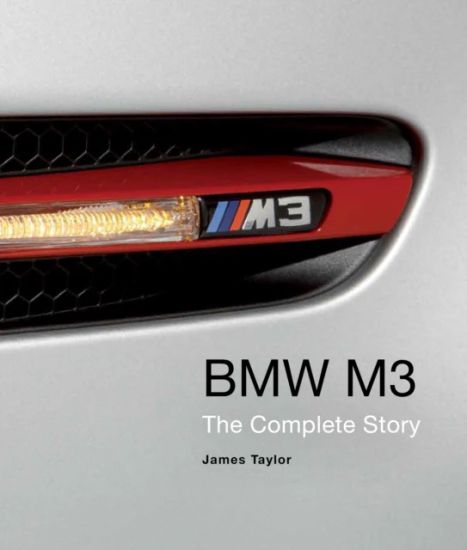
Few cars in recent years have inspired such devotion among enthusiasts as the BMW M3. Now entering its fifth generation, BMW's compact performance car is recognized world-wide as the benchmark of its type. BMW M3 - The Complete Story looks in detail at the first four generations of the M3, which arrived in the mid-1980s as an E30 'homologation special', intended to keep BMW ahead of rivals Mercedes-Benz on the racetracks. But the M3 soon became very much more than that. Before long, buyers latched onto is exclusivity and turned it into a status symbol - and BMW was only too happy to exploit that. For all fans of the BMW M3, this book provides essential background. It is packed with facts and details that make the M3 legend come alive.
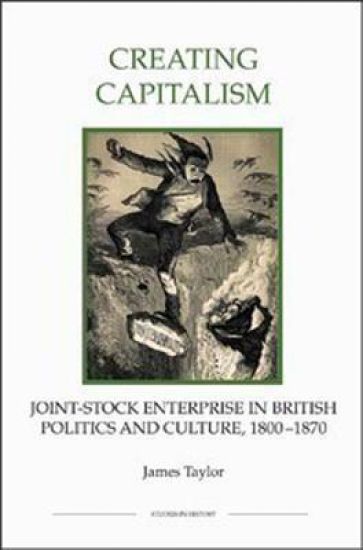
The growth of joint-stock business in Victorian Britain re-evaluated, showing in particular the resistance to it. Winner of the Economic History Society's Best First Monograph award 2009 The emergence of the joint-stock company in nineteenth-century Britain was a culture shock for many Victorians. Though the home of the industrialrevolution, the nation's economy was dominated by the private partnership, seen as the most efficient as well as the most ethical form of business organisation. The large, impersonal company and the rampant speculation it was thought to encourage were viewed with suspicion and downright hostility. This book argues that the existing historiography understates society's resistance to joint-stock enterprise; it employs an eclectic range of sources, fromnewspapers and parliamentary papers to cartoons, novels and plays, to unearth this forgotten economic debate. It explores how the legal system was gradually restructured to facilitate joint-stock enterprise, a process culminatingin the limited liability legislation of the mid-1850s. This has typically been interpreted as evidence for the emergence of new, positive attitudes to speculation and economic growth, but the book demonstrates how traditional outlooks continued to influence legislation, and the way in which economic reforms were driven by political agendas. It shows how debates on the economic culture of nineteenth-century Britain are strikingly relevant to current questions over the ethics of multinational corporations. James Taylor is Senior Lecturer in British History at Lancaster University.
E-type Jaguar; Triumph Spitfire; MGA; Austin-Healey – nobody built sports cars like British manufacturers in the 1950s and ’60s. There was something very special about the combination of low-slung open two-seater bodywork and spartan interior, a slick sporting gearchange and a throaty exhaust note. This was wind-in-the-hair motoring, and it was affordable by the average young man – at least, until he got married and had a family. MG and Triumph stood out as the market leaders, but many other c companies thrived, from luxury manufacturers like Jaguar and even daimler to other more affordable marques. This colourfully illustrated history tells the exciting story of the British sports car in the 1950s and ’60s.
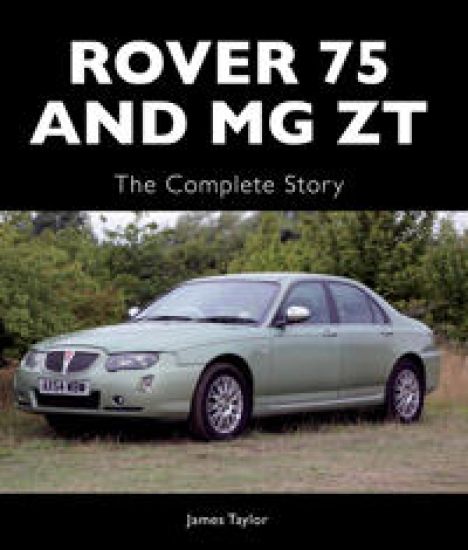
From the moment of its launch in 1998, the Rover 75 caught the public's imagination. Here, at last, was a car that felt like traditional Rovers and had been designed in Britain. Rover 75 and MG ZT charts the evolution of the models from the early 1990 onwards including full production histories and comprehensive specification details. Topics covered include: the development and production of the Rover 75 under BMW in the 1990s; becoming the MG Rover Group - from BMW to Phoenix Venture Holdings; the MG models of the new millennium - the ZT and ZT-T; the Monogram 75, the five-millionth Rover and finally, moving production to China and the end of the MG Rover Group.