Kirjojen hintavertailu – 12 903 725 kirjaa ja 27 kauppaa
Kirjailija
James Thomas
Kirjat ja teokset yhdessä paikassa: 55 kirjaa, julkaisuja vuosilta 1991–2026, suosituimpiin kuuluu The Pig Who Couldn't Quite Oink!. Vertaile teosten hintoja ja tarkista saatavuus suomalaisista kirjakaupoista.
Temple of DagonA notorious treasure-hunter seeks brave adventurers to assist him in acquiring valuables from a recently discovered ruined temple in the middle of the sea. The ancients of Atrotiri were said to have incredible knowledge, power, artifacts, magic, and more ... before the sea swallowed their civilization. It was said they made pacts with evil beings and reaped tremendous rewards, now lost to history. Can your heroes retrieve the lost treasures - or will they and their belongings add to a future archaeologist's find?
Redemption comes to those who may refuse to accept the hand you are dealt as a child. I refused to accept and carry all the bad things that were in my life as child. It took about forty years of standing on the promises of God. Even though I was not perfect, he came through. My past speaks loudly to people that a person can overcome. This is my redemption story, and Jesus has stuck closer than any brother. I have learned that God will use a rejected piece of stone to help strengthen his kingdom. Today people that see me and know me would not have a clue as to what I came out of through Jesus Christ. These redemptive years have rewarded us with a lot joy in our hearts that is beyond words although we gave it a chance through this writing about Sweet Redemption.
Redemption comes to those who may refuse to accept the hand you are dealt as a child. I refused to accept and carry all the bad things that were in my life as child. It took about forty years of standing on the promises of God. Even though I was not perfect, he came through. My past speaks loudly to people that a person can overcome. This is my redemption story, and Jesus has stuck closer than any brother. I have learned that God will use a rejected piece of stone to help strengthen his kingdom. Today people that see me and know me would not have a clue as to what I came out of through Jesus Christ. These redemptive years have rewarded us with a lot joy in our hearts that is beyond words although we gave it a chance through this writing about Sweet Redemption.
Published in 1999, this study focuses on the work of absolute idealist readers of Spinoza's metaphysics, such as John Clark Murray and Leslie Armour. The text is intended to establish a better absolute idealist interpretation of the identity of Spinoza's one substance (reality) with each of its diversity of "attributes". Consideration is given to the interpretations developed by these earlier commentators, who read the attributes as one metaphysical being diversely interpreted. The author finds this disadvantageous in understanding the "parallelism" of the attributes, or Spinoza's doctrine that the same order and connection of things is found in each. This problem can be solved with an alternative absolute idealist reading of the attributes as one order diversely intuited.
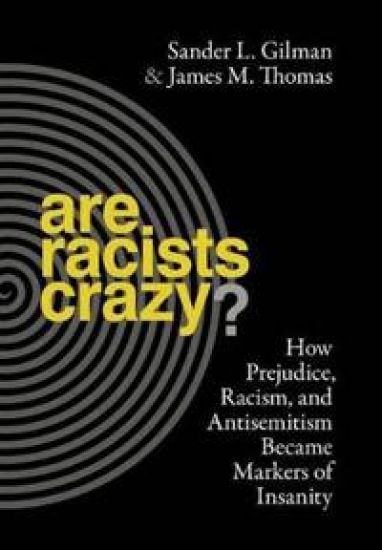
The connection and science behind race, racism, and mental illness In 2012, an interdisciplinary team of scientists at the University of Oxford reported that - based on their clinical experiment - the beta-blocker drug, Propranolol, could reduce implicit racial bias among its users. Shortly after the experiment, an article in Time Magazine cited the study, posing the question: Is racism becoming a mental illness? In Are Racists Crazy? Sander Gilman and James Thomas trace the idea of race and racism as psychopathological categories., from mid-19th century Europe, to contemporary America, up to the aforementioned clinical experiment at the University of Oxford, and ask a slightly different question than that posed by Time: How did racism become a mental illness? Using historical, archival, and content analysis, the authors provide a rich account of how the 19th century 'Sciences of Man' - including anthropology, medicine, and biology - used race as a means of defining psychopathology and how assertions about race and madness became embedded within disciplines that deal with mental health and illness. An illuminating and riveting history of the discourse on racism, antisemitism, and psychopathology, Are Racists Crazy? connects past and present claims about race and racism, showing the dangerous implications of this specious line of thought for today.
Published in 1999, this study focuses on the work of absolute idealist readers of Spinoza's metaphysics, such as John Clark Murray and Leslie Armour. The text is intended to establish a better absolute idealist interpretation of the identity of Spinoza's one substance (reality) with each of its diversity of "attributes". Consideration is given to the interpretations developed by these earlier commentators, who read the attributes as one metaphysical being diversely interpreted. The author finds this disadvantageous in understanding the "parallelism" of the attributes, or Spinoza's doctrine that the same order and connection of things is found in each. This problem can be solved with an alternative absolute idealist reading of the attributes as one order diversely intuited.
There is an easy way to get out of boredom, depression, frustration, anger, stress, etc. negative feelings. Just do something creative and share it with friends and foe in Twitter, Facebook, LinkedIn, etc. avenues. You will get some appreciation and little bit of criticism, all negative energy around you will be replaced by creative positive energy. Here are 25 "Doctor Who" scenes to help you spread your creative wings. Color them as you like, then show it to your near and dear ones. They will most likely appreciate your creative art. It will de-stress you, you will forget about your worries and failures for few hours.
The connection and science behind race, racism, and mental illness In 2012, an interdisciplinary team of scientists at the University of Oxford reported that - based on their clinical experiment - the beta-blocker drug, Propranolol, could reduce implicit racial bias among its users. Shortly after the experiment, an article in Time Magazine cited the study, posing the question: Is racism becoming a mental illness? In Are Racists Crazy? Sander Gilman and James Thomas trace the idea of race and racism as psychopathological categories., from mid-19th century Europe, to contemporary America, up to the aforementioned clinical experiment at the University of Oxford, and ask a slightly different question than that posed by Time: How did racism become a mental illness? Using historical, archival, and content analysis, the authors provide a rich account of how the 19th century 'Sciences of Man' - including anthropology, medicine, and biology - used race as a means of defining psychopathology and how assertions about race and madness became embedded within disciplines that deal with mental health and illness. An illuminating and riveting history of the discourse on racism, antisemitism, and psychopathology, Are Racists Crazy? connects past and present claims about race and racism, showing the dangerous implications of this specious line of thought for today.
A Director's Guide to Stanislavsky's Active Analysis describes Active Analysis, the innovative rehearsal method Stanislavsky formulated in his final years. By uniting ‘mental analysis’ and ‘études’, Active Analysis puts an end to the problem of mind-body dualism and formalized text memorization that traditional rehearsal methods foster. The book describes Active Analysis both practically and conceptually; Part One guides the reader through the entire process of Active Analysis, using A Midsummer Night’s Dream as a practical reference point. The inspiration here is the work of the Russian director Anatoly Efros, whose pioneering work led the way for a reawakening of theatre in post-Soviet Russia. Part Two is the first English translation of Maria Knebel’s foundational article about Active Analysis. Knebel was hand-selected by Stanislavsky to carry his final work forward in unadulterated form for succeeding generations of directors and actors. A Director's Guide to Stanislavsky's Active Analysis provides the first detailed explanation of Active Analysis from the director’s perspective, while also meeting the needs of actors who seek to enhance their creative involvement in the process of play production.
A Director's Guide to Stanislavsky's Active Analysis describes Active Analysis, the innovative rehearsal method Stanislavsky formulated in his final years. By uniting ‘mental analysis’ and ‘études’, Active Analysis puts an end to the problem of mind-body dualism and formalized text memorization that traditional rehearsal methods foster. The book describes Active Analysis both practically and conceptually; Part One guides the reader through the entire process of Active Analysis, using A Midsummer Night’s Dream as a practical reference point. The inspiration here is the work of the Russian director Anatoly Efros, whose pioneering work led the way for a reawakening of theatre in post-Soviet Russia. Part Two is the first English translation of Maria Knebel’s foundational article about Active Analysis. Knebel was hand-selected by Stanislavsky to carry his final work forward in unadulterated form for succeeding generations of directors and actors. A Director's Guide to Stanislavsky's Active Analysis provides the first detailed explanation of Active Analysis from the director’s perspective, while also meeting the needs of actors who seek to enhance their creative involvement in the process of play production.
SECOND EDITION UPDATED APRIL 2017. Sketch Engine is an online corpus resource used by students, teachers and language professionals in many parts of the world. The book, "Discovering English with Sketch Engine," is intended primarily for students and teachers of English as a foreign language. As the reader undertakes hundreds of guided discovery tasks, many aspects of language and linguistics are taught and experienced. In the process, the reader acquires the practical skills of working with corpus software, and processing and interpreting the data that searches return. This book takes its readers on a voyage of guided discovery that ultimately equips them with the knowledge and skills to formulate, ask and solve language queries about morphology, vocabulary, grammar, discourse, pragmatics and stylistics. This is a skill for life.
'IT'S THE SUN WOT WON IT', was the famous headline claim of Britain's most popular newspaper following the Conservative party's victory over Labour in the 1992 general election. The headline referred to a virulent press campaign against Neil Kinnock's Labour party, and dramatically highlighted one of the chief features of British politics during the twentieth century - the conflict between a socialist Labour party and a capitalist popular press. Labour's frequent complaints of the political and electoral unfairness of newspaper bias meant that some commentators considered that this dispute had a heritage as old as the party itself. Others, including the Labour leadership at the time, argued that despite past tensions, the 1992 election marked the culmination of an unprecedented campaign of vilification against the party. Popular Newspapers, the Labour Party and British Politics assesses these competing claims, looking not only at 1992 but both back and forward to examine the continuities and changes in newspaper coverage of British politics and the Labour party over the twentieth century. The book explores whether the popular press has lived up to its claim of being a democratic 'fourth estate', or has merely, as Labour politicians have argued been a powerful 'fifth column' distorting the democratic process. Drawing on a range of previously unexamined sources this book offers the first original and comprehensive history of a fascinating aspect of British politics from Beaverbrook to Blair. James Thomas is a lecturer at the Cardiff School of Journalism, Media and Cultural Studies at Cardiff University, and has published articles and esays exploring the relationship between the popular press and British politics.
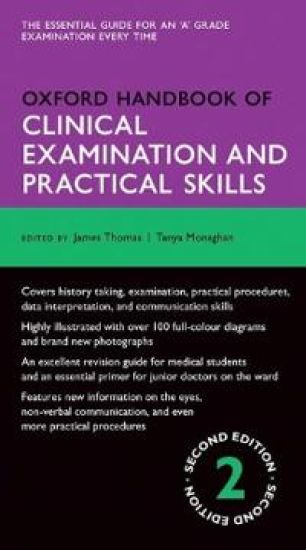
Fully updated and revised for its second edition, the Oxford Handbook of Clinical Examination and Practical Skills is the only truly comprehensive pocket guide to all aspects of history taking, physical examination, practical procedures, data interpretation, and communication skills. Packed with expert knowledge and practical guidance it gives realistic advice on coping with common situations. The handbook is structured to allow rapid reference of key information, and to aid understanding with concise and practical clinical guidance. Full colour throughout, it includes over 140 detailed photographs and diagrams of all common examination skills to show you exactly what you need to do and the theory, practice and complications for each. More photos have been included, with over half completely new and specially produced for this edition. Each system chapter covers applied anatomy, history, examination, and the presentation of common and important disorders. Data interpretation covers the basics of x-rays, ECGs and other key areas. A new chapter on the eyes is included along with the sections on body language and non-verbal communication, and the section on practical procedures has been expanded. This handbook will help to ensure you have the confidence and skill to carry out an 'A' grade examination every time.
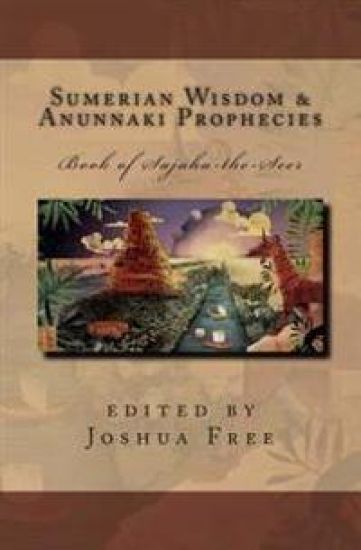
At the dawn of a new era, a new age -- a new "Babylon" -- secret knowledge and wisdom of the greatest empire in history, originally guarded and hidden by the most progressive ruler of western civilization -- Nebuchadnezzar II -- now stands open to all, freshly recovered and translated from the deserts of Middle East... unearthed beyond time and space from ancient Mesopotamia The tablet collection known as the "Sajaha Series" first relayed to the public in 1991 is in the German language: "Das Buch der Sajaha: Neunzehn Schriftsatze der Babylonianischer Sehek," would have appeared as "The Book of Sajaha - Nineteen Writings of the Babylonian Seer"-had it ever been produced in English. More recently Max Cold Champion& Aldo Espinosa released another edition in 2009, again in German, titled: "Sajaha: Die Prophezeiungen fur ein Newes Zeitalter Babylon, Nebukadnezar und der Dritte Sargon." "Sajaha: Prophecies of a New Age of Babylon, Nebuchadnezzar and the Third Sargon."]The public release of The Book of Sajaha-the-Seer (Liber S) marks a new phase in the Mardukite work-featuring the prophecies, visions and advisement of a great Babylonian seer, Sajaha: accounts of a future rise of New Babylon from her point of view. Commentary, new translations and the original German transliteration manuscript are included within this concise volume of 'Sumerian Wisdom & Anunnaki Prophecies: The Book of Sajaha-the-Seer: Babylonian Cuneiform Wisdom Tablet Series of King Nebuchadnezzar II & Prophetic Visions for a New Babylon Rising' edited by Joshua Free. As you reflect upon the lines of this tablet series, the prophecies and visions most surely conjure vivid imagery to mind, not to mention what the intended audience for them would have been thinking-for they were once the private possession of the Babylonian king of Sajaha's time, King Nebuchadnezzar II, a supporter of a progressive fruitful and benevolent pro-Mardukite era of Babylonian Renaissance for nearly half of a century EDITION NOTE: Mardukite-English translation developed by the Mardukite Chamberlains as an unpublished companion to Book of Marduk by Nabu as derived from the German text. An original publication developed by the Mardukite Truth Seeker Press in conjunction with the Mardukite Research Organization Mardukite Chamberlains] & with a grant from NexGenSys NexGen Systemological Society]MRO Archive# Cycle 5 (2013) Chamberlains Catalogue Designation: Liber-S - Year-5]
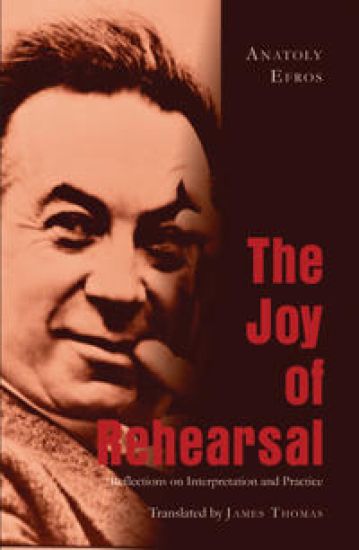
Anatoly Efros (1925-1987), one of the most admired and original directors of post-war Russia, directed at the Central Children’s Theatre, Malaya Bronnaya Theatre, Lenkom Theatre, Moscow Art Theatre, and Taganka Theatre, and elsewhere including the Guthrie Theatre in Minneapolis and the Toen Theatre in Tokyo. He taught directing at the State Institute for Theatre Training and wrote several influential books. His productions received numerous awards for creative excellence. In The Joy of Rehearsal, his best-known work, Efros illuminates the dynamics of the director’s creative work. He discusses the process of considering future plays, rehearsing them, and evaluating the results. Devoted to the principles of Konstantin Stanislavsky and Michael Chekhov, and inspired by the ideas of Bertolt Brecht, Efros also considers the practice of rehearsals and other features central to professional creative work. His productions of Shakespeare, Moliere, Chekhov and other classics were major events for those who looked to the theatre for social significance as well as aesthetic experience. Theatre students and professionals will benefit from the insights gained as Efros writes about his unique vision for the modern theatre.