Kirjojen hintavertailu – 12 859 829 kirjaa ja 27 kauppaa

Kirjailija

James Thompson

Kirjat ja teokset yhdessä paikassa: 70 kirjaa, julkaisuja vuosilta 1984–2026, suosituimpiin kuuluu The Experience of Illness. Vertaile teosten hintoja ja tarkista saatavuus suomalaisista kirjakaupoista.

70 kirjaa

Kirjojen julkaisuvuodet: 1984–2026.

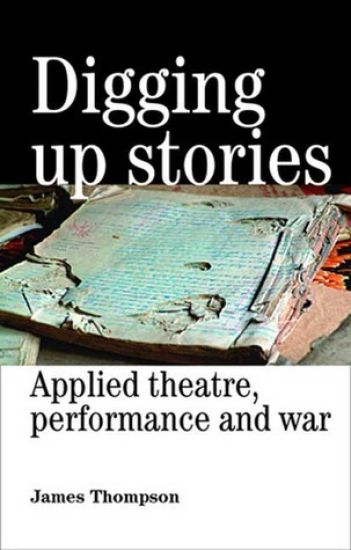
Digging Up Stories

Digging Up Stories

James Thompson

Manchester University Press
2006
nidottu
In 'Digging up stories', James Thompson explores the problems of theatre practice in communities affected by war and exclusion. Each chapter or 'story' is written in a lively and accessible style and draws on a range of contemporary performance theories. The chapters discuss: - participatory theatre in refugee camps - theatre workshop and stories of a massacre - traditional dance-dramas in an insurgent controlled village - 'Forum' theatre with the Mahabharata - ethical issues - the struggle to teach the author to dance'Digging up stories' documents a range of theatre practice and includes project reports, ethnographic accounts, performance analysis and diary-style reflection. Taken from Thompson's research and practice in Sri Lanka, these diverse examples question the link between applied theatre, traditional performance and performances in everyday life. The book blurs lines between research and travel writing to create rich and provocative accounts of applying theatre in a troubled setting.

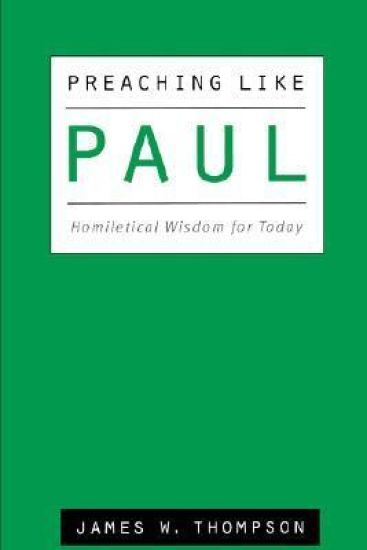
Preaching Like Paul

Preaching Like Paul

James Thompson

Westminster/John Knox Press,U.S.
2000
pokkari
In contrast with the widely popular interest in narrative styles, Professor Thompson believes Paul's letters offer a different and valid model for preaching today. He clearly demonstrates how the manner of preaching used in the pre-Christian culture of Paul is both appropriate and effective in our contemporary post-Christian culture. Unlike most books on preaching, this book does not focus on homiletic technique, but on the goal of preaching - a needed missing component in contemporary homiletic discussion.
Drama Workshops for Anger Management and Offending Behaviour

Drama Workshops for Anger Management and Offending Behaviour

James Thompson

Jessica Kingsley Publishers
1999
pokkari
The Blagg! and Pump! drama workshops combine dynamic drama techniques to explore issues of anger management and offending behaviour. They can be easily adapted to suit the particular needs or backgrounds of a variety of groups, from probationers and prisoners to 'at risk' youth. Both are appropriate for use with groups with behavioural problems, such as offending, aggressiveness or violence. Blagg! examines consequences of actions, the victim's perspective, effects on family members, and strategies for avoiding trouble in the future. Pump! adopts the learning aims of anger management to focus on triggers, self-awareness, coping strategies and consequences. James Thompson presents both of these drama programmes within their historical and theoretical contexts. Each programme consists of a course of dramatic exercises which are sufficiently flexible to accommodate restrictions imposed by time, space or numbers.
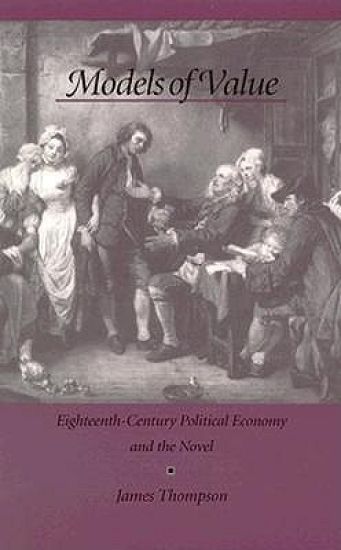
Models of Value

Models of Value

James Thompson

Duke University Press
1996
pokkari
James Thompson examines the concept of value as it came to be understood in eighteenth-century England through two emerging and divergent discourses: political economy and the novel. By looking at the relationship between these two developing forms-one having to do with finance, the other with romance-Thompson demonstrates how value came to have such different meaning in different realms of experience. A highly original rethinking of the origins of the English novel, Models of Value shows the novel’s importance in remapping English culture according to the separate spheres of public and domestic life, men’s and women’s concerns, money and emotion. In this account, political economy and the novel clearly arise as solutions to a crisis in the notion of value. Exploring the ways in which these different genres responded to the crisis-political economy by reconceptualizing wealth as capital, and the novel by refiguring intrinsic or human worth in the form of courtship narratives-Thompson rereads several literary works, including Defoe’s Roxana, Fielding’s Tom Jones, and Burney’s Cecilia, along with influential contemporary economic texts. Models of Value also traces the discursive consequences of this bifurcation of value, and reveals how history and theory participate in the very novelistic and economic processes they describe. In doing so, the book bridges the opposition between the interests of Marxism and feminism, and the distinctions which, newly made in the eighteenth century, continue to inform our discourse today. An important reformulation of the literary and cultural production of the eighteenth century, Models of Value will attract students of the novel, political economy, and of literary history and theory.
Models of Value

Models of Value

James Thompson

Duke University Press
1996
sidottu
James Thompson examines the concept of value as it came to be understood in eighteenth-century England through two emerging and divergent discourses: political economy and the novel. By looking at the relationship between these two developing forms-one having to do with finance, the other with romance-Thompson demonstrates how value came to have such different meaning in different realms of experience. A highly original rethinking of the origins of the English novel, Models of Value shows the novel’s importance in remapping English culture according to the separate spheres of public and domestic life, men’s and women’s concerns, money and emotion. In this account, political economy and the novel clearly arise as solutions to a crisis in the notion of value. Exploring the ways in which these different genres responded to the crisis-political economy by reconceptualizing wealth as capital, and the novel by refiguring intrinsic or human worth in the form of courtship narratives-Thompson rereads several literary works, including Defoe’s Roxana, Fielding’s Tom Jones, and Burney’s Cecilia, along with influential contemporary economic texts. Models of Value also traces the discursive consequences of this bifurcation of value, and reveals how history and theory participate in the very novelistic and economic processes they describe. In doing so, the book bridges the opposition between the interests of Marxism and feminism, and the distinctions which, newly made in the eighteenth century, continue to inform our discourse today. An important reformulation of the literary and cultural production of the eighteenth century, Models of Value will attract students of the novel, political economy, and of literary history and theory.