Kirjojen hintavertailu – 12 903 725 kirjaa ja 27 kauppaa

Kirjailija

James Tilley

Kirjat ja teokset yhdessä paikassa: 3 kirjaa, julkaisuja vuosilta 2014–2026, suosituimpiin kuuluu Blaming Europe?. Vertaile teosten hintoja ja tarkista saatavuus suomalaisista kirjakaupoista.

3 kirjaa

Kirjojen julkaisuvuodet: 2014–2026.

Blaming Europe?

Blaming Europe?

Sara B. Hobolt; James Tilley

Oxford University Press
2014
sidottu
A key component of democratic accountability is that citizens understand 'who is to blame'. Nonetheless, little is known about how citizens attribute responsibility in the European Union or how those perceptions of responsibility matter. This book presents the first comprehensive account of how citizens assign blame to the EU, how politicians and the media attempt to shift blame and finally, how it matters for electoral democracy. Based on rich and unique data sources, Blaming Europe? sheds light on all three aspects of responsibility in the EU. First, it shows that while institutional differences between countries shape citizen judgements of EU responsibility, those judgements are also highly determined by pre-existing attitudes towards the EU. Second, it demonstrates that neither politicians nor the media assign much blame to the EU. Third, it establishes that regardless of whether voters are capable of accurately assigning responsibility, they are not able to hold their EU representatives to account via the ballot box in European elections due to the lack of an identifiable 'European government' to reward or punish. As a consequence, when citizens hold the EU responsible for poor performance, but are unable to sanction an EU incumbent, they lose trust in the EU as a whole instead. In conclusion, it argues that this 'accountability deficit' has significant implications for the future of the European Union.
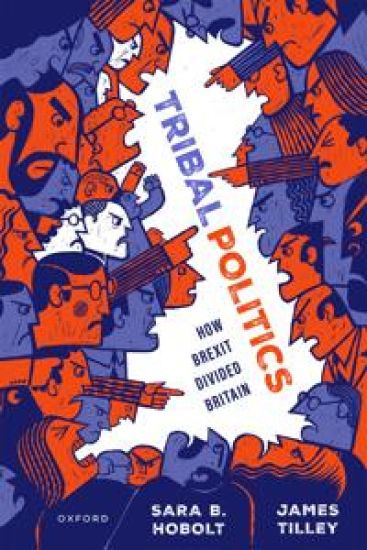
Tribal Politics

Tribal Politics

Sara B. Hobolt; James Tilley

Oxford University Press
2026
sidottu
The Brexit referendum was a pivotal moment in British politics. Tribal Politics argues this is not only because it led to the UK's departure from the European Union, but because it created two new, powerful, and enduring political identities in the UK: Leavers and Remainers. These new identities rapidly became central to how people saw themselves, others, and the world around them, and they continue to underpin British politics. Tribal Politics explores how these identities emerged and why they have proved so resilient in the years since the 2016 vote. It does so by considering the Brexit divide as the result of three contingent factors: issue contestation (intense, high-stakes public conflict), issue expression (individual commitment through voting and political engagement), and issue alignment (the way Brexit cut across traditional party lines). This context transformed a policy question to which most people were largely indifferent into a deep-seated identity divide. Drawing on political psychology and a wide range of original evidence - including surveys, experiments, and analysis of political discourse - Sara B. Hobolt and James Tilley examine the far-reaching consequences of tribal politics for political attitudes and choices. They consider the impact on how we respond to and treat those in another tribe as well as on the way our views of reality, our policy opinions, and even our perceptions of democratic legitimacy to fit our tribal loyalties. While grounded in the Brexit experience, Tribal Politics speaks to the origins, and consequences, of all types of identity-driven affective polarization. As many democracies around the world confront deepening political divides, it offers timely insights into how one political moment can spark lasting tribalism and why those tribes so often survive long after that moment has passed.
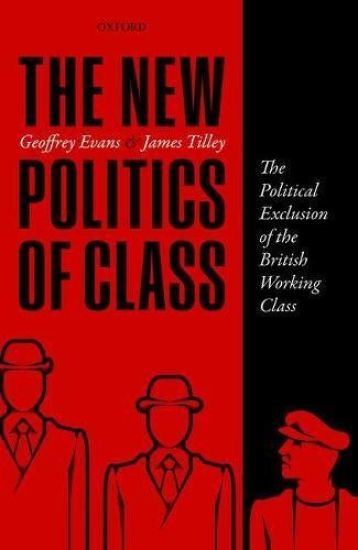
The New Politics of Class

The New Politics of Class

Geoffrey Evans; James Tilley

Oxford University Press
2017
sidottu
This book explores the new politics of class in 21st century Britain. It shows how the changing shape of the class structure since 1945 has led political parties to change, which has both reduced class voting and increased class non-voting. This argument is developed in three stages. The first is to show that there has been enormous social continuity in class divisions. The authors demonstrate this using extensive evidence on class and educational inequality, perceptions of inequality, identity and awareness, and political attitudes over more than fifty years. The second stage is to show that there has been enormous political change in response to changing class sizes. Party policies, politicians' rhetoric, and the social composition of political elites have radically altered. Parties offer similar policies, appeal less to specific classes, and are populated by people from more similar backgrounds. Simultaneously the mass media have stopped talking about the politics of class. The third stage is to show that these political changes have had three major consequences. First, as Labour and the Conservatives became more similar, class differences in party preferences disappeared. Second, new parties, most notably UKIP, have taken working class voters from the mainstream parties. Third, and most importantly, the lack of choice offered by the mainstream parties has led to a huge increase in class-based abstention from voting. Working class people have become much less likely to vote. In that sense, Britain appears to have followed the US down a path of working class political exclusion, ultimately undermining the representativeness of our democracy. They conclude with a discussion of the Brexit referendum and the role that working class alienation played in its historic outcome.