Kirjojen hintavertailu – 12 859 829 kirjaa ja 27 kauppaa

Kirjailija

James Tooley

Kirjat ja teokset yhdessä paikassa: 14 kirjaa, julkaisuja vuosilta 1995–2024, suosituimpiin kuuluu The Debate on Higher Education. Vertaile teosten hintoja ja tarkista saatavuus suomalaisista kirjakaupoista.

14 kirjaa

Kirjojen julkaisuvuodet: 1995–2024.

E. G. West

E. G. West

James Tooley

Continuum International Publishing Group Ltd.
2008
sidottu
E. G. West is indisputably a major thinker in education. James Tooley's volume offers the most coherent account of West's educational thought. This work is divided into: intellectual biography; critical exposition of West's work; the reception and influence of West's work; and, the relevance of the work today. This is a major international reference series providing comprehensive accounts of the work of seminal educational thinkers from a variety of periods, disciplines and traditions. It is the most ambitious and prestigious such project ever published - a definitive resource for at least a generation. The thinkers include: Aquinas, Aristotle, Bourdieu, Bruner, Dewey, Foucault, Freire, Holt, Kant, Locke, Montessori, Neill, Newman, Owen, Peters, Piaget, Plato, Rousseau, Steiner, Vygotsky, West, and Wollstonecraft.

The Debate on Higher Education

The Debate on Higher Education

Adrian Seville; James Tooly; James Tooley

Institute of Economic Affairs
1997
nidottu
With higher education in the UK at a critical juncture in its history, two leading commentators offer new perspectives on the fundamentals of this on-going debate. Seville examines the implications of 'modularity' , while Tooley presents a comprehensive critique of government intervention in the university system, questioning whether the state has to be involved at all.
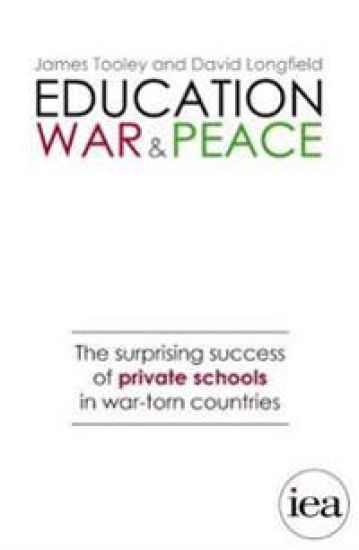
Education, War and Peace

Education, War and Peace

James Tooley

Institute of Economic Affairs
2017
nidottu
The authors of Education, War & Peace travelled to Liberia, Sierra Leone and South Sudan to conduct research on education in these conflict-affected countries. They uncovered an inspiring story of entrepreneurs stepping into the breach and providing low-cost private schooling to large numbers of children in areas where government was not working well and basic infrastructure had been destroyed. For-profit schools also expanded quickly to soak up educational demand once the conflicts were over. The fees were affordable to families on the poverty line and the children did better academically than those in government schools. Yet international agencies continue to promote government-run schools, even though state education has been a major source of both conflict and corruption in these countries. This groundbreaking study advocates a different approach. Low-cost private schools should be welcomed by policymakers as a means of providing high quality educational opportunities for all.
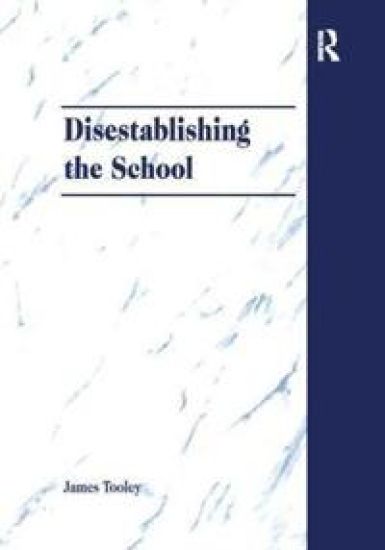
Disestablishing the School

Disestablishing the School

James Tooley

Routledge
2017
nidottu
That governments are, and will always be, involved in education, is taken for granted by the majority of educationalists. Recent market reforms are condemned, because they appear to undermine state intervention in education. But are justifications for state intervention in education philosophically sound? Is the attack on markets justified? In Disestablishing the School, Dr Tooley explores these issues, setting recent educational policy debates in the broader context of debates in moral and political philosophy, and philosophy of economics. Topical issues to do with equality of opportunity, education for democracy, education for autonomy, democratic control of the curriculum, and education as a public good are examined. None of these survive as a critique of markets in education, nor as a justification for state intervention in education. In undermining these arguments, Dr Tooley argues that the case for the disestablishment of the school, for the separation of school and state, can be philosophically sustained.
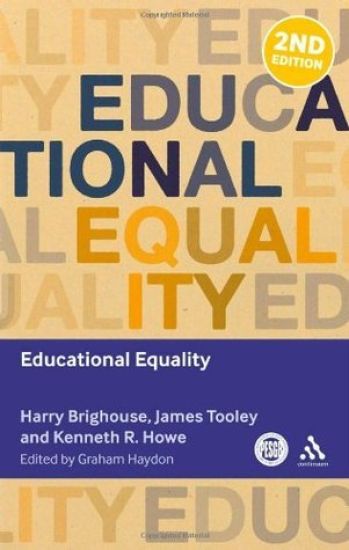
Educational Equality

Educational Equality

Harry Brighouse; Kenneth R. Howe; James Tooley

Continuum Publishing Corporation
2010
nidottu
This title considers the philosophical debates surrounding equality and education. "Educational Equality and the New Selective Schooling" by Harry Brighouse was initially published by the Philosophy of Education Society of Great Britain in 2000. In this new edition, Brighouse has updated his argument, Kenneth R Howe and James Tooley have contributed counter-arguments and Graham Haydon has provided a foreword and afterword drawing the debates together. The issues debated in this new edition of 'Educational Equality" include: What is Educational Equality? Why Does Educational Equality Matter? And is Educational Equality Possible? "Educational Equality" raises issues which will be of interest to all involved in educational equality, including teachers, policy makers and educationalists. This innovative series is addressed to practitioners and policy-makers. It highlights the critical perspectives that philosophy can bring to bear on current education policy and provides a lively discussion of the issues. It aims to stimulate debate and to contribute to better informed educational initiatives.
Reclaiming Education

Reclaiming Education

James Tooley

Continuum International Publishing Group Ltd.
2005
nidottu
What is wrong with education? Why do educational reforms always miss their target? How can we create a better education system? And what can we learn from other countries? Reclaiming Education tackles the challenges facing education that really matter - hte ones that academics often ignore, parents demand solution to and politicians need to confront. Drawing on his global research, James Tooley shows that there is an alternative to poor quality and wasteful inefficiency in education, and that education can be radically transformed to guarantee freedom and higher standards. "Tooley radically challenges any complacency we may have about education in the 21st century." Sir Bob Salisbury "Tooley is an extremist: some of his ideas are outrageous!" Professor Geoffrey Walford, University of Oxford "This is truly a radical book. It should be read by everyone who thinks deeply about education." Sir Christopher Ball
The Miseducation of Women

The Miseducation of Women

James Tooley

Ivan R Dee, Inc
2003
pokkari

Halvin toimitettuna 30,50 €

Girls and boys are different. So why do our schools insist on treating them as identical? Could this misguided equality have anything to do with the increasing dissatisfaction among women that is revealed in survey after survey? Do gender-blind educational policies in fact work to women's disadvantage? Bringing together many women's voices, from Bridget Jones to Simone de Beauvoir, Betty Friedan to Germaine Greer, James Tooley challenges education's sacred cows, demanding a radical rethinking of sexual politics and a fairer way forward for women. The Miseducation of Women landed like a bombshell when it was published in England a few months ago; but Mr. Tooley's book, replete with examples and anecdotes from the United States as well as Great Britain, has equal application to the gender arguments on this side of the Atlantic.
The Miseducation of Women

The Miseducation of Women

James Tooley

Continuum International Publishing Group Ltd.
2003
nidottu
To what extent has feminism benefited women? To what extent have women really been liberated? James Tooley argues that the implication of many women's testimony is that feminism so far has failed to deliver the promised benefits and has even in some ways proved harmful. Bringing together many women's voices, from Bridget Jones to Simone de Beauvoir, he provides a radical rethinking for feminism and sexual politics in the 21st century.
The Miseducation of Women

The Miseducation of Women

James Tooley

Continuum International Publishing Group Ltd.
2002
sidottu
"Current education policy is not in the interests of women. An injustice is being perpetrated."--James Tooley in the Introduction To what extent has feminism benefited women? To what extent have women really been liberated? James Tooley argues that the implication of many women's testimony is that feminism so far has failed to deliver the promised benefits and has even in some ways proved harmful. Bringing together many women's voices, from Simone de Beauvoir to Bridget Jones, he provides a radical rethinking for feminism and sexual politics in the twenty-first century.
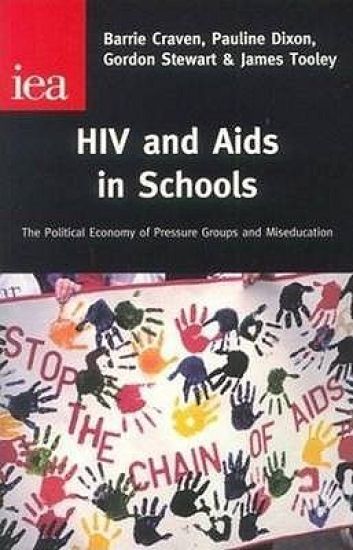
HIV and AIDS in Schools

HIV and AIDS in Schools

Barrie Craven; Pauline Dixon; Gordon Stewart; James Tooley

Institute of Economic Affairs
2001
sidottu
HIV and Aids teaching is compulsory in British schools but the content is not prescribed. Should teaching in such a difficult field, where there are disputes among experts, be left to secondary school teachers with no specialist knowledge? And is it right that the subject should be compulsory? These awkward issues are confronted in this controversial paper which examines the materials being used by schools in HIV/Aids teaching and how teachers are approaching the subject. The authors conclude that, because of material provided by pressure groups, teachers are exaggerating the Aids problem and failing to stress the extent to which the risk of infection depends on behaviour. Rent-seeking by vested interests results in a serious distortion of the views presented to children. Their conclusion about Britain is that HIV/Aids teaching should no longer be compulsory. Either the law should be repealed or schools should simply drop the subject.
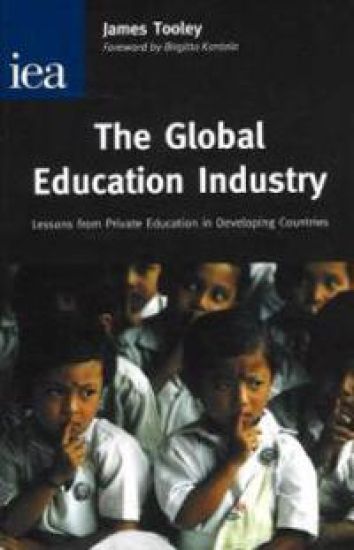
The Global Education Industry

The Global Education Industry

James Tooley

Institute of Economic Affairs
2001
sidottu
The first edition of this pioneering book produced surprising conclusions from research around the world into the extent of private education. James Tooley challenged the prevailing wisdom that private education fosters social and economic inequality. On the contrary, he found that the private sector, as well as being innovative, often provides creative social responsibility programmes, subsidised places and student loan schemes. He concluded with a proposal about the role of for-profit education enterprises in promoting equitable development. In this second edition, Professor Tooley contributes a new preface which shows how his work has developed and extended into other countries. In particular, he provides a fascinating account of how private education is flourishing in China.
Disestablishing the School

Disestablishing the School

James Tooley

Avebury
1995
sidottu
That governments are, and will always be, involved in education, is taken for granted by the majority of educationalists. Recent market reforms are condemned, because they appear to undermine state intervention in education. But are justifications for state intervention in education philosophically sound? Is the attack on markets justified? In Disestablishing the School, Dr Tooley explores these issues, setting recent educational policy debates in the broader context of debates in moral and political philosophy, and philosophy of economics. Topical issues to do with equality of opportunity, education for democracy, education for autonomy, democratic control of the curriculum, and education as a public good are examined. None of these survive as a critique of markets in education, nor as a justification for state intervention in education. In undermining these arguments, Dr Tooley argues that the case for the disestablishment of the school, for the separation of school and state, can be philosophically sustained.