
Kirjailija
James Trefil
Kirjat ja teokset yhdessä paikassa: 24 kirjaa, julkaisuja vuosilta 1989–2027, suosituimpiin kuuluu Nothing Matters. Vertaile teosten hintoja ja tarkista saatavuus suomalaisista kirjakaupoista.
24 kirjaa
Kirjojen julkaisuvuodet: 1989–2027.

Experience the world's most promising technological innovations and the science behind them in this entertaining photo-rich book. For futurists and sci-tech enthusiasts, every page reveals advances powering our future, with on-site interviews, deep explainers, and helpful visuals. What will our future look like? In The Next Big Thing, meteorologist and science reporter Rob Marciano invites readers to take a journey through the innovations that will change our lives for the better in four key realms of science: Energy - How will we power the planet? Marciano ventures inside a nuclear fusion reactor to learn about sustainable, near-infinite energy. Electricity - Marciano goes airborne in an electric one-person aircraft—could be tomorrow's Uber! Infrastructure - Can we build cleaner cities? Marciano visits Ascent, a timber skyscraper in Milwaukee. Information - Is AI friend or foe? Marciano meets android SOPHIA and asks her that question. Complementing Marciano's reporting, physicist James Trefil unpacks the science behind each innovation and highlights other promising developments: solid-state batteries, quantum computers, 3-D printed homes, and robots. By the end of this book, you won't just hope for a better future. You'll believe in it—by understanding the bold science and technology making it happen.
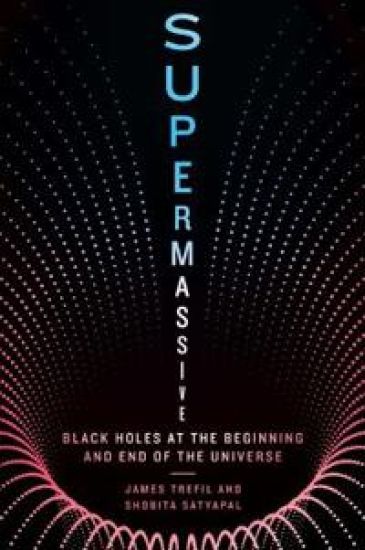
Black holes, demystified: follow along the quest to understand the history and influence of one of space science's most fascinating and confounding phenomena Led by physicist James Trefil and astrophysicist Shobita Satyapal, this book traverses the incredible history of black holes and introduces contemporary developments and theories on still unanswered questions about the enigmatic objects. From the early work of Albert Einstein and Karl Schwarzschild to an insider look at black hole-galaxy connection research led by co-author Satyapa, the comprehensive book surveys an exciting and evolving branch of space science, with topics that include: Visibility of black holesQuasars, the brightest objects in the universeThe black hole at the center of the Milky WayPopular theories on the origin of black holesCosmic X raysDeath of supermassivesBlack hole collisionsBlack holes in science fictionInvisible to the naked eye and telescopes, black holes have mystified and entranced astronomers, scientists, and humanity for more than a century. The first image of a supermassive black hole was only unveiled in 2019, and new black holes are continually discovered. Supermassive illuminates what we know about black holes so far and what we have yet to uncover.

Cosmic Queries
Neil deGrasse Tyson; James Trefil
National Geographic Society
2021
sidottu
Halvin toimitettuna 27,60 €
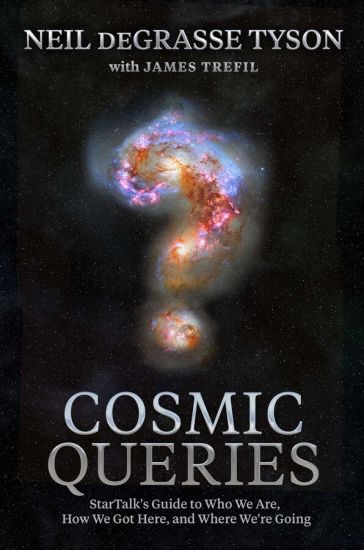
In this thought-provoking follow-up to his acclaimed StarTalk book, uber astrophysicist Neil deGrasse Tyson tackles the world's most important philosophical questions about the universe with wit, wisdom, and cutting-edge science. For science geeks, space and physics nerds, and all who want to understand their place in the universe, this enlightening new book from Neil deGrasse Tyson offers a unique take on the mysteries and curiosities of the cosmos, building on rich material from his beloved StarTalk podcast. In these illuminating pages, illustrated with dazzling photos and revealing graphics, Tyson and co-author James Trefil, a renowned physicist and science popularizer, take on the big questions that humanity has been posing for millennia--How did life begin? What is our place in the universe? Are we alone?--and provide answers based on the most current data, observations, and theories. Populated with paradigm-shifting discoveries that help explain the building blocks of astrophysics, this relatable and entertaining book will engage and inspire readers of all ages, bring sophisticated concepts within reach, and offer a window into the complexities of the cosmos.
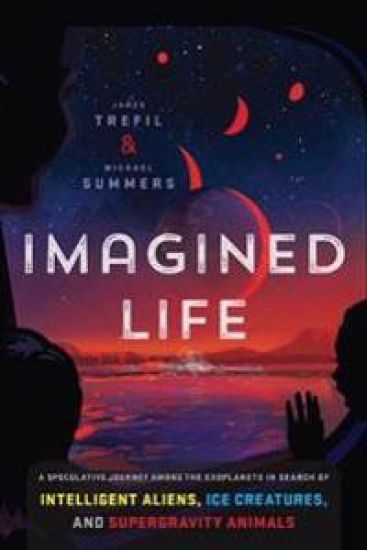
Imagined Life
James Trefil; Michael Summers
Smithsonian Books
2019
sidottu
Halvin toimitettuna 41,40 €
It is now known that we live in a galaxy with more planets than stars. The Milky Way alone encompasses 30 trillion potential home planets. Scientists Trefil and Summers bring readers on a marvellous experimental voyage through the possibilities of life-unlike anything we have experienced so far-that could exist on planets outside our own solar system. Life could be out there in many forms: on frozen worlds, living in liquid oceans beneath ice and communicating (and even battling) with bubbles; on super-dense planets, where they would have evolved body types capable of dealing with extreme gravity; on tidally locked planets with one side turned eternally toward a star; and even on "rogue worlds," which have no star at all. Yet this is no fictional flight of fancy: the authors take what we know about exoplanets and life on our own world and use that data to hypothesize about how, where, and which sorts of life might develop. IMAGINED LIFE is a must-have for anyone wanting to learn how the realities of our universe may turn out to be far stranger than fiction.
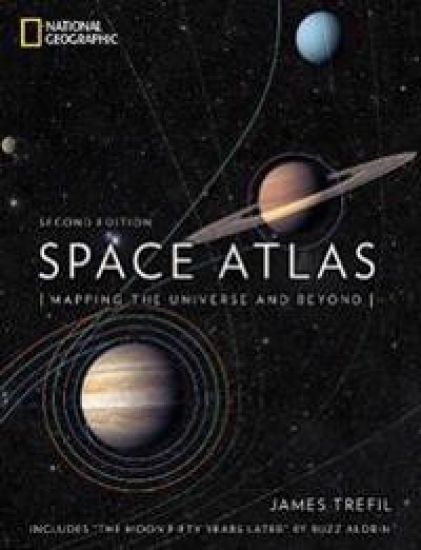
For space enthusiasts, science lovers, and star gazers, the newly revised edition of National Geographic's enduring guide to space, with a new introduction by American hero Buzz Aldrin, combines thoroughly updated maps, lavish photographs, and elegant illustrations to chart the solar system, the universe, and beyond. A guided tour of the solar system, the Milky Way galaxy, the universe, and beyond, with detailed maps and fascinating imagery from recent space missions partnered with clear, authoritative scientific information. Starting with the sun and moving outward into space, acclaimed science writer and physicist James Trefil illuminates each planet, the most important moons, significant asteroids, and other objects in our solar system. Moving beyond, he explains what we know about the Milky Way and other galaxies beyond--and how we know it. To celebrate the 50th anniversary of his moonwalk, astronaut and American hero Buzz Aldrin offers a special section on Earth's moon and its essential role in space exploration past and future.
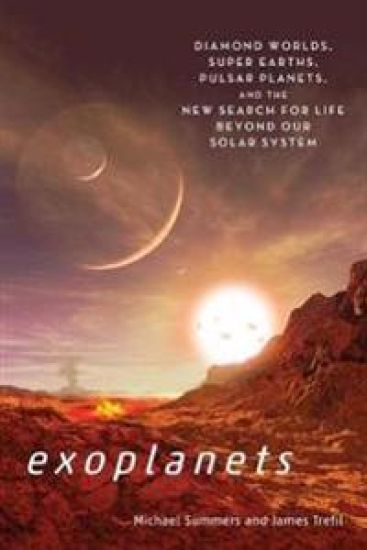
Diamond Worlds, Super Earths, Pulsar Planets and the New Search for Life Beyond our Solar System
Exoplanets: Diamond Worlds, Super Earths, Pulsar Planets, and the New Search for Life Beyond Our Solar System
Michael Summers; James Trefil
Dreamscape Media
2017
mp3 cd-levyllä
Since its 2009 launch, the Kepler satellite has discovered more than two thousand exoplanets, or planets outside our solar system. More exoplanets are being discovered all the time, remarkable in their variety. Astronomer Michael Summers and physicist James Trefil explore these remarkable recent discoveries: planets revolving around pulsars, planets made of diamond, planets that are mostly water, and numerous rogue planets wandering through the emptiness of space. This captivating book reveals the latest discoveries and argues that the incredible richness and complexity we are finding necessitates a change in our questions and mental paradigms. In short, we have to change how we think about the universe and our place in it, because it is stranger and more interesting than we could have imagined.
This text is an unbound, three hole punched version. The Sciences: An Integrated Approach, Binder Ready Version, 8th Edition by James Trefil and Robert Hazen uses an approach that recognizes that science forms a seamless web of knowledge about the universe. This text fully integrates physics, chemistry, astronomy, earth sciences, and biology and emphasizes general principles and their application to real- world situations. The goal of the text is to help students achieve scientific literacy. Applauded by students and instructors for its easy-to-read style and detail appropriate for non-science majors, the eighth edition has been updated to bring the most up-to-date coverage to the students in all areas of science.

Albert Einstein, one of the most prolific scientists of the twentieth century, developed the theory of relativity which was crucial for the advancement of modern physics. Young Einstein identified a paradox between Newtonian Mechanics and Maxwell’s equations which pointed to a flawed understanding of space and time by the scientists of the day. In Relativity, Einstein presents his findings using a minimal amount of mathematical language, but the text can still be challenging for readers who lack an extensive scientific background. The Routledge Guidebook to Einstein’s Relativity expands on and supplements this seminal text, by exploring: the historical context of Einstein’s work and the background to his breakthroughsdetails of experimental verification of special and general relativitythe enduring legacy of Einstein’s theories and their implications for future scientific breakthroughs. This is an essential introduction for students of physics, philosophy and history in understanding the key elements of the work and the importance of this classic text to society today.
Albert Einstein, one of the most prolific scientists of the twentieth century, developed the theory of relativity which was crucial for the advancement of modern physics. Young Einstein identified a paradox between Newtonian Mechanics and Maxwell’s equations which pointed to a flawed understanding of space and time by the scientists of the day. In Relativity, Einstein presents his findings using a minimal amount of mathematical language, but the text can still be challenging for readers who lack an extensive scientific background. The Routledge Guidebook to Einstein’s Relativity expands on and supplements this seminal text, by exploring: the historical context of Einstein’s work and the background to his breakthroughsdetails of experimental verification of special and general relativitythe enduring legacy of Einstein’s theories and their implications for future scientific breakthroughs. This is an essential introduction for students of physics, philosophy and history in understanding the key elements of the work and the importance of this classic text to society today.

Space Atlas (Special Sales Edition): Mapping the Universe and Beyond
James Trefil
National Geographic Society
2012
nidottu

In Science in World History, James Trefil presents a comprehensive, thematic survey of the history of science from its roots in different cultures around the world through to the present day. He explores crucial milestones in scientific development and at the same time examines the enormous social and intellectual changes they initiated. Opening with a discussion of the key elements of modern scientific enterprise, the book goes on to explore the earliest scientific activities, moving through Greece and Alexandria, science in the Muslim world, and then on to Isaac Newton, atomic theory and the major developments of the nineteenth century. After examining the most recent scientific activities across the world, the book concludes by identifying future directions for the field. Suitable for introductory courses and ideal for students new to the subject, this concise and lively study reconsiders the history of science from the perspective of world and comparative history.

In Science in World History, James Trefil presents a comprehensive, thematic survey of the history of science from its roots in different cultures around the world through to the present day. He explores crucial milestones in scientific development and at the same time examines the enormous social and intellectual changes they initiated. Opening with a discussion of the key elements of modern scientific enterprise, the book goes on to explore the earliest scientific activities, moving through Greece and Alexandria, science in the Muslim world, and then on to Isaac Newton, atomic theory and the major developments of the nineteenth century. After examining the most recent scientific activities across the world, the book concludes by identifying future directions for the field. Suitable for introductory courses and ideal for students new to the subject, this concise and lively study reconsiders the history of science from the perspective of world and comparative history.
Knowledge of the basic ideas and principles of science is fundamental to cultural literacy. But most books on science are often too obscure or too specialized to do the general reader much good. Science Matters is a rare exception-a science book for the general reader that is informative enough to be a popular textbook for introductory courses in high school and college, and yet well-written enough to appeal to general readers uncomfortable with scientific jargon and complicated mathematics. And now, revised and expanded for the first time in nearly two decades, it is up-to-date, so that readers can enjoy Hazen and Trefil's refreshingly accessible explanations of the most recent developments in science, from particle physics to biotechnology.
Activity Book to accompany Physics Matters: An Introduction to Conceptual Physics, 1e
James Trefil; Robert M. Hazen; Michael Tammaro
John Wiley Sons Inc
2004
nidottu
Written by authors who have vast experience in communicating science to general audiences, PHYSICS MATTERS conveys the principles of physics in a manner that is understandable to the non-scientist. In a prose style that is clear, engaging, and contemporary, it pays particular attention to the relevance of physics in comprehending our modern technological society and the issues created by those technologies.
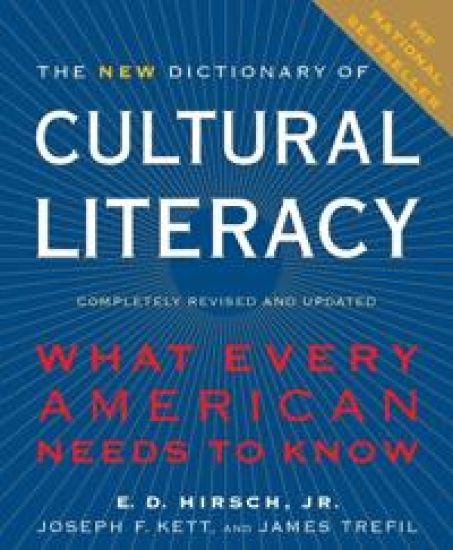
Every American wants to be in the know. In our fast-moving information age, however, who has time to sift through what's really important and what's just a passing fashion? Now, more than ever, we need a book that gathers together all of the critical information--the people, places, events, and terms--that makes up our cultural conversation. Featuring 23 chapters on every major area of knowledge--including politics, business, history, and literature--6,000 concise entries, 280 illustrations and maps, and revised cross-references and index, The New Dictionary of Cultural Literary fits the bill quite nicely. Completely revised and updated for the first time in ten years, this invaluable resource boils down all the facts you need to know to be culturally literate today. Test Your Cultural Knowledge How familiar are you with the following: Chinua Achebe; AWOL; bandwidth; Noam Chomsky; Deng Xioping; gene therapy; GPS; Greenpeace; hobbit; Kwanzaa; Kyoto Protocol; Malawi; NAFTA; Kwame Nkrumah; pheromones; SPAM; Taliban; 24/7; Alice Walker; Tiger Woods? National publicity from New York and Washington, D. C. Radio drive-time tour First edition of this title was a National Bestseller & sold more than 1 million copies.
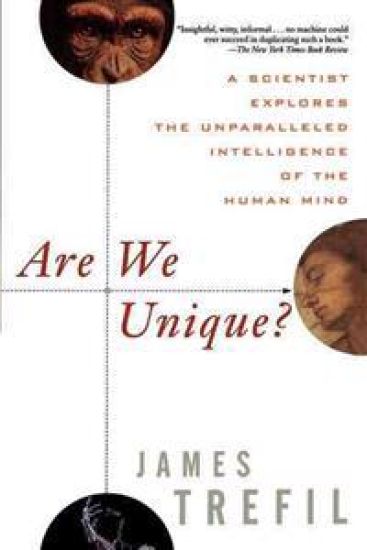
Acclaim for Are We Unique? ""In his masterful book, Trefil shares with readers some of the most recent research in neurology, evolution, primate research, computer science, and philosophy. Trefil's prose is lively and engaging."" --Boston Globe ""Trefil's race through the science that could explain the brain is highly readable."" --Sunday Times of London ""In a provocative essay, Trefil argues that the science of artificial intelligence is progressing rapidly. Machines, he theorizes, will one day develop a new kind of intelligence and self-awareness. So, maybe the real question is: Are we ready?"" --San Diego Union-Tribune ""A highly readable and engaging treatment of a fascinating question. Trefil makes a case for human uniqueness while at the same time celebrating the achievements of creations ranging from lobsters to neural nets. A provocative and enjoyable book."" --Daniel L. Schacter Professor and Chair of Psychology, Harvard University author of Searching for Memory