

Kirjailija
James Tully
Kirjat ja teokset yhdessä paikassa: 13 kirjaa, julkaisuja vuosilta 1982–2024, suosituimpiin kuuluu On Global Citizenship. Vertaile teosten hintoja ja tarkista saatavuus suomalaisista kirjakaupoista.
13 kirjaa
Kirjojen julkaisuvuodet: 1982–2024.
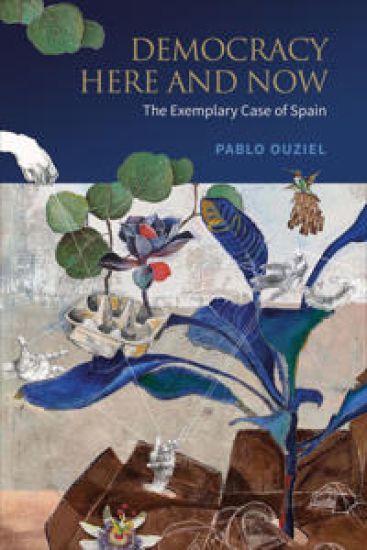
In Spain, on May 15, 2011, a movement against austerity measures began. In a time when representative democracies were under threat, 15M came to life as a virtuous and democratic response to the slide into far-right populism and authoritarianism. More than a social movement, 15M became a mode of being with transformative, democratizing potential. In Democracy Here and Now, Pablo Ouziel offers a grounded analysis of 15M. At the time of the movement and during the ensuing encampments, Ouziel travelled extensively, speaking to participants, and keeping an ongoing record of his conversations. Presenting an original participatory mode of research, the book reveals six types of intersubjective, "joining hands" relationships that 15M has brought into being and works to carry on in creative ways. The book shows how the movement’s way of being and temporality persists in Spain following the square occupations, while 15M citizens continue to learn and move forward in less perceptible ways. Democracy Here and Now sheds light on a deeply relational, intersectional, and eco-social mode of democracy, and shows how 15M’s ongoing democratization practices are exemplary of similar grassroots movements around the world, broadening our understandings of what it means to be democratic in the here and now.
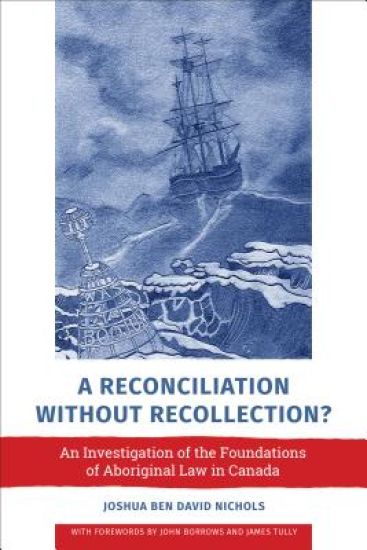
A Reconciliation Without Recollection?
Joshua Nichols; John Borrows; James Tully
University of Toronto Press
2019
pokkari
The current framework for reconciliation between Indigenous peoples and the Canadian state is based on the Supreme Court of Canada’s acceptance of the Crown’s assertion of sovereignty, legislative power, and underlying title. The basis of this assertion is a long-standing interpretation of Section 91(24) of Canada’s Constitution, which reads it as a plenary grant of power over Indigenous communities and their lands, leading the courts to simply bypass the question of the inherent right of self-government. In A Reconciliation without Recollection?, Joshua Ben David Nichols argues that if we are to find a meaningful path toward reconciliation, we will need to address the history of sovereignty without assuming its foundations. Exposing the limitations of the current model, Nichols carefully examines the lines of descent and association that underlie the legal conceptualization of the Aboriginal right to govern. Blending legal analysis with insights drawn from political theory and philosophy, A Reconciliation without Recollection? is an ambitious and timely intervention into one of the most pressing concerns in Canada.
This book is open access and available on www.bloomsburycollections.com. It is funded by Knowledge Unlatched. In his lead essay, Tully applies his distinctive philosophy to the global field of citizenship. The second part of the book contains responses from influential interlocutors including Bonnie Honig and Marc Stears, David Owen and Adam Dunn, Aletta Norval, Antony Laden, and Duncan Bell. These provide a commentary not just on the ideas contained in this volume, but on Tully's approach to political philosophy more generally, thus making the book an ideal first source for academics and students wishing to engage with Tully's work. The volume closes with a response from Tully to his interlocutors. This is the opening volume in Bloomsbury's Critical Powers series of dialogues between authors and their critics. It offers a stimulating read for students and scholars of political theory and philosophy, especially those engaged with questions of citizenship. It is an ideal first source for academics and students wishing to engage with Tully's work.
This book is open access and available on www.bloomsburycollections.com. It is funded by Knowledge Unlatched. Global Citizenship develops James Tully's distinctive and influential approach to political philosophy, first outlined in his 2008 two-volume work Public Philosophy in a New Key, and applies it to the field of citizenship. The book opens with a substantial original essay from Tully, which is philosophically astute, historically informed and always engaged with the politics of the real world. The second part of a book contains responses from influential interlocutors -- Aletta Norval, Antony Laden, Bonnie Honig and Marc Stears, Annabel Brett, Duncan Bell and David Owen. These provide a commentary not just on the ideas contained in this volume, but on Tully's approach to political philosophy more generally, thus making the book an ideal first source for academics and students wishing to engage with Tully's work. The volume closes with a response from Tully to his interlocutors.
Public Philosophy in a New Key: Volume 1, Democracy and Civic Freedom
James Tully
Cambridge University Press
2008
sidottu
These two ambitious volumes from one of the world's most celebrated political philosophers present a new kind of political and legal theory that James Tully calls a public philosophy, and a complementary new way of thinking about active citizenship, called civic freedom. Professor Tully takes the reader step-by-step through the principal debates in political theory and the major types of political struggle today. These volumes represent a genuine landmark in political theory from the author of Strange Multiplicity, one of the most influential and distinctive commentaries on politics and the contemporary world published in recent years. This first volume of Public Philosophy in a New Key consists of a presentation and defence of a contextual approach to public philosophy and civic freedom, and then goes on to study specific struggles over recognition and distribution within states.
Public Philosophy in a New Key: Volume 2, Imperialism and Civic Freedom
James Tully
Cambridge University Press
2008
sidottu
These two ambitious volumes from one of the world's most celebrated political philosophers present a new kind of political and legal theory that James Tully calls a public philosophy, and a complementary new way of thinking about active citizenship, called civic freedom. Professor Tully takes the reader step-by-step through the principal debates in political theory and the major types of political struggle today. These volumes represent a genuine landmark in political theory. In this second volume, Professor Tully studies networks and civic struggles over global or imperial relations of inequality, dependency, exploitation and environmental degradation beyond the state. The final chapter brings all of the author's resonant themes together in a new way of thinking about global and local citizenship, and of political theory in relation to it. This forms a powerful conclusion to a major intervention from a vital and distinctive voice in contemporary thought.
Public Philosophy in a New Key: Volume 2, Imperialism and Civic Freedom
James Tully
Cambridge University Press
2008
pokkari
These two ambitious volumes from one of the world's most celebrated political philosophers present a new kind of political and legal theory that James Tully calls a public philosophy, and a complementary new way of thinking about active citizenship, called civic freedom. Professor Tully takes the reader step-by-step through the principal debates in political theory and the major types of political struggle today. These volumes represent a genuine landmark in political theory. In this second volume, Professor Tully studies networks and civic struggles over global or imperial relations of inequality, dependency, exploitation and environmental degradation beyond the state. The final chapter brings all of the author's resonant themes together in a new way of thinking about global and local citizenship, and of political theory in relation to it. This forms a powerful conclusion to a major intervention from a vital and distinctive voice in contemporary thought.
Noted criminologist James Tully became fascinated by inconsistencies he found in the accounts of the lives and deaths of the Brontes. So dark and unexpected were the results of his searches, he decided to tell the story in the form of a novel. He has created a controversial and compelling account of this most famous Victorian family.
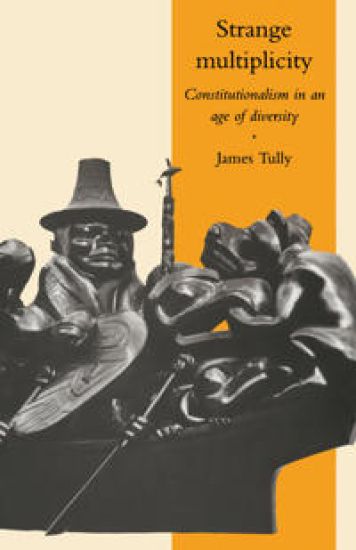
Strange Multiplicity
James Tully
Cambridge University Press
1995
pokkari
Halvin toimitettuna 31,60 €
In the inaugural set of Seeley Lectures, the distinguished political philosopher James Tully addresses the demands for cultural recognition that constitute the major conflicts of today: supranational associations, nationalism and federalism, linguistic and ethnic minorities, feminism, multiculturalism and aboriginal self government. Neither modern nor post-modern constitutionalism can adjudicate such claims justly. However, by surveying 400 years of constitutional practice, with special attention to the American aboriginal peoples, Tully develops a new philosophy of constitutionalism based on dialogues of conciliation which, he argues, have the capacity to mediate contemporary conflicts and bring peace to the twenty-first century. Strange Multiplicity brings profound historical, critical and philosophical perspectives to our most pressing contemporary conflicts, and provides an authoritative guide to constitutional possibilities in a multicultural age.
An Approach to Political Philosophy: Locke in Context brings together Professor Tully's most important and innovative statements on Locke in a systematic treatment of the latter's thought that is at once contextual and critical. Each essay has been rewritten and expanded for this volume, and each seeks to understand a theme of Locke's political philosophy by interpreting it in light of the complex contexts of early modern European political thought and practice. These historical studies are then used in a variety of ways to gain critical perspectives on the assumptions underlying current debates in political philosophy and the history of political thought. The themes treated include government, toleration, discipline, property, aboriginal rights, individualism, power, labour, self-ownership, community, progress, liberty, participation, and revolution.
An Approach to Political Philosophy: Locke in Context brings together Professor Tully’s most important and innovative statements on Locke in a systematic treatment of the latter’s thought that is at once contextual and critical. Each essay has been rewritten and expanded for this volume, and each seeks to understand a theme of Locke’s political philosophy by interpreting it in light of the complex contexts of early modern European political thought and practice. These historical studies are then used in a variety of ways to gain critical perspectives on the assumptions underlying current debates in political philosophy and the history of political thought. The themes treated include government, toleration, discipline, property, aboriginal rights, individualism, power, labour, self-ownership, community, progress, liberty, participation, and revolution.
John Locke's theory of property is perhaps the most distinctive and the most influential aspect of his political theory. In this book James Tully uses an hermeneutical and analytical approach to offer a revolutionary revision of early modern theories of property, focusing particularly on that of Locke. Setting his analysis within the intellectual context of the seventeenth century, Professor Tully overturns the standard interpretations of Locke's theory, showing that it is not a justification of private property. Instead he shows it to be a theory of individual use rights within a framework of inclusive claim rights. He links Locke's conception of rights not merely to his ethical theory, but to the central arguments of his epistemology, and illuminates the way in which Locke's theory is tied to his metaphysical views of God and man, his theory of revolution and his account of a legitimate polity.