Kirjojen hintavertailu – 12 859 828 kirjaa ja 27 kauppaa
Kirjailija
James Turner
Kirjat ja teokset yhdessä paikassa: 71 kirjaa, julkaisuja vuosilta 2000–2027, suosituimpiin kuuluu Harald Hardrada. Vertaile teosten hintoja ja tarkista saatavuus suomalaisista kirjakaupoista.
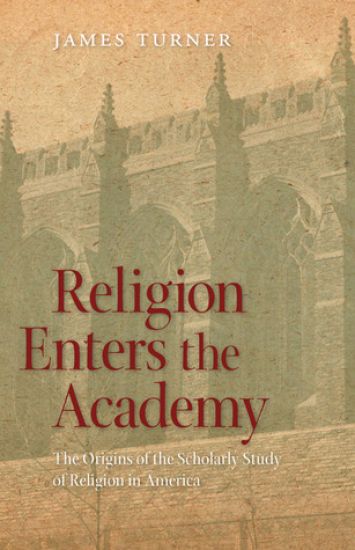
Religious studies—also known as comparative religion or history of religions—emerged as a field of study in colleges and universities on both sides of the Atlantic during the late nineteenth century. In Europe, as previous historians have demonstrated, the discipline grew from long-established traditions of university-based philological scholarship. But in the United States, James Turner argues, religious studies developed outside the academy. Until about 1820, Turner contends, even learned Americans showed little interest in non-European religions—a subject that had fascinated their counterparts in Europe since the end of the seventeenth century. Growing concerns about the status of Christianity generated American interest in comparing it to other great religions, and the resulting writings eventually produced the academic discipline of religious studies in U. S. universities. Fostered especially by learned Protestant ministers, this new discipline focused on canonical texts—the “bibles”—of other great world religions. This rather narrow approach provoked the philosopher and psychologist William James to challenge academic religious studies in 1902 with his celebrated and groundbreaking Varieties of Religious Experience.
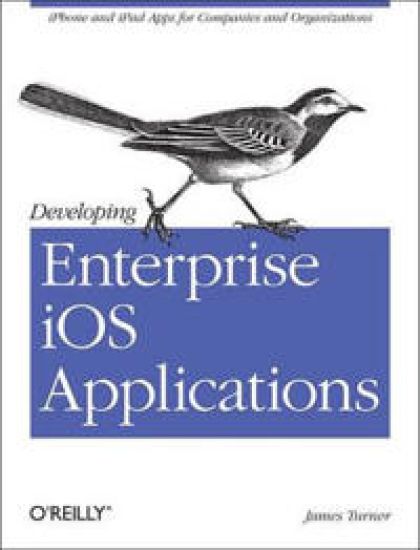
iOS development is a real pleasure, that is until you have to try and integrate the freewheeling development style of iOS with the realities of enterprise software deployment. This book leads you through the steps needed to create successful applications in the enterprise, both for internal consumption and sale to end users. You'll learn the pitfalls of concurrent project development, how to interface Objective-C applications to legacy backend systems, how to create unit tests and code metrics, how to implement automated XCode builds, and more. The Apple App Store is a great marketplace, but do you know how it can bite enterprise developers in the rear? How do you maintain iOS applications for the long term? If you are developing iOS applications in a corporate setting, you need to read this book.
Religious studies—also known as comparative religion or history of religions—emerged as a field of study in colleges and universities on both sides of the Atlantic during the late nineteenth century. In Europe, as previous historians have demonstrated, the discipline grew from long-established traditions of university-based philological scholarship. But in the United States, James Turner argues, religious studies developed outside the academy. Until about 1820, Turner contends, even learned Americans showed little interest in non-European religions—a subject that had fascinated their counterparts in Europe since the end of the seventeenth century. Growing concerns about the status of Christianity generated American interest in comparing it to other great religions, and the resulting writings eventually produced the academic discipline of religious studies in U. S. universities. Fostered especially by learned Protestant ministers, this new discipline focused on canonical texts—the “bibles”—of other great world religions. This rather narrow approach provoked the philosopher and psychologist William James to challenge academic religious studies in 1902 with his celebrated and groundbreaking Varieties of Religious Experience.
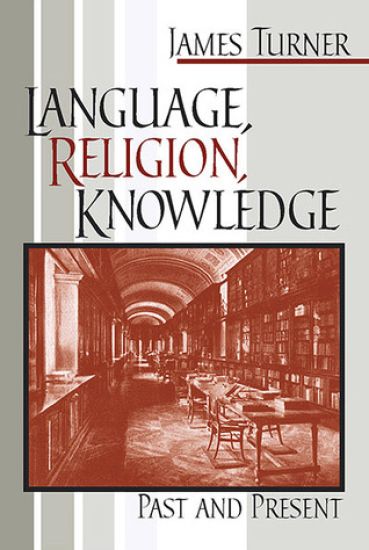
Higher education and university-based research rank among the main forces shaping our world. Focusing on knowledge rather than institutions, Language, Religion, Knowledge offers penetrating insight into how higher learning took its present form and the direction in which it is headed. The first section of this remarkable collection probes the history of higher learning in the United States; the second analyzes problems in higher learning today. Renowned historian James Turner uncovers surprising blind spots in our knowledge of how higher learning has evolved by focusing on four themes: the influence of philology, historicism, disciplinary specialization, and the retreat of religion from the academy. Turner offers an especially interesting discussion of the powerful, yet often unrecognized, impact of the study of texts and languages on knowledge. These thought-provoking essays examine losses and gains for contemporary higher education resulting from the fading of religion. Turner counts fragmentation of knowledge and the "marooning of research on an island of secular modernity" as among the greatest losses. Yet, he also proposes ways for higher learning today to recover the benefits of religiously grounded thinking without compromising the advantages of secularity. By demonstrating that religious intellectual traditions can and should reinvigorate the life of the mind, Language, Religion, Knowledge gives new insights into the past and future of higher education.
Higher education and university-based research rank among the main forces shaping our world. Focusing on knowledge rather than institutions, Language, Religion, Knowledge offers penetrating insight into how higher learning took its present form and the direction in which it is headed. The first section of this remarkable collection probes the history of higher learning in the United States; the second analyzes problems in higher learning today. Renowned historian James Turner uncovers surprising blind spots in our knowledge of how higher learning has evolved by focusing on four themes: the influence of philology, historicism, disciplinary specialization, and the retreat of religion from the academy. Turner offers an especially interesting discussion of the powerful, yet often unrecognized, impact of the study of texts and languages on knowledge. These thought-provoking essays examine losses and gains for contemporary higher education resulting from the fading of religion. Turner counts fragmentation of knowledge and the "marooning of research on an island of secular modernity" as among the greatest losses. Yet, he also proposes ways for higher learning today to recover the benefits of religiously grounded thinking without compromising the advantages of secularity. By demonstrating that religious intellectual traditions can and should reinvigorate the life of the mind, Language, Religion, Knowledge gives new insights into the past and future of higher education.
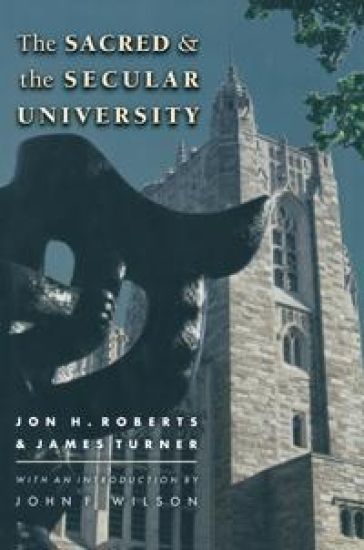
American higher education was transformed between the end of the Civil War and the beginning of World War I. During this period, U. S. colleges underwent fundamental changes--changes that helped to create the modern university we know today. Most significantly, the study of the sciences and the humanities effectively dissolved the Protestant framework of learning by introducing a new secularized curriculum. This secularization has long been recognized as a decisive turning point in the history of American education. Until now, however, there has been remarkably little attention paid to the details of how this transformation came about. Here, at last, Jon Roberts and James Turner identify the forces and explain the events that reformed the college curriculum during this era. The first section of the book examines how the study of science became detached from theological considerations. Previously, one of the primary pursuits of "natural scientists" was to achieve an understanding of the workings of the divine in earthly events. During the late nineteenth century, however, scientists reduced the scope of their inquiries to subjects that could be isolated, measured, and studied objectively. In pursuit of "scientific truth," they were drawn away from the larger "truths" that they had once sought. On a related path, social scientists began to pursue the study of human society more scientifically, attempting to generalize principles of behavior from empirically observed events. The second section describes the revolution that occurred in the humanities, beginning in the mid-nineteenth century, when the study of humanities was largely the study of Greek and Latin. By 1900, however, the humanities were much more broadly construed, including such previously unstudied subjects as literature, philosophy, history, and art history. The "triumph of the humanities" represented a significant change in attitudes about what constituted academic knowledge and, therefore, what should be a part of the college curriculum. The Sacred and the Secular University rewrites the history of higher education in the United States. It will interest all readers who are concerned about American universities and about how the content of a "college education" has changed over the course of the last century. "[Jon Roberts and James Turner's] thoroughly researched and carefully argued presentations invite readers to revisit stereotypical generalizations and to rethink the premises developed in the late nineteenth century that underlie the modern university. At the least, their arguments challenge crude versions of the secularization thesis as applied to higher education."--From the foreword by William G. Bowen and Harold T. Shapiro