Kirjojen hintavertailu – 12 859 828 kirjaa ja 27 kauppaa
Kirjailija
James Vernon
Kirjat ja teokset yhdessä paikassa: 10 kirjaa, julkaisuja vuosilta 2007–2025, suosituimpiin kuuluu Letters Illustrative of the Reign of William III. from 1696 to 1708. Addressed to the Duke of Shrewsbury, by James Vernon, Esq. Secretary of State. Now First Published from the Originals. Edited by G. P. R. James, Esq. In Three Volumes. Vertaile teosten hintoja ja tarkista saatavuus suomalaisista kirjakaupoista.
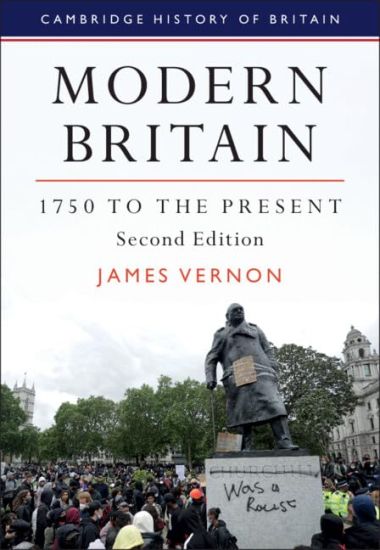
This wide-ranging introduction to the history of modern Britain extends from the eighteenth century to the present day. Vernon structures his compelling narrative around the rise, fall and reinvention of liberal ideas of how markets, governments and empires should work. In this new edition, Vernon expands on four important themes: the history of the environment and climate crisis; global pandemics; the history of minoritised people of colour; and shifting ideas of democracy and sovereignty. This textbook offers a new global history of Britain, demonstrating how the world shaped the course of Britain's modern history. Richly illustrated with figures and maps, the book features textboxes, further reading guides, highlighted key terms and a glossary. A supplementary online package includes a study guide with discussion questions and links to additional primary sources. This textbook is an essential resource for introductory courses on the history of modern Britain.
This wide-ranging introduction to the history of modern Britain extends from the eighteenth century to the present day. Vernon structures his compelling narrative around the rise, fall and reinvention of liberal ideas of how markets, governments and empires should work. In this new edition, Vernon expands on four important themes: the history of the environment and climate crisis; global pandemics; the history of minoritised people of colour; and shifting ideas of democracy and sovereignty. This textbook offers a new global history of Britain, demonstrating how the world shaped the course of Britain's modern history. Richly illustrated with figures and maps, the book features textboxes, further reading guides, highlighted key terms and a glossary. A supplementary online package includes a study guide with discussion questions and links to additional primary sources. This textbook is an essential resource for introductory courses on the history of modern Britain.
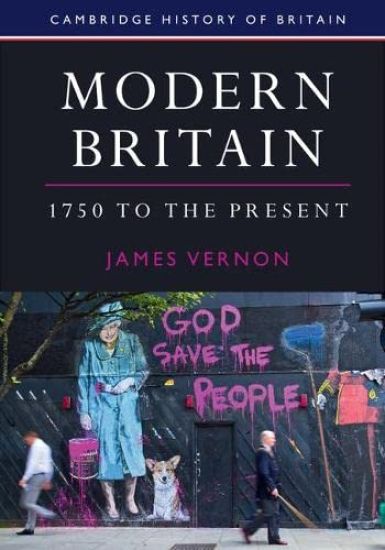
This wide-ranging introduction to the history of modern Britain extends from the eighteenth century to the present day. James Vernon's distinctive history is weaved around an account of the rise, fall and reinvention of liberal ideas of how markets, governments and empires should work. The history takes seriously the different experiences within the British Isles and the British Empire, and offers a global history of Britain. Instead of tracing how Britons made the modern world, Vernon shows how the world shaped the course of Britain's modern history. Richly illustrated with figures and maps, the book features textboxes (on particular people, places and sources), further reading guides, highlighted key terms and a glossary. A supplementary online package includes additional primary sources, discussion questions, and further reading suggestions, including useful links. This textbook is an essential resource for introductory courses on the history of modern Britain.
This wide-ranging introduction to the history of modern Britain extends from the eighteenth century to the present day. James Vernon's distinctive history is weaved around an account of the rise, fall and reinvention of liberal ideas of how markets, governments and empires should work. The history takes seriously the different experiences within the British Isles and the British Empire, and offers a global history of Britain. Instead of tracing how Britons made the modern world, Vernon shows how the world shaped the course of Britain's modern history. Richly illustrated with figures and maps, the book features textboxes (on particular people, places and sources), further reading guides, highlighted key terms and a glossary. A supplementary online package includes additional primary sources, discussion questions, and further reading suggestions, including useful links. This textbook is an essential resource for introductory courses on the history of modern Britain.
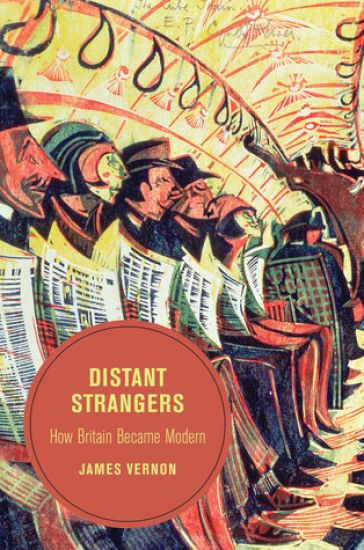
What does it mean to live in the modern world? How different is that world from those that preceded it, and when did we become modern? In Distant Strangers, James Vernon argues that the world was made modern not by revolution, industrialization, or the Enlightenment. Instead, he shows how in Britain, a place long held to be the crucible of modernity, a new and distinctly modern social condition emerged by the middle of the nineteenth century. Rapid and sustained population growth, combined with increasing mobility of people over greater distances and concentrations of people in cities, created a society of strangers. Vernon explores how individuals in modern societies adapted to live among strangers by forging more abstract and anonymous economic, social, and political relations, as well as by reanimating the local and the personal.
What does it mean to live in the modern world? How different is that world from those that preceded it, and when did we become modern? In Distant Strangers, James Vernon argues that the world was made modern not by revolution, industrialization, or the Enlightenment. Instead, he shows how in Britain, a place long held to be the crucible of modernity, a new and distinctly modern social condition emerged by the middle of the nineteenth century. Rapid and sustained population growth, combined with increasing mobility of people over greater distances and concentrations of people in cities, created a society of strangers. Vernon explores how individuals in modern societies adapted to live among strangers by forging more abstract and anonymous economic, social, and political relations, as well as by reanimating the local and the personal.
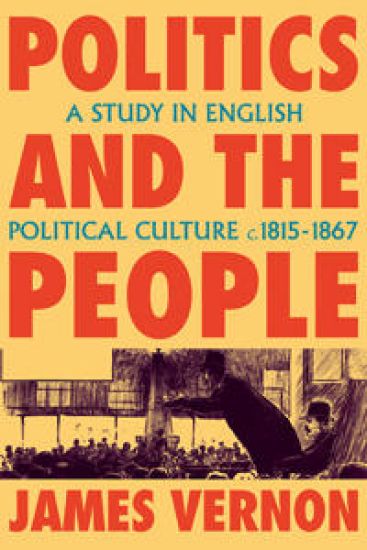
This ambitious and provocative study provides a unique narrative of nineteenth-century English political history. Based on extensive research the book draws on critical theory to read and interpret a vast range of oral, visual and printed sources, in an attempt to expand our conception of the politics of the period. Read in the context of such sources, nineteenth-century English politics becomes resolved into a story about the struggle to define the nation's constitution, past, present and future. It suggests the existence of a popular strain of English libertarian politics, albeit one whose radical and democratic potential was gradually closed down. In short, despite the invention of a liberal constitution in this period, politics became less (not more) democratic, a lesson which the author sees as pertinent for many struggling to live in, or establish, liberal democratic constitutions in our own times.
Hunger is as old as history itself. Indeed, it appears to be a timeless and inescapable biological condition. And yet perceptions of hunger and of the hungry have changed over time and differed from place to place. Hunger has a history, which can now be told. At the beginning of the nineteenth century, hunger was viewed as an unavoidable natural phenomenon or as the fault of its lazy and morally flawed victims. By the middle of the twentieth century, a new understanding of hunger had taken root. Across the British Empire and beyond, humanitarian groups, political activists, social reformers, and nutritional scientists established that the hungry were innocent victims of political and economic forces outside their control. Hunger was now seen as a global social problem requiring government intervention in the form of welfare to aid the hungry at home and abroad. James Vernon captures this momentous shift as it occurred in imperial Britain over the past two centuries. Rigorously researched, Hunger: A Modern History draws together social, cultural, and political history in a novel way, to show us how we came to have a moral, political, and social responsibility toward the hungry. Vernon forcefully reminds us how many perished from hunger in the empire and reveals how their history was intricately connected with the precarious achievements of the welfare state in Britain, as well as with the development of international institutions, such as the United Nations, committed to the conquest of world hunger. All those moved by the plight of the hungry will want to read this compelling book.