Kirjojen hintavertailu – 12 859 827 kirjaa ja 27 kauppaa

Kirjailija

James W. Ely

Kirjat ja teokset yhdessä paikassa: 7 kirjaa, julkaisuja vuosilta 2001–2017, suosituimpiin kuuluu The Fuller Court. Vertaile teosten hintoja ja tarkista saatavuus suomalaisista kirjakaupoista.

7 kirjaa

Kirjojen julkaisuvuodet: 2001–2017.

American Legal History: Cases and Materials

American Legal History: Cases and Materials

Kermit L. Hall; Paul Finkelman; James W. Ely

Oxford University Press
2017
nidottu
This highly acclaimed text provides a comprehensive selection of the most important documents in American legal history, integrating the history of public and private law from America's colonial origins to the present. Devoting special attention to the interaction of social and legal change, American Legal History: Cases and Materials, Fifth Edition, shows how legal ideas developed in tandem with specific historical events and reveals a rich legal culture unique to America. The book also deals with state and federal courts and looks at the relationship between the development of American society, politics, and economy and how it relates to the evolution of American law. Introductions and instructive headnotes accompany each document, tying legal developments to broader historical themes and providing a social and political context essential to an understanding of the history of law in America. Setting the legal challenges of the twenty-first century in a broad context, American Legal History, Fifth Edition, is an indispensable text for students and teachers of constitutional and legal history, the judicial process, and the effects of society on law.
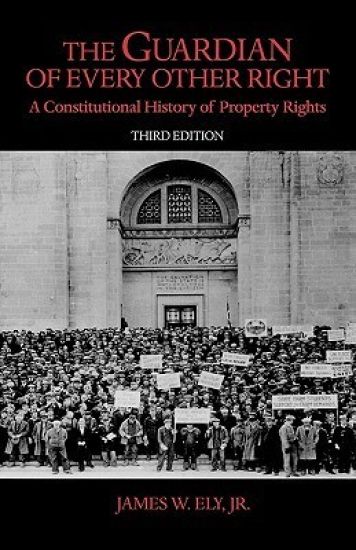
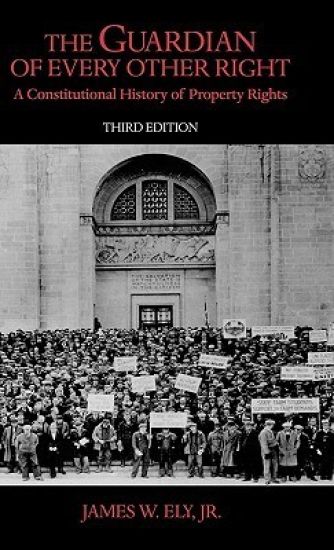
The Guardian of Every Other Right

The Guardian of Every Other Right

James W. Ely

Oxford University Press Inc
2007
nidottu
The Guardian of Every Other Right chronicles the pivotal role of property rights in fashioning the American constitutional order from the colonial era to the current controversies over eminent domain and land use controls. The book emphasizes the interplay of law, ideology, politics, and economic change in shaping constitutional thought and provides a historical perspective on the contemporary debate about property rights. Since publication of the original edition of this work, both academic and popular interest in the constitutional rights of property owners has markedly increased. Now in its third edition, this text has been revised to incorporate a full treatment of important judicial decisions, notable legislation, and scholarship since the second edition appeared in 1997. In particular, Ely provides helpful background and context for understanding the controversial Kelo decision relating to the exercise of eminent domain power for "public use." Covering the entire history of property rights in the United States, this new edition continues to fill a major gap in the literature of constitutional history and is an ideal text for students of legal and constitutional history.
The Guardian of Every Other Right

The Guardian of Every Other Right

James W. Ely

Oxford University Press Inc
2007
sidottu
The Guardian of Every Other Right chronicles the pivotal role of property rights in fashioning the American constitutional order from the colonial era to the current controversies over eminent domain and land use controls. The book emphasizes the interplay of law, ideology, politics, and economic change in shaping constitutional thought and provides a historical perspective on the contemporary debate about property rights. Since publication of the original edition of this work, both academic and popular interest in the constitutional rights of property owners has markedly increased. Now in its third edition, this text has been revised to incorporate a full treatment of important judicial decisions, notable legislation, and scholarship since the second edition appeared in 1997. In particular, Ely provides helpful background and context for understanding the controversial Kelo decision relating to the exercise of eminent domain power for "public use." Covering the entire history of property rights in the United States, this new edition continues to fill a major gap in the literature of constitutional history and is an ideal text for students of legal and constitutional history.
A History of the Tennessee Supreme Court

A History of the Tennessee Supreme Court

James W. Ely

University of Tennessee Press
2004
nidottu
In this first comprehensive history of the Tennessee Supreme Court, seven leading scholars explore the role played by the Court in the social, economic, and political life of the state. Charting the evolution and organization of the Court (and its predecessor, the Superior Court of Law and Equity), the authors also assess the work of the Court within the larger context of the legal history of the South. Arranged chronologically, this volume covers the period from statehood in 1796 through the judicial election of 1998 and traces the range of contentious issues the Court has faced, including slavery, Reconstruction, economic rights, the regulation of business, and race and gender relations. The authors also outline the Court’s relationship with the Supreme Court of the United States and chronicle the achievements of the Court in public and private law, state constitutional law, property law, criminal justice, and family law. The central themes that emerge include the nature of federalism, the search for judicial independence, and the practice of judicial review. As the authors demonstrate, the work of the Tennessee Supreme Court highlights the importance of state courts to the federal system and illuminates the interplay between regionalism and national norms in shaping a state’s legal culture. Indeed, as mediator of conflicts between traditional southern values and national economic and social trends, the Court has generally, if sometimes belatedly, adopted national legal standards. Further, while the Court has tended to defer to the state’s legislative decision-making process, it has on occasion assumed a more activist role in order to assert individual rights for Tennessee’s citizens. Sponsored by the Tennessee Supreme Court Historical Society, this book is written for anyone interested in Tennessee history in general or legal history in particular. Appendixes include a comprehensive table of cases and biographical information about all the Court’s judges. The Editor: James W. Ely Jr. is Milton R. Underwood Professor of Law and professor of history at Vanderbilt University. His books include The Chief Justiceship of Melville W. Fuller, 1888–1910 and The Guardian of Every Other Right: A Constitutional History of Property Rights. He is also the series editor of the six-volume Property Rights in American History.
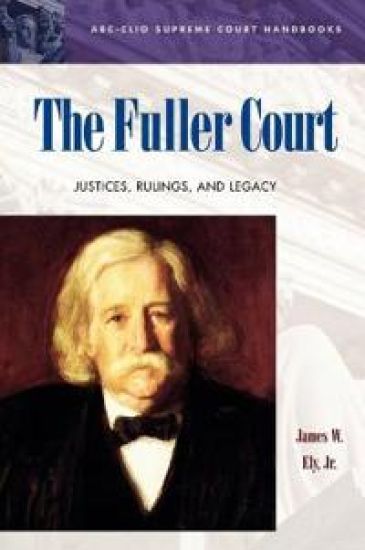
The Fuller Court

The Fuller Court

James W. Ely

ABC-CLIO
2003
sidottu
Explores the era, justices, key events, and decisions in landmark Supreme Court cases under Chief Justice Melville W. Fuller, including the creation of the Sherman Act, and the Pure Food and Drug Act.
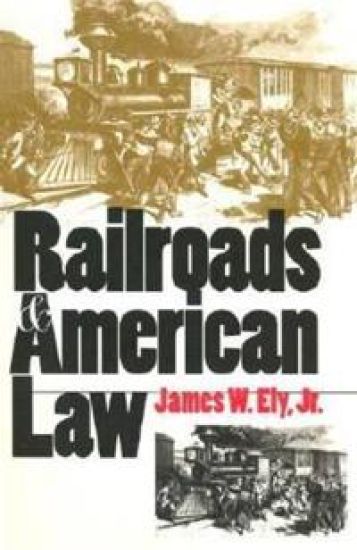
Railroads and American Law

Railroads and American Law

James W. Ely

University Press of Kansas
2001
sidottu
At its peak, the railroad was the Internet of its day in its transformative impact on American life and law. A harbinger and promoter of economic empire, it was also the icon of a technological revolution that accelerated national expansion and in the process transformed our legal system. James W. Ely Jr., in the first comprehensive legal history of the rail industry, shows that the two institutions - the railroad and American law - had a profound influence on each other. Ely chronicles how ""America's first big business"" impelled the creation of a vast array of new laws in a country where long-distance internal transport had previously been limited to canals and turnpikes. Railroads, the first major industry to experience extensive regulation, brought about significant legal innovations governing interstate commerce, eminent domain, private property, labor relations, and much more. Much of this development was originally designed to serve the interests of the railroads themselves but gradually came to contest and control the industry's power and exploitative tendencies. As Ely reveals, despite its great promise and potential as an engine of prosperity and uniter of far-flung regions, the railroad was not universally admired. Railroads uprooted people, threatened local autonomy, and posed dangers to employees and the public alike - situations with unprecedented legal ramifications. Ely explores the complex and sometimes contradictory ways in which those ramifications played out, as railroads crossed state lines and knitted together a diverse nation with thousands of miles of iron rail. Epic in its scope, Railroads and American Law makes a complex subject accessible to a wide range of readers, from legal historians to railroad buffs, and shows the many ways in which a powerful industry brought change and innovation to America.