Kirjojen hintavertailu – 12 903 724 kirjaa ja 27 kauppaa
Kirjailija
James Waghorne
Kirjat ja teokset yhdessä paikassa: 7 kirjaa, julkaisuja vuosilta 2011–2025, suosituimpiin kuuluu Liberty: A History of Civil Liberties in Australia. Vertaile teosten hintoja ja tarkista saatavuus suomalaisista kirjakaupoista.
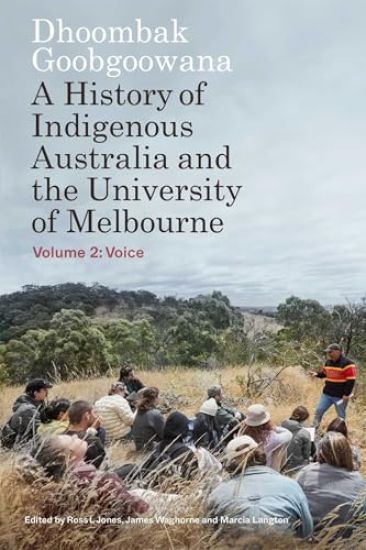
Dhoombak Goobgoowana Volume II: Voice reveals the pivotal role played by Indigenous people in the history of the University of Melbourne. It traces the University's role in ignoring and quietening Indigenous peoples' voices, and the reverberations created by those voices that broke through. It shows how collections of art and cultural objects have transitioned from texts for western interpretation to expressions of self-identity. It reveals the Indigenous pioneers who gained admission to the University as students more than a century after it was established, and then later as staff, and documents their triumphs and struggles. This second volume, following the revelations of Dhoombak Goobgoowana Volume I: Truth, shows how Indigenous communities challenged and disrupted the University, how they contributed to its research endeavours and exhorted it to introduce Indigenous knowledge into the academic sphere. Gradually, and often reluctantly, the University began to change. But there remains much work to be done.
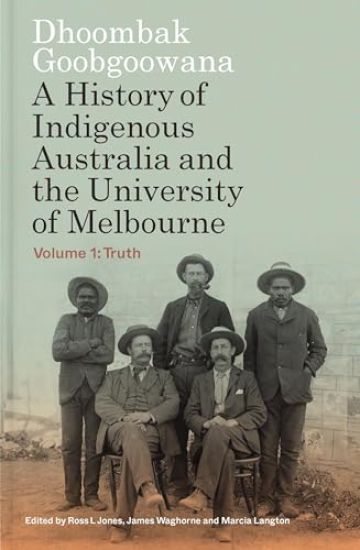
Dhoombak Goobgoowana acknowledges and publicly addresses the long, complex and troubled relationship between the Indigenous people of Australia and the University of Melbourne. It is a book about race and how it has been constructed by academics in the University. It is also about power and how academics have wielded it and justified its use against Indigenous populations, and about knowledge, especially the Indigenous knowledge that silently contributed to many early research projects and collection endeavours. By appropriating Wurundjeri land for its buildings, and accepting donations drawn from the proceeds of colonisation of Indigenous Country, the University of Melbourne advertised its superiority as a whole institution to Indigenous people. Within its buildings, academics and students explored a worldview that effectively banished Indigenous knowledge and culture. The University has supported injustices called progress, half-truths presented as facts, and prejudices pretending at objectivity. It follows the failings of many biographies and institutional histories that excluded race from their stories of achievement, overlooking how racist ideas complicated and shaped their narratives. Although many things have changed, the stain of the past remains. But the University no longer wishes to look away. Dhoombak Goobgoowana can be translated as 'truth-telling' in the Woi Wurrung language of the Wurundjeri Woi Wurrung people on whose unceded lands several University of Melbourne campuses are located. The cover photograph shows the members of a 1901 expedition through central Australia led by Frank Gillen (seated, left) and Baldwin Spencer (seated, right). To the rear stands mounted constable Harry Chance. Beside these white men are two Arrernte men, Erlikilyika (to the left) and Purunda (to the right). This image has been chosen to represent the unacknowledged participation of Indigenous people in the activities of academics in the University's history. The uncredited work of Erlikilyika as interpreter of both language and culture informed many of the conclusions of the white ethnographers and the anthropologists who followed. The expedition would have been impossible without the knowledge of these Indigenous men, and the scholarship it produced exists only because of them.
The Melbourne University Union was and is the very heart of social life for students, and this book tells its story from its origins in 1884 until today. Spotlighted are students engaged in debate and activism, theatre and comedy, balls and bands. Described are changing visions of what a campus community should be. James Waghorne looks back at the Union's unique contribution to the University and to the world beyond. He sees the Union as the meeting place for convivial mixing and conversation and beginning friendships and associations that may last a lifetime.
Australian Universities is essential reading for anyone seeking to understand where Australian universities have come from, and where they are heading. Few of our institutions are as significant or as complex as Australia’s universities. This first comprehensive history of Australia’s university sector explores how universities work and for whom, and how their relationship with each other, their academics and students and the public has evolved over a century. This book tells the story of how Australia’s universities have expanded to usher in an era of much wider participation in higher education, and shaped and been shaped by internationalism. Since coming together as a sector, universities have had many achievements, such as making research a national undertaking during the Great Depression and reshaping themselves as part of reconstruction after World War II. They were also at the forefront of the establishment of the internet in Australia. Australian Universities shines a light on these achievements and is essential reading to anyone who seeks to understand where Australian universities have come from, and where they are heading.
Australia's extraordinary contribution to World War I extended well beyond its military forces to the expertise of its universities and professional men and women. Scientists and engineers oversaw the manufacture of munitions and the development of chemical weapons. Doctors sustained soldiers in the trenches, and treated the physically and psychologically damaged. Public servants, lawyers and translators were employed in the war bureaucracy, while artists and writers found new modes to convey the trauma of war. The graduates and staff of Australia's six universities in Sydney, Melbourne, Adelaide, Tasmania, Queensland and Western Australia and Queensland were involved in this expansion of expertise. But what did these men and women do after the guns were silenced? How were the professions and universities transformed by the immediate and longer-term impacts of the war? The First World War, the Universities and the Professions examines how the technical and conceptual advances that occurred during World War I transformed Australian society. It traces the evolving role of universities and their graduates in the 1920s and 1930s, the increasing government validation of research, the expansion of the public service, and the rise of modern professional associations and international networks. While the war contributed to greater specialisations in traditional professions such as teaching or medicine, it also stimulated new jobs and training—whether in economics, anthropology or graphic art. This volume provides a new account of the interwar years that places knowledge and expertise at the heart of the Australian story. Its four sections—The Medical Sciences; Science and Technology; Humanities, Social Sciences and Teaching; and The Arts: Design, Music and Writing—highlight how World War I disrupted and shaped the careers of individuals as well as the development of Australian society and institutions.
Australia's extraordinary contribution to World War I extended well beyond its military forces to the expertise of its universities and professional men and women. Scientists and engineers oversaw the manufacture of munitions and the development of chemical weapons. Doctors sustained soldiers in the trenches, and treated the physically and psychologically damaged. Public servants, lawyers and translators were employed in the war bureaucracy, while artists and writers found new modes to convey the trauma of war. The graduates and staff of Australia's six universities—Sydney, Melbourne, Adelaide, Tasmania, Queensland and Western Australia and Queensland—were involved in this expansion of expertise. But what did these men and women do after the guns were silenced? How were the professions and universities transformed by the immediate and longer-term impacts of the war? The First World War, the Universities and the Professions examines how the technical and conceptual advances that occurred during World War I transformed Australian society. It traces the evolving role of universities and their graduates in the 1920s and 1930s, the increasing government validation of research, the expansion of the public service, and the rise of modern professional associations and international networks. While the war contributed to greater specialisations in traditional professions such as teaching or medicine, it also stimulated new jobs and training—whether in economics, anthropology or graphic art. This volume provides a new account of the interwar years that places knowledge and expertise at the heart of the Australian story. Its four sections—The Medical Sciences; Science and Technology; Humanities, Social Sciences and Teaching; and The Arts: Design, Music and Writing—highlight how World War I disrupted and shaped the careers of individuals as well as the development of Australian society and institutions.
A fascinating look at the history of civil liberties in Australia, this account offers a solid background to key civil liberties cases and a fresh analysis of the common law, human rights, and parliamentary democracy. From arguments over censorship in the 1930s to present-day debates on mandatory sentencing, the concept of civil liberties and its impact are discussed, tracing the formation of the Australian Council for Civil Liberties and its state-based counterparts as well as chronicling their involvement in the movement for law reform. Through major Australian historic events, this book demonstrates how the nation has been shaped by civil liberties.