
Kirjailija
James Walvin
Kirjat ja teokset yhdessä paikassa: 43 kirjaa, julkaisuja vuosilta 1970–2024, suosituimpiin kuuluu English Urban Life. Vertaile teosten hintoja ja tarkista saatavuus suomalaisista kirjakaupoista.
43 kirjaa
Kirjojen julkaisuvuodet: 1970–2024.
A World Transformed explores how slavery thrived at the heart of the entire Western world for more than three centuries. Arguing that slavery can only be fully understood by stepping back from traditional national histories, this book collects the scattered accounts of the most recent scholarship into a comprehensive history of slavery and its shaping of the world we know. Celebrated historian James Walvin tells a global story that covers everything from the capitalist economy, labor, and the environment, to social culture and ideas of family, beauty and taste. This book underscores just how thoroughly slavery is responsible for the making of the modern world. The enforced transportation and labour of millions of Africans became a massive social and economic force, catalysing the rapid development of multiple new and enormous trading systems with profound global consequences. The labour and products of enslaved people changed the consumption habits of millions - in India and Asia, Europe and Africa, in colonised and Indigenous American societies. Across time, slavery shaped many of the dominant features of Western taste: items and habits or rare and costly luxuries, some of which might seem, at first glance, utterly removed from the horrific reality of slavery. A World Transformed traces the global impacts of slavery over centuries, far beyond legal or historical endpoints, confirming that the world created by slave labour lives on today.
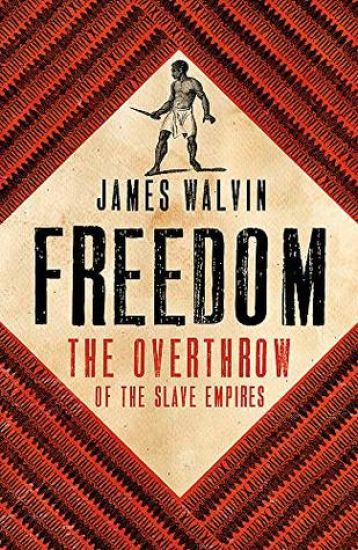
This long overdue, vivid and wide-ranging examination of the significance of the resistance of the enslaved themselves - from sabotage and running away to outright violent rebellion - shines fresh light on the end of slavery in the Atlantic World. It is high time that this resistance, in addition to abolitionism and other factors, was given its due weight in seeking to understand the overthrow of slavery. Fundamentally, as Walvin shows so clearly, it was the implacable hatred of the enslaved for slavery and their strategies of resistance that made the whole system unsustainable and, ultimately, brought about its downfall. Walvin's approach is original, too, in looking at the Atlantic world as a whole, including the French and Spanish Empires and Brazil, as well as Britain's colonies. In doing so, he casts new light on one of the major shifts in Western history: in the three-hundred years following Columbus's landfall in the Americas, slavery had become a widespread and critical institution. It had seen twelve million Africans forced onto slave ships; a forced migration that had had seismic consequences for Africa. It had transformed the Americas and materially enriched the Western world. It had also been largely unquestioned - in Europe at least, and among slave owners, traders and those who profited from the system. Yet, within a mere seventy-five years during the nineteenth century, slavery had vanished from the Americas: it had declined, collapsed and been destroyed by a complexity of forces that, to this day, remains disputed. As Walvin shows so clearly here, though, it was in large part overthrown by those it had enslaved.
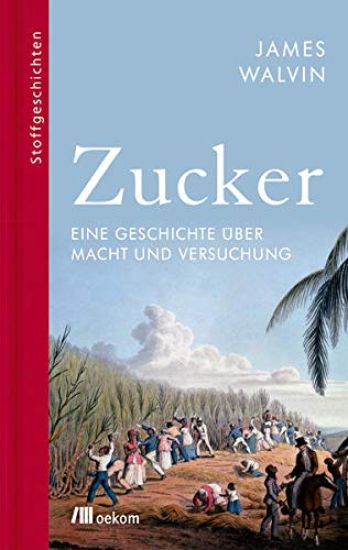
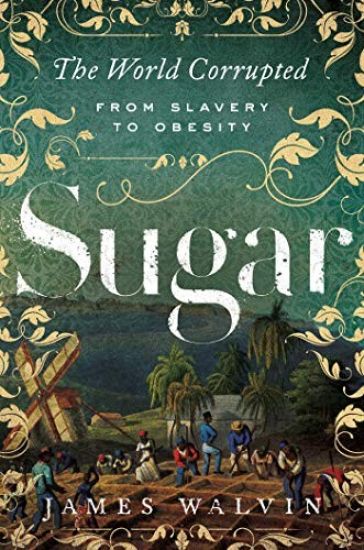
The modern successor to Sweetness and Power, James Walvin's Sugar is a rich and engaging work on a topic that continues to change our world. How did sugar grow from prize to pariah? Acclaimed historian James Walvin looks at the history of our collective sweet tooth, beginning with the sugar grown by enslaved people who had been uprooted and shipped vast distances to undertake the grueling labor on plantations. The combination of sugar and slavery would transform the tastes of the Western world. Prior to 1600, sugar was a costly luxury, the domain of the rich. But with the rise of the sugar colonies in the New World over the following century, sugar became cheap, ubiquitous, and an everyday necessity. Less than fifty years ago, few people suggested that sugar posed a global health problem. And yet today, sugar is regularly denounced as a dangerous addiction, on a par with tobacco. Masterfully insightful and probing, James Walvin reveals the relationship between society and sweetness over the past two centuries-- and how it explains our conflicted relationship with sugar today.
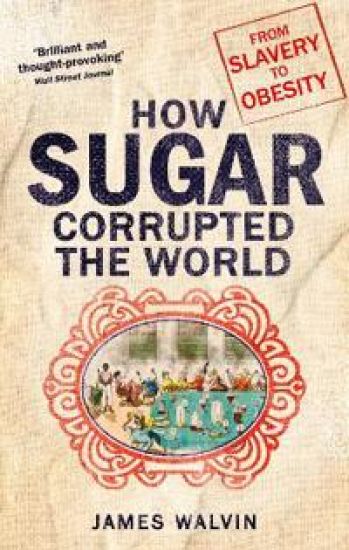
An 'entertaining, informative and utterly depressing global history of an important commodity . . . By alerting readers to the ways that modernity's very origins are entangled with a seemingly benign and delicious substance, How Sugar Corrupted the World raises fundamental questions about our world.'Sven Beckert, the Laird Bell professor of American history at Harvard University and the author of Empire of Cotton: A Global History, in the New York Times'A brilliant and thought-provoking history of sugar and its ironies'Bee Wilson, Wall Street Journal'Shocking and revelatory . . . no other product has so changed the world, and no other book reveals the scale of its impact.' David Olusoga'This study could not be more timely.' Laura Sandy, Lecturer in the History of Slavery, University of LiverpoolThe story of sugar, and of mankind's desire for sweetness in food and drink is a compelling, though confusing story. It is also an historical story. The story of mankind's love of sweetness - the need to consume honey, cane sugar, beet sugar and chemical sweeteners - has important historical origins. To take a simple example, two centuries ago, cane sugar was vital to the burgeoning European domestic and colonial economies. For all its recent origins, today's obesity epidemic - if that is what it is - did not emerge overnight, but instead evolved from a complexity of historical forces which stretch back centuries. We can only fully understand this modern problem, by coming to terms with its genesis and history: and we need to consider the historical relationship between society and sweetness over a long historical span. This book seeks to do just that: to tell the story of how the consumption of sugar - the addition of sugar to food and drink - became a fundamental and increasingly troublesome feature of modern life. Walvin's book is the heir to Sidney Mintz's Sweetness and Power, a brilliant sociological account, but now thirty years old. In addition, the problem of sugar, and the consequent intellectual and political debate about the role of sugar, has been totally transformed in the years since that book's publication.
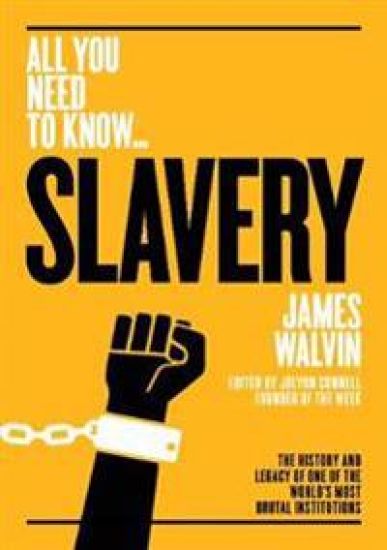
Western slavery goes back 10,000 years to Mesopotamia, today's Iraq, where a male slave was worth an orchard of date palms. Female slaves were called on for sexual services, gaining freedom only when their masters died. This book traces slavery from classical times to the present. It shows how the enforced movement of more than 12 million Africans on to the Atlantic slave ships, and the scattering of more 11 million survivors across the colonies of the Americas between the late 16th and early 19th centuries, transformed the face of the Americas. Though they were not its pioneers, it was the British who came to dominate Atlantic slavery, helping to consolidate the country's status as a world power before it became the first major country to abolish slavery. James Walvin explores the moral and economic issues slavery raises, examines how it worked and describes the lives of individual slaves, their resilience in the face of a brutal institution, and the depths to which white owners and their overseers could on occasion sink in their treatment of them.
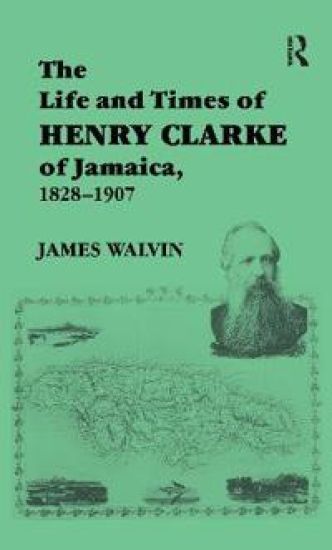
When Henry Clarke died in 1907 his obituary described him as an Englishman, yet he had only spent the first 19 years of his life in England, the next 60 being spent in Jamaica. He was a teacher, a cleric politician, a businessman, an inventor, and the father of eleven children. He left behind an extraordinary amount of writing, including a six volume diary upon which this biography is based.
The British role in the shaping of the African diaspora was central: the British carried more Africans across the Atlantic than any other nation and their colonial settlements in the Caribbean and North America absorbed vast numbers of Africans. The crops produced by those slaves helped to lay the foundations for Western material well-being, and their associated cultural habits helped to shape key areas of Western sociability that survive to this day. Britain was also central in the drive to end slavery, in her own possessions and elsewhere in the world. Making the Black Atlantic presents a coherent story of Britain’s role in the African diaspora, its origins, progress, and transformation.
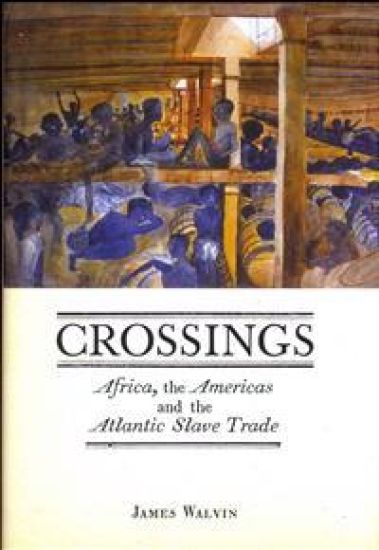
From the mid-fifteenth century to the close of the nineteenth, it is estimated that more than 12 million people from Africa were forced onto slave ships and transported to the Americas; at least 11 million survived the journey. Even after Britain banned the importation of African slaves in its colonies in 1807, and the U. S. followed suit in 1808, more than 3 million Africans made the terrible transit across the Atlantic. Slavery itself was not finally ended until Brazilian emancipation in 1888. Crossings explores the broad sweep of slavery across the Atlantic world, revealing the extraordinary efforts to end it as well as the remarkable degree to which slavery and the slave trade managed to survive, even to the present day. In the most authoritative history of the entire slave trade to date, James Walvin returns the emphasis of the story to its origins in Africa. It was here that the trade originated, here that the terrible ordeal of slaves began, and here that the scars remain today. Journeying across the ocean, Crossings also explores the history of Portugese, French and British colonies, as well as its development in the USA, and shows how Brazilian slavery was central to the development of the slave trade itself: that country tested techniques and methods for trading and slavery that were successfully exported to the Caribbean and the rest of the Americas in the following centuries. This book examines some vital unanswered questions, such as how did a system which the Western world had come to regard with distaste manage to survive for so long? And why were the British - so fundamental in developing and perfecting the slave trade - so prominent in its eradication? This groundbreaking study makes use of major new developments in research, rendering them available to a broad readership for the first time and offering a new understanding of one of the most important, and tragic, episodes in world history.
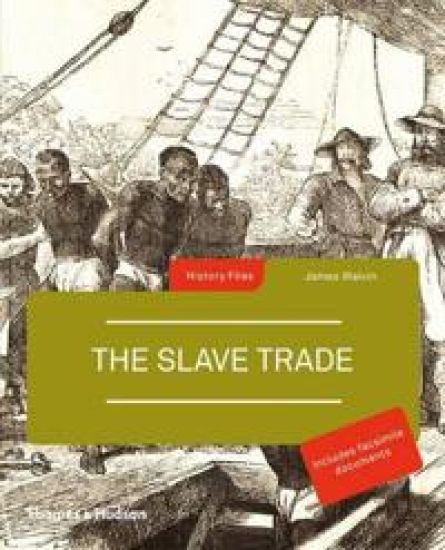
The History Files series presents the people, events and ideas that have shaped our world, through the lens of recent research. Each title covers a single topic and is illustrated with telling images from out-of-the-way sources and a collection of facsimile documents, bringing the past to life in an accessible yet authoritative format. Focusing on the experiences of those who lived through slavery, James Walvin, a leading authority on the subject, discusses the origins, development, abolition and legacies of the slave trade. The facsimile documents bring the period alive, as do the poignant quotations taken from first-hand accounts, detailed box features and over 150 evocative images.
Slavery, Abolition and Emancipation Vol 4
Peter J Kitson; Debbie Lee; Anne K Mellor; James Walvin
Routledge
1999
sidottu
Most writers associated with the first generation of British Romanticism - Blake, Coleridge, Wordsworth, Southey, Thelwall, and others - wrote against the slave trade. This edition collects a corpus of work which reflects the issues and theories concerning slavery and the status of the slave.
Slavery, Abolition and Emancipation Vol 3
Peter J Kitson; Debbie Lee; Anne K Mellor; James Walvin
Routledge
1999
sidottu
Most writers associated with the first generation of British Romanticism - Blake, Coleridge, Wordsworth, Southey, Thelwall, and others - wrote against the slave trade. This edition collects a corpus of work which reflects the issues and theories concerning slavery and the status of the slave.
Slavery, Abolition and Emancipation Vol 1
Peter J Kitson; Debbie Lee; Anne K Mellor; James Walvin
Routledge
1999
sidottu
Most writers associated with the first generation of British Romanticism - Blake, Coleridge, Wordsworth, Southey, Thelwall, and others - wrote against the slave trade. This edition collects a corpus of work which reflects the issues and theories concerning slavery and the status of the slave.
Slavery, Abolition and Emancipation Vol 8
Peter J Kitson; Debbie Lee; Anne K Mellor; James Walvin
Routledge
1999
sidottu
Most writers associated with the first generation of British Romanticism - Blake, Coleridge, Wordsworth, Southey, Thelwall, and others - wrote against the slave trade. This edition collects a corpus of work which reflects the issues and theories concerning slavery and the status of the slave.
Slavery, Abolition and Emancipation Vol 7
Peter J Kitson; Debbie Lee; Anne K Mellor; James Walvin
Routledge
1999
sidottu
Most writers associated with the first generation of British Romanticism - Blake, Coleridge, Wordsworth, Southey, Thelwall, and others - wrote against the slave trade. This edition collects a corpus of work which reflects the issues and theories concerning slavery and the status of the slave.
Slavery, Abolition and Emancipation Vol 6
Peter J Kitson; Debbie Lee; Anne K Mellor; James Walvin
Routledge
1999
sidottu
Most writers associated with the first generation of British Romanticism - Blake, Coleridge, Wordsworth, Southey, Thelwall, and others - wrote against the slave trade. This edition collects a corpus of work which reflects the issues and theories concerning slavery and the status of the slave.
Slavery, Abolition and Emancipation Vol 5
Peter J Kitson; Debbie Lee; Anne K Mellor; James Walvin
Routledge
1999
sidottu
Most writers associated with the first generation of British Romanticism - Blake, Coleridge, Wordsworth, Southey, Thelwall, and others - wrote against the slave trade. This edition collects a corpus of work which reflects the issues and theories concerning slavery and the status of the slave.
Slavery, Abolition and Emancipation Vol 2
Peter J Kitson; Debbie Lee; Anne K Mellor; James Walvin
Routledge
1999
sidottu
Most writers associated with the first generation of British Romanticism - Blake, Coleridge, Wordsworth, Southey, Thelwall, and others - wrote against the slave trade. This edition collects a corpus of work which reflects the issues and theories concerning slavery and the status of the slave.