Kirjojen hintavertailu – 12 903 725 kirjaa ja 27 kauppaa

Kirjailija

James Warren

Kirjat ja teokset yhdessä paikassa: 19 kirjaa, julkaisuja vuosilta 2002–2026, suosituimpiin kuuluu The Pleasures of Reason in Plato, Aristotle, and the Hellenistic Hedonists. Vertaile teosten hintoja ja tarkista saatavuus suomalaisista kirjakaupoista.

19 kirjaa

Kirjojen julkaisuvuodet: 2002–2026.

The Pleasures of Reason in Plato, Aristotle, and the Hellenistic Hedonists
Human lives are full of pleasures and pains. And humans are creatures that are able to think: to learn, understand, remember and recall, plan and anticipate. Ancient philosophers were interested in both of these facts and, what is more, were interested in how these two facts are related to one another. There appear to be, after all, pleasures and pains associated with learning and inquiring, recollecting and anticipating. We enjoy finding something out. We are pained to discover that a belief we hold is false. We can think back and enjoy or be upset by recalling past events. And we can plan for and enjoy imagining pleasures yet to come. This book is about what Plato, Aristotle, the Epicureans and the Cyrenaics had to say about these relationships between pleasure and reason.
The Pleasures of Reason in Plato, Aristotle, and the Hellenistic Hedonists
Human lives are full of pleasures and pains. And humans are creatures that are able to think: to learn, understand, remember and recall, plan and anticipate. Ancient philosophers were interested in both of these facts and, what is more, were interested in how these two facts are related to one another. There appear to be, after all, pleasures and pains associated with learning and inquiring, recollecting and anticipating. We enjoy finding something out. We are pained to discover that a belief we hold is false. We can think back and enjoy or be upset by recalling past events. And we can plan for and enjoy imagining pleasures yet to come. This book is about what Plato, Aristotle, the Epicureans and the Cyrenaics had to say about these relationships between pleasure and reason.
Political Unity in Plato and Aristotle

Political Unity in Plato and Aristotle

James Warren

Oxford University Press
2026
sidottu
Plato and Aristotle both think that for humans to live full and flourishing lives, we must live together in political communities. They are therefore interested in their various ways in which the people in any given political community relate to one another, how they respond to or value one another, and how they conceive of their good in relation to their fellow citizens. Plato and Aristotle think that instilling and maintaining the correct beliefs and attitudes (such as 'solidarity', 'like-mindedness', and 'friendship') among the citizens is the most important mechanism to ensure that the city is 'one' and resistant to internal strife, factionalism, and perhaps the eventual dissolution of the community. This study is an investigation of the various ways in which Plato and Aristotle approach the question of political unity, how their views differ from and are alike one another, and the ways in which their views matter for continuing discussions. James Warren investigates their arguments for what kinds of relationships are important and how citizens should relate to and think about one another, work together, and feel as part of a single unified political community.
Protection Racket

Protection Racket

James Warren

Book Folks
2025
pokkari
A man who had it coming, a woman who plays with fire, and a lawyer facing a tough choice... When a big-shot lawyer with a reputation for being handsy is found murdered in his office, the evidence points to his colleague Amanda Morelli who, despite having suffered the victim's unwanted attentions, insists she's innocent. Quickly indicted, Amanda's parents rush to employ attorney David Lee to take on the case, no expense spared. Given how stunning the accused woman is, it's a no-brainer. Yet with a murder trial impending, Amanda inexplicably leaves town. Her vague answers and elusiveness soon raise doubts in David's mind. Add to the blurry picture some damning new evidence and a tough prosecutor, and the cards seem stacked against him. Can David convince the jury of Amanda's innocence? And is she telling the truth, or has falling for her charms clouded his judgement? If you like legal procedurals with a good mystery, courtroom drama, lots of suspense, and a clever twist, you'll absolutely love this book. Look out for James Warren's first legal thriller novel, the brilliant THAT CARE FORGOT, about a cold serial killer case set in New Orleans and Los Angeles. PROTECTION RACKET is great for fans of Robert Dugoni, James Chandler, John Grisham, and Teresa Burrell.
That Care Forgot

That Care Forgot

James Warren

Book Folks
2024
pokkari
A city on edge, a murderer who holds a secret, and an aspiring female lawyer put to the test... When her LA law firm hands junior attorney Rebecca Holt the pro bono case of a convicted felon, her heart sinks. She doesn't want to help murderers go free. But volatile and obsessive Nick Malone is less interested in his parole hearing than telling Rebecca a story. That of the so-called Crescent City Killer who consigned the beaten bodies of several young women to the humid swamps and bayous of Louisiana. Rebecca has no choice but to listen to Malone as he takes her back to the suffocating, sultry heat of New Orleans' sleazy underbelly. A city rife with corruption, the marginalized, and the forgotten, who became the prey. The assistant district attorney at the time headed an incompetent team of losers and has-beens. It was almost as if she was set up to fail. Pursuing her only lead meant making a tough decision with serious consequences. But how does Malone know so much about this killer who stalked the backstreets and jazz bars of The Big Easy, yet left no trace? And when Malone reveals his secrets, will Rebecca be ready to step up and fight for the truth? THAT CARE FORGOT is a totally gripping legal crime thriller set in present-day Los Angeles and 1990s New Orleans. It is the debut novel of former attorney and federal prosecutor James Warren. Look out for his forthcoming PROTECTION RACKET, another crime thriller about a defense lawyer in New York. Free with Kindle Unlimited and available in paperback, if you enjoy fiction by Robert Dugoni, James Chandler, Michael Stagg, and John Grisham, you'll absolutely love this book
Regret

Regret

James Warren

Oxford University Press
2021
sidottu
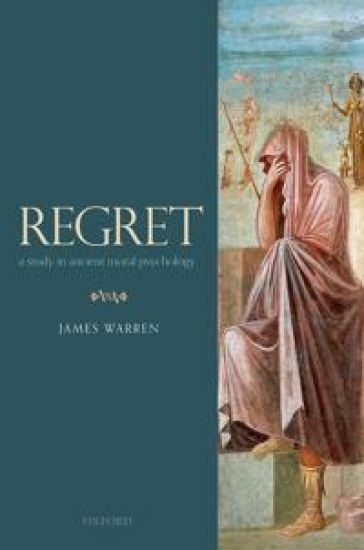
This book provides a study of regret (metameleia) in the moral psychology of Plato, Aristotle, and the Stoics. It was important for all these philosophers to insist that regret is a characteristic of neither fully virtuous nor wholly irredeemable characters. Rather, they took regret to be something that affects people who retrospectively feel pain at realising an earlier mistaken action. Regret sets out in full the accounts of the nature of this emotion found in the works of these philosophers, viewing them in the context of their respective accounts of virtuous and non-virtuous agents, ethical progress, the role of knowledge in producing good actions, and compares it with modern philosophical notions of 'agent regret'.
Energy Systems and Sustainability

Energy Systems and Sustainability

Bob Everett; Stephen Peake; James Warren

Oxford University Press
2021
nidottu

Halvin toimitettuna 90,40 €

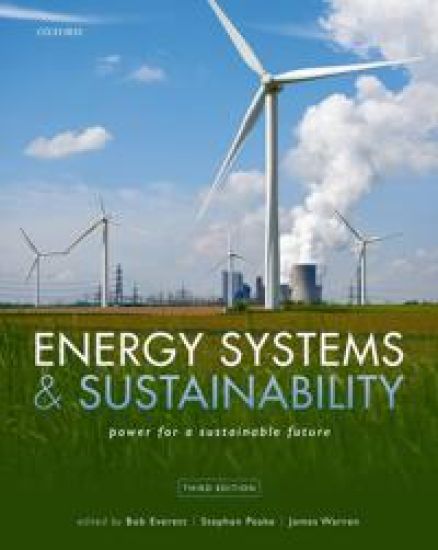
Energy Systems and Sustainability provides an exploration of the economic, social, environmental, and policy issues raised by current systems of energy use, as well as describing their key physical and engineering features. From an overview of the historical evolution of the world's energy systems, through the principles underlying their use, to future prospects and sustainability, this comprehensive text provides thorough coverage of contemporary energy conversion systems and their impact on society and the environment. The engaging writing style and frequent use of illustrations makes the text accessible for students of all backgrounds and levels. Feature boxes throughout the text present explanations of the more advanced topics and detailed energy arithmetic is addressed in the appendix. The new edition has been thoroughly updated to include the most recent statistics and developments in this rapidly moving field. Digital formats and resources Energy Systems and Sustainability is available for students and institutions to purchase in a variety of formats. The e-book offers a mobile experience and convenient access along with functionality tools, navigation features, and links that offer extra learning support: www.oxfordtextbooks.co.uk/ebooks The online resources to accompany Energy Systems and Sustainability include: For students: · Links to sources of further information and up-to-date energy statistics · Self-assessment questions For registered adopters of the book: · Figures from the book, available for download
Roman Chariots and the Agape of God

Roman Chariots and the Agape of God

James Warren

Independently Published
2019
nidottu
While profoundly theological, this book is no abstract exposition. Instead, Warren returns to his childhood experience of the 1959 film, Ben Hur, and discovers in the film powerful lessons about violence, rivalry, the meaning of Jesus' death and the Atonement, and the power of faith. It is not necessary to have seen the film Ben-Hur in order to understand and benefit from the book. Dense with insight and inspiration, this book offers itself as a wonderful solution for churches seeking unique material for discussion groups. The chapters allow for a comfortable six-week discussion series, yet the book is also short enough to be read and discussed within a week or two. The discussion can be inaugurated with a viewing of the film, providing both a fun evening and powerful motivation for people to read the book
Big Data:Principles and best practices of scalable realtime data systems
Services like social networks, web analytics, and intelligent e-commerce often need to manage data at a scale too big for a traditional database. As scale and demand increase, so does Complexity. Fortunately, scalability and simplicity are not mutually exclusive— rather than using some trendy technology, a different approach is needed. Big data systems use many machines working in parallel to store and process data, which introduces fundamental challenges unfamiliar to most developers. Big Data shows how to build these systems using an architecture that takes advantage of clustered hardware along with new tools designed specifically to capture and analyze web-scale data. It describes a scalable, easy to understand approach to big data systems that can be built and run by a small team. Following a realistic example, this book guides readers through the theory of big data systems, how to use them in practice, and how to deploy and operate them once they're built. AUDIENCE This book requires no previous exposure to large-scale data analysis or NoSQL tools. Familiarity with traditional databases is helpful. ABOUT THE TECHNOLOGY To tackle the challenges of Big Data, a new breed of technologies has emerged. Many of which have been grouped under the term "NoSQL." In some ways these new technologies can be more complex than traditional databases and in other ways, simpler. Using them effectively requires a fundamentally new set of techniques
Compassion Or Apocalypse? – A comprehensible guide to the thoughts of René Girard
Ren Girard s thesis that culture and religion arose from an original act of scapegoating murder gained international scholarly attention in the early seventies with his publication in France of Violence and the Sacred. A few years later, with Things Hidden Since the Foundation of the World, Girard made it clear that his basic insights derived of all places from the Bible. Those insights are finally escaping the confines of academia, and coming to the awareness of a broader, theologically minded public. Many people are beginning to find in Girard answers to troublesome questions such as: Is God violent? Is there a necessary relationship between violence and religion? Why are there so many violent stories in the Bible? Why did Jesus have to die? Are we living in the end times? In clear, understandable prose, Compassion or Apocalypse shows how the Girardian perspective answers such questions, making Girard s mimetic theory and its application to biblical interpretation available to those who have little or no familiarity with Girard s work. To read the Bible from a Girardian point of view is to discover the radical message of God s nonviolent love in its historical wrestling with human violence, and its immanent confrontation with the gathering human apocalypse.
Presocratics

Presocratics

James Warren

Acumen Publishing Ltd
2007
sidottu
The earliest phase of philosophy in Europe saw the beginnings of cosmology and rational theology, metaphysics, epistemology, and ethical and political theory. It saw the development of a wide range of radical and challenging ideas: from Thales' claim that magnets have souls and Parmenides' account that there is only one unchanging existent to the development of an atomist theory of the physical world. This general account of the Presocratics introduces the major Greek philosophical thinkers from the sixth to the middle of the fifth century BC. It explores how we might go about reconstructing their views and understanding the motivation and context for their work as well as highlighting the ongoing philosophical interest of their often surprising claims. Separate chapters are devoted to each of the major Presocratic thinkers, including Xenophanes, Heraclitus, Parmenides, Anaxagoras, Empedocles, Leucippus and Democritus, and an introductory chapter sets the scene by describing their intellectual world and the tradition through which their philosophy has been transmitted and interpreted. With a useful chronology and guide to further reading, the book is an ideal introduction for the student and general reader.
Presocratics

Presocratics

James Warren

Acumen Publishing Ltd
2007
nidottu
The earliest phase of philosophy in Europe saw the beginnings of cosmology and rational theology, metaphysics, epistemology, and ethical and political theory. It saw the development of wide range of radical and challenging ideas: from Thales' claim that magnets have souls and Parmenides' account that there is only one unchanging existent to the development of an atomist theory of the physical world. This general account of the Presocratics introduces the major Greek philosophical thinkers from the sixth to the middle of the fifth century BC. It explores how we might go about reconstructing their views and understanding the motivation and context for their work as well as highlighting the ongoing philosophical interest of their often surprising claims. Separate chapters are devoted to each of the major Presocratic thinkers, including Xenophanes, Heraclitus, Parmenides, Anaxagoras, Empedocles, Leucippus and Democritus, and an introductory chapter sets the scene by describing their intellectual world and the tradition through which their philosophy has been transmitted and interpreted. With a useful chronology and guide to further reading the book is an ideal introduction for the student and general reader.
Epicurus and Democritean Ethics

Epicurus and Democritean Ethics

James Warren

Cambridge University Press
2006
pokkari
The Epicurean philosophical system has enjoyed much scrutiny, but the question of its philosophical ancestry remains largely neglected. It has often been thought that Epicurus owed only his physical theory of atomism to the fifth-century BC philosopher Democritus, but this 2002 study finds that there is much in his ethical thought which can be traced to Democritus. It also finds important influences on Epicurus in Democritus' fourth-century followers such as Anaxarchus and Pyrrho, and in Epicurus' disagreements with his own Democritean teacher Nausiphanes. The result is not only a fascinating reconstruction of a lost tradition, but also an important contribution to the philosophical interpretation of Epicureanism, bearing especially on its ideal of tranquillity and on the relation of ethics to physics.
Facing Death

Facing Death

James Warren

Clarendon Press
2006
nidottu
The ancient philosophical school of Epicureanism tried to argue that death is 'nothing to us'. Were they right? James Warren provides a comprehensive study and articulation of the interlocking arguments against the fear of death found not only in the writings of Epicurus himself, but also in Lucretius' poem De rerum natura and in Philodemus' work De morte. These arguments are central to the Epicurean project of providing ataraxia (freedom from anxiety) and therefore central to an understanding of Epicureanism as a whole. They also offer significant resources for modern discussions of the value of death - one which stands at the intersection of metaphysics and ethics. If death is the end of the subject, and the subject can not be benefited nor harmed after death, is it reasonable nevertheless to fear the ceasing-to-be? If the Epicureans are not right to claim that the dead can neither be benefited nor harmed, what alternative models might be offered for understanding the harm done by death and do these alternatives suffer from any further difficulties? The discussion involves consideration of both ethical and metaphysical topics since it requires analysis not only of the nature of a good life but also the nature of personal identity and time. A number of modern philosophers have offered criticisms or defences of the Epicureans' views. Warren explores and evaluates these in the light of a systematic and detailed study of the precise form and intention of the Epicureans' original arguments. Warren argues that the Epicureans also were interested in showing that mortality is not to be regretted and that premature death is not to be feared. Their arguments for these conclusions are to be found in their positive conception of the nature of a good and complete life, which divorce the completeness of a life as far as possible from considerations of its duration. Later chapters investigate the nature of a life lived without the fear of death and pose serious problems for the Epicureans being able to allow any concern for the post mortem future and being able to offer a positive reason for prolonging a life which is already complete in their terms.
Facing Death

Facing Death

James Warren

Clarendon Press
2004
sidottu
The ancient philosophical school of Epicureanism tried to argue that death is 'nothing to us'. Were they right? James Warren provides a comprehensive study and articulation of the interlocking arguments against the fear of death found not only in the writings of Epicurus himself, but also in Lucretius' poem De rerum natura and in Philodemus' work De morte. These arguments are central to the Epicurean project of providing ataraxia (freedom from anxiety) and therefore central to an understanding of Epicureanism as a whole. They also offer significant resources for modern discussions of the value of death - one which stands at the intersection of metaphysics and ethics. If death is the end of the subject, and the subject can not be benefited nor harmed after death, is it reasonable nevertheless to fear the ceasing-to-be? If the Epicureans are not right to claim that the dead can neither be benefited nor harmed, what alternative models might be offered for understanding the harm done by death and do these alternatives suffer from any further difficulties? The discussion involves consideration of both ethical and metaphysical topics since it requires analysis not only of the nature of a good life but also the nature of personal identity and time. A number of modern philosophers have offered criticisms or defences of the Epicureans' views. Warren explores and evaluates these in the light of a systematic and detailed study of the precise form and intention of the Epicureans' original arguments. Warren argues that the Epicureans also were interested in showing that mortality is not to be regretted and that premature death is not to be feared. Their arguments for these conclusions are to be found in their positive conception of the nature of a good and complete life, which divorce the completeness of a life as far as possible from considerations of its duration. Later chapters investigate the nature of a life lived without the fear of death and pose serious problems for the Epicureans being able to allow any concern for the post mortem future and being able to offer a positive reason for prolonging a life which is already complete in their terms.
Epicurus and Democritean Ethics

Epicurus and Democritean Ethics

James Warren

Cambridge University Press
2002
sidottu
The Epicurean philosophical system has enjoyed much scrutiny, but the question of its philosophical ancestry remains largely neglected. It has often been thought that Epicurus owed only his physical theory of atomism to the fifth-century BC philosopher Democritus, but this 2002 study finds that there is much in his ethical thought which can be traced to Democritus. It also finds important influences on Epicurus in Democritus' fourth-century followers such as Anaxarchus and Pyrrho, and in Epicurus' disagreements with his own Democritean teacher Nausiphanes. The result is not only a fascinating reconstruction of a lost tradition, but also an important contribution to the philosophical interpretation of Epicureanism, bearing especially on its ideal of tranquillity and on the relation of ethics to physics.