Kirjailija
James Weldon Johnson
Kirjat ja teokset yhdessä paikassa: 93 kirjaa, julkaisuja vuosilta 1969–2027, suosituimpiin kuuluu The Autobiography of an Ex-Colored Man. Vertaile teosten hintoja ja tarkista saatavuus suomalaisista kirjakaupoista.
93 kirjaa
Kirjojen julkaisuvuodet: 1969–2027.
African-American scholars have cited James Weldon Johnson's 1927 book of poems, "God's Trombones: Seven Negro Sermons in Verse" as one of the author's most notable works. Johnson, who is best known for his 1912 work, "The Autobiography of an Ex-Colored Man", was an American writer and civil rights activist born in Jacksonville, Florida in 1871. As a leader of the National Association for the Advancement of Colored People, Johnson helped to bring awareness to the problem of black lynching in America during the first part of the 20th century as well as other civil rights issues that people of color faced in America. A collection of eight poems, "God's Trombones" draws upon the tradition in the black church of drawing upon black folklore to preach the word of god. The title of the work has been described by Johnson as a metaphor for the powerfully persuasive nature of the vocal and rhetorical qualities of the sermons of a folk preacher. Immediately upon its publication "God's Trombones" would go on to achieve great critical acclaim in the black community further helping to establish Johnson as one of the principal figures of the Harlem Renaissance. This edition is printed on premium acid-free paper.
A Harlem Renaissance classic: seven inspirational poems inspired by the powerful rhetorical traditions of African-American sermons and spirituals. James Weldon Johnson, the co-author of "Lift Every Voice and Sing" and author of The Autobiography of an Ex-Colored Man, was a leading figure of the Harlem Renaissance. In God's Trombones, one of his most celebrated works, the rich tradition of inspirational sermons by Black preachers are reimagined as poetry, reverberating with the musicality and splendid eloquence of the classic spirituals. This collection includes "The Creation," "The Prodigal Son," "Go Down Death (A Funeral Sermon)," "Noah Built the Ark," "The Crucifixion," "Let My People Go," and "The Judgment Day," and includes the remarkable original illustrations by artist Aaron Douglas.
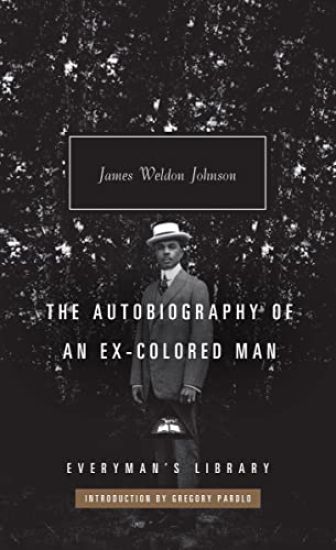
First published anonymously in 1912, this resolutely unsentimental novel gave many white readers their first glimpse of the double standards - and double consciousness - experienced by Black people in modern America. Republished in 1927, at the height of the Harlem Renaissance, with an introduction by Carl Van Vechten, The Autobiography of an Ex-Colored Man became a pioneering document of African-American culture and an eloquent model for later novelists ranging from Zora Neale Hurston to Richard Wright and Ralph Ellison. Narrated by a man whose light skin enables him to 'pass' for white, the novel describes a journey through the strata of Black society at the turn of the century - from a cigar factory in Jacksonville to an elite gambling club in New York, from genteel aristocrats to the musicians who hammered out the rhythms of Ragtime. The Autobiography of an Ex-Colored Man is a complex and moving examination of the question of race and an unsparing look at what it meant to forge an identity as a man in a culture that recognized nothing but colour.
The book "" The Autobiography of an Ex-Colored Man "" has been considered important throughout the human history, and so that this work is never forgotten we have made efforts in its preservation by republishing this book in a modern format for present and future generations. This whole book has been reformatted, retyped and designed. These books are not made of scanned copies and hence the text is clear and readable.
The Book of American Negro Poetry (1922) is an anthology by James Weldon Johnson. Alongside some of his own poems, Johnson includes the work of such legendary artists as Paul Laurence Dunbar, W. E. B. Du Bois, Jessie Fauset, and Georgia Douglas Johnson. Carefully selected and supported with a masterful preface by Johnson, the poems herein reflect a range of voices, styles, and subjects drawn from tradition and experience alike. In his preface, Johnson justifies his anthology by identifying its vital purpose: “The public, generally speaking, does not know that there are American Negro poets—to supply this lack of information is, alone, a work worthy of somebody's effort.” And the effort was his. In his poem “O Black and Unknown Bards,” he asks “O black and unknown bards of long ago, / How came your lips to touch the sacred fire?” Recognizing the need for a reconciliation between the long tradition of black culture and the overwhelming erasure of his own contemporary artists, Johnson highlights the efforts of those poets who “Within [their] dark-kept soul[s], burst into song.” Like Johnson himself, many of the poets included in The Book of American Negro Poetry work in a variety of voices, moving expertly from dialect to the traditional lyric in poems that harness the spirit of song and sermon alike. To borrow the words of Joseph S. Cotter Jr., a poet included in this anthology, these poems are elemental in their power to rejuvenate an exclusive national culture, and they “Rise and fall triumphant / Over every thing.” With a beautifully designed cover and professionally typeset manuscript, this edition of James Weldon Johnson’s The Book of American Negro Poetry is a classic of African American literature reimagined for modern readers.
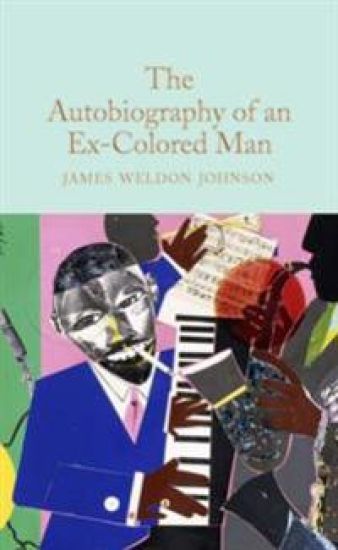
James Weldon Johnson’s The Autobiography of an Ex-Colored Man is a powerful, trailblazing novel that exposes the intricate relationship between race and class in late nineteenth-century America. Complete & Unabridged. Part of the Macmillan Collector’s Library; a series of stunning, clothbound, pocket-sized classics with gold foiled edges and ribbon markers. These beautiful books make perfect gifts or a treat for any book lover. This edition is introduced by Dr Sam Halliday. After losing his mother at a very young age, the narrator is thrust from his comfortable, middle-class environment, afforded by his distant but aristocratic father, into the wider world. His passion for music begins in Georgia’s all-black church community and takes him from New York, where he plays ragtime for a rich white gentleman, to the South, where he witnesses lynchings and out of fear gives up his passion, as well as his race, to pass for white. Relevant to this day, The Autobiography of an Ex-Colored Man is an unflinching account of black experience in America.
The book "" The Book of American Negro Poetry, has been considered important throughout the human history, and so that this work is never forgotten we have made efforts in its preservation by republishing this book in a modern format for present and future generations. This whole book has been reformatted, retyped and designed. These books are not made of scanned copies and hence the text is clear and readable.
The Book of American Negro Poetry (1922) is an anthology by James Weldon Johnson. Alongside some of his own poems, Johnson includes the work of such legendary artists as Paul Laurence Dunbar, W. E. B. Du Bois, Jessie Fauset, and Georgia Douglas Johnson. Carefully selected and supported with a masterful preface by Johnson, the poems herein reflect a range of voices, styles, and subjects drawn from tradition and experience alike. In his preface, Johnson justifies his anthology by identifying its vital purpose: “The public, generally speaking, does not know that there are American Negro poets—to supply this lack of information is, alone, a work worthy of somebody's effort.” And the effort was his. In his poem “O Black and Unknown Bards,” he asks “O black and unknown bards of long ago, / How came your lips to touch the sacred fire?” Recognizing the need for a reconciliation between the long tradition of black culture and the overwhelming erasure of his own contemporary artists, Johnson highlights the efforts of those poets who “Within [their] dark-kept soul[s], burst into song.” Like Johnson himself, many of the poets included in The Book of American Negro Poetry work in a variety of voices, moving expertly from dialect to the traditional lyric in poems that harness the spirit of song and sermon alike. To borrow the words of Joseph S. Cotter Jr., a poet included in this anthology, these poems are elemental in their power to rejuvenate an exclusive national culture, and they “Rise and fall triumphant / Over every thing.” With a beautifully designed cover and professionally typeset manuscript, this edition of James Weldon Johnson’s The Book of American Negro Poetry is a classic of African American literature reimagined for modern readers.
Fifty Years and Other Poems (1917) is a collection of poems by James Weldon Johnson. Although less popular than his book God’s Trombones: Seven Negro Sermons in Verse (1927), Johnson’s second poetry collection showcases his talents as a rising star of African American literature. Including some poems that would be featured in The Book of American Negro Poetry (1922), an influential anthology compiled and edited by the poet himself, Fifty Years and Other Poems remains essential to Johnson’s legacy as a leading figure of the Harlem Renaissance. “Fifty Years” opens the collection with an ode to emancipation, a starting point from which millions of men, women, and children were given the opportunity, however fragile it was, to pursue better lives. Rather than give thanks for freedom granted, however, Johnson implores his fellow Black Americans to remain proud, assured that liberty is their hard-earned right: “This land is ours by right of birth, / This land is ours by right of toil; / We helped to turn its virgin earth, / Our sweat is in its fruitful soil.” Hopeful and resilient, Johnson reflects on his own place in this history of struggle, paying particular heed to his status as a poet, his ability to sing despite centuries of violent oppression. In his poem “O Black and Unknown Bards,” he asks “O black and unknown bards of long ago, / How came your lips to touch the sacred fire?” Recognizing the need for a reconciliation between the long tradition of black culture and the overwhelming erasure of his own contemporary artists, Johnson highlights the efforts of those poets such as himself, who “Within [their] dark-kept soul[s], burst into song.” >With a beautifully designed cover and professionally typeset manuscript, this edition of James Weldon Johnson’s Fifty Years and Other Poems is a classic of African American literature reimagined for modern readers.
In this classic work, first published in 1930, James Weldon Johnson, one of the leading lights of the Harlem Renaissance, combined the skills of the historian, social scientist, and the reporter to trace the New York black experience from the earliest settlements on Chatham Square during the pre-revolutionary period to the triumphant achievements of Harlem in the 1920s. Featuring a foreword by Zadie Smith.
A gifted musician’s decision to navigate society as a white man causes an internal debate about anti-blackness and the explicit nature of intent versus impact. James Weldon Johnson presents a distinct conflict driven by a person’s desires and overwhelming fear. The Autobiography of an Ex-Colored Man follows the story of an unnamed narrator and his unique experience as a fair-skinned Black person. As a child, he is initially unaware of his race, but his mother soon clarifies their family’s ancestry. The young man’s ability to pass for white allows him to negate the harsh and discriminatory treatment most Black people face. This leads to a series of events that significantly shape the way he views his place in society. James Weldon Johnson delivers a captivating tale of identity politics in the U. S. and abroad. The main character is living a life of omission that provides public gain at a personal cost. This story maintains its relevance as a critical examination of race in society. With an eye-catching new cover, and professionally typeset manuscript, this edition of The Autobiography of an Ex-Colored Man is both modern and readable.
The Autobiography of an Ex-Colored Man (Royal Collector's Edition) (Case Laminate Hardcover with Jacket)
James Weldon Johnson
Royal Classics
2021
sidottu
The Autobiography of an Ex-Colored Man is the fictional account of a young biracial man, referred to only as the "Ex-Colored Man," living in post-Reconstruction era America in the late nineteenth and early twentieth centuries. He lives through a variety of experiences, including witnessing a lynching, that convince him to "pass" as white to secure his safety and advancement, but he feels as if he has given up his dream of "glorifying" the black race by composing ragtime music. James Weldon Johnson originally published The Autobiography of an Ex-Colored Man anonymously in 1912, because he was uncertain how the potentially controversial book would affect his diplomatic career. He wrote openly about issues of race and discrimination that were not common then in literature. The book's initial public reception was poor. It was republished in 1927, with some minor changes of phraseology, by Alfred A. Knopf, an influential firm that published many Harlem Renaissance writers, and Johnson was credited as the author. This case laminate collector's edition includes a Victorian inspired dust-jacket.
James Weldon Johnson (1871-1938) was an American civil rights activist and writer. He led the National Association for the Advancement of Colored People and was the first African-American professor at New York University. As a writer, Johnson was well-known in the Harlem Renaissance for his novels and poems which dealt primarily with black culture. In "The Autobiography of an Ex-Coloured Man", Johnson offers a fictional account of a biracial man living in America in the late nineteenth and early twentieth centuries who attempts to pass as a white man to ensure his safety and future prospects. Read & Co. Classics is republishing this classic novel now in a new addition complete with the poem "At the Closed Gate of Justice" by James D. Corrothers.
First published anonymously in 1912, James Weldon Johnson's emotionally gripping fictional autobiography of a young biracial man living in America during the turn of the century is a landmark in black literary history and a classic of American fiction. Masterfully exploring the complexity of race relations in America and the search for racial identity by one of mixed ethnicity, this pioneering work probes the psychological aspects of "passing for white" and examines the American caste and class system. Narrated by a biracial man whose light skin allows him to "pass" for white, the novel describes a pilgrimage through America's color lines at the turn of the century - from his attendance of a black college in Florida to an elite New York nightclub, from the rural South to the suburbs of the Northeast, and Europe. The "Ex-Colored" man makes his living as a jazz pianist playing ragtime at a popular New York City club. While there, he catches the attention of a wealthy white gentleman who employs him to play at his parties. They become friends but a feeling of subservience prompts the narrator to part ways. He travels to the South to perfect his music and glorify the artistry of his race. But after witnessing a Southern lynching he abandons his desire to embrace his black heritage opting instead to "pass" as a white man. Johnson influenced a generation of writers during the Harlem Renaissance and gave white readers a new perspective on the double standard of racial identity imposed on black Americans.
The Autobiography of an Ex-Colored Man (Warbler Classics)
James Weldon Johnson
Warbler Classics
2020
pokkari
Recalling the great confessional narratives from St. Augustine to Jean Jacques Rousseau, from Benjamin Franklin and Frederick Douglass to Henry Adams, James Weldon Johnson relates the emotionally gripping tale of a mixed-race piano prodigy who can pass for white in turn-of-the-century America. Forced into impossible choices created by an unjust society, the narrator describes his experiences as he travels from Jacksonville to New York City, the rural South to Paris, London, and beyond. The earliest first-person novel published by an African American author, Johnson's powerfully unsentimental story examines the significance of chance and choice, the particularly American investment in self-invention, and the role of identity in shaping our lives. Its influence extends to Richard Wright, Ralph Waldo Ellison's Invisible Man and even Barack Obama's Dreams from my Father. Includes several of Johnson's influential and still timely New York Age editorials and a detailed biographical timeline.
Masked in the tradition of the literary confession as practiced by such writers as St. Augustine and Rousseau, this "autobiography" purports to be the candid account of its narrator's private views and feelings as well as an acknowledgement of the central secret of his life: that though he lives as a white man, he is, by heritage and experience, an African American. Tracing his journey from the South to the North and from America to Europe and back again, the narrator's first hand experiences on both sides of the colourline intimately demonstrates the qualities of race that are both established yet mutable. An important exploration into identity and how to establish it, Autobiography of an Ex-Coloured Man is a timeless and vital novel.