Kirjojen hintavertailu – 12 903 725 kirjaa ja 27 kauppaa

Kirjailija

Jamie Pittock

Kirjat ja teokset yhdessä paikassa: 5 kirjaa, julkaisuja vuosilta 2009–2024, suosituimpiin kuuluu Lessons for Climate Change Adaptation from Better Management of Rivers. Vertaile teosten hintoja ja tarkista saatavuus suomalaisista kirjakaupoista.

5 kirjaa

Kirjojen julkaisuvuodet: 2009–2024.

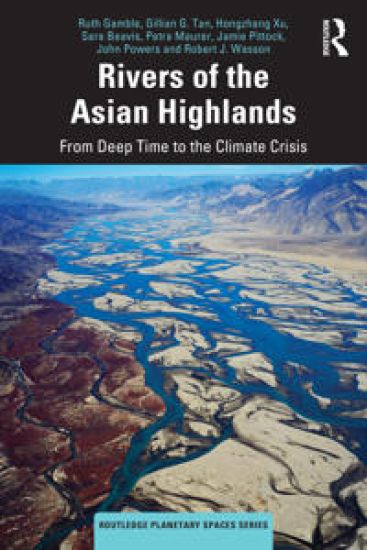
Rivers of the Asian Highlands

Rivers of the Asian Highlands

Ruth Gamble; Gillian G. Tan; Hongzhang Xu; Sara Beavis; Petra Maurer; Jamie Pittock; John Powers; Robert J. Wasson

TAYLOR FRANCIS LTD
2024
nidottu
Rivers of the Asian Highlands introduces readers to the intersecting headwaters of Asia’s eight largest rivers, focusing on the upper reaches of two river systems: the Brahmaputra’s highland tributaries in the eastern Himalayan Mountains and the Dri Chu (upper Yangzi), which descends from the Tibetan Plateau’s east through the Hengduan Mountains. This book guides its readers through these two rivers’ physical, environmental, cultural, social, and political histories before providing a multifaceted assessment of their present. It uses general and detailed insights from multiple disciplines, including anthropology, conservation, geography, geomorphology, climate science, ecology, history, hydrology, and religious studies. The rivers’ stories explain how the catchments’ hazards—earthquakes, landslides, floods, droughts, and erosion—interact with their energetic, hydrological, ecological, cultural, and social abundance. This book’s multiple cultural and disciplinary perspectives on the rivers will interest anyone who wants to understand the rivers of this critically important region as the environment faces climate change and other ecological crises.
Rivers of the Asian Highlands

Rivers of the Asian Highlands

Ruth Gamble; Gillian G. Tan; Hongzhang Xu; Sara Beavis; Petra Maurer; Jamie Pittock; John Powers; Robert J. Wasson

TAYLOR FRANCIS LTD
2024
sidottu
Rivers of the Asian Highlands introduces readers to the intersecting headwaters of Asia’s eight largest rivers, focusing on the upper reaches of two river systems: the Brahmaputra’s highland tributaries in the eastern Himalayan Mountains and the Dri Chu (upper Yangzi), which descends from the Tibetan Plateau’s east through the Hengduan Mountains. This book guides its readers through these two rivers’ physical, environmental, cultural, social, and political histories before providing a multifaceted assessment of their present. It uses general and detailed insights from multiple disciplines, including anthropology, conservation, geography, geomorphology, climate science, ecology, history, hydrology, and religious studies. The rivers’ stories explain how the catchments’ hazards—earthquakes, landslides, floods, droughts, and erosion—interact with their energetic, hydrological, ecological, cultural, and social abundance. This book’s multiple cultural and disciplinary perspectives on the rivers will interest anyone who wants to understand the rivers of this critically important region as the environment faces climate change and other ecological crises.
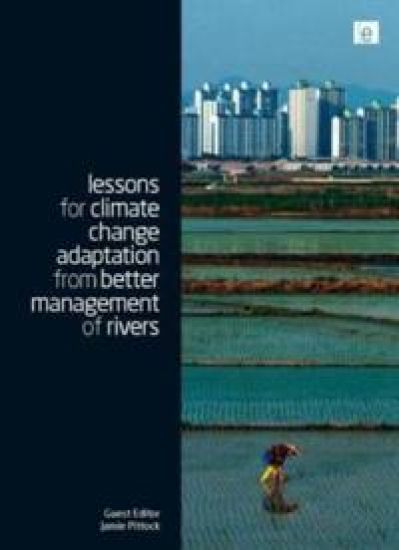
Lessons for Climate Change Adaptation from Better Management of Rivers
Climate change is dramatically affecting freshwater supplies, particularly in the developing world. The papers in this volume present a powerful case for and exploration of different freshwater adaptation strategies in the face of global climatic change. The volume centres on six detailed case studies, from India, China, Mexico, Brazil, the lower Danube basin and Tanzania, written by experienced local academics and practitioners. They assess autonomous adaptation in the freshwater sector, drawing out key lessons about what motivated these societies to change, which factors led to more successful adaptation, and how interventions may best be sustained. The volume also contains a global overview of the lessons derived from these experiences. It sheds light on two key theories: that vulnerability to climate change is best reduced by reducing poverty and promoting sustainable development first, or by reducing bio-physical risks from climate change. The publication also highlights the need to ensure that access to more precise climate change impact data is not used as an excuse to delay implementation of no regrets adaptation measures.
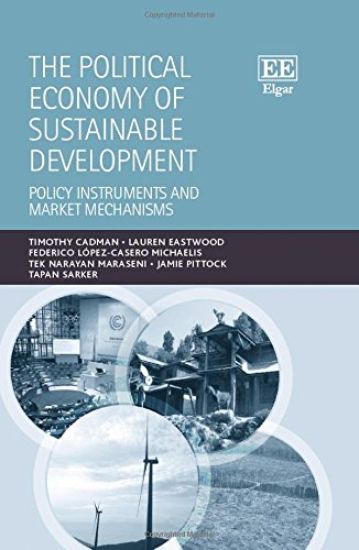
The Political Economy of Sustainable Development

The Political Economy of Sustainable Development

Timothy Cadman; Lauren Eastwood; Federico Lopez-Casero Michaelis; Tek N. Maraseni; Jamie Pittock; Tapan Sarker

Edward Elgar Publishing Ltd
2015
sidottu
Since the Rio 'Earth' Summit of 1992, sustainable development has become the major policy response to tackling global environmental degradation, from climate change to loss of biodiversity and deforestation. Market instruments such as emissions trading, payments for ecosystem services and timber certification have become the main mechanisms for financing the sustainable management of the earth's natural resources. Yet how effective are they - and do they help the planet and developing countries, or merely uphold the economic status quo? This book investigates these important questions. Providing a comprehensive analysis and the latest research on sustainable development, the authors compare the divergent approaches to emissions trading. Included is a detailed investigation into illegal logging and the effectiveness of policy responses, with an evaluation of different forest certification schemes. Biodiversity offsets and environmental payments are also explored. Integral to the book are interviews and opinions of the key stakeholders in the political economy of sustainable development. This uniquely comprehensive analysis of the governance quality of different sustainable development mechanisms, unprecedented in its panorama of comparative case studies, is essential reading for all those in the policy, academic and non-governmental communities.
Lessons for Climate Change Adaptation from Better Management of Rivers
Climate change is dramatically affecting freshwater supplies, particularly in the developing world. The papers in this volume present a powerful case for and exploration of different freshwater adaptation strategies in the face of global climatic change. The volume centres on six detailed case studies, from India, China, Mexico, Brazil, the lower Danube basin and Tanzania, written by experienced local academics and practitioners. They assess autonomous adaptation in the freshwater sector, drawing out key lessons about what motivated these societies to change, which factors led to more successful adaptation, and how interventions may best be sustained. The volume also contains a global overview of the lessons derived from these experiences. It sheds light on two key theories: that vulnerability to climate change is best reduced by reducing poverty and promoting sustainable development first, or by reducing bio-physical risks from climate change. The publication also highlights the need to ensure that access to more precise climate change impact data is not used as an excuse to delay implementation of no regrets adaptation measures.