Kirjojen hintavertailu – 12 859 818 kirjaa ja 27 kauppaa

Kirjailija

Jamieson Webster

Kirjat ja teokset yhdessä paikassa: 9 kirjaa, julkaisuja vuosilta 2013–2026, suosituimpiin kuuluu Piotr Uklanski: Fatal Attraction. Vertaile teosten hintoja ja tarkista saatavuus suomalaisista kirjakaupoista.

9 kirjaa

Kirjojen julkaisuvuodet: 2013–2026.

Piotr Uklanski: Fatal Attraction

Piotr Uklanski: Fatal Attraction

Rosetta Brooks; Douglas Eklund; Jamieson Webster

Rizzoli International Publications
2016
sidottu
A luxurious, richly illustrated monograph, Piotr Uklanski Fatal Attraction consists of images of works made by Piotr Ukla?ski, as well as groupings of images of artworks selected by Ukla?ski from the Met's collections for an accompanying exhibition. Both exhibitions are based on the classical themes of love and death.

On Breathing

On Breathing

Jamieson Webster

Peninsula Press Ltd
2025
nidottu

Halvin toimitettuna 21,80 €

A beautiful, expansive essay about care, dependence, and what it means to breathe in an age of environmental catastrophe A few moments after birth we begin to use our lungs for the first time. From then on, we must continue breathing for as long as we are alive. And although this mostly happens unconsciously, in a society plagued by anxiety, climate change, environmental racism, and illness, there are more and more instances that ‘teach us about the privilege that is breathing.’ Why do we so easily forget the air that we breathe in common? What does it mean to breathe when the environment that sustains life now threatens it? And how can life continue to flourish under conditions that are increasingly toxic? To approach these questions, Jamieson Webster draws on psychoanalytic theory and reflects on her own experiences as an asthmatic teenager, a deep-sea diver, a palliative psychologist during covid, a psychoanalyst attentive to the somatic, and a new mother. The result is a compassionate and timely exploration of air and breathing as a way to undo the pervasive myth of the individual by considering our dependence on invisible systems, on one another, and the way we have violently neglected this important aspect of life.
On Breathing: Care in a Time of Catastrophe
A gorgeous, expansive piece of narrative non-fiction about care, dependence, and what it means to breathe in an age of environmental catastrophe A few moments after birth we begin to use our lungs for the first time. From then on, we must continue breathing for as long as we are alive. And although this mostly happens unconsciously, in a society plagued by anxiety, climate change, environmental racism, and illness, there are more and more instances that "teach us about the privilege that is breathing." Why do we so easily forget the air that we breathe in common? What does it mean to breathe when the environment that sustains life now threatens it? And how can life continue to flourish under conditions that are increasingly toxic? To approach these questions, Jamieson Webster draws on psychoanalytic theory and reflects on her own experiences as an asthmatic teenager, a deep-sea diver, a palliative psychologist during COVID, a psychoanalyst attentive to the somatic, and a new mother. The result is a compassionate and timely exploration of air and breathing as a way to undo the pervasive myth of the individual by considering our dependence on invisible systems, on one another, and the way we have violently neglected this important aspect of life.
Conversion Disorder

Conversion Disorder

Jamieson Webster

Columbia University Press
2022
pokkari
Conversion disorder—a psychiatric term that names the enigmatic transformation of psychic energy into bodily manifestations—offers a way to rethink the present. With so many people suffering from unexplained bodily symptoms; with so many seeking recourse to pharmacological treatments or bodily modification; with young men and women seemingly willing to direct violence toward anybody, including themselves—a radical disordering in culture insists on the level of the body. Part memoir, part clinical case, part theoretical investigation, this book searches for the body. Is it a psychopathological entity; a crossroads for the cultural, political, and biological in the form of care; or the foundation of psychoanalytic work on the question of sexuality? Jamieson Webster traces conversion’s shifting meanings—in religious, economic, and even chemical processes—revisiting the work of thinkers as diverse as Benjamin, Foucault, Agamben, and Lacan. She provides an intimate account of her own conversion from patient to psychoanalyst, as well as her continuing struggle to apprehend the complexities of the patient’s body. When listening to dreams, symptoms, worries, or sexual impasses, the body becomes a defining trope that belies a vulnerable and urgent wish for transformation. Conversion Disorder names what is singular about the entanglement of the fractured body and the social world in order to imagine what kind of cure is possible.
The Life and Death of Psychoanalysis

The Life and Death of Psychoanalysis

Jamieson Webster

Routledge
2019
sidottu
The author believes the discovery of psychoanalysis cannot be separated from Freud's self-analysis and the foundational act of writing about his own dreams. Now that the hype, the 100 years of excitement and building up of the institution of psychoanalysis, is in decline, the time seems ripe for a return to the question of the truth of the discover
Conversion Disorder

Conversion Disorder

Jamieson Webster

Columbia University Press
2018
sidottu
Conversion disorder—a psychiatric term that names the enigmatic transformation of psychic energy into bodily manifestations—offers a way to rethink the present. With so many people suffering from unexplained bodily symptoms; with so many seeking recourse to pharmacological treatments or bodily modification; with young men and women seemingly willing to direct violence toward anybody, including themselves—a radical disordering in culture insists on the level of the body. Part memoir, part clinical case, part theoretical investigation, this book searches for the body. Is it a psychopathological entity; a crossroads for the cultural, political, and biological in the form of care; or the foundation of psychoanalytic work on the question of sexuality? Jamieson Webster traces conversion’s shifting meanings—in religious, economic, and even chemical processes—revisiting the work of thinkers as diverse as Benjamin, Foucault, Agamben, and Lacan. She provides an intimate account of her own conversion from patient to psychoanalyst, as well as her continuing struggle to apprehend the complexities of the patient’s body. When listening to dreams, symptoms, worries, or sexual impasses, the body becomes a defining trope that belies a vulnerable and urgent wish for transformation. Conversion Disorder names what is singular about the entanglement of the fractured body and the social world in order to imagine what kind of cure is possible.
Stay, Illusion!: The Hamlet Doctrine

Stay, Illusion!: The Hamlet Doctrine

Simon Critchley; Jamieson Webster

VINTAGE
2014
nidottu

Halvin toimitettuna 23,20 €

The figure of Hamlet haunts our culture like the Ghost haunts him. Arguably, no literary work, not even the Bible, is more familiar to us than Shakespeare's Hamlet. Everyone knows at least six words from the play; often people know many more. Yet the play--Shakespeare's longest--is more than "passing strange" and becomes deeply unfamiliar when considered closely. Reading Hamlet alongside other writers, philosophers, and psychoanalysts--Carl Schmitt, Walter Benjamin, Freud, Lacan, Nietzsche, Melville, and Joyce--Simon Critchley and Jamieson Webster consider the political context and stakes of Shakespeare's play, its relation to religion, the movement of desire, and the incapacity to love.
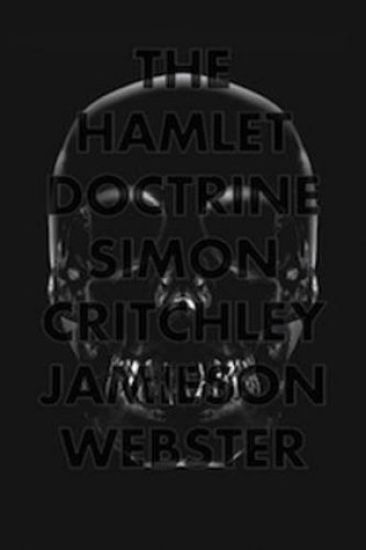
The Hamlet Doctrine

The Hamlet Doctrine

Simon Critchley; Jamieson Webster

Verso Books
2013
sidottu
Arguably, no literary work is more familiar to us than Shakespeare's most famous tragedy. Everyone can quote at least six words from the play; often people know many more. In this riveting and thought-provoking re-examination, philosopher Simon Critchley and psychoanalyst Jamieson Webster explore Hamlet's continued relevance for a modern world no less troubled by existential anxieties than Elizabethan London. Reading the drama alongside writers, philosophers and psychoanalysts-Schmitt, Benjamin, Freud, Lacan, Nietzsche, Melville, and Joyce-the authors delve into the politics of the era, the play's relationship to religion, the exigencies of desire and the incapacity to love. It is an intellectual investigation that leads to a startling conclusion: Hamlet is a play about nothing in which Ophelia emerges as the true hero. From the illusion of theatre and the spectacle of statecraft to the psychological theatre of inhibition and emotion, what Hamlet makes manifest is the modern paradox of our lives: where we know, we cannot act. The Hamlet Doctrine is a passionate encounter with a great work of literature that continues to speak to us across centuries.