Kirjojen hintavertailu – 12 903 724 kirjaa ja 27 kauppaa

Kirjailija

Jan De Vos

Kirjat ja teokset yhdessä paikassa: 10 kirjaa, julkaisuja vuosilta 2012–2020, suosituimpiin kuuluu The Metamorphoses of the Brain – Neurologisation and its Discontents. Vertaile teosten hintoja ja tarkista saatavuus suomalaisista kirjakaupoista.

10 kirjaa

Kirjojen julkaisuvuodet: 2012–2020.

The Digitalisation of (Inter)Subjectivity
This book explores the responsibility of psychological and neuropsychological perspectives in relation to the digitalisation of inter-subjectivity. It examines how integral their theories and models have been to the development of digital technologies, and by combining theoretical and critical work of leading thinkers, it is a new and highly original perspective on (inter)subjectivity in the digital era. The book engages with artificial intelligence and cybernetics and the work of Alan Turing, Norbert Wiener, Marvin Minsky, Gregory Bateson, and Warren McCulloch to demonstrate how their use of neuropsy-theories persists in contemporary digital culture. The author aims to trace a trajectory from psychologisation to neurologisation, and finally, to digitalisation, to make us question the digital future of humankind in relation to the idea of subjectivity, and the threat of the ‘death-drive’ inherent to digitality itself. This volume is fascinating reading for students and researchers in the fields of critical psychology, neuroscience, education studies, philosophy, media studies, and other related areas.

The Digitalisation of (Inter)Subjectivity
This book explores the responsibility of psychological and neuropsychological perspectives in relation to the digitalisation of inter-subjectivity. It examines how integral their theories and models have been to the development of digital technologies, and by combining theoretical and critical work of leading thinkers, it is a new and highly original perspective on (inter)subjectivity in the digital era. The book engages with artificial intelligence and cybernetics and the work of Alan Turing, Norbert Wiener, Marvin Minsky, Gregory Bateson, and Warren McCulloch to demonstrate how their use of neuropsy-theories persists in contemporary digital culture. The author aims to trace a trajectory from psychologisation to neurologisation, and finally, to digitalisation, to make us question the digital future of humankind in relation to the idea of subjectivity, and the threat of the ‘death-drive’ inherent to digitality itself. This volume is fascinating reading for students and researchers in the fields of critical psychology, neuroscience, education studies, philosophy, media studies, and other related areas.

The Metamorphoses of the Brain – Neurologisation and its Discontents
What are we exactly, when we are said to be our brain? This question leads Jan De Vos to examine the different metamorphoses of the brain: the educated brain, the material brain, the iconographic brain, the sexual brain, the celebrated brain and, finally, the political brain. This first, protracted and sustained argument on neurologisation, which lays bare its lineage with psychologisation, should be taken seriously by psychologists, educationalists, sociologists, students of cultural studies, policy makers and, above all, neuroscientists themselves.
Constructions of Neuroscience in Early Childhood Education

Constructions of Neuroscience in Early Childhood Education

Michel Vandenbroeck; Jan De Vos; Wim Fias; Liselott Mariett Olsson; Helen Penn; Dave Wastell; Sue White

Routledge
2017
nidottu
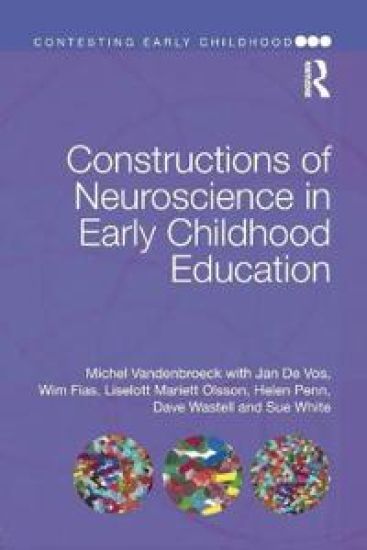
This book explores and critiques topical debates in educational sciences, philosophy, social work and cognitive neuroscience. It examines constructions of children, parents and the welfare state in relation to neurosciences and its vocabulary of brain architecture, critical periods and toxic stress. The authors provide insight into the historical roots of the relationship between early childhood education policy and practice and sciences. The book argues that the neurophilia in the early childhood education field is not a coincidence, but relates to larger societal changes that value economic arguments over ethical, social and eminently pedagogical concerns. It affects the image of the child, the parent and the very meaning of education in general. Constructions of Neuroscience in Early Childhood Education discusses what neuroscience has to offer, what its limitations are, and how to gain a more nuanced view on its benefits and challenges. The debates in this book will support early childhood researchers, students and practitioners in the field to make their own judgements about new evolutions in the scientific discourse.
Constructions of Neuroscience in Early Childhood Education

Constructions of Neuroscience in Early Childhood Education

Michel Vandenbroeck; Jan De Vos; Wim Fias; Liselott Mariett Olsson; Helen Penn; Dave Wastell; Sue White

Routledge
2017
sidottu
This book explores and critiques topical debates in educational sciences, philosophy, social work and cognitive neuroscience. It examines constructions of children, parents and the welfare state in relation to neurosciences and its vocabulary of brain architecture, critical periods and toxic stress. The authors provide insight into the historical roots of the relationship between early childhood education policy and practice and sciences. The book argues that the neurophilia in the early childhood education field is not a coincidence, but relates to larger societal changes that value economic arguments over ethical, social and eminently pedagogical concerns. It affects the image of the child, the parent and the very meaning of education in general. Constructions of Neuroscience in Early Childhood Education discusses what neuroscience has to offer, what its limitations are, and how to gain a more nuanced view on its benefits and challenges. The debates in this book will support early childhood researchers, students and practitioners in the field to make their own judgements about new evolutions in the scientific discourse.
The Metamorphoses of the Brain – Neurologisation and its Discontents
What are we exactly, when we are said to be our brain? This question leads Jan De Vos to examine the different metamorphoses of the brain: the educated brain, the material brain, the iconographic brain, the sexual brain, the celebrated brain and, finally, the political brain. This first, protracted and sustained argument on neurologisation, which lays bare its lineage with psychologisation, should be taken seriously by psychologists, educationalists, sociologists, students of cultural studies, policy makers and, above all, neuroscientists themselves.
Psychologisation in Times of Globalisation
Today more than ever, our understanding of ourselves, others and the world around us is described in psychological terms. Psychologists deeply influence our society, and psychological-discourse has invaded companies, advertising, culture, politics, and even our social and family life. Moreover, psychologisation has become a global process, applied to situations such as torture, reality TV and famine. This book analyses this ‘overflow of psychology’ in the three main areas of science, culture and politics. The concept of psychologisation has become crucial to current debates in critical psychology. De Vos combines these debates with insights from the fields of critical theory, philosophy and ideology critique, to present the first book-length argument that seriously considers the concept of psychologisation in these times of globalisation. The book contains numerous real-world examples making it an accessible and engaging analysis that should be of interest to researchers, postgraduates and undergraduate students of psychology and philosophy.
Psychologisation in Times of Globalisation
Today more than ever, our understanding of ourselves, others and the world around us is described in psychological terms. Psychologists deeply influence our society, and psychological-discourse has invaded companies, advertising, culture, politics, and even our social and family life. Moreover, psychologisation has become a global process, applied to situations such as torture, reality TV and famine. This book analyses this ‘overflow of psychology’ in the three main areas of science, culture and politics. The concept of psychologisation has become crucial to current debates in critical psychology. De Vos combines these debates with insights from the fields of critical theory, philosophy and ideology critique, to present the first book-length argument that seriously considers the concept of psychologisation in these times of globalisation. The book contains numerous real-world examples making it an accessible and engaging analysis that should be of interest to researchers, postgraduates and undergraduate students of psychology and philosophy.