Kirjojen hintavertailu – 12 859 828 kirjaa ja 27 kauppaa

Kirjailija

Jan Schwarz

Kirjat ja teokset yhdessä paikassa: 5 kirjaa, julkaisuja vuosilta 2015–2025, suosituimpiin kuuluu Jiddisch i Sverige : mir zaynen do, Vol 1. Vertaile teosten hintoja ja tarkista saatavuus suomalaisista kirjakaupoista.

5 kirjaa

Kirjojen julkaisuvuodet: 2015–2025.

Jiddisch i Sverige : mir zaynen do, Vol 1

Jiddisch i Sverige : mir zaynen do, Vol 1

Sofia Berg-Böhm; Håkan Blomqvist; Dorotea Bromberg; Karin Brygger; Urszula Ulla Chowaniec; Ronn Elfors Lipsker; Sari Feld; Alexander Freudenthal; Marianne Goldman; Danny Gordon; Bernt Hermele; Kenneth Hyltenstam; Erik Joas; Ulrika Knutson; Hannah Laustiola Frydman; Sara Mannheimer; Stefan Mehr; Tommaso M. Milani; Simo Muir; Morton Narrowe; Adriana Savin; Aviva Scheiman; Abbe Schulman; Salomon Schulman; Jan Schwarz; Leif Zern

Dos Nisele AB
2025
sidottu
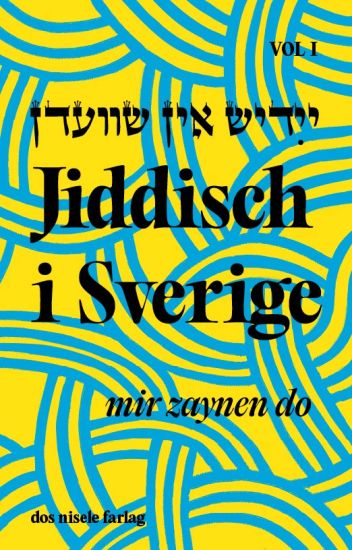
Antologin Jiddisch i Sverige: mir zaynen do samlar 25 berättelser om ett judiskt språk och kultur som vägrar försvinna. En berättelse för varje år som jiddisch varit ett erkänt nationellt minoritetsspråk i Sverige. Texterna rör sig mellan barndomsminnen och litterära möten, mellan bänkraderna i shul och barrikaderna, mellan Drohobych och Klippgatan. Skribenterna skiljer sig åt i ålder, bakgrund, politisk och religiös övertygelse, men delar insikten att jiddisch på olika sätt har format dem. Detta är den första av två antologier där jiddischvärlden står i centrum. En plats dit alla är välkomna. Ett ovanligt rum i dessa tider. Denna volym är tillägnad Salomon Schulman (1947–2024), som med sina berättelser, översättningar och kloka läkarråd lärde en hel generation att älska, käfta och sjunga – på jiddisch – i Sverige. Författarna är: Sofia Berg-Böhm, Håkan Blomqvist, Dorotea Bromberg, Karin Brygger, Urszula Ulla Chowaniec, Ronn Elfors Lipsker, Sari Feld, Alexander Freudenthal, Marianne Goldman, Danny Gordon, Bernt Hermele, Kenneth Hyltenstam, Erik Joas, Ulrika Knutson, Hannah Laustiola Frydman, Sara Mannheimer, Stefan Mehr, Tommaso M. Milani, Simo Muir, Morton Narrowe, Adriana Savin, Aviva Scheiman, Abbe Schulman, Salomon Schulman, Jan Schwarz och Leif Zern.
Shakroeïk

Shakroeïk

Jan Schwarz

tredition GmbH
2021
sidottu
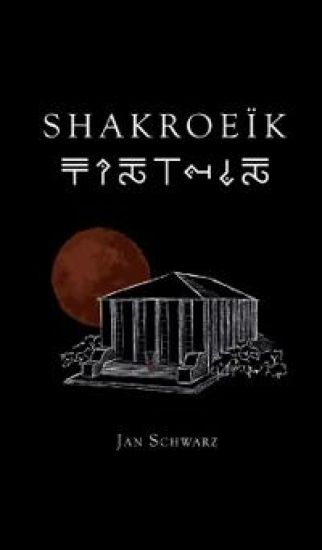
Unter dem roten Mond Eishor geraten die alten Ordnungen ins Wanken. Neue Kr fte fordern die Ara des Schwarzen Reiches Ta n, die Klans des Wei en Reiches Ehortt und den Memeh des Goldenen Reiches Sewasdar heraus. Fortschritt und Krieg ver ndern das Angesicht der Welt. Wer wird die Hoffnung auf eine bessere Zukunft erf llen - oder alle ins Verderben st rzen? Dies ist die Geschichte einer ra, von der Gr ndung eines neuen Staates, von umst rzlerischen Ideen, von der Verf hrung der Macht und vom Versprechen der Freiheit. Dies ist die Geschichte von Sharnog, Atae r, Alnika und Esa .
Survivors and Exiles

Survivors and Exiles

Jan Schwarz

Wayne State University Press
2021
nidottu
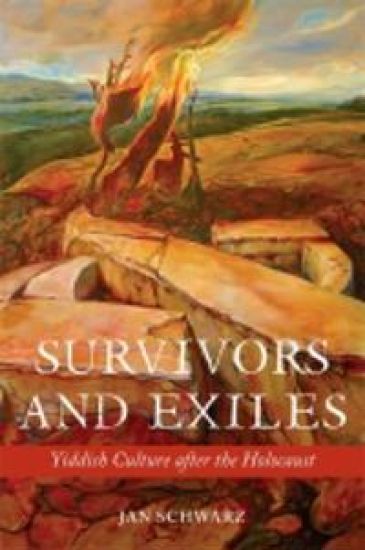
After the Holocaust's near complete destruction of European Yiddish cultural centers, the Yiddish language was largely viewed as a remnant of the past, tragically eradicated in its prime. In Survivors and Exiles: Yiddish Culture after the Holocaust, Jan Schwarz reveals that, on the contrary, Yiddish culture in the two and a half decades after the Holocaust was in dynamic flux. Yiddish writers and cultural organizations maintained a staggering level of activity in fostering publications and performances, collecting archival and historical materials, and launching young literary talents. Schwarz traces the transition from the Old World to the New through the works of seven major Yiddish writers-including well-known figures (Isaac Bashevis Singer, Avrom Sutzkever, Yankev Glatshteyn, and Chaim Grade) and some who are less well known (Leib Rochman, Aaron Zeitlin, and Chava Rosenfarb). The first section, Ground Zero, presents writings forged by the crucible of ghettos and concentration camps in Vilna, Lodz, and Minsk-Mazowiecki. Subsequent sections, Transnational Ashkenaz and Yiddish Letters in New York, examine Yiddish culture behind the Iron Curtain, in Israel and the Americas. Two appendixes list Yiddish publications in the book series Dos poylishe yidntum (published in Buenos Aires, 1946-66) and offer transliterations of Yiddish quotes. Survivors and Exiles charts a transnational post-Holocaust network in which the conflicting trends of fragmentation and globalization provided a context for Yiddish literature and artworks of great originality. Schwarz includes a wealth of examples and illustrations from the works under discussion, as well as photographs of creators, making this volume not only a critical commentary on Yiddish culture but also an anthology of sorts. Readers interested in Yiddish studies, Holocaust studies, and modern Jewish studies will find Survivors and Exiles a compelling contribution to these fields.
Survivors and Exiles

Survivors and Exiles

Jan Schwarz

Wayne State University Press
2015
sidottu
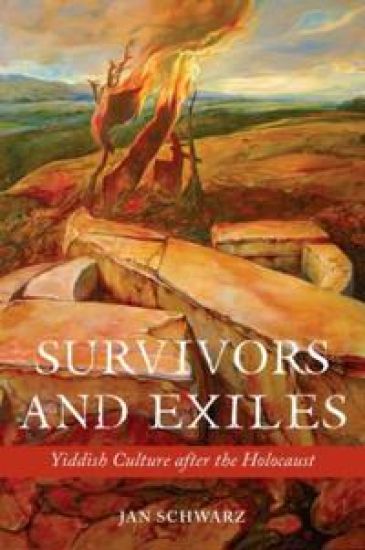
After the Holocaust's near complete destruction of European Yiddish cultural centers, the Yiddish language was largely viewed as a remnant of the past, tragically eradicated in its prime. In Survivors and Exiles: Yiddish Culture after the Holocaust, Jan Schwarz reveals that, on the contrary, Yiddish culture in the two and a half decades after the Holocaust was in dynamic flux. Yiddish writers and cultural organizations maintained a staggering level of activity in fostering publications and performances, collecting archival and historical materials, and launching young literary talents. Schwarz traces the transition from the Old World to the New through the works of seven major Yiddish writers-including well-known figures (Isaac Bashevis Singer, Avrom Sutzkever, Yankev Glatshteyn, and Chaim Grade) and some who are less well known (Leib Rochman, Aaron Zeitlin, and Chava Rosenfarb). The first section, Ground Zero, presents writings forged by the crucible of ghettos and concentration camps in Vilna, Lodz, and Minsk-Mazowiecki. Subsequent sections, Transnational Ashkenaz and Yiddish Letters in New York, examine Yiddish culture behind the Iron Curtain, in Israel and the Americas. Two appendixes list Yiddish publications in the book series Dos poylishe yidntum (published in Buenos Aires, 1946-66) and offer transliterations of Yiddish quotes. Survivors and Exiles charts a transnational post-Holocaust network in which the conflicting trends of fragmentation and globalization provided a context for Yiddish literature and artworks of great originality. Schwarz includes a wealth of examples and illustrations from the works under discussion, as well as photographs of creators, making this volume not only a critical commentary on Yiddish culture but also an anthology of sorts. Readers interested in Yiddish studies, Holocaust studies, and modern Jewish studies will find Survivors and Exiles a compelling contribution to these fields.