Kirjojen hintavertailu – 12 859 819 kirjaa ja 27 kauppaa

Kirjailija

Jan Shipps

Kirjat ja teokset yhdessä paikassa: 4 kirjaa, julkaisuja vuosilta 1987–2013, suosituimpiin kuuluu Sojourner in the Promised Land. Vertaile teosten hintoja ja tarkista saatavuus suomalaisista kirjakaupoista.

4 kirjaa

Kirjojen julkaisuvuodet: 1987–2013.

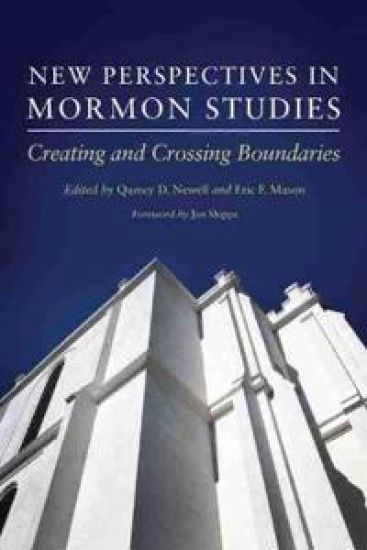
New Perspectives in Mormon Studies

New Perspectives in Mormon Studies

Jan Shipps

University of Oklahoma Press
2013
nidottu
Scholarship in Mormon studies has often focused on a few key events and individuals in Mormon history. The essays collected by Quincy D. Newell and Eric F. Mason in this interdisciplinary volume expand the conversation. One of the main purposes of this volume is to define and cross boundaries. Part 1 addresses internal boundaries - walls that divide some Mormons from others. One chapter examines Joseph Smith's writings on economic matters and argues that he sought to make social distinctions irrelevant. Another considers Jane James, an African American Latter-day Saint, and her experiences at the intersection of religious and racial identityIn part 2, contributors consider Mormonism's influence on Pentecostal leader John Alexander Dowie and relationships between Mormonism and other religious movements, including Methodism and Presbyterianism. Other chapters compare Mormonism and Islam and examine the group Ex-Mormons for Jesus/Saints Alive in Jesus. Part 3 deals with Mormonism in the academy and the ongoing evolution of Mormon studies. Written by contributors from a variety of backgrounds, these essays will spark scholarly dialogue across the disciplines.

Sojourner in the Promised Land

Sojourner in the Promised Land

Jan Shipps

University of Illinois Press
2006
nidottu
Infused with Jan Shipps's lively curiosity, scholarly rigor, and contagious fascination with a significant subculture, Sojourner in the Promised Land presents a distinctive parallel history in which Shipps surrounds her professional writings about the Latter-day Saints with an ongoing personal description of her encounters with them. By combining a portrait of the dynamic evolution of contemporary Mormonism with absorbing intellectual autobiography, Shipps illuminates the Mormons and at the same time shares with the reader what it has been like to be on the outside of a culture that remains both familiar and strange.
The Mountain Meadows Massacre

The Mountain Meadows Massacre

Juanita Brooks; Jan Shipps

University of Oklahoma Press
1991
nidottu
In the Fall of 1857, some 120 California-bound emigrants were killed in lonely Mountain Meadows in southern Utah; only eighteen young children were spared. The men on the ground after the bloody deed took an oath that they would never mention the event again, either in public or in private. The leaders of the Mormon church also counseled silence. The first report, soon after the massacre, described it as an Indian onslaught at which a few white men were present, only one of whom, John D. Lee, was actually named. With admirable scholarship, Mrs. Brooks has traced the background of conflict, analyzed the emotional climate at the time, pointed up the social and military organization in Utah, and revealed the forces which culminated in the great tragedy at Mountain Meadows. The result is a near-classic treatment which neither smears nor clears the participants as individuals. It portrays an atmosphere of war hysteria, whipped up by recitals of past persecutions and the vision of an approaching ""army"" coming to drive the Mormons from their homes.
Mormonism

Mormonism

Jan Shipps

University of Illinois Press
1987
nidottu
"Without fully and consciously realizing that they were doing so, the followers of Jesus established a new religious tradition. This book tells the story of yet another assembly of saints whose history, I believe, is in many respects analogous to the history of those early Christians who thought at first that they had found the only proper way to be Jews. Mormonism started to grow away from traditional Christianity almost immediately upon coming into existence. It began as a movement that understood itself as Christian, but. . . these nineteenth-century Latter-day Saints (as they came to be called) embarked on a path that led to developments that now distinguish their tradition from the Christian tradition as surely as early Christianity was distinguished from its Hebraic context."--From the preface