Kirjojen hintavertailu – 12 859 829 kirjaa ja 27 kauppaa

Kirjailija

Jan T. Gross

Kirjat ja teokset yhdessä paikassa: 11 kirjaa, julkaisuja vuosilta 2002–2024, suosituimpiin kuuluu Cannibal Island. Vertaile teosten hintoja ja tarkista saatavuus suomalaisista kirjakaupoista.

11 kirjaa

Kirjojen julkaisuvuodet: 2002–2024.

Cannibal Island

Cannibal Island

Nicolas Werth; Jan T. Gross

PRINCETON UNIVERSITY PRESS
2024
pokkari

Halvin toimitettuna 27,90 €

A searing historical account of a tragic episode of the Stalinist terrorDuring the spring of 1933, Stalin’s police rounded up nearly one hundred thousand people as part of the Soviet regime’s “cleansing” of Moscow and Leningrad and deported them to Siberia. Many of the victims were sent to labor camps, but ten thousand of them were dumped in a remote wasteland and left to fend for themselves. Cannibal Island reveals the shocking, grisly truth about their fate. These people were abandoned on the island of Nazino without food or shelter. Left there to starve and to die, they eventually began to eat each other. Nicolas Werth, a French historian of the Soviet era, reconstructs their gruesome final days using rare archival material from deep inside the Stalinist vaults. Werth skillfully weaves this episode into a broader story about the Soviet frenzy in the 1930s to purge society of all those deemed to be unfit. For Stalin, these undesirables included criminals, opponents of forced collectivization, vagabonds, gypsies, even entire groups in Soviet society such as the “kulaks” and their families. Werth sets his story within the broader social and political context of the period, giving us for the first time a full picture of how Stalin’s system of “special villages” worked, how hundreds of thousands of Soviet citizens were moved about the country in wholesale mass transportations, and how this savage bureaucratic machinery functioned on the local, regional, and state levels. Cannibal Island challenges us to confront unpleasant facts not only about Stalin’s punitive social controls and his failed Soviet utopia but about every generation’s capacity for brutality—including our own.
Cannibal Island

Cannibal Island

Nicolas Werth; Jan T. Gross

PRINCETON UNIVERSITY PRESS
2007
sidottu
During the spring of 1933, Stalin's police rounded up nearly one hundred thousand people as part of the Soviet regime's "cleansing" of Moscow and Leningrad and deported them to Siberia. Many of the victims were sent to labor camps, but ten thousand of them were dumped in a remote wasteland and left to fend for themselves. Cannibal Island reveals the shocking, grisly truth about their fate. These people were abandoned on the island of Nazino without food or shelter. Left there to starve and to die, they eventually began to eat each other. Nicolas Werth, a French historian of the Soviet era, reconstructs their gruesome final days using rare archival material from deep inside the Stalinist vaults. Werth skillfully weaves this episode into a broader story about the Soviet frenzy in the 1930s to purge society of all those deemed to be unfit. For Stalin, these undesirables included criminals, opponents of forced collectivization, vagabonds, gypsies, even entire groups in Soviet society such as the "kulaks" and their families. Werth sets his story within the broader social and political context of the period, giving us for the first time a full picture of how Stalin's system of "special villages" worked, how hundreds of thousands of Soviet citizens were moved about the country in wholesale mass transportations, and how this savage bureaucratic machinery functioned on the local, regional, and state levels. Cannibal Island challenges us to confront unpleasant facts not only about Stalin's punitive social controls and his failed Soviet utopia, but about every generation's capacity for brutality--including our own.
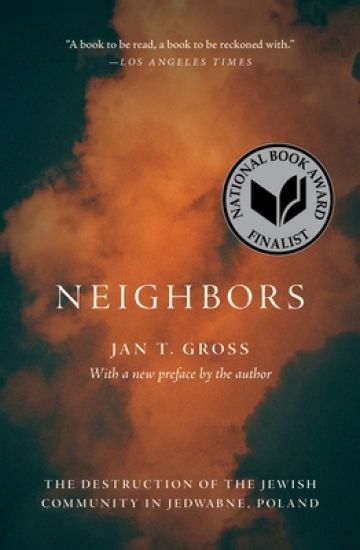
Neighbors

Neighbors

Jan T. Gross

PRINCETON UNIVERSITY PRESS
2022
pokkari
A landmark book that changed the story of Poland’s role in the HolocaustOn July 10, 1941, in Nazi-occupied Poland, half of the town of Jedwabne brutally murdered the other half: 1,600 men, women, and children—all but seven of the town’s Jews. In this shocking and compelling classic of Holocaust history, Jan Gross reveals how Jedwabne’s Jews were murdered not by faceless Nazis but by people who knew them well—their non-Jewish Polish neighbors. A previously untold story of the complicity of non-Germans in the extermination of the Jews, Neighbors shows how people victimized by the Nazis could at the same time victimize their Jewish fellow citizens. In a new preface, Gross reflects on the book’s explosive international impact and the backlash it continues to provoke from right-wing Polish nationalists who still deny their ancestors’ role in the destruction of the Jews.
Les Voisins: 10 Juillet 1941. Un Massacre de Juifs En Pologne
Le massacre collectif des Juifs de Jedwabne dans le courant de l'ete 1941 rouvre le dossier de l'historiographie des relations entre Polonais et Juifs au cours de la Seconde Guerre mondiale. Il faut mettre de cote les sedatifs administres depuis plus de cinquante ans par les historiens et les journalistes. Il est tout simplement inexact que les Juifs massacres en Pologne au cours de la guerre l'aient ete uniquement par les Allemands, a l'occasion assistes dans l'execution de leur besogne macabre par des formations d'auxiliaires de police essentiellement composees de Lettons, d'Ukrainiens et autres Kalmouks , pour ne dire mot des legendaires boucs emissaires que chacun fustigeait parce qu'il n'etait pas facile d'assumer la responsabilite de ce qu'il avait fait - les szmalcowniks, les extorqueurs qui se firent une specialite de faire chanter les Juifs essayant de vivre dans la clandestinite. En les designant comme coupables, les historiens et autres ont trouve commode de clore ce chapitre et d'expliquer que toute societe a sa lie , qu'il ne s'agissait que d'une poignee de marginaux et que, de toute maniere, des cours clandestines s'occuperent d'eux. ...]En verite, il nous faut repenser l'histoire polonaise de la guerre et de l'apres-guerre, mais aussi reevaluer certains themes interpretatifs largement acceptes comme explications des faits, attitudes et institutions de ces annees-la. J. T.
Polish Society Under German Occupation

Polish Society Under German Occupation

Jan T. Gross

PRINCETON UNIVERSITY PRESS
2019
sidottu
By combining historical and political analysis with a sophisticated sociological approach, Jane Gross offers a new itnerpretations of the German occupation of Poland during World War II. Based on his hypothesis that a society cannot be destroyed by coercion short of the physical annihilation of its members, his work has a twofold aim; to examine the model of German occupation in theory and in practice, and to identify the patterns of collective behavior that emerged among the Polish people in response to the social control exercised over them. The author argues taht when an occupier provdies no institutions through which a lcoal population can at least minimally satisfy its social needs, the subjugated populace builds substituted institutions on the remnants of previous forms of its collective life. These substitutes constitute the society's self-defense, to which the occupier must in some way adjust if its goals of manipulation and exploitation are to be achieved. Professor Gross points out numerous ways in which the Poles under the General gouvernement circumvented the goals and authority of the German occupiers. Most significant was the emergence of the Polish underground, which took on the leadership, social welfare, political, and financial functions of an independent state. This phenomenon, he concludes, shows that resistance should not be conceived merely as a military movement but rather as a complex social phenomenon. Jan Tomasz Gross is Assistant Professor of Sociology at Yale University. Originally published in 1979. The Princeton Legacy Library uses the latest print-on-demand technology to again make available previously out-of-print books from the distinguished backlist of Princeton University Press. These editions preserve the original texts of these important books while presenting them in durable paperback and hardcover editions. The goal of the Princeton Legacy Library is to vastly increase access to the rich scholarly heritage found in the thousands of books published by Princeton University Press since its founding in 1905.
Polish Society Under German Occupation

Polish Society Under German Occupation

Jan T. Gross

Princeton University Press
2019
pokkari
By combining historical and political analysis with a sophisticated sociological approach, Jane Gross offers a new itnerpretations of the German occupation of Poland during World War II. Based on his hypothesis that a society cannot be destroyed by coercion short of the physical annihilation of its members, his work has a twofold aim; to examine the model of German occupation in theory and in practice, and to identify the patterns of collective behavior that emerged among the Polish people in response to the social control exercised over them. The author argues taht when an occupier provdies no institutions through which a lcoal population can at least minimally satisfy its social needs, the subjugated populace builds substituted institutions on the remnants of previous forms of its collective life. These substitutes constitute the society's self-defense, to which the occupier must in some way adjust if its goals of manipulation and exploitation are to be achieved. Professor Gross points out numerous ways in which the Poles under the General gouvernement circumvented the goals and authority of the German occupiers. Most significant was the emergence of the Polish underground, which took on the leadership, social welfare, political, and financial functions of an independent state. This phenomenon, he concludes, shows that resistance should not be conceived merely as a military movement but rather as a complex social phenomenon. Jan Tomasz Gross is Assistant Professor of Sociology at Yale University. Originally published in 1979. The Princeton Legacy Library uses the latest print-on-demand technology to again make available previously out-of-print books from the distinguished backlist of Princeton University Press. These editions preserve the original texts of these important books while presenting them in durable paperback and hardcover editions. The goal of the Princeton Legacy Library is to vastly increase access to the rich scholarly heritage found in the thousands of books published by Princeton University Press since its founding in 1905.
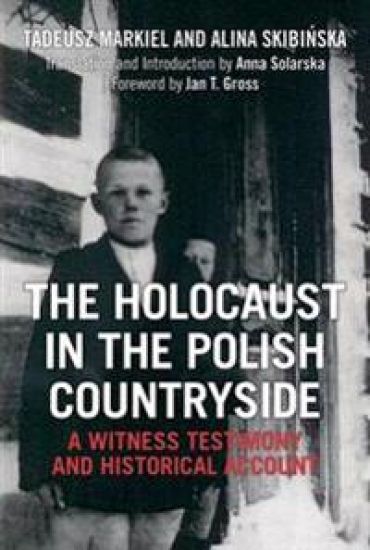
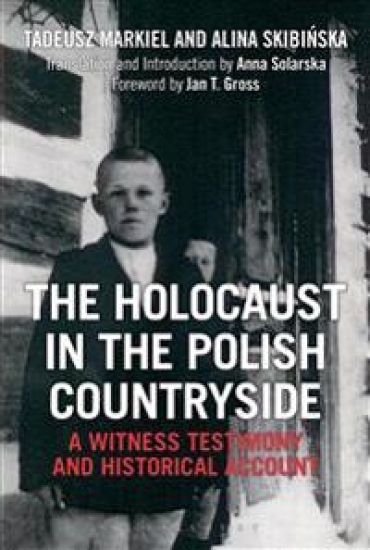
The Holocaust in the Polish Countryside

The Holocaust in the Polish Countryside

Tadeusz Markiel; Alina Skibinska; Jan T. Gross

Bloomsbury Academic
2017
sidottu
The Holocaust in the Polish Countryside brings the incredibly moving first-hand witness testimony of Tadeusz Markiel and his recollection of life as a Polish Catholic boy in the rural town of Gniewczyna to an English-speaking audience for the first time. His narrative, supplemented with extensive academic footnotes from Alina Skibinska, recounts life in the Polish countryside prior to the Nazis, before describing in horrific detail the torture, rape, pillaging and betrayal of his Jewish neighbours. Skibinska, a founding member of the world-renowned Polish Centre for Holocaust Research, then builds on this with a sensitive historical account that serves to corroborate, enrich and contextualise Markiel's testimony. This book, which also includes a Foreword by Neighbors and Golden Harvest author Jan T. Gross and useful transcripts from post-war trials and correspondence between residents and former residents of Gniewczyna, is of incredible significance to anyone seeking to further their understanding of the Holocaust. It provides readers with extensive source material, in English here for the first time, and delivers new insights into burgeoning Holocaust studies topics like the pillaging of the Jews, the Holocaust in rural areas, and notions concerning the witness and the role of the past in the present.
The Holocaust in the Polish Countryside

The Holocaust in the Polish Countryside

Tadeusz Markiel; Alina Skibinska; Jan T. Gross

Bloomsbury Academic
2017
nidottu
The Holocaust in the Polish Countryside brings the incredibly moving first-hand witness testimony of Tadeusz Markiel and his recollection of life as a Polish Catholic boy in the rural town of Gniewczyna to an English-speaking audience for the first time. His narrative, supplemented with extensive academic footnotes from Alina Skibinska, recounts life in the Polish countryside prior to the Nazis, before describing in horrific detail the torture, rape, pillaging and betrayal of his Jewish neighbours. Skibinska, a founding member of the world-renowned Polish Centre for Holocaust Research, then builds on this with a sensitive historical account that serves to corroborate, enrich and contextualise Markiel's testimony. This book, which also includes a Foreword by Neighbors and Golden Harvest author Jan T. Gross and useful transcripts from post-war trials and correspondence between residents and former residents of Gniewczyna, is of incredible significance to anyone seeking to further their understanding of the Holocaust. It provides readers with extensive source material, in English here for the first time, and delivers new insights into burgeoning Holocaust studies topics like the pillaging of the Jews, the Holocaust in rural areas, and notions concerning the witness and the role of the past in the present.
Golden Harvest

Golden Harvest

Jan T. Gross; Irena Grudzinska Gross

Oxford University Press Inc
2012
sidottu
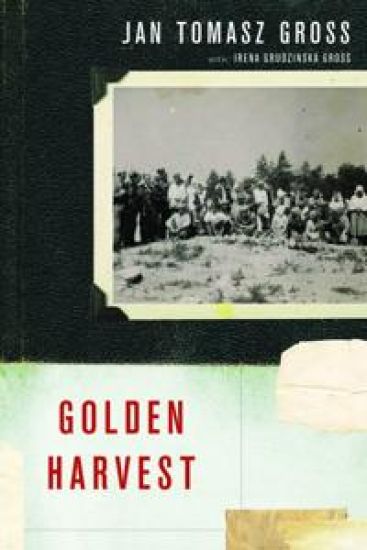
It seems at first commonplace: a photograph of peasants at harvest time, after work well done, resting contentedly with their tools, behind the fruits of their labor. But when one finally notices that what seemed innocent on first view becomes horrific: the crops scattered in front of the group are skulls and bones. Where are we? Who are the people in the photograph, and what are they doing? The starting point of Jan Gross's A Golden Harvest, this haunting photograph in fact depicts a group of peasants--"diggers" atop a mountain of ashes at Treblinka, where some 800,000 Jews were gassed and cremated. The diggers are hoping to find gold and precious stones that Nazi executioners may have overlooked. The story captured in this grainy black-and-white photograph symbolizes the vast, continent-wide plunder of Jewish wealth. The seizure of Jewish assets during World War II occasionally generates widespread attention when Swiss banks are challenged to produce lists of dormant accounts, or national museums are forced to return stolen paintings. The theft of this wealth was not limited to conquering armies, leading banks, and museums, but to local populations such as those pictured in the photograph. Based upon a simple group shot, this moving book evokes the depth and range, as well as the intimacy, of the final solution.
Fear

Fear

Jan T. Gross

Princeton University Press
2006
sidottu
Poland suffered an exceedingly brutal Nazi occupation during the Second World War - close to five million Poles were killed. This book attempts to answer the question: How was anti-Semitism possible in Poland after the war? It argues that postwar Polish anti-Semitism cannot be understood simply as a continuation of prewar attitudes.
Revolution from Abroad

Revolution from Abroad

Jan T. Gross

Princeton University Press
2002
pokkari
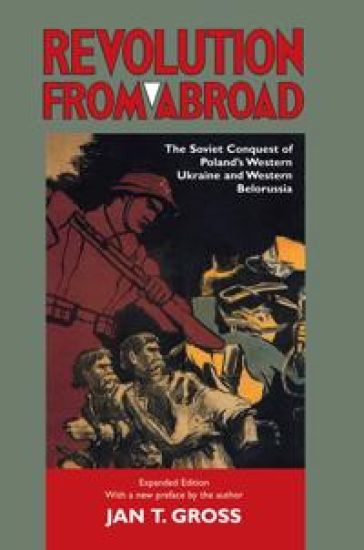
Jan Gross describes the terrors of the Soviet occupation of the lands that made up eastern Poland between the two world wars: the Western Ukraine and Western Belorussia. His lucid analysis of the revolution that came to Poland from abroad is based on hundreds of first-hand accounts of the hardship, suffering, and social chaos that accompanied the Sovietization of this poorest section of a poverty-stricken country. Woven into the author's exploration of events from the Soviet's German-supported aggression against Poland in September of 1939 to Germany's attack on the Soviet Union in June 1941, these testimonies not only illuminate his conclusions about the nature of totalitarianism but also make a powerful statement of their own. Those who endured the imposition of Soviet rule and mass deportations to forced resettlement, labor camps, and prisons of the Soviet Union are here allowed to speak for themselves, and they do so with grim effectiveness.