Kirjojen hintavertailu – 12 859 819 kirjaa ja 27 kauppaa

Kirjailija

Jan Willem Drijvers

Kirjat ja teokset yhdessä paikassa: 11 kirjaa, julkaisuja vuosilta 1991–2022, suosituimpiin kuuluu Philological and Historical Commentary on Ammianus Marcellinus XXXI. Vertaile teosten hintoja ja tarkista saatavuus suomalaisista kirjakaupoista.

11 kirjaa

Kirjojen julkaisuvuodet: 1991–2022.

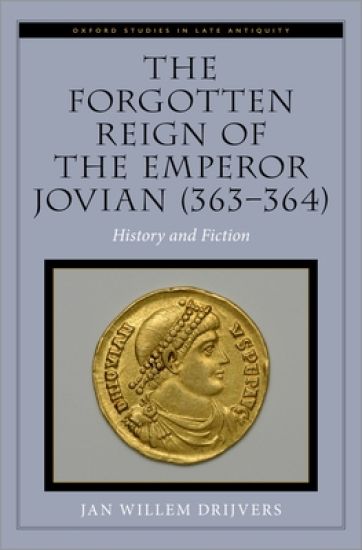
The Forgotten Reign of the Emperor Jovian (363-364)

The Forgotten Reign of the Emperor Jovian (363-364)

Jan Willem Drijvers

OXFORD UNIVERSITY PRESS INC
2022
sidottu
The Forgotten Reign of the Emperor Jovian (363-364): History and Fiction offers a new assessment of the Roman emperor's brief rule. A former imperial bodyguard, Jovian reinvigorated the Roman Empire militarily, administratively, and religiously. More than an imperial footnote, the years 363-364 restored the Roman empire after the failed reign of Julian. Jovian returned to the policies of Constantius II and Constantine the Great and his political legacy continued to endure with his successors Valentinian I and Valens, especially in the realm of religion. Jan Willem Drijvers' newest edition tracks the intricacies of Jovian's election, offers a novel evaluation of his peace agreement with Shapur II, and examines Jovian's self-representation. For an emperor who ruled only eight months, Jovian had an unexpected and surprising afterlife. In the rarely studied and largely unknown historical fiction piece The Julian Romance, Jovian is presented as the ideal Christian emperor and a new Constantine. In comparison with other sources, the Syriac Romance also offers a surprising and different perspective on his personal associations and reign. The Forgotten Reign challenges readers to rethink Jovian's reign and other imperial figures largely forgotten by history. Ultimately, the book reveals the legacy of Jovian's role in Roman-Persian relations and the positioning of Edessa in the late antique world of Christendom.
Philological and Historical Commentary on Ammianus Marcellinus XXXI

Philological and Historical Commentary on Ammianus Marcellinus XXXI

Jan Boeft; Jan Willem Drijvers; Daniël Hengst; Hans C. Teitler

BRILL
2017
sidottu
This is the final volume in the series of commentaries on Ammianus' Res Gestae. The last book of Ammianus Marcellinus’ Res Gestae is the most important source for a momentous event in European history: the invasion of the Goths across the Danube border into the Roman Empire and the ensuing battle of Adrianople (378 CE), in which a Roman army was annihilated and the emperor Valens lost his life. Many contemporaries were of the opinion that this defeat heralded the decline of the Empire. Ammianus is sharply critical of the way Valens and his generals handled the military situation, but holds on to his belief in the permanence of Roma Aeterna, reminding his readers of earlier crises from which the Empire had recovered and pointing to the incompetence of the barbarians in siege craft.
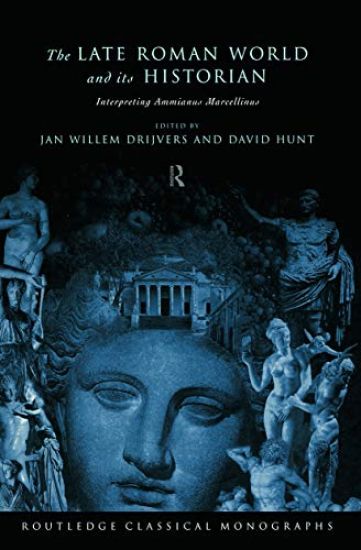
The Late Roman World and Its Historian

The Late Roman World and Its Historian

Jan Willem Drijvers; David Hunt

Routledge
2012
nidottu
Ammianus Marcellinus, Greek by birth but writing in Latin c. AD 390, was the last great Roman historian. His writings are an indispensable basis for our knowledge of the late Roman world. This book represents a collection of papers analysing Ammianus's writings from a variety of perspective, including Ammianus as historian of, and participant in, Julian's Persian campaign, his identification with traditional religious attitudes and values in Rome and his view of the Persian Magi. The contributors engage especially with the concept of self-identification. They address the tension of Ammianus' dual role as both 'outside' external narrator and at the same time and 'insider' to the contemporary experiences and events which make up his surviving history.
Philological and Historical Commentary on Ammianus Marcellinus XXVIII

Philological and Historical Commentary on Ammianus Marcellinus XXVIII

Jan Boeft; Jan Willem Drijvers; Daniël Hengst; Hans Teitler

BRILL
2011
sidottu
In Book 28 Ammianus describes the military activity of Valentinian on the Rhine. The historian speaks with admiration about his efforts to strengthen the northwestern border of the empire. He shows a similar esteem for the general Theodosius, who re-established order in Britain. However, in the greater part of Book 28 there is an air of gloom. Ammianus writes reluctantly about the judicial terror inflicted on the Roman aristocracy by powerful magistrates. In his digression about Roman manners he speaks with contempt about the senatorial elite and the Roman plebs, because they fail to live up to the standards of their ancestors. The final chapter illustrates the disastrous effects of the mismanagement of the province of Tripolis by corrupt officials.
Philological and Historical Commentary on Ammianus Marcellinus XXVII

Philological and Historical Commentary on Ammianus Marcellinus XXVII

Jan Boeft; Jan Willem Drijvers; Daniël Hengst; Hans C. Teitler

BRILL
2009
sidottu
Book 27 deals with events between 365 and 370. Military operations in the western and eastern half of the Empire take up a large part of the available space. Apart from military matters Ammianus deals with internal affairs. He discusses the terms of office of four Roman urban prefects and paints a picture of Petronius Probus, the mightiest civil official of the period. The most striking part of the book contains a portrait of the emperor Valentinian. This passage forms the centre of the book, which therefore has the structure of a triptych: of the two outer parts each contains military affairs in the West and the East and reports on some notable non-military events, whilst in the central panel Valentinian takes pride of place.
Philological And Historical Commentary on Ammianus Marcellinus XXV

Philological And Historical Commentary on Ammianus Marcellinus XXV

J. Den (EDT) Boeft; Jan Willem Drijvers; D. Den Hengst

Brill
2005
sidottu
Book 25 of Ammianus Marcellinus' Res Gestae is the final part of the trilogy (books 23-25) on the emperor Julian's Persian expedition. Covering a period of eight months, from June 17, 363 to February 17, 364, it contains a series of momentous events: the death of Julian on June 26, the surprising appointment of the unexperienced Jovian as his successor, the dramatic and difficult return of the Roman army, the painful surrender of Roman territory around the upper course of the Tigris to the Persian king Sapor, and finally Jovian's sudden death. The contrast between Julian, who for all his shortcomings was a true leader of men, and Jovian, who lacked this stature and who failed to defend the integrity of the Roman Empire, gives the book the character of a diptych.
Cyril of Jerusalem: Bishop and City

Cyril of Jerusalem: Bishop and City

Jan Willem Drijvers

Brill
2004
sidottu
This volume deals with the episcopate of Cyril of Jerusalem (350 to 387). Its overall theme is the relationship between the city and its bishop and, in particular, Cyril’s efforts to promote Jerusalem as the Christian city par excellence, by employing Jerusalem’s religious symbols - the holy sites and the Cross. Apart from chapters on Jerusalem in the fourth century C. E. and on the life and works of Cyril, this study discusses important aspects and events of Cyril's episcopacy, such as his pastoral work as an urban bishop of the Jerusalem Christian community, Jerusalem’s liturgy, the rebuilding of the Temple, giving a re-interpretation of the Syriac letter ascribed to Cyril about this event, and Jerusalem’s and Palestine’s religious landscape.
Philological and Historical Commentary on Ammianus Marcellinus Xxiv

Philological and Historical Commentary on Ammianus Marcellinus Xxiv

J. Den (EDT) Boeft; Jan Willem Drijvers; D. Den Hengst

Brill
2001
sidottu
This commentary is the fifth volume in a series of commentaries on the fourth-century historian Ammianus Marcellinus, which continues the commentaries by P. de Jonge on Books XIV-IXX. In XXIV the Persian expedition of Julian is described, from its successful start until the failure to take the capital Ctesiphon. The commentary deals both with the philological, literary and linguistic problems in the Latin text and with the historical and geographical details that are necessary for an understanding of the course of events. Special attention is given to the author's highly personal involvement as a participant in the expedition.
The Late Roman World and Its Historian

The Late Roman World and Its Historian

Jan Willem Drijvers; David Hunt

Routledge
1999
sidottu
Ammianus Marcellinus, Greek by birth but writing in Latin c. AD 390, was the last great Roman historian. His writings are an indispensable basis for our knowledge of the late Roman world. This book represents a collection of papers analysing Ammianus's writings from a variety of perspective, including Ammianus as historian of, and participant in, Julian's Persian campaign, his identification with traditional religious attitudes and values in Rome and his view of the Persian Magi. The contributors engage especially with the concept of self-identification. They address the tension of Ammianus' dual role as both 'outside' external narrator and at the same time and 'insider' to the contemporary experiences and events which make up his surviving history.
Helena Augusta

Helena Augusta

Jan Willem Drijvers

Brill
1991
erikoissidos
This study on Flavia Julia Helena Augusta, mother of Constantine the Great, is divided into two parts. The purpose of the first part is to ascertain the facts of Helena's life on the basis of reliable historical sources. The second part deals with the legends concerning the discovery of the True Cross in Jerusalem by Helena. Fact and fiction, which are so often confused in the secondary literature, are carefully distinguished. The first part deals with subjects like Helena's life before the reign of Constantine, her residences in Trier and Rome, her conversion, her position at the court of Constantine, and her pilgrimage to the Holy Land. The second part investigates the origin, development and function of the legends of the discovery of the True Cross, which were developed in the 4th and 5th centuries: the Helena legend, the (Syriac) Protonike legend and the Judas Cyriacus legend. An appendix deals with the portraits of Helena.