Kirjojen hintavertailu – 12 859 819 kirjaa ja 27 kauppaa

Kirjailija

Jan Wolenski

Kirjat ja teokset yhdessä paikassa: 9 kirjaa, julkaisuja vuosilta 1988–2026, suosituimpiin kuuluu L'Ecole de Lvov-Varsovie: Philosophie Et Logique En Pologne (1895-1939). Vertaile teosten hintoja ja tarkista saatavuus suomalaisista kirjakaupoista.

9 kirjaa

Kirjojen julkaisuvuodet: 1988–2026.

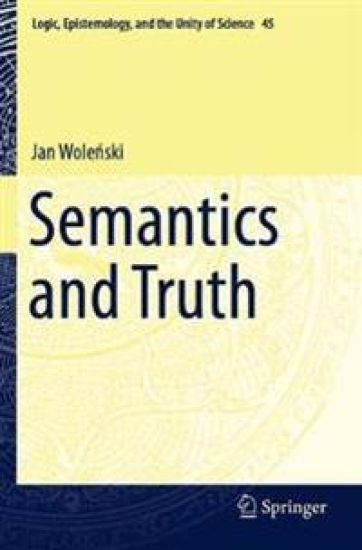
Semantics and Truth

Semantics and Truth

Jan Wolenski

Springer Nature Switzerland AG
2021
nidottu
The book provides a historical (with an outline of the history of the concept of truth from antiquity to our time) and systematic exposition of the semantic theory of truth formulated by Alfred Tarski in the 1930s. This theory became famous very soon and inspired logicians and philosophers. It has two different, but interconnected aspects: formal-logical and philosophical. The book deals with both, but it is intended mostly as a philosophical monograph. It explains Tarski’s motivation and presents discussions about his ideas (pro and contra) as well as points out various applications of the semantic theory of truth to philosophical problems (truth-criteria, realism and anti-realism, future contingents or the concept of correspondence between language and reality).
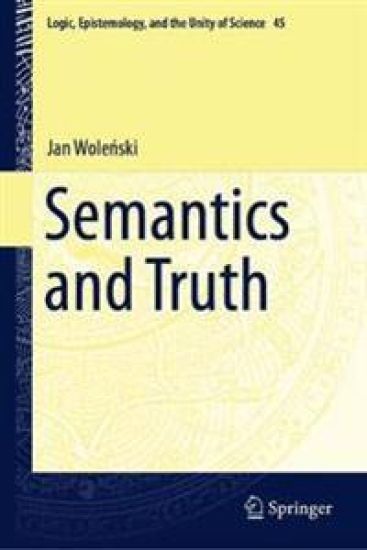
Semantics and Truth

Semantics and Truth

Jan Wolenski

Springer Nature Switzerland AG
2020
sidottu
The book provides a historical (with an outline of the history of the concept of truth from antiquity to our time) and systematic exposition of the semantic theory of truth formulated by Alfred Tarski in the 1930s. This theory became famous very soon and inspired logicians and philosophers. It has two different, but interconnected aspects: formal-logical and philosophical. The book deals with both, but it is intended mostly as a philosophical monograph. It explains Tarski’s motivation and presents discussions about his ideas (pro and contra) as well as points out various applications of the semantic theory of truth to philosophical problems (truth-criteria, realism and anti-realism, future contingents or the concept of correspondence between language and reality).
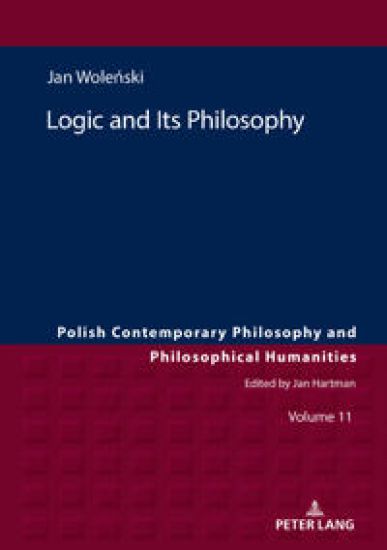
Logic and Its Philosophy

Logic and Its Philosophy

Jan Wolenski

Peter Lang AG
2018
sidottu
This collection of essays examines logic and its philosophy. The author investigates the nature of logic not only by describing its properties but also by showing philosophical applications of logical concepts and structures. He evaluates what logic is and analyzes among other aspects the relations of logic and language, the status of identity, bivalence, proof, truth, constructivism, and metamathematics. With examples concerning the application of logic to philosophy, he also covers semantic loops, the epistemic discourse, the normative discourse, paradoxes, properties of truth, truth-making as well as theology, being and logical determinism. The author concludes with a philosophical reflection on nothingness and its modelling.
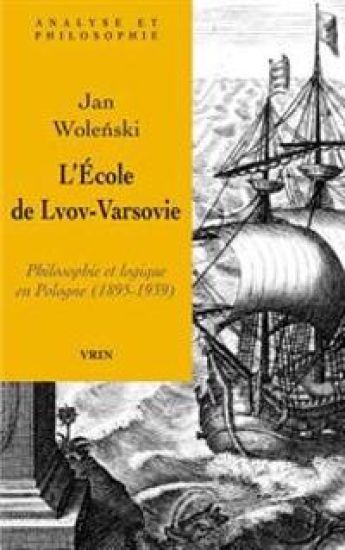
L'Ecole de Lvov-Varsovie: Philosophie Et Logique En Pologne (1895-1939)
Ancien etudiant de Brentano et de Zimmerman, Kazimierz Twardowski, apres son election a la chaire de philosophie a Lvov en 1895, crea autour de lui un cercle d'etudiants et de collaborateurs exceptionnel, connu aujourd'hui sous le nom d'Ecole de Lvov-Varsovie. A mi-chemin entre Vienne et Cambridge, c'est a Lvov, et puis partiellement a Varsovie, que Jan Lukasiewicz, Stanislaw Lesniewski, Alfred Tarski, Kazimierz Ajdukiewicz, Tadeusz Kotarbinski et bien d'autres encore, repenserent dans un esprit d'analyse les questions fondamentales de la philosophie du langage, de la logique, de la philosophie des sciences et des mathematiques. Plus qu'une simple traduction, ce livre est une version revisee de la monographie desormais classique que Jan Wolenski, connu pour ses travaux non seulement en histoire de la philosophie analytique, mais aussi en epistemologie et en theorie de la verite, a consacree a l'Ecole de Lvov-Varsovie.
Logic and Philosophy in the Lvov—Warsaw School
The Lvov-Warsaw School was active in all spheres of philosophy. Its members worked in the border area between philosophy and disci- plines such as psychology, linguistics, and literary theory. But its most important achievements were without doubt in logic and philosophical analysis based on logic. The present book is concerned with fields to which the Lvov-Warsaw School made its most important and famous contributions. Data on the School as a whole are included only in the first and last part of the book. This work is based on my monograph (1985), which appeared in Polish. But it is not merely a translation, because some fragments of the Polish version have been omitted (e. g. , the chapter on ethics), and some have been revised. Many persons helped me in my work on the book in Polish as well as on the present edition. I must first mention the late Izydora D~mbska, to whom this book is dedicated. On various detailed issues I have availed myself of advice and information given to me by Stefan Amsterdamski, Zdzislaw Augustynek, Kazimierz Czarnota, Henryk Hii, Boleslaw Iwanus, Jacek Jadacki, Jacek KabziIiski, Stanislaw Kiczuk, Tomasz Komendzinski, Janina Kotarbinska, Czeslaw Lejewski, Jerzy Perzanowski, Marian Przet~cki, the late Jerzy Slupecki, Klemens Szaniawski, Stefan Zamecki, Zbigniew Zwinogrodzki i Jan Zygmunt. I am indebted to Jaakko Hintikka for suggesting that my book be trans- lated into English and published by Reidel. Olgierd Wojtasiewicz helped me to prepare the English text.

Essays on Logic and its Applications in Philosophy
This is a collection of essays about logic and its applications to various philosophical problems. In general, it is argued that logic constitutes an important device of philosophical analysis. Concerning the nature of logic the author defends the thesis that first-order logic is the logic. Among the philosophical problems to which logic is applied in the essays are: truth, consistency, realism, foundations of semantics, psychologism, undetermination of theories by empirical data, modalities, value concepts, identity, vagueness, God’s existence, transcendentals, legal reasoning, category mistakes, bivalence, the cognitive relation, and meaningfulness.
Logic and Philosophy in the Lvov—Warsaw School

Logic and Philosophy in the Lvov—Warsaw School

Jan Wolenski

Kluwer Academic Publishers
1988
sidottu
The Lvov-Warsaw School was active in all spheres of philosophy. Its members worked in the border area between philosophy and disci- plines such as psychology, linguistics, and literary theory. But its most important achievements were without doubt in logic and philosophical analysis based on logic. The present book is concerned with fields to which the Lvov-Warsaw School made its most important and famous contributions. Data on the School as a whole are included only in the first and last part of the book. This work is based on my monograph (1985), which appeared in Polish. But it is not merely a translation, because some fragments of the Polish version have been omitted (e. g. , the chapter on ethics), and some have been revised. Many persons helped me in my work on the book in Polish as well as on the present edition. I must first mention the late Izydora D~mbska, to whom this book is dedicated. On various detailed issues I have availed myself of advice and information given to me by Stefan Amsterdamski, Zdzislaw Augustynek, Kazimierz Czarnota, Henryk Hii, Boleslaw Iwanus, Jacek Jadacki, Jacek KabziIiski, Stanislaw Kiczuk, Tomasz Komendzinski, Janina Kotarbinska, Czeslaw Lejewski, Jerzy Perzanowski, Marian Przet~cki, the late Jerzy Slupecki, Klemens Szaniawski, Stefan Zamecki, Zbigniew Zwinogrodzki i Jan Zygmunt. I am indebted to Jaakko Hintikka for suggesting that my book be trans- lated into English and published by Reidel. Olgierd Wojtasiewicz helped me to prepare the English text.