Kirjojen hintavertailu – 12 903 724 kirjaa ja 27 kauppaa

Kirjailija

Jane Burbank

Kirjat ja teokset yhdessä paikassa: 5 kirjaa, julkaisuja vuosilta 1989–2026, suosituimpiin kuuluu Post-Imperial Possibilities. Vertaile teosten hintoja ja tarkista saatavuus suomalaisista kirjakaupoista.

5 kirjaa

Kirjojen julkaisuvuodet: 1989–2026.

Post-Imperial Possibilities

Post-Imperial Possibilities

Jane Burbank; Frederick Cooper

PRINCETON UNIVERSITY PRESS
2026
pokkari
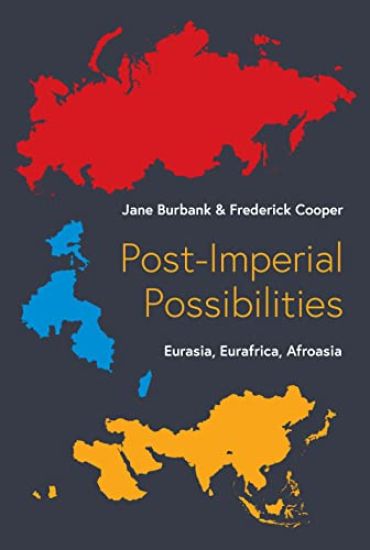
A history of three transnational political projects designed to overcome the inequities of imperialism After the dissolution of empires, was the nation-state the only way to unite people politically, culturally, and economically? In Post-Imperial Possibilities, historians Jane Burbank and Frederick Cooper examine three large-scale, transcontinental projects aimed at bringing together peoples of different regions to mitigate imperial legacies of inequality. Eurasia, Eurafrica, and Afroasia—in theory if not in practice—offered alternative routes out of empire. The theory of Eurasianism was developed after the collapse of imperial Russia by exiled intellectuals alienated by both Western imperialism and communism. Eurafrica began as a design for collaborative European exploitation of Africa but was transformed in the 1940s and 1950s into a project to include France’s African territories in plans for European integration. The Afroasian movement wanted to replace the vertical relationship of colonizer and colonized with a horizontal relationship among former colonial territories that could challenge both the communist and capitalist worlds. Both Eurafrica and Afroasia floundered, victims of old and new vested interests. But Eurasia revived in the 1990s, when Russian intellectuals turned the theory’s attack on Western hegemony into a recipe for the restoration of Russian imperial power. While both the system of purportedly sovereign states and the concentrated might of large economic and political institutions continue to frustrate projects to overcome inequities in welfare and power, Burbank and Cooper’s study of political imagination explores wide-ranging concepts of social affiliation and obligation that emerged after empire and the reasons for their unlike destinies.
Post-Imperial Possibilities

Post-Imperial Possibilities

Jane Burbank; Frederick Cooper

PRINCETON UNIVERSITY PRESS
2023
sidottu
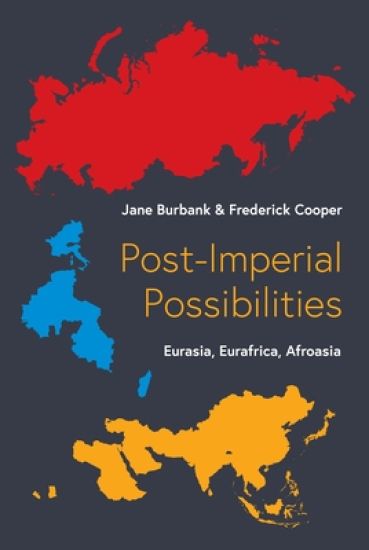
A history of three transnational political projects designed to overcome the inequities of imperialismAfter the dissolution of empires, was the nation-state the only way to unite people politically, culturally, and economically? In Post-Imperial Possibilities, historians Jane Burbank and Frederick Cooper examine three large-scale, transcontinental projects aimed at bringing together peoples of different regions to mitigate imperial legacies of inequality. Eurasia, Eurafrica, and Afroasia—in theory if not in practice—offered alternative routes out of empire. The theory of Eurasianism was developed after the collapse of imperial Russia by exiled intellectuals alienated by both Western imperialism and communism. Eurafrica began as a design for collaborative European exploitation of Africa but was transformed in the 1940s and 1950s into a project to include France’s African territories in plans for European integration. The Afroasian movement wanted to replace the vertical relationship of colonizer and colonized with a horizontal relationship among former colonial territories that could challenge both the communist and capitalist worlds. Both Eurafrica and Afroasia floundered, victims of old and new vested interests. But Eurasia revived in the 1990s, when Russian intellectuals turned the theory’s attack on Western hegemony into a recipe for the restoration of Russian imperial power. While both the system of purportedly sovereign states and the concentrated might of large economic and political institutions continue to frustrate projects to overcome inequities in welfare and power, Burbank and Cooper’s study of political imagination explores wide-ranging concepts of social affiliation and obligation that emerged after empire and the reasons for their unlike destinies.
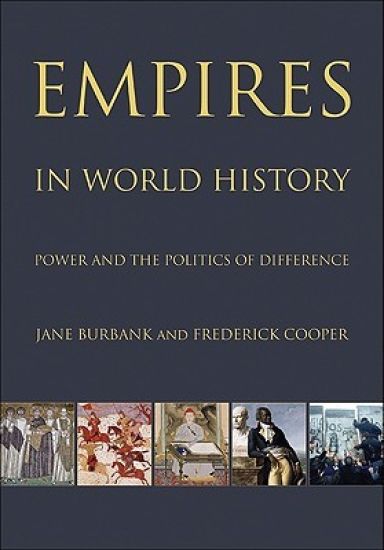
Empires in World History

Empires in World History

Jane Burbank; Frederick Cooper

Princeton University Press
2011
pokkari

Halvin toimitettuna 33,20 €

Empires--vast states of territories and peoples united by force and ambition--have dominated the political landscape for more than two millennia. Empires in World History departs from conventional European and nation-centered perspectives to take a remarkable look at how empires relied on diversity to shape the global order. Beginning with ancient Rome and China and continuing across Asia, Europe, the Americas, and Africa, Jane Burbank and Frederick Cooper examine empires' conquests, rivalries, and strategies of domination--with an emphasis on how empires accommodated, created, and manipulated differences among populations. Burbank and Cooper examine Rome and China from the third century BCE, empires that sustained state power for centuries. They delve into the militant monotheism of Byzantium, the Islamic Caliphates, and the short-lived Carolingians, as well as the pragmatically tolerant rule of the Mongols and Ottomans, who combined religious protection with the politics of loyalty. Burbank and Cooper discuss the influence of empire on capitalism and popular sovereignty, the limitations and instability of Europe's colonial projects, Russia's repertoire of exploitation and differentiation, as well as the "empire of liberty"--devised by American revolutionaries and later extended across a continent and beyond. With its investigation into the relationship between diversity and imperial states, Empires in World History offers a fresh approach to understanding the impact of empires on the past and present.
Russian Peasants Go to Court

Russian Peasants Go to Court

Jane Burbank

Indiana University Press
2004
sidottu
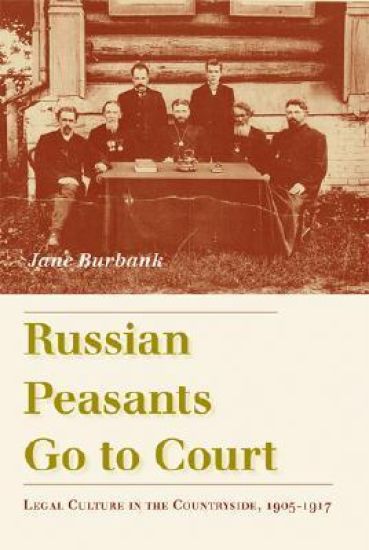
". . . will challenge (and should transform) existing interpretations of late Imperial Russian governance, peasant studies, and Russian legal history." —Cathy A. Frierson ". . . a major contribution to our understanding both of the dynamic of change within the peasantry and of legal development in late Imperial Russia." —William G. Wagner Russian Peasants Go to Court brings into focus the legal practice of Russian peasants in the township courts of the Russian empire from 1905 through 1917. Contrary to prevailing conceptions of peasants as backward, drunken, and ignorant, and as mistrustful of the state, Jane Burbank's study of court records reveals engaged rural citizens who valued order in their communities and made use of state courts to seek justice and to enforce and protect order. Through narrative studies of individual cases and statistical analysis of a large body of court records, Burbank demonstrates that Russian peasants made effective use of legal opportunities to settle disputes over economic resources, to assert personal dignity, and to address the bane of small crimes in their communities. The text is enhanced by contemporary photographs and lively accounts of individual court cases.
Intelligentsia and Revolution

Intelligentsia and Revolution

Jane Burbank

Oxford University Press Inc
1989
nidottu
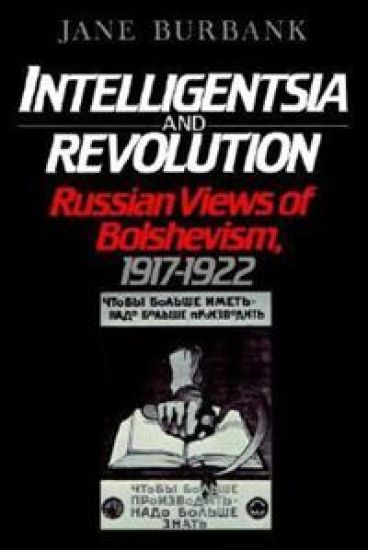
Professor Burbank recovers and analyses a large body of literature by intellectuals in the years following the Revolution, works which represent the entire political spectrum, and which are especially relevant during Gorbachev's search for alternative political and economic systems for the Soviet Union. This important research is a major contribution to understanding the complexities of the Revolution and its aftermath.