Kirjojen hintavertailu – 12 903 725 kirjaa ja 27 kauppaa

Kirjailija

Jane Donawerth

Kirjat ja teokset yhdessä paikassa: 3 kirjaa, julkaisuja vuosilta 1997–2018, suosituimpiin kuuluu Women`s Speaking Justified and Other Pamphlets. Vertaile teosten hintoja ja tarkista saatavuus suomalaisista kirjakaupoista.

3 kirjaa

Kirjojen julkaisuvuodet: 1997–2018.

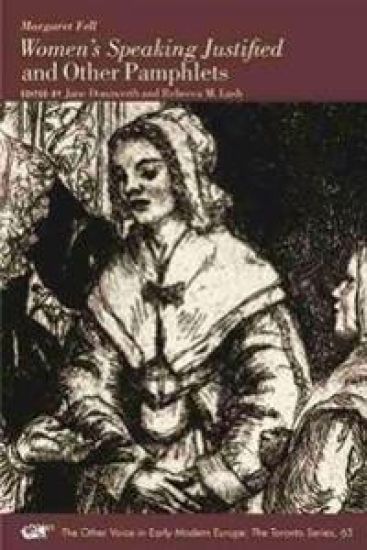
Women`s Speaking Justified and Other Pamphlets

Women`s Speaking Justified and Other Pamphlets

Margaret Fell; Jane Donawerth; Rebecca M. Lush

State University of New York at Binghamton,Medieval Renaissance Texts Studies
2018
nidottu
Margaret Fell (1614–1702), one of the co-founders of the Society of Friends and a religious activist, was a prolific writer and distributor of Quaker pamphlets. This volume offers eight texts that span her writing career and represent her range of writing: autobiography, epistle or public letter, examination or record of a trial, letter to the king, and argument for women’s preaching. These selections also document Fell’s contributions to Friends’ theology, exemplify seventeenth-century women’s English-language literacy, illustrate Fell’s theories of biblical reading, and exhibit the common qualities of Quaker rhetoric. The Other Voice in Early Modern Europe - The Toronto Series, volume 65
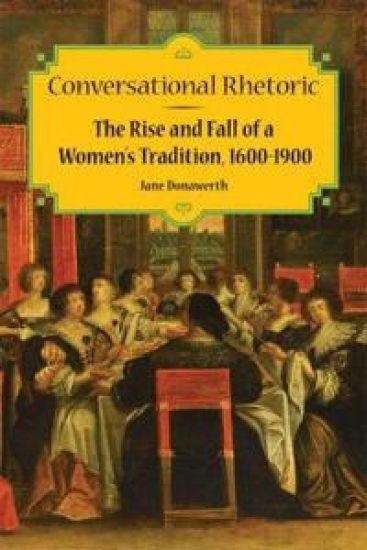
Conversational Rhetoric

Conversational Rhetoric

Jane Donawerth

Southern Illinois University Press
2011
sidottu
Much of the scholarly exchange regarding the history of women in rhetoric has emphasized women’s rhetorical practices. In Conversational Rhetoric: The Rise and Fall of a Women’s Tradition, 1600–1900, Jane Donawerth traces the historical development of rhetorical theory by women for women, studying the moments when women produced theory about the arts of communication in alternative genres—humanist treatises and dialogues, defenses of women’s preaching, conduct books, and elocution handbooks. She examines the relationship between communication and gender and between theory and pedagogy and argues that women constructed a theory of rhetoric based on conversation, not public speaking, as a model for all discourse. Donawerth traces the development of women’s rhetorical theory through the voices of English and American women (and one much-translated French woman) over three centuries. She demonstrates how they cultivated theories of rhetoric centered on conversation that faded once women began writing composition textbooks for mixed-gender audiences in the latter part of the nineteenth century. She recovers and elucidates the importance of the theories in dialogues and defenses of women’s education by Bathsua Makin, Mary Astell, and Madeleine de Scudéry; in conduct books by Hannah More, Lydia Sigourney, and Eliza Farrar; in defenses of women’s preaching by Ellen Stewart, Lucretia Mott, Catherine Booth, and Frances Willard; and in elocution handbooks by Anna Morgan, Hallie Quinn Brown, Genevieve Stebbins, and Emily Bishop. In each genre, Donawerth explores facets of women’s rhetorical theory, such as the recognition of the gendered nature of communication in conduct books, the incorporation of the language of women’s rights in the defenses of women’s preaching, and the adaptation of sentimental culture to the cultivation of women’s bodies as tools of communication in elocution books. Rather than a linear history, Conversational Rhetoric follows the starts, stops, and starting over in women’s rhetorical theory. It covers a broad range of women’s rhetorical theory in the Anglo-American world and places them in their social, rhetorical, and gendered historical contexts. This study adds women’s rhetorical theory to the rhetorical tradition, advances our understanding of women’s theories and their use of rhetoric, and offers a paradigm for analyzing the differences between men’s and women’s rhetoric from 1600 to 1900.

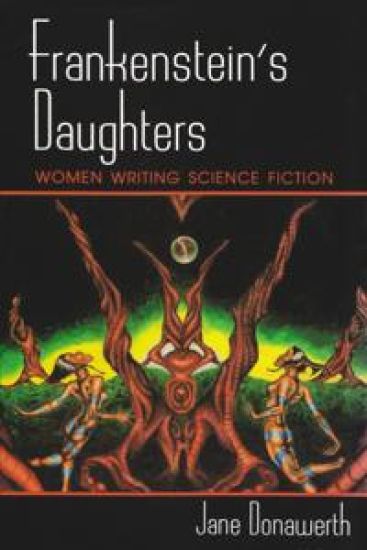
Frankenstein's Daughters

Frankenstein's Daughters

Jane Donawerth

Syracuse University Press
1997
nidottu
Beginning with the birth of science fiction in Mary Shelley's ""Frankenstein"", Jane Donawerth takes a broad look at science fiction and utopian literature written by women. In a creative close reading of ""Frankenstein"", Donawerth pinpoints the gender problems that reside in the male-oriented science fiction genre and shows how Shelley and other women science fiction authors have typically responded to such problems. Employing feminist, social and cultural theory, Donawerth identifies new forms of science fiction that emerge from women writers as they address the problems of the genre. She includes a number of close readings from original texts to flesh out these new paradigms for the genre. The range of works by women makes this volume an invaluable scholarly review of the entire field of feminist science fiction and criticism. Without falling prey to an elitist academic discourse or establishing an exclusive science fiction canon, she generates a rigorous and extensive intellectual approach, method and sensibility that reinvents the science fiction intertext itself. The book should be of interest to scholars in a number of fields, especially women's studies and literature.