Kirjojen hintavertailu – 12 903 725 kirjaa ja 27 kauppaa

Kirjailija

Jane Freedman

Kirjat ja teokset yhdessä paikassa: 10 kirjaa, julkaisuja vuosilta 2004–2024, suosituimpiin kuuluu Rethinking Sexual and Reproductive Health and Rights for Young Women in Southern Africa. Vertaile teosten hintoja ja tarkista saatavuus suomalaisista kirjakaupoista.

10 kirjaa

Kirjojen julkaisuvuodet: 2004–2024.

Rethinking Sexual and Reproductive Health and Rights for Young Women in Southern Africa

Rethinking Sexual and Reproductive Health and Rights for Young Women in Southern Africa

Tamaryn Crankshaw; Jane Freedman; Carolien Aantjes; Nana K. Poku

TAYLOR FRANCIS LTD
2024
nidottu
This important book provides a critical examination of the sexual and reproductive health and rights (SRHR) of young women and girls in Southern Africa, examining the ways in which current policies and programmes aimed at improving SRHR often fail to reach the most marginalised populations. Addressing key regional challenges such as high rates of HIV, unintended pregnancies, unsafe abortions, and sexual and gender-based violence, the book highlights how health inequalities in the region are in fact increasing, despite the 2030 Agenda for Sustainable Development of "leaving no one behind". The book draws on theoretical analysis and empirical data gathered from studies carried out in five Southern African countries (Madagascar, Mozambique, South Africa, Zambia, and Zimbabwe), arguing that a continued focus on HIV and interventions that target health in a narrow sense often fail to understand the wider socio-economic determinants of poor sexual and reproductive health and the ways in which girls and young women are made vulnerable. Written by leading scholars in the field, this will be essential reading for students and researchers in Global Health, International Development, Women’s Studies, and all related fields.
Rethinking Sexual and Reproductive Health and Rights for Young Women in Southern Africa

Rethinking Sexual and Reproductive Health and Rights for Young Women in Southern Africa

Tamaryn Crankshaw; Jane Freedman; Carolien Aantjes; Nana K. Poku

TAYLOR FRANCIS LTD
2024
sidottu
This important book provides a critical examination of the sexual and reproductive health and rights (SRHR) of young women and girls in Southern Africa, examining the ways in which current policies and programmes aimed at improving SRHR often fail to reach the most marginalised populations. Addressing key regional challenges such as high rates of HIV, unintended pregnancies, unsafe abortions, and sexual and gender-based violence, the book highlights how health inequalities in the region are in fact increasing, despite the 2030 Agenda for Sustainable Development of "leaving no one behind". The book draws on theoretical analysis and empirical data gathered from studies carried out in five Southern African countries (Madagascar, Mozambique, South Africa, Zambia, and Zimbabwe), arguing that a continued focus on HIV and interventions that target health in a narrow sense often fail to understand the wider socio-economic determinants of poor sexual and reproductive health and the ways in which girls and young women are made vulnerable. Written by leading scholars in the field, this will be essential reading for students and researchers in Global Health, International Development, Women’s Studies, and all related fields.
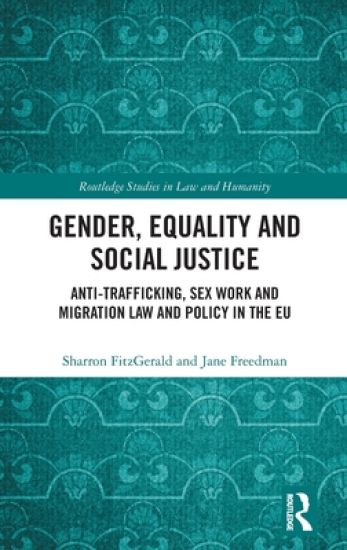
Gender, Equality and Social Justice

Gender, Equality and Social Justice

Sharron FitzGerald; Jane Freedman

TAYLOR FRANCIS LTD
2024
nidottu
This book addresses a gap in both contemporary theorising and empirical analysis of the European Union’s (EU) law and policy frameworks on migration, sex work and anti trafficking. Drawing on the authors’ previous research on these policies and with their practical experience of engaging with various EU institutions in law and policy-making fora around gender, equality and justice, the work examines the processes involved in constructing and enacting policy frameworks and legal interventions on these issues, within a feminist analytical framework. The authors map how EU agenda-setting operates, and detail the roles that various EU institutions, external groups and actors, including non-governmental organisations, play in promoting or blocking policy on these three issues. The book draws on feminist theorising on gender, policy-making and social justice to develop a general theoretical framework to help us understand how and why a consensus has seemingly been achieved at EU level on what constitutes gender equality in these three policy areas. The book presents a valuable resource for academics, researchers and policy makers in Law, Migration, EU policy making and Gender Studies.
Gender, Equality and Social Justice

Gender, Equality and Social Justice

Sharron FitzGerald; Jane Freedman

TAYLOR FRANCIS LTD
2022
sidottu
This book addresses a gap in both contemporary theorising and empirical analysis of the European Union’s (EU) law and policy frameworks on migration, sex work and anti trafficking. Drawing on the authors’ previous research on these policies and with their practical experience of engaging with various EU institutions in law and policy-making fora around gender, equality and justice, the work examines the processes involved in constructing and enacting policy frameworks and legal interventions on these issues, within a feminist analytical framework. The authors map how EU agenda-setting operates, and detail the roles that various EU institutions, external groups and actors, including non-governmental organisations, play in promoting or blocking policy on these three issues. The book draws on feminist theorising on gender, policy-making and social justice to develop a general theoretical framework to help us understand how and why a consensus has seemingly been achieved at EU level on what constitutes gender equality in these three policy areas. The book presents a valuable resource for academics, researchers and policy makers in Law, Migration, EU policy making and Gender Studies.
Gender, Violence and Politics in the Democratic Republic of Congo
The Democratic Republic of Congo (DRC) has been called the ’worst place in the world’ for women, with reports of widespread and horrific incidents of rape and sexual violence and almost complete impunity for the perpetrators of such violence. However, despite the high profile media reporting on sexual violence in the DRC, and the widely publicized responses of the international community, there is still very little real analysis of the real situation of women in the country. This book provides such detailed analysis of gender relations in the DRC, and goes beyond the usual explanations of sexual violence as a product of conflict, to examine the complex and socially constructed gender norms and roles which underlie incidences of violence. The book benefits from a comprehensive account of men’s and women’s roles in conflict, violence, peace building and reconstruction, and evaluates the impacts of national and international political responses. In doing so, this book provides valuable new evidence and analysis of the complex and multilayered conflicts in the DRC.
Immigration and Insecurity in France
The importance of the immigration issue in French politics has been highlighted by the success of Jean-Marie Le Pen, leader of the extreme-right Front National party, in reaching the second round of the presidential elections. This absorbing book closely examines the debate over immigration in contemporary France, looking not only at the development of immigration and nationality policies, but also at the changing discourse on the integration of immigrants. It analyzes the continuing racialization of discourse on immigration and anti-Islamic sentiment arising from the 'Islamic headscarf affair'. The work addresses issues such as the gendered nature of immigration and pays particular attention to the experiences of women immigrants in France. This careful analysis is then placed within the context of developments in the EU towards creating a unified immigration and asylum policy.
Gender, Violence and Politics in the Democratic Republic of Congo
The Democratic Republic of Congo (DRC) has been called the ’worst place in the world’ for women, with reports of widespread and horrific incidents of rape and sexual violence and almost complete impunity for the perpetrators of such violence. However, despite the high profile media reporting on sexual violence in the DRC, and the widely publicized responses of the international community, there is still very little real analysis of the real situation of women in the country. This book provides such detailed analysis of gender relations in the DRC, and goes beyond the usual explanations of sexual violence as a product of conflict, to examine the complex and socially constructed gender norms and roles which underlie incidences of violence. The book benefits from a comprehensive account of men’s and women’s roles in conflict, violence, peace building and reconstruction, and evaluates the impacts of national and international political responses. In doing so, this book provides valuable new evidence and analysis of the complex and multilayered conflicts in the DRC.
Engaging Men in the Fight against Gender Violence
Gender-based violence is a global phenomenon which affects millions worldwide. However, despite the increasing attention which is now paid to this violence by policy makers data seem to indicate that these efforts are not having as great an impact as may have been hoped. In all countries of the world, reports of gender-related violence remain elevated, whilst many incidents of such violence probably remain unreported due to fear of stigma or reprisals for those who are victims. One of the problems in tackling gender-based violence has been that for too long men have been ignored as part of the solution. Men are often labelled as perpetrators of violence, but they are perhaps too infrequently considered also as potential victims, or as partners and actors in the fight against violence. Constructions of masculinities are not adequately studied to analyse how dominant forms of masculinities may contribute to cycles of violence, and may also oppress and traumatise men themselves. This volume aims to address critically the issues of men, masculinity and gender-based violence, asking how men can be fully engaged in the prevention of gender-based violence, and how this engagement can strengthen prevention initiatives.
Engaging Men in the Fight against Gender Violence
Gender-based violence is a global phenomenon which affects millions worldwide. However, despite the increasing attention which is now paid to this violence by policy makers data seem to indicate that these efforts are not having as great an impact as may have been hoped. In all countries of the world, reports of gender-related violence remain elevated, whilst many incidents of such violence probably remain unreported due to fear of stigma or reprisals for those who are victims. One of the problems in tackling gender-based violence has been that for too long men have been ignored as part of the solution. Men are often labelled as perpetrators of violence, but they are perhaps too infrequently considered also as potential victims, or as partners and actors in the fight against violence. Constructions of masculinities are not adequately studied to analyse how dominant forms of masculinities may contribute to cycles of violence, and may also oppress and traumatise men themselves. This volume aims to address critically the issues of men, masculinity and gender-based violence, asking how men can be fully engaged in the prevention of gender-based violence, and how this engagement can strengthen prevention initiatives.
Immigration and Insecurity in France

Immigration and Insecurity in France

Jane Freedman

Ashgate Publishing Limited
2004
sidottu
The importance of the immigration issue in French politics has been highlighted by the success of Jean-Marie Le Pen, leader of the extreme-right Front National party, in reaching the second round of the presidential elections. This absorbing book closely examines the debate over immigration in contemporary France, looking not only at the development of immigration and nationality policies, but also at the changing discourse on the integration of immigrants. It analyzes the continuing racialization of discourse on immigration and anti-Islamic sentiment arising from the 'Islamic headscarf affair'. The work addresses issues such as the gendered nature of immigration and pays particular attention to the experiences of women immigrants in France. This careful analysis is then placed within the context of developments in the EU towards creating a unified immigration and asylum policy.