Kirjojen hintavertailu – 12 859 828 kirjaa ja 27 kauppaa

Kirjailija

Jane Haldimand Marcet

Kirjat ja teokset yhdessä paikassa: 33 kirjaa, julkaisuja vuosilta 2007–2026, suosituimpiin kuuluu Conversations on Chemistry. Vertaile teosten hintoja ja tarkista saatavuus suomalaisista kirjakaupoista.

Nimi esiintyy myös muodoissa: (Jane Haldimand) Marcet

33 kirjaa

Kirjojen julkaisuvuodet: 2007–2026.

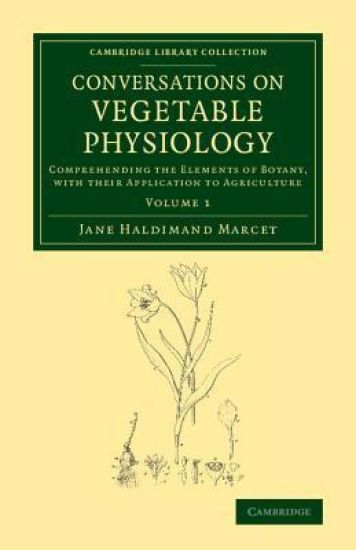
Conversations on Vegetable Physiology: Volume 1

Conversations on Vegetable Physiology: Volume 1

Jane Haldimand Marcet

Cambridge University Press
2013
pokkari
Jane Haldimand Marcet (1769–1858) wrote across a range of topics, from natural philosophy to political economy. Her educational books were especially intended for female students, to combat the prevalent idea that science and economics were unsuitable for women, but they found broader popularity: Michael Faraday, as a young bookbinder's apprentice, credited Marcet with introducing him to electrochemistry. This two-volume work, first published in 1829, is a beginner's guide to botany. Since the chief aim was accessibility, Marcet does not dwell on the often burdensome process of plant classification, but focuses on plant forms and botany's practical applications. She presents the facts in the form of simple conversations between two students and their teacher. Based on the lectures of the Swiss botanist Candolle, Volume 1 introduces roots, leaves, sap, and the effects of different soil and air.
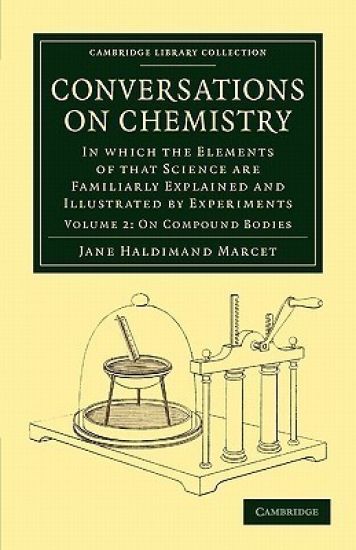
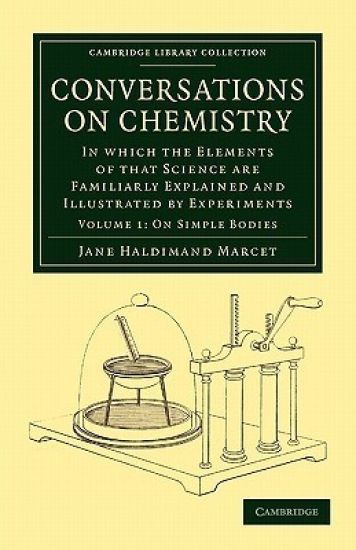
Conversations on Chemistry

Conversations on Chemistry

Jane Haldimand Marcet

Cambridge University Press
2010
pokkari
Jane Haldimand Marcet (1769–1858) was a pioneer in the field of education who wrote accessible introductory books on science and economics. Noting that women's education 'is seldom calculated to prepare their minds for abstract ideas', she resolved to write books that would inform, entertain and improve a generation of female readers. First published anonymously in 1805, her two-volume Conversations on Chemistry swiftly became a standard primer going through sixteen editions in England alone, and is credited with having influenced the young Michael Faraday. Presented as a series of discussions between a fictional tutor, Mrs. Bryan, and her two female students, the flighty Caroline and earnest Emily, Conversations combines entertaining banter with a clear and concise explanation of scientific theories of the day. Volume 2 contains spirited exchanges on topics including 'shells and chalk', borax, decomposing vegetables and 'animal economy', which will interest historians of both science and education.
Conversations on Chemistry

Conversations on Chemistry

Jane Haldimand Marcet

Cambridge University Press
2010
pokkari
Jane Haldimand Marcet (1769–1858) was a pioneer in the field of education who wrote accessible introductory books on science and economics. Noting that women's education 'is seldom calculated to prepare their minds for abstract ideas', she resolved to write books that would inform, entertain and improve a generation of female readers. First published anonymously in 1805, her two-volume work Conversations on Chemistry swiftly became a standard primer going through sixteen editions in England alone, and is credited with having influenced the young Michael Faraday. Presented as a series of discussions between a fictional tutor, Mrs. Bryan, and her two female students, the flighty Caroline and earnest Emily, Conversations combines entertaining banter with a clear and concise explanation of scientific theories of the day. In Volume 1 the girls are introduced to 'Simple Bodies' through such colourful examples as hot air balloons and the spa waters of Harrogate.
Conversations on Political Economy

Conversations on Political Economy

Jane Haldimand Marcet

Cambridge University Press
2010
pokkari
Published at a pivotal moment in the economic development of Britain, Conversations on Political Economy (1816) influenced a generation of economists, politicians and intellectuals. Employing her trademark format of dialogues between Mrs. Bryan and her pupil Caroline, Marcet introduces readers to theories surrounding property, population, and the 'condition of the poor'. Despite a target audience of young women, there is little evidence of feminine sentimentality, nor does the author's commitment to female education prevent her from propounding challenging, often controversial arguments; an approach which won her admiration. As one of her avid readers, Anne Romilly wrote, 'those, who like me know very little … are delighted with the knowledge they have acquired'. In fact, the first edition was so well received that a second was called for before the author had time to make corrections. Marcet had become, as one of her obituarists later put it, the 'instructress of a generation'.