Kirjojen hintavertailu – 12 903 724 kirjaa ja 27 kauppaa
Kirjailija
Jane L. Carman
Kirjat ja teokset yhdessä paikassa: 5 kirjaa, julkaisuja vuosilta 2015–2016, suosituimpiin kuuluu Scattershot: Collected Fictions. Vertaile teosten hintoja ja tarkista saatavuus suomalaisista kirjakaupoista.
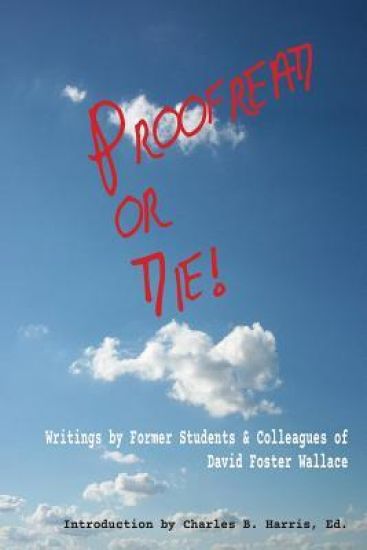
The contributions in this anthology reflect the aesthetic breadth that David fostered in his classrooms. They represent multiple genres-fiction, nonfiction, even a play-and a range of voices, styles, and forms. A handful of the contributions in the anthology have been published elsewhere, in little magazines or online, but the majority of them appear here for the first time. Not all of the former students represented in this volume worked extensively with David, though most took at least one course from him. A few of the stories and essays were initially written for one of his classes or as part of a thesis he directed or co-directed, but most were written later, as former students progressed into their careers as professional writers. In one way or another, all of the works collected here reflect David's influence, either on individual writers, as mentor, or on the writing program they studied or taught in. Except for Doug Hesse's essay about team-teaching a graduate seminar with David, none of the contributions is about David in a strict biographical or autobiographical sense, although characters who resemble him do turn up in a couple of the works that, though wholly imagined, may play off of actual events involving him.
-This bomb-ass, brilliant book is, without question, as serious as a heart attack. The storyworld of REAL survival: Amy Eggert is the only person I know brave enough, badd enuff, to go there. Aiming to challenge-and more than likely, shatter-widespread myth and that which has been cataclysmic in our society like no other fiction I've read, Scattershot is the true language of trauma. It never stops talking to you, getting into your head in ways that you'll never forget. Far-reaching, Scattershot will utterly blow you away. It's that good-Ricardo Cortez Cruz, author of Straight Outta Compton and Five Days of Bleeding -Written with a compressed precision, the short stories and prose poems that make up Scattershot are like the random yet deadly pattern produced by a haphazardly fired shotgun: painful, contingent, indelible. Equally poised between quiet empathy and unflinching candor, these are snapshots of everyday life in a neoliberal America that has given up on its social contract and the promise of the better life. What remains is a haunted landscape of broken dreams, broken bodies, and broken minds. Amy Eggert is a poet of our diminished world, and Scattershot is necessary reading- Christopher Breu, author of Insistence of the Material: Literature in the Age of Biopolitics and Hard-Boiled Masculinities -Amy Eggert's Scattershot must be what Cathy Caruth meant by "the story of a wound that cries out." Only here are many wounds growing mouths, yearning to be heard-the grandfather in the assisted living facility crying "this isn't home," the four year old son flashing back to his father's hallway suicide, a woman who pines for ghost babies lost in trees. These stories, in their unflinching exquisiteness, are a live nerve twitching, the body at its limits demanding witness. Eggert's debut collection is the body almost choking on its own vulnerable song-- Sara Henning, author of A Sweeter Water
IS Several forms of language - poetry, prose, dialogue, essay, opera - take shape in Is. Once we use language with imagination, the definitions/constrictions of traditional form fall away. All writing = all writing. The Chaos Theory of Literary Composition puts it this way: art is energy. To achieve chaos, which releases energy, the writer subjects the writing to heat {in the Chaos Theory of physics, that heat is literal, i.e. fire), i.e., passion, intuition, defamilarization, disruption of syntax, style, genre, spontaneity, the unreal, the unexpected, etc. etc. etc. That state of chaos reveals new form, that chaos opens fissures along which the energy travels and along which the reader engages that energy. IS, putatively the passive verb, includes in it all that is, all the energy we, as artists, bring to the work. Yet, IS, as what we call the passive verb, is a fiction. Like zero in mathematics, the "is" in our work, in the title to this book, isness, does not exist in the real world, but it functions to make everything else work. There is no object - no noun - no thing - that does nothing, that is not an action. Action = energy. Art is energy. The title IS references this nothing which is not, and this - every word - every world - every thing which is, the action inherent in being, including the heat that creates chaos that reveals new form.
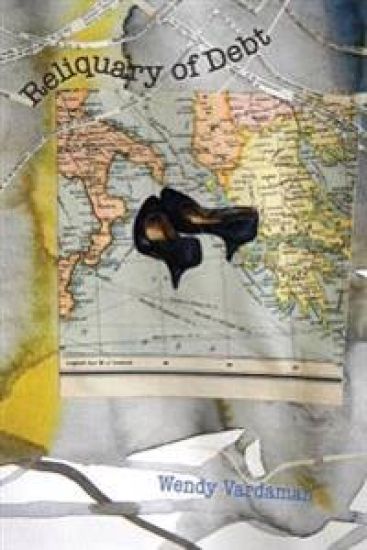
Reliquary of Debt takes on the familiar topics of pilgrimage and travel in order to ask new questions about the intersections of parenting, god, economics, feminism, art, and culture. Margaret Rozga, author of Justice, Freedom, Herbs, calls the collection "a tour de force of poetic innovation and fun." Kimberly Blaeser, author of Apprenticed to Justice, says that the book "invites the reader to re-see the art and artifacts of our culture. ... "from 'finger bones' and frescoes to the Harry Potter Platform 9 3/4. The book awakens an awareness of everyday 'debts' we owe for the lushness of food and persistence of memory, for stories like that of Saint Zita's miracle and the ones we create walking through our days together." Susan Firer notes the mix of "dense, inclusive, polyglot poems ... with dance-party rhythms, fresh language and imagery, imagination and facts." Sonnets, syllabics, and Skypes; story and lyric; tradition and experiment; poetry and prose; old and new forms, including a sequence of factual-fictional "Wikiprosepoems" about the appearance of pumpkin in Italy and an architectural series that imitates Giotto's Arena Chapel all figure in this collection, an extended meditation on worship and want. What do we abandon, leave behind, relinquish, and forsake as we journey with fellow travelers in mixed sympathy and antipathy? How do we keep moving forward and at what cost? What do we notice and what do we ignore? How many museums and churches does one family need to see? Who decides, and does it matter? -Wendy Vardaman travels with a keen eye for off-beat and evocative details of history, art, culture, and her own family relationships. These she savors and preserves for us in Reliquary of Debt, a tour de force of poetic innovation and fun-Margaret Rozga, author of Justice Freedom Herbs, Though I Haven't Been to Baghdad and 200 Nights and One Day -A poetic pilgrimage, Wendy Vardaman's Reliquary of Debt invites the reader to re-see the art and artifacts of our culture. Through the lens of these gentle, smart, and witty poems, the distance that the notion of "relic" usually conjures falls away, replaced by a vital experience that has the reader's own "worship-wanting eyes" newly fixed on everything from "finger bones" and frescoes to the Harry Potter Platform 9 3/4. The book awakens an awareness of everyday "debts" we owe for the lushness of food and persistence of memory, for stories like that of Saint Zita's miracle and the ones we create walking through our days together. This is the poetry of ancient cities, of museums and cathedrals, but it is also the poetry of family, of sacred journey taken together with the sun warm on our backs-Kimberly Blaeser, author of Apprenticed to Justice -Wendy Vardaman serves up dense, inclusive, olyglot poems of pilgrimage, travel, family, history, art, imagination, relationships and more. With dance-party rhythms, fresh language and imagery, imagination and facts, Vardaman continues in the American line of making traditions: Skype poems, giottos, Wikiprosepoems, Wikilistprosepoems, American sonnets, Abecedarians and scholarly-lyric-hybrids. Read the powerful "Tortelli di Zucca Mantovani," the second poem in the collection, and you won't be able to put the book down. You'll also be craving the title dish. No worry: Vardaman includes a recipe for the famous dish. Not a cook? Trader Joe's is mentioned several times as a source for imported Tortelli di Zucca. However, poems like Vardaman's you'll find no where else but in her surprising, adventuresome collection Reliquary of Debt-Susan Firer, author of Milwaukee Does Strange Things to People: New & Selected Poems 1979-2007