

Kirjailija
Jane Lewis
Kirjat ja teokset yhdessä paikassa: 22 kirjaa, julkaisuja vuosilta 1995–2025, suosituimpiin kuuluu A Sonata for Rosa Maria. Vertaile teosten hintoja ja tarkista saatavuus suomalaisista kirjakaupoista.
22 kirjaa
Kirjojen julkaisuvuodet: 1995–2025.
During the early twentieth century maternal and child welfare became a national issue for the first time. The child and maternal welfare movement had a significant material and ideological effect on women and it is therefore important to understand the mechanisms which structured and controlled it. Originally published in 1980, The Politics of Motherhood asks why child and maternal welfare policy took the particular form that it did during the Edwardian and inter-war years and in doing so brings together a number of important themes relating to women and social policy. By taking into account not only the professionals involved, but also the mothers themselves – their reactions to the policies implemented and their own demands for change, the study brings to the forefront such themes as the relation between health and the family economy, the control of health care and the control of reproduction. Many issues arising from these themes were of present-day interest at the time, and still are today, such as the medicalisation of childbirth which has involved a loss of control by women over its management. This study illustrates the importance of stopping to examine the pedigree of our social policies and the need to ask whether a policy developed under one specific set of social, economic and political conditions can continue to be relevant in a markedly different situation.
In the 1980s, as the proportion of elderly people in the population grew steadily larger, the task of looking after them would fall increasingly on one group – daughters. The government, in promoting its move in social policy towards community care, had stated that ‘the family’ – which in practice meant women – must expect to provide the bulk of care in the future. But how do women feel about this? What impact does caring for others have on their own lives? How might professional helpers better support them? Originally published in 1988, from in-depth interviews with daughters who have looked after their mothers for varying numbers of years, Jane Lewis and Barbara Meredith look at why it is that women come to care, and consider the legacy of their caring experiences. Because caring is usually a labour of love, the feelings that surround it are complicated and fraught with ambivalence. In analysing these Daughters Who Care explores the meaning of caring from the carer’s point of view, as well as examining the implications for professionals seeking to ‘support the supporters’. Carers themselves and those working with them professionally or as volunteers, as well as students of community care, social policies for the elderly, and social psychology will all find this a stimulating approach to what is still an increasingly urgent issue.
In the 1980s, as the proportion of elderly people in the population grew steadily larger, the task of looking after them would fall increasingly on one group – daughters. The government, in promoting its move in social policy towards community care, had stated that ‘the family’ – which in practice meant women – must expect to provide the bulk of care in the future. But how do women feel about this? What impact does caring for others have on their own lives? How might professional helpers better support them? Originally published in 1988, from in-depth interviews with daughters who have looked after their mothers for varying numbers of years, Jane Lewis and Barbara Meredith look at why it is that women come to care, and consider the legacy of their caring experiences. Because caring is usually a labour of love, the feelings that surround it are complicated and fraught with ambivalence. In analysing these Daughters Who Care explores the meaning of caring from the carer’s point of view, as well as examining the implications for professionals seeking to ‘support the supporters’. Carers themselves and those working with them professionally or as volunteers, as well as students of community care, social policies for the elderly, and social psychology will all find this a stimulating approach to what is still an increasingly urgent issue.
During the early twentieth century maternal and child welfare became a national issue for the first time. The child and maternal welfare movement had a significant material and ideological effect on women and it is therefore important to understand the mechanisms which structured and controlled it. Originally published in 1980, The Politics of Motherhood asks why child and maternal welfare policy took the particular form that it did during the Edwardian and inter-war years and in doing so brings together a number of important themes relating to women and social policy. By taking into account not only the professionals involved, but also the mothers themselves – their reactions to the policies implemented and their own demands for change, the study brings to the forefront such themes as the relation between health and the family economy, the control of health care and the control of reproduction. Many issues arising from these themes were of present-day interest at the time, and still are today, such as the medicalisation of childbirth which has involved a loss of control by women over its management. This study illustrates the importance of stopping to examine the pedigree of our social policies and the need to ask whether a policy developed under one specific set of social, economic and political conditions can continue to be relevant in a markedly different situation.


To escape gossip about her disastrous engagement, Sarah Miller flees to Wylder, Wyoming where her aunt owns a dress shop. But the danger she discovers in the wild west has her ready to board the next stagecoach out of town. Daniel Taylor rescues a damsel in distress only to fall in love with her at first sight. The past has taught him that gentle women don't make Wylder their home. He intends to court Sarah, but braces himself for a broken heart, knowing she will eventually leave town. When Sarah is forced to face down the men who have tormented her since her arrival in Wylder, she will have to make the most difficult decision of her life.

Lisbeth Douglas works as a pilot, mechanic and flight instructor. As a Lady Flyer in the 1930's, she works in a male-dominated profession. Fearful of ridicule she keeps her dream of becoming a test pilot a secret. A cocky airplane salesman arrives in Saplingville and sets up shop at the airport. He steals her heart but will never take possession of her dreams. Paul Williams is more comfortable designing airplanes than flying them. To please his father, he takes a job as an airplane salesman. His boss sends him to the deep-south where he meets a ravishing, daredevil of a woman. His heart takes a nosedive at the first sight of her. How can he give up his controlling ways and let her soar?
Drawing an unfavourable contrast between the position of students and graduates with that of their baby boomer parents has become a staple for media comment. Indeed, student indebtedness and difficulties in finding graduate jobs and housing typically contrasts markedly with their parents’ experiences. Broadening the investigation, ‘Helicopter Parenting’ and ‘Boomerang Children’ depicts how students and graduates are now likely to be close to their parents, receive considerable financial and emotional support from them and, upon graduation, return home. Using qualitative data from two interview studies of middle-class families, this title explores the impact of these changes on young people’s transition to independence and adulthood and on intergenerational and intragenerational equality. This enlightening monograph will appeal to undergraduate and postgraduate students interested in fields such as Social Policy, Family Sociology and Education.

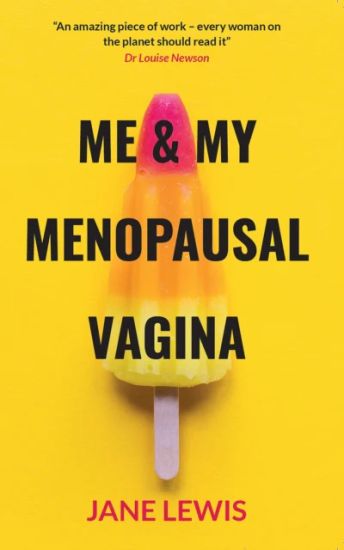
One woman's journey of menopause and vaginal atrophy. Written in collaboration with her daughter in a tongue-in-cheek way to help break taboos of vaginal atrophy. This book is informative, serious, tear jerking and guaranteed to make you laugh.

Mary Bonner: Impressions of a Printmaker is the definitive account of the life of an iconic Texas artist known for her delicate etchings and prints of the places and people that make South Texas unique. Mary Bonner begins with the artist’s early years in San Antonio and continues through her awakening as an artist at the Woodstock colony in upstate New York in summer 1922 to her years in France under the instruction of master printmaker Édouard Henri Léon. In Paris, Bonner began entering her work in juried exhibitions, and these early Paris prints were met with some acclaim. She came into her own when she began experimenting with a more innovative and modern style, exemplified by Les cowboys, a three-part frieze inspired by memories of her family’s ranch in Texas. After several years of dedicated study in Paris, Bonner began splitting her time between San Antonio and Paris. By 1928 she had begun to take on the causes of art and conservation in San Antonio, devoting less time to her own work. She spent the last years of her life at the family residence in San Antonio and died in 1935 at age forty-eight. Bonner’s legacy, both as an accomplished artist and as a steadfast advocate for the arts, lives on, especially in San Antonio. Mary Bonner is copublished with the National Trust for Historic Preservation and Villa Finale. The book will accompany a retrospective of Bonner’s work at the McNay Art Museum in San Antonio. This edition includes a new preface, an introduction by McNay curator Lyle Williams, and an afterword by Jane Lewis, director of Villa Finale.

After her mother's death, Dottie Lester moves to her parent's hometown of Saplingville, Georgia with her alcoholic father. She wants to escape and go to live with her aunt in Macon, but first, she must get her father settled in his new job. When Dottie meets a handsome pilot and falls in love, her goal changes, but it is still no match for his desire to leave their small town behind and fly for a commercial airline. Victor Douglas, United States Army Air Corps pilot, returns to Saplingville to help his ailing father. He has been flying his own JN-4 Jenny bi-plane for years. That and his army experience qualify him to apply for a job as a commercial airline pilot and win a coveted job offer, but how can he leave his father now, or a budding romance with the pretty new girl in town?

Drawing an unfavourable contrast between the position of students and graduates with that of their baby boomer parents has become a staple for media comment. Indeed, student indebtedness and difficulties in finding graduate jobs and housing typically contrasts markedly with their parents’ experiences. Broadening the investigation, ‘Helicopter Parenting’ and ‘Boomerang Children’ depicts how students and graduates are now likely to be close to their parents, receive considerable financial and emotional support from them and, upon graduation, return home. Using qualitative data from two interview studies of middle-class families, this title explores the impact of these changes on young people’s transition to independence and adulthood and on intergenerational and intragenerational equality. This enlightening monograph will appeal to undergraduate and postgraduate students interested in fields such as Social Policy, Family Sociology and Education.

Forensic Document Examination enlightens forensic document examiners, forensic investigators, attorneys and others using the services of forensic document examiners with the basic principles and current trends in the area. Standards and methodologies apply now, which were non-existent 20 years ago. Instrumentation has moved beyond the microscope and the magnifying glass to digital cameras, digital microscopes, video spectral comparators, electrostatic detection devices for the development of indented writing on paper, scanners, and software programs like Write-On 2.0 and Photoshop.
First published in 1987. This volume traces the arguments of early suffragists through the last three decades of the nineteenth century. Includes the texts of the House of Commons Debate on the 1871 Disabilities Bill, 1982 Women's Franchise Bill and key documents by those who were opposed to women's suffrage
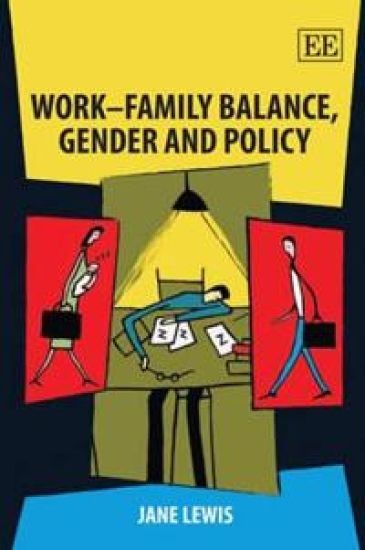
Combining paid work with caring for children has become more difficult for families as women's working hours have increased. Over the past decade the issue of work-family balance has reached a more prominent place on the policy agenda of many Western European countries. However the preoccupations of governments have been largely instrumental, focusing particularly on the goal of increasing female employment rates in order to achieve greater competitiveness and economic growth, and also in many countries on raising fertility rates and promoting children's early learning. This important book looks at the three main components of work-family policy packages - childcare services, flexible working patterns and entitlements to leave from work in order to care - across EU15 Member States, with comparative reference to the US. It also provides an in-depth examination of developments in the UK. Variations in national priorities, policy instruments, established policy orientations and the context for policy making in terms of employment patterns, fertility behaviour and attitudes towards work and care are highlighted. Gender inequalities in the division of paid and unpaid work underpin the whole issue of work-family balance. But what constitutes gender equality in this crucial policy field? Jane Lewis argues that in spite of growing political emphasis on the importance of 'choice', a 'real' choice to engage in either or both the socially necessary activities of paid and unpaid work has remained elusive. Work-Family Balance, Gender and Policy is essential reading for students and scholars who wish to understand the complex challenges facing families and family policy and the opportunities for the future.
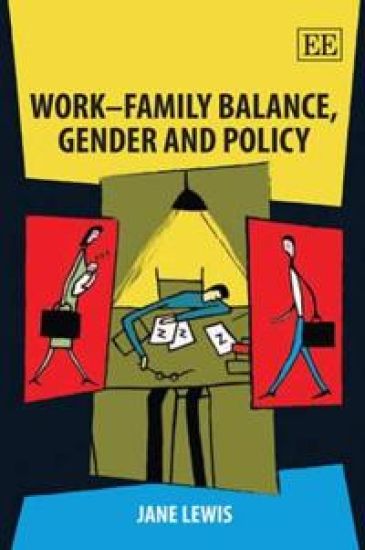
Combining paid work with caring for children has become more difficult for families as women's working hours have increased. Over the past decade the issue of work-family balance has reached a more prominent place on the policy agenda of many Western European countries. However the preoccupations of governments have been largely instrumental, focusing particularly on the goal of increasing female employment rates in order to achieve greater competitiveness and economic growth, and also in many countries on raising fertility rates and promoting children's early learning. This important book looks at the three main components of work-family policy packages - childcare services, flexible working patterns and entitlements to leave from work in order to care - across EU15 Member States, with comparative reference to the US. It also provides an in-depth examination of developments in the UK. Variations in national priorities, policy instruments, established policy orientations and the context for policy making in terms of employment patterns, fertility behaviour and attitudes towards work and care are highlighted. Gender inequalities in the division of paid and unpaid work underpin the whole issue of work-family balance. But what constitutes gender equality in this crucial policy field? Jane Lewis argues that in spite of growing political emphasis on the importance of 'choice', a 'real' choice to engage in either or both the socially necessary activities of paid and unpaid work has remained elusive. Work-Family Balance, Gender and Policy is essential reading for students and scholars who wish to understand the complex challenges facing families and family policy and the opportunities for the future.
Over the past quarter-century, the pace of family change in most Western countries has been extremely rapid; we have witnessed the substantial erosion of the traditional male-breadwinner, two-parent family form. This change inherently makes obsolete those laws and policies that assume the breadwinner/homemaker family structure. Should We Worry about Family Change? unpacks the current controversies and larger issues surrounding family change: the nature of family change; the impact of family change on the lives of women; and the need for amendment to our social policies and laws to reflect today's diverse family patterns. Drawing on her vast understanding of the historical development of the family and the social policies that have attempted to meet familial concerns, Lewis comments on such pivotal topics as absent fathers, the increasing economic independence of women, and the effects of the rise of cohabitation. Lewis ultimately suggests that there are policy options available to increase the choices men and women make about their contributions to family life and to promote family responsibility. Drawing on a wide range of literature, cross-national data, and policy approaches, Lewis engages her readers in a highly public and timely debate.

The modern day sees fewer marriages than before, and cohabitation is a major driver of family change. Jane Lewis questions whether this is - as many commentators argue and fear - a sign of ever-increasing individualism. Just as the order in which sex, marriage, cohabitation and childbirth occur can no longer be assumed, nor can the pattern of contributions that men and women make to the household. The End of Marriage? explores both the way in which the old rules have been eroded and what happens as a result. While there may certainly be something of a vacuum, Jane Lewis suggests that in some quarters at least this is being filled by increased negotiation at the household level. This questions the idea that individualism is necessarily selfish and destructive, which in turn raises issues regarding the regulation of the family, an increasingly delicate task for policymakers. The book reviews the debate surrounding the causes of family change, and suggests that the 'cultural variable' has been neglected, and that it is important to look at changes in normative expectations as well as in behaviour. Historical analysis is used to track changes in the major prescriptive frameworks of family law and the male breadwinner model. Contemporary qualitative research is also drawn upon in order to explore relationships in married and cohabiting households. This outstanding volume will fascinate a wide audience, including those interested in sociology and social policy, socio-legal studies and social history