Kirjojen hintavertailu – 12 876 058 kirjaa ja 26 kauppaa

Kirjailija

Jane Millar

Kirjat ja teokset yhdessä paikassa: 3 kirjaa, julkaisuja vuosilta 2002–2023, suosituimpiin kuuluu Poverty and Social Exclusion in Europe. Vertaile teosten hintoja ja tarkista saatavuus suomalaisista kirjakaupoista.

3 kirjaa

Kirjojen julkaisuvuodet: 2002–2023.

How Considerate Am I?

How Considerate Am I?

Jane Millar

austin macauley publishers llc
2023
pokkari
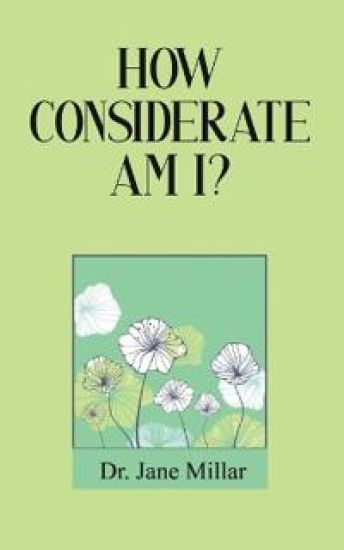
From the time I was a little girl, my mother drilled into my head that etiquette was not a matter of knowing which fork to use first. Rather, etiquette was a matter of being considerate and respectful of others. If asked, "Do you think of yourself as being a considerate person?" most of us would respond, "Of course, I am considerate." Many of us, however, might be surprised to learn that we are not as considerate as we think we are. How Considerate Am I? is a fun and private way to take a close look at just how considerate each of us actually is. How Considerate Am I? contains 37 categories of self-evaluation questions. The topics range from "How Considerate Am I in the Office?" to "How Considerate Am I at the Meal Table?" to "How Considerate Am I with My family?" The number of questions in each category ranges from 5 to 25, with each question being answered with "Always, Usually, Sometimes, Rarely, or Never." Through the scoring system within each category, the reader gets a humorous glimpse at how considerate he/she is. The score for each category is tabulated independently of the other categories. For example, I might learn that I am quite considerate when traveling by air, but not as considerate when dining in a restaurant. This just might be a book that you would want to share with others.
Poverty and Social Exclusion in Europe

Poverty and Social Exclusion in Europe

Matt Barnes; Christopher Heady; Sue Middleton; Jane Millar; Fotis Papadopoulos; Graham Room; Panos Tsakloglou

Edward Elgar Publishing Ltd
2003
nidottu
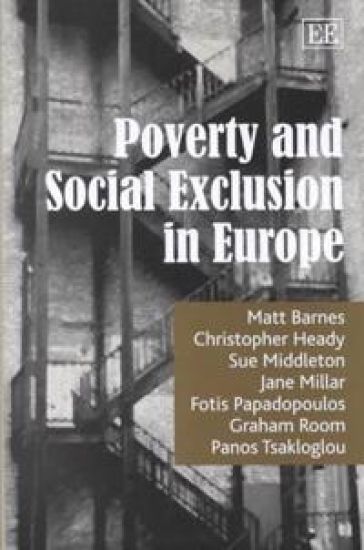
There are estimated to be almost 60 million people living in poverty throughout the European Union. This bleak statistic underlines the value of this important book which explores the nature and extent of poverty and social exclusion in six European countries, namely: Austria, Germany, Greece, Norway, Portugal and the UK. The book focuses on four 'life course' groups who might be considered particularly at risk: young adults, lone parents, the sick and disabled, and the retired. The authors show how poverty is the outcome of the interaction between several factors including education, gender and family structure. They emphasise the importance of distinguishing between poverty and non-monetary measures of deprivation and isolation. Although the poor are more at risk of suffering from deprivation, the authors demonstrate that this relationship is more tenuous than many people suppose. Employing rigorous theoretical and methodological analyses they go on to relate their findings to the policy environment in each of the countries, which were specifically chosen to reflect differing welfare systems. In this way the authors compare the impact of government policy on both the level of poverty and social exclusion, and on who is most at risk of experiencing them. Both statistically and in policy terms this book will be essential reading for students and academics of economics and the social sciences, and policy makers at both the national and European level.
Poverty and Social Exclusion in Europe

Poverty and Social Exclusion in Europe

Matt Barnes; Christopher Heady; Sue Middleton; Jane Millar; Fotis Papadopoulos; Graham Room; Panos Tsakloglou

Edward Elgar Publishing Ltd
2002
sidottu
There are estimated to be almost 60 million people living in poverty throughout the European Union. This bleak statistic underlines the value of this important book which explores the nature and extent of poverty and social exclusion in six European countries, namely: Austria, Germany, Greece, Norway, Portugal and the UK. The book focuses on four 'life course' groups who might be considered particularly at risk: young adults, lone parents, the sick and disabled, and the retired. The authors show how poverty is the outcome of the interaction between several factors including education, gender and family structure. They emphasise the importance of distinguishing between poverty and non-monetary measures of deprivation and isolation. Although the poor are more at risk of suffering from deprivation, the authors demonstrate that this relationship is more tenuous than many people suppose. Employing rigorous theoretical and methodological analyses they go on to relate their findings to the policy environment in each of the countries, which were specifically chosen to reflect differing welfare systems. In this way the authors compare the impact of government policy on both the level of poverty and social exclusion, and on who is most at risk of experiencing them. Both statistically and in policy terms this book will be essential reading for students and academics of economics and the social sciences, and policy makers at both the national and European level.