Kirjojen hintavertailu – 12 903 724 kirjaa ja 27 kauppaa

Kirjailija

Jane Rendall

Kirjat ja teokset yhdessä paikassa: 4 kirjaa, julkaisuja vuosilta 1985–2000, suosituimpiin kuuluu Women in an Industrializing Society. Vertaile teosten hintoja ja tarkista saatavuus suomalaisista kirjakaupoista.

4 kirjaa

Kirjojen julkaisuvuodet: 1985–2000.

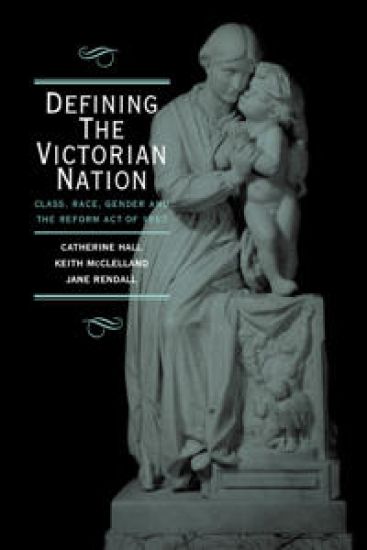
Defining the Victorian Nation

Defining the Victorian Nation

Catherine Hall; Keith McClelland; Jane Rendall

Cambridge University Press
2000
sidottu
Defining the Victorian Nation offers a fresh perspective on one of the most significant pieces of legislation in nineteenth-century Britain. Catherine Hall, Keith McClelland and Jane Rendall demonstrate that the Second Reform Act of 1867 was marked not only by extensive controversy about the extension of the vote, but also by new concepts of masculinity and the masculine voter, the beginnings of the movement for women’s suffrage, and a parallel debate about the meanings and forms of national belonging. The chapters in this book draw on recent developments in cultural, social and gender history, broadening the study of nineteenth-century British political history and integrating questions of nation and empire. Fascinating illustrations illuminate the argument, and a detailed chronology, biographical notes and selected bibliography offer further support to the student reader. Students and scholars in history, women’s studies, cultural studies, and postcolonial studies will find this book invaluable.
Defining the Victorian Nation

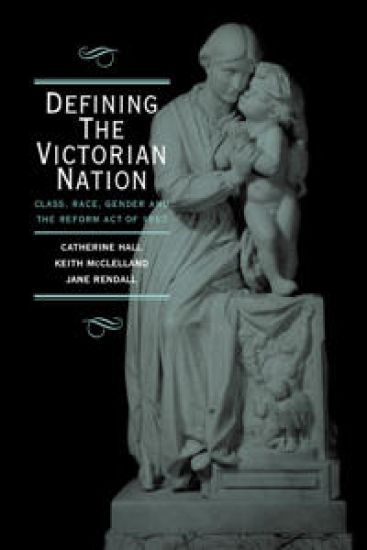
Defining the Victorian Nation

Catherine Hall; Keith McClelland; Jane Rendall

Cambridge University Press
2000
pokkari

Halvin toimitettuna 55,60 €

Defining the Victorian Nation offers a fresh perspective on one of the most significant pieces of legislation in nineteenth-century Britain. Catherine Hall, Keith McClelland and Jane Rendall demonstrate that the Second Reform Act of 1867 was marked not only by extensive controversy about the extension of the vote, but also by new concepts of masculinity and the masculine voter, the beginnings of the movement for women’s suffrage, and a parallel debate about the meanings and forms of national belonging. The chapters in this book draw on recent developments in cultural, social and gender history, broadening the study of nineteenth-century British political history and integrating questions of nation and empire. Fascinating illustrations illuminate the argument, and a detailed chronology, biographical notes and selected bibliography offer further support to the student reader. Students and scholars in history, women’s studies, cultural studies, and postcolonial studies will find this book invaluable.
Women in an Industrializing Society

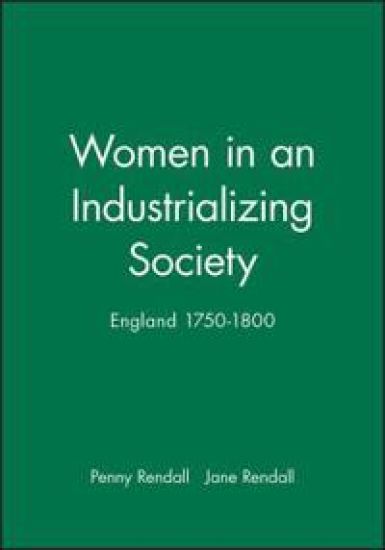
Women in an Industrializing Society

Penny Rendall; Jane Rendall

Blackwell Publishers
1990
nidottu
This book examines the experiences of women in an industrializing society, not only in their paid employment, but also in the home. Both are vital to understanding the role women played in the industrial revolution in England. Jane Rendall draws upon the most recent work on the social history of the nineteenth century to consider the economic changes that brought new divisions of labour between the sexes in the working-class family and the growth of the ideal of 'separate spheres' for middle-class men and women. She shows how, by the end of the period, domestic labour, both paid and unpaid, and the responsibilities of motherhood has become the expected occupation of the majority of women.
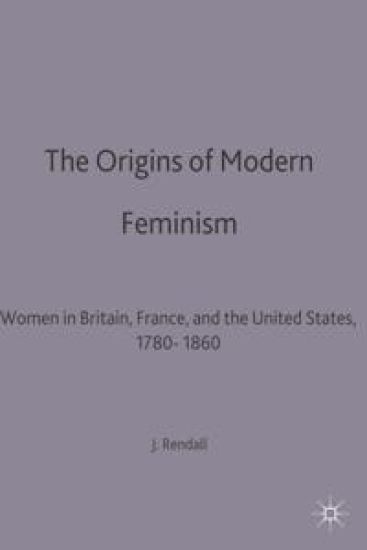
The Origins of Modern Feminism

The Origins of Modern Feminism

Jane Rendall

Red Globe Press
1985
nidottu
This comparative study analyses the emergence of feminist movements and their differing characters in Britain, France and the United States. Jane Rendall examines the social, economic and cultural factors which affected women's status in society, and led some women to act, individually and collectively, to seek to change it. The Enlightenment emphasis on women's 'nature' and the evangelical stress on the moral potential of women contributed to a framework of ideas which could be used by conservatives and by feminists. Among the middle classes, discussion focused on the need to improve women's education and on the strengths and limitations of domesticity. Patterns of paid employment for women were shifting, and Jane Rendall suggests that the weak position of women in the labor market during the early stages of industrialisation restricted their ability to associate together. Yet involvement in religious, political and philanthropic movements could provide a means by which women might come together to identify their common concerns and learn the necessary political skills. Jane Rendall places the origins of feminism in the broader context of social and political change in the nineteenth century, looking both at the changing relationship between paid work and domestic life and at the links between feminism and class and political conflict in three different societies.