Kirjojen hintavertailu – 12 859 828 kirjaa ja 27 kauppaa

Kirjailija

Jane Scoular

Kirjat ja teokset yhdessä paikassa: 5 kirjaa, julkaisuja vuosilta 2006–2018, suosituimpiin kuuluu Internet Sex Work. Vertaile teosten hintoja ja tarkista saatavuus suomalaisista kirjakaupoista.

5 kirjaa

Kirjojen julkaisuvuodet: 2006–2018.

Internet Sex Work

Internet Sex Work

Teela Sanders; Jane Scoular; Rosie Campbell; Jane Pitcher; Stewart Cunningham

Springer International Publishing AG
2018
nidottu
This book takes readers behind the screen to uncover how digital technologies have affected the UK sex industry. The authors use extensive new datasets to explore the working practices, safety and regulation of the sex industry, for female, male and trans sex workers primarily working in the UK. Insights are given as to how sex workers use the internet in their everyday working lives, appropriating social media, private online spaces and marketing strategies to manage their profiles, businesses and careers. Internet Sex Work also explores safety strategies in response to new forms of crimes experienced by sex workers, as well as policing responses. The book will be of interest to students and scholars across a range of social science disciplines, including gender studies, socio-legal studies, criminology and sociology.

Internet Sex Work

Internet Sex Work

Teela Sanders; Jane Scoular; Rosie Campbell; Jane Pitcher; Stewart Cunningham

Springer International Publishing AG
2017
sidottu
This book takes readers behind the screen to uncover how digital technologies have affected the UK sex industry. The authors use extensive new datasets to explore the working practices, safety and regulation of the sex industry, for female, male and trans sex workers primarily working in the UK. Insights are given as to how sex workers use the internet in their everyday working lives, appropriating social media, private online spaces and marketing strategies to manage their profiles, businesses and careers. Internet Sex Work also explores safety strategies in response to new forms of crimes experienced by sex workers, as well as policing responses. The book will be of interest to students and scholars across a range of social science disciplines, including gender studies, socio-legal studies, criminology and sociology.

The Subject of Prostitution

The Subject of Prostitution

Jane Scoular

Routledge
2017
nidottu
The Subject of Prostitution offers a distinctive analysis of the links between prostitution and social theory in order to advance a critical analysis of the relationship of law to sex work. Using the lens of social theory to disrupt fixed meanings the book provides an advanced analytical framework through which to understand the complexity and contingencies of sex work in late modernity. The book analyses contemporary citizenship discourse and the law's ability to meet the competing demands of empowerment by sex workers and protection by radical feminists who view prostitution as the epitome of patriarchal sexual and economic relations. Its central focus is the role of law in both structuring and responding to the 'problem of prostitution'. By developing a distinctive constitutive approach to law, the author offers a more advanced analytical framework from which to understand how law matters in contemporary debates and also suggests how law could matter in more imaginative justice reforms. This is particularly pertinent in a period of unprecedented legal reform, both internationally and nationally, as legal norms simultaneously attempt to protect, empower and criminalise parties involved in the purchase of sexual services. The Subject of Prostitution aims to overcome the current aporia in these debates and suggest new ways to engage with the subject and law. As such, The Subject of Prostitution provides an advanced theoretical resource for policymakers, researchers and activists involved in contemporary struggles over the meanings and place of sex work in late modernity.
The Subject of Prostitution

The Subject of Prostitution

Jane Scoular

Routledge Cavendish
2015
sidottu
The Subject of Prostitution offers a distinctive analysis of the links between prostitution and social theory in order to advance a critical analysis of the relationship of law to sex work. Using the lens of social theory to disrupt fixed meanings the book provides an advanced analytical framework through which to understand the complexity and contingencies of sex work in late modernity. The book analyses contemporary citizenship discourse and the law's ability to meet the competing demands of empowerment by sex workers and protection by radical feminists who view prostitution as the epitome of patriarchal sexual and economic relations. Its central focus is the role of law in both structuring and responding to the 'problem of prostitution'. By developing a distinctive constitutive approach to law, the author offers a more advanced analytical framework from which to understand how law matters in contemporary debates and also suggests how law could matter in more imaginative justice reforms. This is particularly pertinent in a period of unprecedented legal reform, both internationally and nationally, as legal norms simultaneously attempt to protect, empower and criminalise parties involved in the purchase of sexual services. The Subject of Prostitution aims to overcome the current aporia in these debates and suggest new ways to engage with the subject and law. As such, The Subject of Prostitution provides an advanced theoretical resource for policymakers, researchers and activists involved in contemporary struggles over the meanings and place of sex work in late modernity.
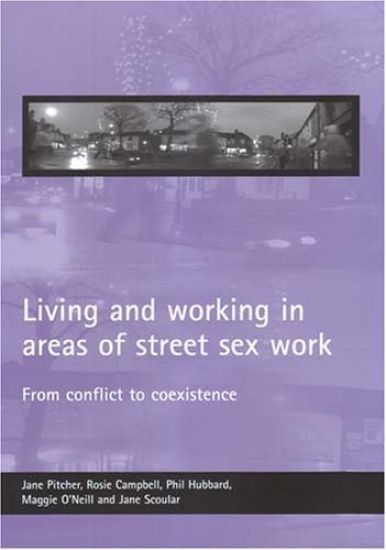
Living and working in areas of street sex work

Living and working in areas of street sex work

Jane Pitcher; Rosie Campbell; Phil Hubbard; Maggie O'Neill; Jane Scoular

Policy Press
2006
nidottu
There has been considerable recent policy debate on street sex work in local neighbourhoods and responses to community concerns. This report examines how residential areas characterised as areas of female street sex work are shared by different sections of the community and considers community and policy responses to street sex work. The report draws on research with sex workers, residents and agency staff in five case study areas in England and Scotland. It considers community responses to street sex work in local neighbourhoods and the varying degrees of tolerance and engagement. Exploring whether residential streets can serve as shared spaces where residents and sex workers may coexist, the authors reflect on the scope for improving relations between residents and street sex workers, through initiatives such as consultation, mediation and awareness-raising. Living and working in areas of street sex work considers both the effectiveness of responses such as enforcement and the use of anti-social behaviour legislation; and the need for integrated initiatives to address community conflicts and manage the street scene.