Kirjojen hintavertailu – 12 859 818 kirjaa ja 27 kauppaa

Kirjailija

Jane Singer

Kirjat ja teokset yhdessä paikassa: 5 kirjaa, julkaisuja vuosilta 2005–2019, suosituimpiin kuuluu Lincoln's Secret Spy. Vertaile teosten hintoja ja tarkista saatavuus suomalaisista kirjakaupoista.

5 kirjaa

Kirjojen julkaisuvuodet: 2005–2019.

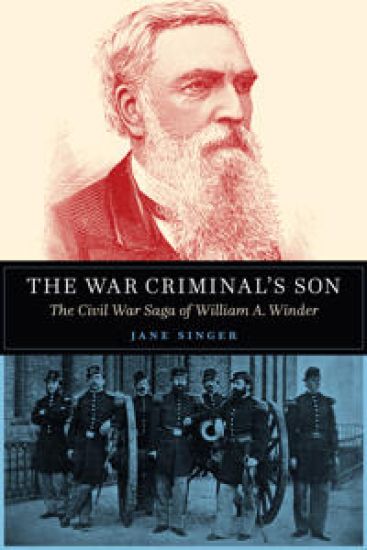
The War Criminal's Son

The War Criminal's Son

Jane Singer

Potomac Books Inc
2019
sidottu
The War Criminal’s Son brings to life hidden aspects of the Civil War through the sweeping saga of the firstborn son in the infamous Confederate Winder family, who shattered family ties to stand with the Union. Gen. John H. Winder was the commandant of most prison camps in the Confederacy, including Andersonville. When Winder gave his son William Andrew Winder the order to come south and fight, desert, or commit suicide, William went to the White House and swore his allegiance to President Lincoln and the Union. Despite his pleas to remain at the front, it was not enough. Winder was ordered to command Alcatraz, a fortress that became a Civil War prison, where he treated his prisoners humanely despite repeated accusations of disloyalty and treason because the Winder name had become shorthand for brutality during an already brutal war. John Winder died before he could be brought to justice as a war criminal. Haunted by his father’s villainy, William went into a self-imposed exile for twenty years and eventually ended up at the Rosebud Reservation in South Dakota, to fulfill his longstanding desire to better the lot of Native Americans. In The War Criminal’s Son Jane Singer evokes the universal themes of loyalty, shame, and redemption in the face of unspeakable cruelty.
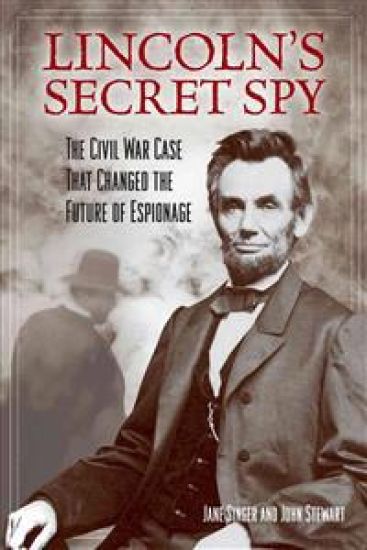
Lincoln's Secret Spy

Lincoln's Secret Spy

Jane Singer; John Stewart; Jane Singer

The Lyons Press
2015
sidottu
A month after Lincoln's assassination, William Alvin Lloyd arrived in Washington, DC, to press a claim against the federal government for money due him for serving as the president's spy in the Confederacy. Lloyd claimed that Lincoln personally had issued papers of transit for him to cross into the South, a salary of $200 a month, and a secret commission as Lincoln's own top-secret spy. The claim convinced Secretary of War Edwin Stanton and Judge Advocate General Joseph Holt-but was it true? For many years Lloyd had been hawking his Southern Steamboat and Railroad Guide throughout Dixie, and it was this thorough familiarity with the South and its people-and their familiarity with him-that would have given him a good cover when the time came. In July, 1861, and now desperate for cash, Lloyd crossed enemy lines to collect debts owed by advertising clients in the South. After just a few days in the Confederacy, officials jailed Lloyd for bigamy, not for being a Yankee spy as he later claimed. After bribing his way out, he crisscrossed the Southern states, trying to collect enough money to stay alive. Between riding the rails he found time to marry plenty of unsuspecting young women only to ditch them a few days later. His behavior drew the attention of Confederate authorities, who nabbed him in Savannah and charged him as a suspected spy. But after nine months, they couldn't find any incriminating evidence or anyone to testify against him, so they let him go. A free but broken man, Lloyd continued roaming the South, making money however he could. In May 1865, he went to Washington with an extraordinary claim and little else: a few coached witnesses, and a pass to cross the lines signed "A. Lincoln" (the most forged signature in American history), and his own testimony. So was he really Lincoln's secret agent or nothing more than a con man? And was Totten vs. United States-inspired by Lloyd's claim and which set precedent for espionage law based on a monumental fraud? Find out in this completely irresistible and wholly original work.
Online Journalism Ethics

Online Journalism Ethics

Cecilia Friend; Jane Singer

Routledge
2007
nidottu
Online media present both old and new ethical issues for journalists who must make decisions in an interactive, instantaneous environment short on normative standards or guidelines. This user-friendly book guides prospective and professional journalists through ethical questions encountered only online. Including real-life examples and perspectives from online journalists in every chapter, the book examines the issues of gathering information, reporting, interviewing, and writing for mainstream news organizations on the Web. It considers the ethical implications of linking, interactivity, verification, transparency, and Web advertising, as well as the effects of convergence on newsrooms. It also addresses the question of who is a journalist and what is journalism in an age when anyone can be a publisher. Each chapter includes a complex case study that promotes critical thinking and classroom discussion about how to apply the ethical issues covered.
Online Journalism Ethics

Online Journalism Ethics

Cecilia Friend; Jane Singer

Routledge
2007
sidottu
Online media present both old and new ethical issues for journalists who must make decisions in an interactive, instantaneous environment short on normative standards or guidelines. This user-friendly book guides prospective and professional journalists through ethical questions encountered only online. Including real-life examples and perspectives from online journalists in every chapter, the book examines the issues of gathering information, reporting, interviewing, and writing for mainstream news organizations on the Web. It considers the ethical implications of linking, interactivity, verification, transparency, and Web advertising, as well as the effects of convergence on newsrooms. It also addresses the question of who is a journalist and what is journalism in an age when anyone can be a publisher. Each chapter includes a complex case study that promotes critical thinking and classroom discussion about how to apply the ethical issues covered.
The Confederate Dirty War

The Confederate Dirty War

Jane Singer

McFarland Co Inc
2005
pokkari
They echo modern headlines--a shadowy underground organization orchestrating plans to bring down the government; bands of saboteurs slipping in from Canada to attempt coordinated acts of destruction; plans to poison water supplies and spread deadly diseases among the urban populace--but these and similar incidents were part of a Confederate strategy to wreak "terror and consternation" upon the North during the Civil War. Elements within the Confederacy, acting officially or otherwise, developed--and attempted--numerous plans to inflict terror and death upon the Union populace and bring down the government using a variety of unconventional means. These efforts are an overlooked and important aspect of the Confederate strategy during the Civil War. This is a history of Confederate efforts to terrorize, demoralize and defeat the North by attacking civilians and the government, using means outside the bounds of conventional warfare. It covers arsonists, "destructionists," engineers of chemical and biological weapons, bands of mobile operatives, and a variety of other singular individuals and those who opposed them. Chapters cover prominent events in the campaign, from the efforts of the Sons of Liberty--an underground society allied against the Union and brought down by one heroic spy--to attempts to destroy the White House and "decapitate" the government. Illustrations, photographs and relative documents are included, as is an appendix following the career of Confederate bomber W. S. Duepree, killed while setting one of his own mines. Notes, a bibliography and an index are included.