Kirjojen hintavertailu – 12 903 735 kirjaa ja 27 kauppaa

Kirjailija

Jane Whittle

Kirjat ja teokset yhdessä paikassa: 5 kirjaa, julkaisuja vuosilta 2000–2025, suosituimpiin kuuluu Consumption and Gender in the Early Seventeenth-Century Household. Vertaile teosten hintoja ja tarkista saatavuus suomalaisista kirjakaupoista.

5 kirjaa

Kirjojen julkaisuvuodet: 2000–2025.

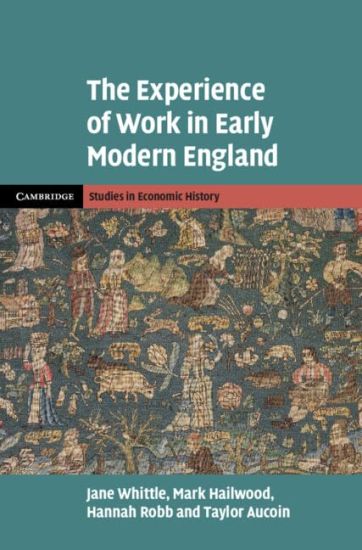
The Experience of Work in Early Modern England

The Experience of Work in Early Modern England

Jane Whittle; Mark Hailwood; Hannah Robb; Taylor Aucoin

Cambridge University Press
2025
sidottu
This book applies the innovative work-task approach to the history of work, which captures the contribution of all workers and types of work to the early modern economy. Drawing on tens of thousands of court depositions, the authors analyse the individual tasks that made up everyday work for women and men, shedding new light on the gender division of labour, and the ways in which time, space, age and marital status shaped sixteenth and seventeenth-century working life. Combining qualitative and quantitative analysis, the book deepens our understanding of the preindustrial economy, and calls for us to rethink not only who did what, but also the implications of these findings for major debates about structural change, the nature and extent of paid work, and what has been lost as well as gained over the past three centuries of economic development. This title is also available as open access on Cambridge Core.
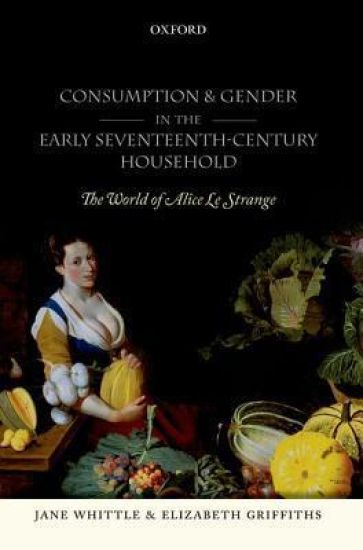
Consumption and Gender in the Early Seventeenth-Century Household

Consumption and Gender in the Early Seventeenth-Century Household

Jane Whittle; Elizabeth Griffiths

Oxford University Press
2012
sidottu
Lady Alice Le Strange of Hunstanton in Norfolk kept a continuous series of household accounts from 1610-1654. Jane Whittle and Elizabeth Griffiths have used the Le Stranges' rich archive to reconstruct the material aspects of family life. This involves looking not only at purchases, but also at home production and gifts; and not only at the luxurious, but at the everyday consumption of food and medical care. Consumption is viewed not just as a set of objects owned, but as a process involving household management, acquisition and appropriation, a process that created and reinforced social links with craftsmen, servants, labourers, and the local community. It is argued that the county gentry provide a missing link in histories of consumption: connecting the fashions of London and the royal court, with those of middling strata of rural England. Recent writing has focused upon the transformation of consumption patterns in the eighteenth century. Here the earlier context is illuminated and, instead of tradition and stability, we find constant change and innovation. Issues of gender permeate the study. Consumption is often viewed as a female activity and the book looks in detail at who managed the provisioning, purchases, and work within the household, how spending on sons and daughters differed, and whether men and women attached different cultural values to household goods. This single household's economy provides a window into some of most significant cultural and economic issues of early modern England: innovations in trade, retail and production, the basis of gentry power, social relations in the countryside, and the gendering of family life.
The Development of Agrarian Capitalism

The Development of Agrarian Capitalism

Jane Whittle

Clarendon Press
2000
sidottu
This is an important new scholarly study of the roots of capitalism. Jane Whittle's penetrating examination of rural England in the fifteenth and sixteenth centuries asks how capitalist it was, and how and why it changed over the century and a half under scrutiny. Her book intelligently relates ideas of peasant society and capitalism to a local study of north-east Norfolk, a county that was to become one of the crucibles of the so-called agrarian revolution. Dr Whittle uses the rich variety of historical sources produced by this precocious commercialized locality to examine a wide range of topics from the manorial system and serfdom, rights to land and the level of rent, the land market and inheritance, to the distribution of land and wealth, the numbers of landless, wage-earners, and rural craftsmen, servants, and the labour laws.