Kirjojen hintavertailu – 12 859 824 kirjaa ja 27 kauppaa

Kirjailija

Janet Rose

Kirjat ja teokset yhdessä paikassa: 7 kirjaa, julkaisuja vuosilta 2012–2026, suosituimpiin kuuluu The Sensory Aware Early Years Toolkit. Vertaile teosten hintoja ja tarkista saatavuus suomalaisista kirjakaupoista.

7 kirjaa

Kirjojen julkaisuvuodet: 2012–2026.

The Sensory Aware Early Years Toolkit

The Sensory Aware Early Years Toolkit

Alice Hoyle; Tessa Hyde; Janet Rose; Charlotte Forrester

TAYLOR FRANCIS LTD
2026
sidottu
Sensory wellbeing is central to everything in the early years. This practical toolkit helps you understand how sensory experiences can impact on young children’s ability to play, learn and connect, and turn that understanding into everyday action, across your whole setting. Written for busy early years teams, the book accessibly explains the eight senses and shows how sensory profiles can look very different from child to child. With everything you need to create a setting where all children feel safe, regulated, and ready to learn and thrive, it: Helps you spot when behaviour is really a child communicating, “this feels too much”, or “I need more input”. Encourages the reader to explore their own sensory preferences and triggers, because regulated adults create regulated spaces. Is packed with resources, including a self-assessment tool and audit, universal and targeted strategies, and suggestions for environment tweaks. Provides realistic, easy-to-implement next steps that can be adapted for different settings. Whether you’re a key worker, room leader, SENCO or nursery manager, this book will help you embed sensory inclusion into your routines, culture, training and leadership —without needing to be a sensory expert. A companion to the bestselling Becoming a Sensory Aware School, this book brings the same clarity, compassion and practical wisdom to the early years sector.

The Sensory Aware Early Years Toolkit

The Sensory Aware Early Years Toolkit

Alice Hoyle; Tessa Hyde; Janet Rose; Charlotte Forrester

TAYLOR FRANCIS LTD
2026
nidottu
Sensory wellbeing is central to everything in the early years. This practical toolkit helps you understand how sensory experiences can impact on young children’s ability to play, learn and connect, and turn that understanding into everyday action, across your whole setting. Written for busy early years teams, the book accessibly explains the eight senses and shows how sensory profiles can look very different from child to child. With everything you need to create a setting where all children feel safe, regulated, and ready to learn and thrive, it: Helps you spot when behaviour is really a child communicating, “this feels too much”, or “I need more input”. Encourages the reader to explore their own sensory preferences and triggers, because regulated adults create regulated spaces. Is packed with resources, including a self-assessment tool and audit, universal and targeted strategies, and suggestions for environment tweaks. Provides realistic, easy-to-implement next steps that can be adapted for different settings. Whether you’re a key worker, room leader, SENCO or nursery manager, this book will help you embed sensory inclusion into your routines, culture, training and leadership —without needing to be a sensory expert. A companion to the bestselling Becoming a Sensory Aware School, this book brings the same clarity, compassion and practical wisdom to the early years sector.
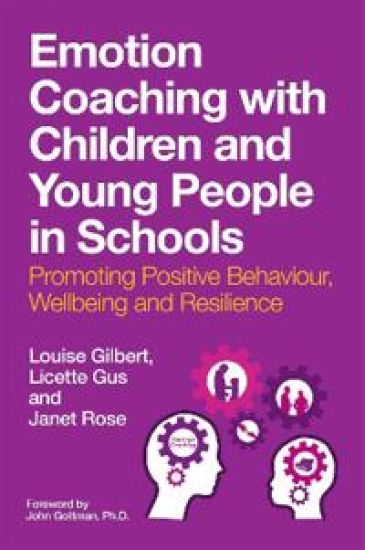
Emotion Coaching with Children and Young People in Schools

Emotion Coaching with Children and Young People in Schools

Louise Gilbert; Licette Gus; Janet Rose; John Gottman

Jessica Kingsley Publishers
2021
pokkari
Emotion Coaching (EC) is a universal communication strategy which supports children and young people to self-regulate and manage their stress responses. Originally noticed as an effective way parents communicated with their children around challenging behaviours, Emotion Coaching has been shown to be highly successful in educational settings too. This is why the authors pioneered the research and application of Emotion Coaching into UK (primary and secondary) schools and community settings. The book includes straightforward descriptions and practical tips, with signposting to resources, case studies and vignettes to illustrate its practical application in educational settings. It supports adults to promote empathetic responses to challenging behaviours and situations, helping children and young people to understand their emotions and learn to manage them and their behavior in the longer-term.
Health and Well-being in Early Childhood

Health and Well-being in Early Childhood

Janet Rose; Louise Gilbert; Val Richards

SAGE Publications Ltd
2015
nidottu
The health and well-being of children is integral to learning and development but what does it actually mean in practice? This textbook draws on contemporary research on the brain and mind to provide an up-to-date overview of the central aspects of young children’s health and well-being – a key component of the revised EYFS curriculum. Critically engaging with a range of current debates, coverage includes early influences, such as relationships, attachment (attachment theory) and nutritionthe role of the brain in health and well-beingthe enabling environmentother issues affecting child development To support students with further reading, reflective and critical thinking it employs: case studiespointers for practicemindful moments discussion questionsreferences to extra readings web links This current, critical and comprehensive course text will provide a solid foundation for students and practitioners on a wide range of early childhood courses, and empower them to support and nurture young children’s health and well-being.
Health and Well-being in Early Childhood

Health and Well-being in Early Childhood

Janet Rose; Louise Gilbert; Val Richards

SAGE Publications Ltd
2015
sidottu
The health and well-being of children is integral to learning and development but what does it actually mean in practice? This textbook draws on contemporary research on the brain and mind to provide an up-to-date overview of the central aspects of young children’s health and well-being – a key component of the revised EYFS curriculum. Critically engaging with a range of current debates, coverage includes early influences, such as relationships, attachment (attachment theory) and nutritionthe role of the brain in health and well-beingthe enabling environmentother issues affecting child development To support students with further reading, reflective and critical thinking it employs: case studiespointers for practicemindful moments discussion questionsreferences to extra readings web links This current, critical and comprehensive course text will provide a solid foundation for students and practitioners on a wide range of early childhood courses, and empower them to support and nurture young children’s health and well-being.
The Role of the Adult in Early Years Settings

The Role of the Adult in Early Years Settings

Janet Rose; Sue Rogers

Open University Press
2012
nidottu
“This book offers a unique and critical approach to the theme of adults working in early years settings through a focus on seven key dimensions encompassed in the term 'the plural practitioner'. The discussion is strongly underpinned by a consideration of the two important principles of child centredness and social justice. The authors also draw on multiple perspectives, including the role of neuroscience and socio cultural perspectives, to consider who these early years professional are and the complexity of what they bring to their work.” Linda Miller, Professor Emeritus, Early Years, The Open University, UKThis essential book focuses on the adult role within early years education and care. The book introduces the concept of the 'plural practitioner', which acknowledges that the role of the adult in early years settings is complex and entails many different responsibilities. The book argues that the ‘plural practitioner’ can create quality early years provision by implementing child-centred and socially just practices. The idea of the ‘plural practitioner’ is embedded in theory and research, providing a robust rationale and framework to help early years practitioners understand of a range of theories and relate them to their work with young children. The book includes:Discussion of the seven different dimensions of the adult role - to help practitioners reflect on the multiple and complex ways in which they work with young children including: The Critical Reflector, The Carer, The Communicator, The Facilitator, The Observer, The Assessor and The Creator Key questions at the end of each chapter to stimulate further reflection and reading Case study examples of real practitioner experiences The Role of the Adult in Early Years Settings will appeal to all students and practitioners either planning to or currently working in early years settings and aiming to develop their practice.