Kirjojen hintavertailu – 12 870 371 kirjaa ja 27 kauppaa

Kirjailija

Janet Staiger

Kirjat ja teokset yhdessä paikassa: 10 kirjaa, julkaisuja vuosilta 1988–2015, suosituimpiin kuuluu The Classical Hollywood Cinema. Vertaile teosten hintoja ja tarkista saatavuus suomalaisista kirjakaupoista.

10 kirjaa

Kirjojen julkaisuvuodet: 1988–2015.

The Classical Hollywood Cinema

The Classical Hollywood Cinema

David Bordwell; Janet Staiger; Kristin Thompson

Routledge
2015
sidottu
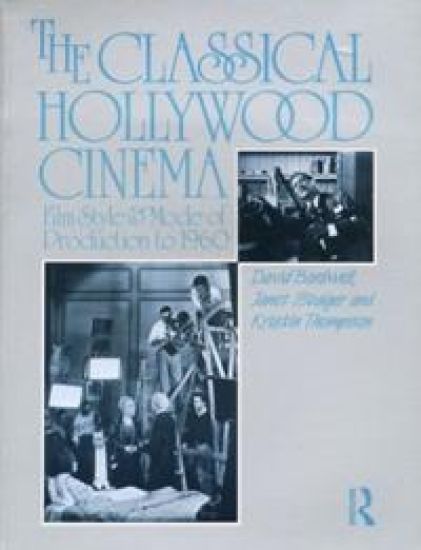
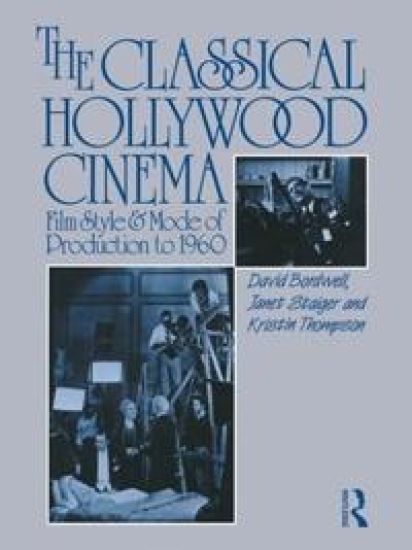
'A dense, challenging and important book.' Philip French Observer'At the very least, this blockbuster is probably the best single volume history of Hollywood we're likely to get for a very long time.' Paul Kerr City Limits'Persuasively argued, the book is also packed with facts, figures and photographs.' Nigel Andrews Financial TimesAcclaimed for their breakthrough approach, Bordwell, Staiger and Thompson analyze the basic conditions of American film-making as a historical institution and consider to what extent Hollywood film production constitutes a systematic enterprise, in both its style and its business operations. Despite differences of director, genre or studio, most Hollywood films operate within a set of shared assumptions about how a film should look and sound. Such assumptions are neither natural nor inevitable; but because classical-style films have been the type most widely seen, they have come to be accepted as the 'norm' of film-making and viewing. The authors show how these classical conventions were formulated and standardized, and how they responded to the arrival of sound, colour, widescreen ratios and stereophonic sound. They argue that each new technological development has served a function within an existing narrational system. The authors also examine how the Hollywood cinema standardized the film-making process itself. They describe how, over the course of its history, Hollywood developed distinct modes of production in a constant search for maximum efficiency, predictability and novelty. Set apart by its combination of theoretical analysis and empirical evidence, this book is the standard work on the classical Hollywood cinema style of film-making from the silent era to the 1960s. Now available in paperback, it is a 'must' for film students, lecturers and all those seriously interested in the development of the film industry.
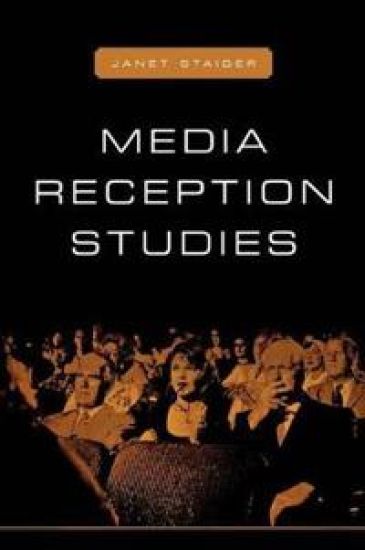
Media Reception Studies

Media Reception Studies

Janet Staiger

New York University Press
2005
sidottu
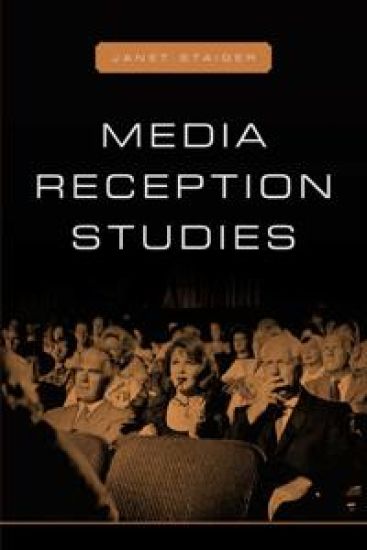
A broad survey on how audiences make meaning out of mass media Media Reception Studies broadly surveys the past century of scholarship on the ways in which audiences make meaning out of mass media. It synthesizes in plain language social scientific, linguistic, and cultural studies approaches to film and television as communication media. Janet Staiger traverses a broad terrain, covering the Chicago School, early psychological approaches, Soviet theory, the Frankfurt School, mass communication research and critical theory, linguistics and semiotic theory, social-psychoanalytical research, cognitive psychology, and cultural studies. She offers these theories as a set of tools for understanding the complex relationships between films and their audiences, TV shows and their viewers. She explains such questions as the behavior of fans; the implications of gender, sexuality, and race/ethnicity with regard to the media; the effect of violence, horror, and sexually explicit images on viewers; and the place of memory in spectatorship. Providing an organized and lucid introduction to a staggering amount of work, Media Reception Studies is an indispensable resource for anyone interested in understanding the effects of mass media.
Media Reception Studies

Media Reception Studies

Janet Staiger

New York University Press
2005
pokkari
A broad survey on how audiences make meaning out of mass media Media Reception Studies broadly surveys the past century of scholarship on the ways in which audiences make meaning out of mass media. It synthesizes in plain language social scientific, linguistic, and cultural studies approaches to film and television as communication media. Janet Staiger traverses a broad terrain, covering the Chicago School, early psychological approaches, Soviet theory, the Frankfurt School, mass communication research and critical theory, linguistics and semiotic theory, social-psychoanalytical research, cognitive psychology, and cultural studies. She offers these theories as a set of tools for understanding the complex relationships between films and their audiences, TV shows and their viewers. She explains such questions as the behavior of fans; the implications of gender, sexuality, and race/ethnicity with regard to the media; the effect of violence, horror, and sexually explicit images on viewers; and the place of memory in spectatorship. Providing an organized and lucid introduction to a staggering amount of work, Media Reception Studies is an indispensable resource for anyone interested in understanding the effects of mass media.
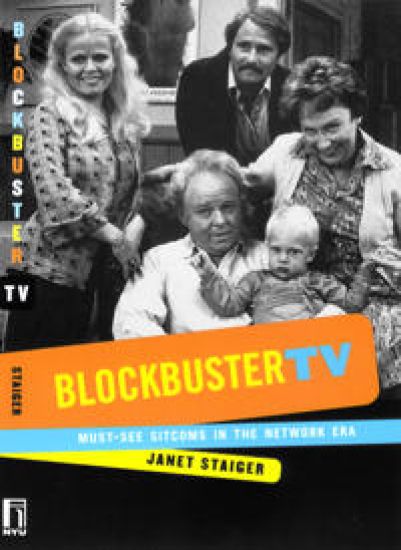
Blockbuster TV

Blockbuster TV

Janet Staiger

New York University Press
2000
sidottu
Archie Bunker. Jed. Laverne and Shirley. Cliff Huxtable. Throughout the entire history of American prime-time television only four sitcoms have been true blockbusters, with Nielsen ratings far above the second- and third-rated programs. Weekly, millions of Americans of every age were making a special effort to turn on the set to see what Archie, Jed, Laverne, and Cliff were doing that week. The wild popularity of these shows--All in the Family, The Beverly Hillbillies, Laverne & Shirley (and its partner Happy Days), and The Cosby Show--left commentators bewildered by the tastes and preferences of the American public. How do we account for the huge appeal of these sitcoms, and how does it figure into the history of network prime-time television? Janet Staiger answers these questions by detailing the myriad factors that go into the construction of mass audiences. Treating the four shows as case studies, she deftly balances factual explanations (for instance, the impact of VCRs and cable on network domination of TV) with more interpretative ones (for example, the transformation of The Beverly Hillbillies from a popular show detested by the critics, to a blockbuster after its elevation as the critics' darling), and juxtaposes industry-based reasons (for example, the ways in which TV shows derive success from placement in the weekly programming schedule) with stylistic explanations (how, for instance, certain shows create pleasure from a repetition and variation of a formula). Staiger concludes that because of changes in the industry, these shows were a phenomenon that may never be repeated. And while the western or the night-time soap has at times captured public attention, Blockbuster TV maintains that the sitcom has been THE genre to attract people to the tube, and that without understanding the sitcom, we can't properly understand the role of television in our culture.
Blockbuster TV

Blockbuster TV

Janet Staiger

New York University Press
2000
pokkari
Archie Bunker. Jed. Laverne and Shirley. Cliff Huxtable. Throughout the entire history of American prime-time television only four sitcoms have been true blockbusters, with Nielsen ratings far above the second- and third-rated programs. Weekly, millions of Americans of every age were making a special effort to turn on the set to see what Archie, Jed, Laverne, and Cliff were doing that week. The wild popularity of these shows--All in the Family, The Beverly Hillbillies, Laverne & Shirley (and its partner Happy Days), and The Cosby Show--left commentators bewildered by the tastes and preferences of the American public. How do we account for the huge appeal of these sitcoms, and how does it figure into the history of network prime-time television? Janet Staiger answers these questions by detailing the myriad factors that go into the construction of mass audiences. Treating the four shows as case studies, she deftly balances factual explanations (for instance, the impact of VCRs and cable on network domination of TV) with more interpretative ones (for example, the transformation of The Beverly Hillbillies from a popular show detested by the critics, to a blockbuster after its elevation as the critics' darling), and juxtaposes industry-based reasons (for example, the ways in which TV shows derive success from placement in the weekly programming schedule) with stylistic explanations (how, for instance, certain shows create pleasure from a repetition and variation of a formula). Staiger concludes that because of changes in the industry, these shows were a phenomenon that may never be repeated. And while the western or the night-time soap has at times captured public attention, Blockbuster TV maintains that the sitcom has been THE genre to attract people to the tube, and that without understanding the sitcom, we can't properly understand the role of television in our culture.
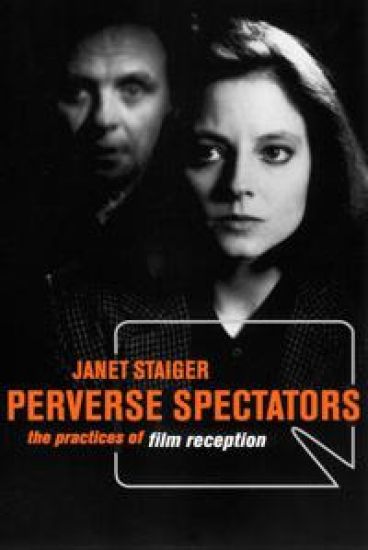
Perverse Spectators

Perverse Spectators

Janet Staiger

New York University Press
2000
pokkari
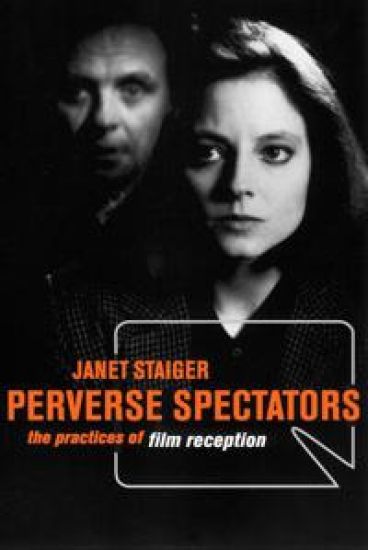
Film and television have never been more prevalent or watched than they are now, yet we still have little understanding of how people process and make use of what they see. And though we acknowledge the enormous role the media plays in our culture, we have only a vague sense of how it actually influences our attitudes and desires. In Perverse Spectators, Janet Staiger argues that studying the interpretive methods of spectators within their historical contexts is both possible and necessary to understand the role media plays in culture and in our personal lives. This analytical approach is applied to topics such as depictions of violence, the role of ratings codes, the horror and suspense genre, historical accuracy in film, and sexual identities, and then demonstrated through works like JFK, The Silence of the Lambs, The Texas Chain Saw Massacre, Psycho, and A Clockwork Orange. Each chapter shows a different approach to reconstructing audience responses to films, consistently and ingeniously finding traces of what would otherwise appear to be unrecoverable information. Using vivid examples, charting key concepts, and offering useful syntheses of long-standing debates, Perverse Spectators constitutes a compelling case for a reconsideration of the assumptions about film reception which underlie contemporary scholarship in media studies. Taking on widely influential theories and scholars, Perverse Spectators is certain to spark controversy and help redefine the study of film as it enters the new millennium.
Perverse Spectators

Perverse Spectators

Janet Staiger

New York University Press
2000
sidottu
Film and television have never been more prevalent or watched than they are now, yet we still have little understanding of how people process and make use of what they see. And though we acknowledge the enormous role the media plays in our culture, we have only a vague sense of how it actually influences our attitudes and desires. In Perverse Spectators, Janet Staiger argues that studying the interpretive methods of spectators within their historical contexts is both possible and necessary to understand the role media plays in culture and in our personal lives. This analytical approach is applied to topics such as depictions of violence, the role of ratings codes, the horror and suspense genre, historical accuracy in film, and sexual identities, and then demonstrated through works like JFK, The Silence of the Lambs, The Texas Chain Saw Massacre, Psycho, and A Clockwork Orange. Each chapter shows a different approach to reconstructing audience responses to films, consistently and ingeniously finding traces of what would otherwise appear to be unrecoverable information. Using vivid examples, charting key concepts, and offering useful syntheses of long-standing debates, Perverse Spectators constitutes a compelling case for a reconsideration of the assumptions about film reception which underlie contemporary scholarship in media studies. Taking on widely influential theories and scholars, Perverse Spectators is certain to spark controversy and help redefine the study of film as it enters the new millennium.
Bad Women

Bad Women

Janet Staiger

University of Minnesota Press
1995
nidottu
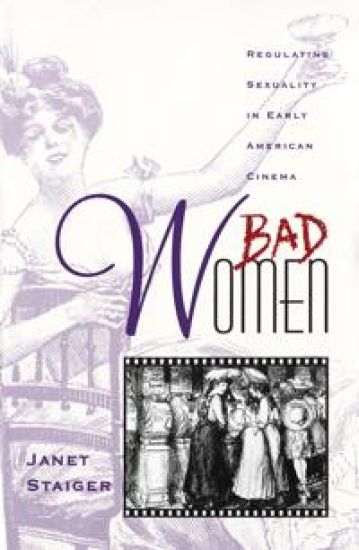
Charts the cultural tensions played out on-screen in early American cinema. It was a new age, and on movie screens the American middle class presented its visions of sexual morality, with definitions of good women and bad. Bad Women takes us back to this time of massive social, cultural, and economic change to show us how American cinema gave women and women’s sexuality images useful to the new consumer culture of the early 1900s and its exploitation of sexual pleasure. Although aimed at producing a certain kind of woman, these new images did manage to put discussions of women and their sexuality on America’s agenda. Charting the resulting cultural tensions as they played out in movie regulation, Janet Staiger shows us how representations and their endless permutations enacted conflicts over women’s public and private behaviors. Rich in historical detail and theoretical insight, this book offers an original depiction of a culture in transition, a sexual sensibility in the making, and film’s participation in the change.
Interpreting Films

Interpreting Films

Janet Staiger

Princeton University Press
1992
pokkari
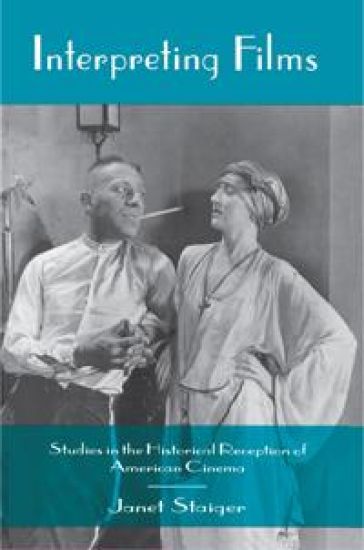
Employing a wide range of examples from Uncle Tom's Cabin and Birth of a Nation to Zelig and Personal Best, Janet Staiger argues that a historical examination of spectators' responses to films can make a valuable contribution to the history, criticism, and philosophy of cultural products. She maintains that as artifacts, films do not contain immanent meanings, that differences among interpretations have historical bases, and that these variations are due to social, political, and economic conditions as well as the viewers' constructed images of themselves. After proposing a theory of reception study, the author demonstrates its application mainly through analyzing the varying responses of audiences to certain films at specific moments in history. Staiger gives special attention to how questions of class, gender, sexual preference, race, and ethnicity enter into film viewers' interpretations. Her analysis reflects recent developments in post-structuralism, cognitive psychology, psychoanalysis, and cultural studies, and includes a discussion of current reader-response models in literary and film studies as well as an alternative approach for thinking about historical readers and spectators.
The Classical Hollywood Cinema

The Classical Hollywood Cinema

David Bordwell; Janet Staiger; Kristin Thompson

Routledge
1988
nidottu

Halvin toimitettuna 63,30 €

'A dense, challenging and important book.' Philip French Observer'At the very least, this blockbuster is probably the best single volume history of Hollywood we're likely to get for a very long time.' Paul Kerr City Limits'Persuasively argued, the book is also packed with facts, figures and photographs.' Nigel Andrews Financial TimesAcclaimed for their breakthrough approach, Bordwell, Staiger and Thompson analyze the basic conditions of American film-making as a historical institution and consider to what extent Hollywood film production constitutes a systematic enterprise, in both its style and its business operations. Despite differences of director, genre or studio, most Hollywood films operate within a set of shared assumptions about how a film should look and sound. Such assumptions are neither natural nor inevitable; but because classical-style films have been the type most widely seen, they have come to be accepted as the 'norm' of film-making and viewing. The authors show how these classical conventions were formulated and standardized, and how they responded to the arrival of sound, colour, widescreen ratios and stereophonic sound. They argue that each new technological development has served a function within an existing narrational system. The authors also examine how the Hollywood cinema standardized the film-making process itself. They describe how, over the course of its history, Hollywood developed distinct modes of production in a constant search for maximum efficiency, predictability and novelty. Set apart by its combination of theoretical analysis and empirical evidence, this book is the standard work on the classical Hollywood cinema style of film-making from the silent era to the 1960s. Now available in paperback, it is a 'must' for film students, lecturers and all those seriously interested in the development of the film industry.