Kirjojen hintavertailu – 12 859 828 kirjaa ja 27 kauppaa

Kirjailija

Janice Jipson

Kirjat ja teokset yhdessä paikassa: 3 kirjaa, julkaisuja vuosilta 1995–2000, suosituimpiin kuuluu Questions of You and the Struggle of Collaborative Life. Vertaile teosten hintoja ja tarkista saatavuus suomalaisista kirjakaupoista.

3 kirjaa

Kirjojen julkaisuvuodet: 1995–2000.

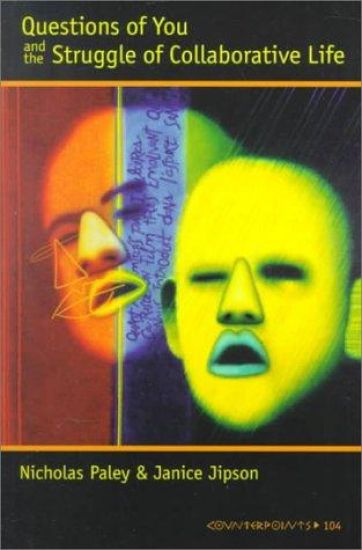
Questions of You and the Struggle of Collaborative Life

Questions of You and the Struggle of Collaborative Life

Nicholas Paley; Janice Jipson

Peter Lang Publishing Inc
2000
nidottu
"Questions of You and the Struggle of Collaborative Life" explores the nature of the collaborative experience. It examines the complex issues involved as two educators work together to understand the conceptual perspectives they develop, the research processes they create, and the multiple, shifting possibilities for personal and social change at stake in such searching and making. Organized around diverse analytic approaches including narrative, autobiographic, fictive, poetic, and theoretic genres, this book is an experimental project that examines what we may know, how we might know, and in what ways we can express our understanding of the collaborative research experience.
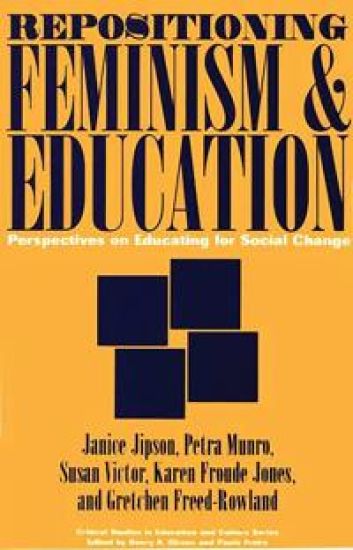
Repositioning Feminism & Education

Repositioning Feminism & Education

Janice Jipson; Karen Jones; Petra Munro; Gretchen Rowland; Susan Victor

Praeger Publishers Inc
1995
nidottu
This book presents testimony of feminisms in process. The accounts are filled with tensions, not least an uneasiness with feminism itself, and the question of what exactly it means to be a feminist in education in the contemporary world. It is their respect for their own differences and the honesty with which they write that makes this such a rich text. From the Foreword by Kathleen Weiler Educators committed to social change face the common dilemma of how to take up the work of transformation without reinscribing systems of domination. The struggle with the concept of imposition is central to the emergence of many educators' identities and provides a site for exploring the complex relationship between power, knowledge, and teacher identity. This book chronicles the collaborative efforts of five diverse women educators (Native American, European, Jewish American, rural, midwestern, working class) to grapple with the tensions of taking up a political position while honoring the cultural, social, and historical context of others. Their dialogue across feminist, critical, and postmodern theories and practices explores the process of fusing theory with political work in the world. What emerges is the continual repositioning and disruption of taken for granted meanings as central to enhancing emancipatory education.
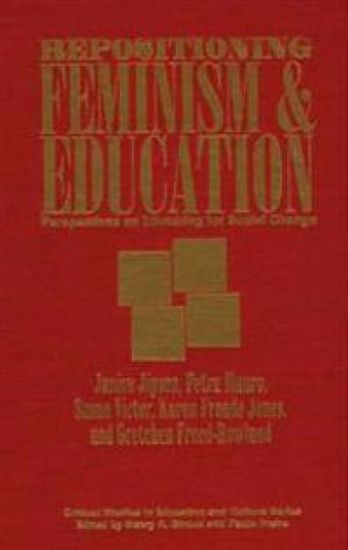
Repositioning Feminism & Education

Repositioning Feminism & Education

Janice Jipson; Karen Jones; Petra Munro; Gretchen Rowland; Susan Victor

Praeger Publishers Inc
1995
sidottu
This book presents testimony of feminisms in process. The accounts are filled with tensions, not least an uneasiness with feminism itself, and the question of what exactly it means to be a feminist in education in the contemporary world. It is their respect for their own differences and the honesty with which they write that makes this such a rich text. From the Foreword by Kathleen Weiler Educators committed to social change face the common dilemma of how to take up the work of transformation without reinscribing systems of domination. The struggle with the concept of imposition is central to the emergence of many educators' identities and provides a site for exploring the complex relationship between power, knowledge, and teacher identity. This book chronicles the collaborative efforts of five diverse women educators (Native American, European, Jewish American, rural, midwestern, working class) to grapple with the tensions of taking up a political position while honoring the cultural, social, and historical context of others. Their dialogue across feminist, critical, and postmodern theories and practices explores the process of fusing theory with political work in the world. What emerges is the continual repositioning and disruption of taken for granted meanings as central to enhancing emancipatory education.