Kirjojen hintavertailu – 12 859 818 kirjaa ja 27 kauppaa

Kirjailija

Janine Bourriau

Kirjat ja teokset yhdessä paikassa: 5 kirjaa, julkaisuja vuosilta 1992–2018, suosituimpiin kuuluu Invention and Innovation. Vertaile teosten hintoja ja tarkista saatavuus suomalaisista kirjakaupoista.

5 kirjaa

Kirjojen julkaisuvuodet: 1992–2018.

The Anubieion at Saqqara IV

The Anubieion at Saqqara IV

Peter French; Janine Bourriau

Egypt Exploration Society
2018
nidottu
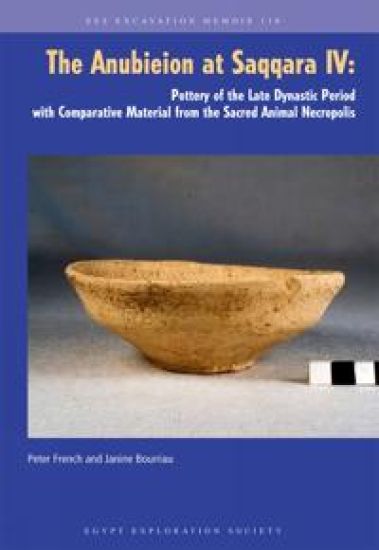
This volume continues the ceramic history of the Saqqara Anubis temple, excavated by the Egypt Exploration Society from 1977 to 1979. Volume III showed how the site was used for burials of royalty and high officials from the Archaic Period until the end of the New Kingdom. The present volume covers the succeeding Late Dynastic Period: from at least the mid-sixth century onwards, burials appear to have been made in the earlier shaft tombs as well as in a new cemetery in the sand. A temple to Anubis, god of the dead, was commenced at the same time, abandoned during the Persian Period but restarted around 400 BC. The ceramics include bowls used by the embalmers as well as offering vessels and the repertoire of the fourth century builders. Unpublished contemporary ceramics from the nearby Sacred Animal Necropolis elucidate and supplement the Anubieion record.
Invention and Innovation

Invention and Innovation

Janine Bourriau; Jacke Phillips

Oxbow Books
2016
nidottu
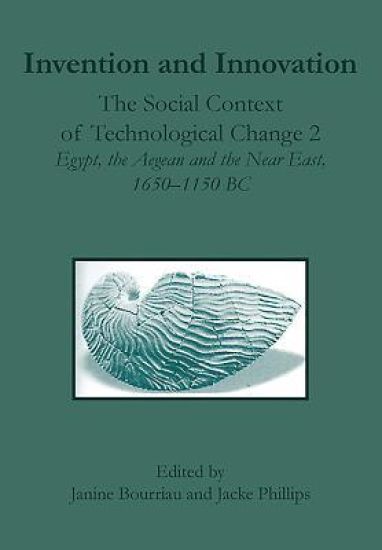
In September 2002, a second workshop on the theme of the social context of technological change was held at the McDonald Institute for Archaeological Research, University of Cambridge. Discussion has been the core of these meetings so far, with the aim being to relate the results of the specialist investigator to broad historical questions concerning the nature and development of ancient societies. The papers presented here address a wider context: geographically, with the inclusion of the Aegean and thematically, with papers on natural products and raw materials. The time frame remains the same in covering the Late Bronze Age/New Kingdom. The majority of the papers draw on Egyptian evidence, and illustrate a multiplicity of approaches to the problems set by ancient technologies: modelling, methodology of art history and archaeology applied to a problematic group of artefacts, integration of archaeological and textual sources, and the application of the results of scientific analysis to illuminate ancient technology.
The Survey of Memphis VIII

The Survey of Memphis VIII

Janine Bourriau; Carla Gallorini

EGYPT EXPLORATION SOCIETY
2016
nidottu
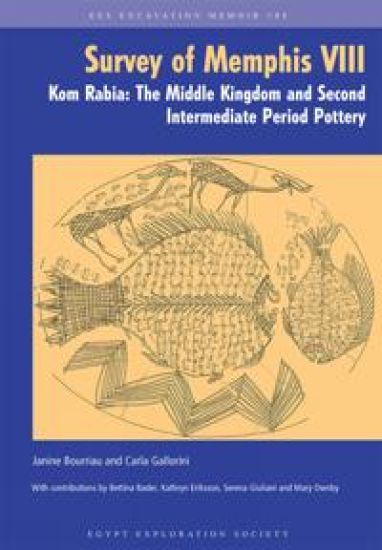
This volume is a study of ceramic changes in the stratified settlement at Kom Rabia, Memphis, during the Late Middle Kingdom and Second Intermediate Period. The pottery is presented by sectors, following the archaeological narrative of Giddy's report (The Survey of Memphis VI), and quantitative analysis of a random sample taken from 73% of all contexts is used to plot ceramic changes through time. The fine points of this development are discussed in the commentary for each corpus, while Appendices 1 and 2 show the distribution of types within the sequence and of pottery within single contexts. Within the Egyptian pottery assemblage there were classes that required discussion of all occurrences and these are presented in two separate chapters: vessels with marks incised before and after firing (Chapter 12, Carla Gallorini) and large handmade oval plates with incised decoration ('fish dishes') (Chapter 13, Bettina Bader). Three further chapters discuss the non-Egyptian pottery: Nubian Pottery (Chapter 14, Janine Bourriau and Serena Giuliani); Aegean and Cypriote Fine Wares (Chapter 15, Kathryn Eriksson) and Middle Bronze Age Canaanite Jars (Chapter 16, Mary Ownby).
The Survey of Memphis IV

The Survey of Memphis IV

Janine Bourriau

Egypt Exploration Society
2010
pokkari
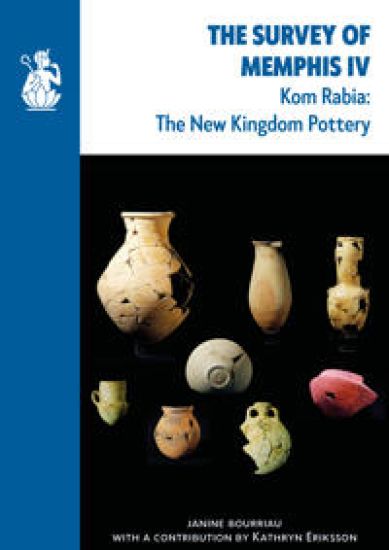
This volume is a study of ceramic change in a stratified settlement at Kom Rabia, Memphis, during the New Kingdom. Ceramic chronology of this period has traditionally relied on pottery associated with dated individuals, usually from burials. In contrast, this study presents quantified evidence from a random sample taken from all contexts. A corpus has been made up for each level or phase. Appendices show the distribution of pottery within single contexts and of types within the sequence. Dating, fabric, surface treatments and shape are described in detail and there is a critical appraisal of the methodology used.