Kirjojen hintavertailu – 12 859 819 kirjaa ja 27 kauppaa

Kirjailija

Janine Marchessault

Kirjat ja teokset yhdessä paikassa: 7 kirjaa, julkaisuja vuosilta 2004–2023, suosituimpiin kuuluu Marshall McLuhan. Vertaile teosten hintoja ja tarkista saatavuus suomalaisista kirjakaupoista.

7 kirjaa

Kirjojen julkaisuvuodet: 2004–2023.

Marshall McLuhan

Marshall McLuhan

Janine Marchessault

SAGE Publications Inc
2004
sidottu
'In quite a profound, high-modernist way, this succinct but comprehensive book deems its subject worthy of careful scholarly analysis. I applaud and recommend it for taking much of the nonsense out of McLuhan' - Topia Journal 'Feted and reviled in his own lifetime, Marshall McLuhan has made a dramatic comeback in recent years. Marchessault gives a balanced and carefully considered appraisal of McLuhan's contribution to cultural theory, which may be even more pertinent now, in the early twenty-first century, than when he originally formulated it in the 1950s and '60s' Jim McGuigan, Professor of Cultural Analysis, Loughborough University Why is McLuhan important? What use can we make of his approach to the media today? In this insightful critical introduction, McLuhan's contribution is carefully explained and his reputation reassessed. The book: · Explains McLuhan's key ideas · Engages with critical issues in media and contemporary art · Demonstrates the relevance of his work for students of media and communications · Addresses his methodological contribution · Revises our understanding of his place in the history of ideas. Illustrated with many examples from the network society, the book works as a guide to anyone who wants to know why McLuhan is important.
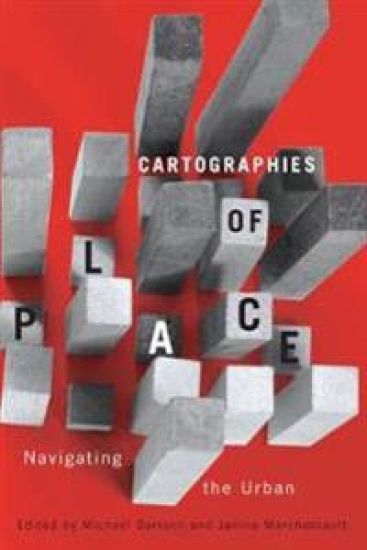
Cartographies of Place

Cartographies of Place

Michael Darroch; Janine Marchessault

McGill-Queen's University Press
2015
nidottu
Media are incorporated into our physical environments more dramatically than ever before - literally opening up new spaces of interactivity and connection that transform the experience of being in the city. Public gatherings and movement, even the capabilities of democratic ideology, have been redefined. Urban Screens, mobile media, new digital mappings, and ambient and pervasive media have all created new ecologies in cities. How do we analyze these new spaces? Recognition of the mutual histories and research programs of urban and media studies is only the beginning. Cartographies of Place develops new vocabularies and methodologies for engaging with the distinctive situations and experiences created by media technologies which are reshaping, augmenting, and expanding urban spaces. The book builds upon the rich traditions and insights of a post-war generation of humanist scholars, media theorists, and urban planners. Authors engage with different historical and contemporary currents in urban studies which share a common concern for media forms, either as research tools or as the means for discerning the expressive nature of city spaces around the world. All of the media considered here are not simply "free floating," but are deeply embedded in the geopolitical, economic, and material contexts in which they are used. Cartographies of Place is exemplary of a new direction in interdisciplinary media scholarship, opening up new ways of studying the complexities of cities and urban media in a global context.
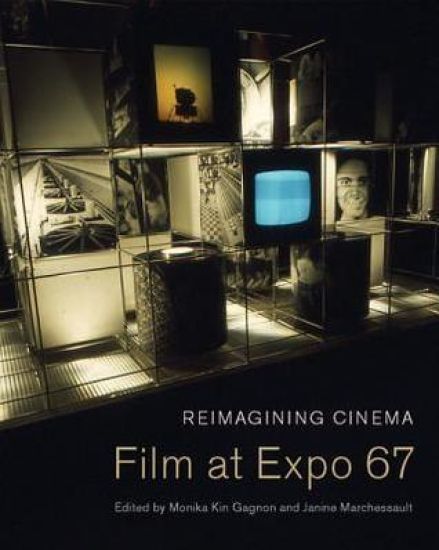
Reimagining Cinema

Reimagining Cinema

Monika Kin Gagnon; Janine Marchessault

McGill-Queen's University Press
2014
sidottu
Expo 67, in its utopian aspirations, invited artists to create the world anew. What distinguished Montreal's exhibition from previous world fairs were its dramatic displays of film and media, transformed into urban and futuristic architectures. Reimagining Cinema explores the innovations that film and media artists offered Expo audiences and presents extensive visual material to reconstruct the viewer's experience. At the pinnacle of a new global humanism, cinema was expanded beyond the frame into total environments, multi-screens, multi-image and 360-degree immersion - experiments often seen as a harbinger of the digital age. Taking this expanded cinema as a starting point, the contributors focus on eight screen experiments, and employ innovative methodologies to reveal the intricacies and processes of production, while including factual descriptions, interpretive essays, interviews, and image dossiers. The book reflects how the Expo 67 film-events were encountered as creative experimentations that resonated with broader 1960s arts and culture, and as institutional collaborations with artists. More displays of photographic, cinematic, and telematic technology were experienced at Expo 67 than in any other previous world exposition. Reimagining Cinema captures the complexity and imaginative fervour of this exciting period in film history. Contributors include Seth Feldman (York University), Monika Kin Gagnon, (Concordia University), Anthony Kinik, (Concordia University), Janine Marchessault, (York University), Gary Mediema, Chief Historian and Associate Director, Heritage Toronto (Ontario), Aimee Mitchell, Canadian Filmmaker's Distribution Centre (Ontario), Johanne Sloan, (Concordia University), Donald Theall (Trent University).
Reimagining Cinema

Reimagining Cinema

Monika Kin Gagnon; Janine Marchessault

McGill-Queen's University Press
2014
nidottu
Expo 67, in its utopian aspirations, invited artists to create the world anew. What distinguished Montreal's exhibition from previous world fairs were its dramatic displays of film and media, transformed into urban and futuristic architectures. Reimagining Cinema explores the innovations that film and media artists offered Expo audiences and presents extensive visual material to reconstruct the viewer's experience. At the pinnacle of a new global humanism, cinema was expanded beyond the frame into total environments, multi-screens, multi-image and 360-degree immersion - experiments often seen as a harbinger of the digital age. Taking this expanded cinema as a starting point, the contributors focus on eight screen experiments, and employ innovative methodologies to reveal the intricacies and processes of production, while including factual descriptions, interpretive essays, interviews, and image dossiers. The book reflects how the Expo 67 film-events were encountered as creative experimentations that resonated with broader 1960s arts and culture, and as institutional collaborations with artists. More displays of photographic, cinematic, and telematic technology were experienced at Expo 67 than in any other previous world exposition. Reimagining Cinema captures the complexity and imaginative fervour of this exciting period in film history. Contributors include Seth Feldman (York University), Monika Kin Gagnon, (Concordia University), Anthony Kinik, (Concordia University), Janine Marchessault, (York University), Gary Mediema, Chief Historian and Associate Director, Heritage Toronto (Ontario), Aimee Mitchell, Canadian Filmmaker's Distribution Centre (Ontario), Johanne Sloan, (Concordia University), Donald Theall (Trent University).
Cartographies of Place

Cartographies of Place

Michael Darroch; Janine Marchessault

McGill-Queen's University Press
2014
sidottu
Media are incorporated into our physical environments more dramatically than ever before - literally opening up new spaces of interactivity and connection that transform the experience of being in the city. Public gatherings and movement, even the capabilities of democratic ideology, have been redefined. Urban Screens, mobile media, new digital mappings, and ambient and pervasive media have all created new ecologies in cities. How do we analyze these new spaces? Recognition of the mutual histories and research programs of urban and media studies is only the beginning. Cartographies of Place develops new vocabularies and methodologies for engaging with the distinctive situations and experiences created by media technologies which are reshaping, augmenting, and expanding urban spaces. The book builds upon the rich traditions and insights of a post-war generation of humanist scholars, media theorists, and urban planners. Authors engage with different historical and contemporary currents in urban studies which share a common concern for media forms, either as research tools or as the means for discerning the expressive nature of city spaces around the world. All of the media considered here are not simply "free floating," but are deeply embedded in the geopolitical, economic, and material contexts in which they are used. Cartographies of Place is exemplary of a new direction in interdisciplinary media scholarship, opening up new ways of studying the complexities of cities and urban media in a global context.
Marshall McLuhan

Marshall McLuhan

Janine Marchessault

SAGE Publications Inc
2004
nidottu
'In quite a profound, high-modernist way, this succinct but comprehensive book deems its subject worthy of careful scholarly analysis. I applaud and recommend it for taking much of the nonsense out of McLuhan' - Topia Journal 'Feted and reviled in his own lifetime, Marshall McLuhan has made a dramatic comeback in recent years. Marchessault gives a balanced and carefully considered appraisal of McLuhan's contribution to cultural theory, which may be even more pertinent now, in the early twenty-first century, than when he originally formulated it in the 1950s and '60s' Jim McGuigan, Professor of Cultural Analysis, Loughborough University Why is McLuhan important? What use can we make of his approach to the media today? In this insightful critical introduction, McLuhan's contribution is carefully explained and his reputation reassessed. The book: · Explains McLuhan's key ideas · Engages with critical issues in media and contemporary art · Demonstrates the relevance of his work for students of media and communications · Addresses his methodological contribution · Revises our understanding of his place in the history of ideas. Illustrated with many examples from the network society, the book works as a guide to anyone who wants to know why McLuhan is important.