Kirjojen hintavertailu – 12 903 724 kirjaa ja 27 kauppaa

Kirjailija

Jared Cohen

Kirjat ja teokset yhdessä paikassa: 9 kirjaa, julkaisuja vuosilta 2014–2025, suosituimpiin kuuluu The New Digital Age: Transforming Nations, Businesses, and Our Lives. Vertaile teosten hintoja ja tarkista saatavuus suomalaisista kirjakaupoista.

9 kirjaa

Kirjojen julkaisuvuodet: 2014–2025.

The New Digital Age: Transforming Nations, Businesses, and Our Lives
In the next decade, five billion new people will come online, posing for our world a host of new opportunities--and dangers. Google's Eric Schmidt and Jared Cohen traveled to thirty-five countries, including some of the world's most volatile regions and met with political leaders, entrepreneurs, and activists to learn firsthand about the challenges they face. Packed with fascinating ideas, informed predictions, and prescient warnings, The New Digital Age tackles some of the toughest questions about our future: how will technology change the way we approach issues like privacy and security, war and intervention, diplomacy, revolution and terrorism. And how can we best use new technologies to improve our lives? More than a book about gadgets and data, this is a prescriptive glimpse of how technology is reshaping our world and the lives of the people who live in it. With a new afterword.
The New Digital Age

The New Digital Age

Eric Schmidt; Jared Cohen

John Murray Publishers Ltd
2014
pokkari
'This is the most important - and fascinating - book yet written about how the digital age will affect our world' Walter Isaacson, author of Steve JobsFrom two leading thinkers, the widely anticipated book that describes a new, hugely connected world of the future, full of challenges and benefits which are ours to meet and harness. The New Digital Age is the product of an unparalleled collaboration: full of the brilliant insights of one of Silicon Valley's great innovators - what Bill Gates was to Microsoft and Steve Jobs was to Apple, Schmidt (along with Larry Page and Sergey Brin) was to Google - and the Director of Google Ideas, Jared Cohen, formerly an advisor to both Secretaries of State Condoleezza Rice and Hillary Clinton. Never before has the future been so vividly and transparently imagined. From technologies that will change lives (information systems that greatly increase productivity, safety and our quality of life, thought-controlled motion technology that can revolutionise medical procedures, and near-perfect translation technology that allows us to have more diversified interactions) to our most important future considerations (curating our online identity and fighting those who would do harm with it) to the widespread political change that will transform the globe (through transformations in conflict, increasingly active and global citizenries, a new wave of cyber-terrorism and states operating simultaneously in the physical and virtual realms) to the ever present threats to our privacy and security, Schmidt and Cohen outline in great detail and scope all the promise and peril awaiting us in the coming decades. A breakthrough book - pragmatic, inspirational and totally fascinating. Whether a government, a business or an individual, we must understand technology if we want to understand the future.'A brilliant guidebook for the next century . . . Schmidt and Cohen offer a dazzling glimpse into how the new digital revolution is changing our lives' Richard Branson
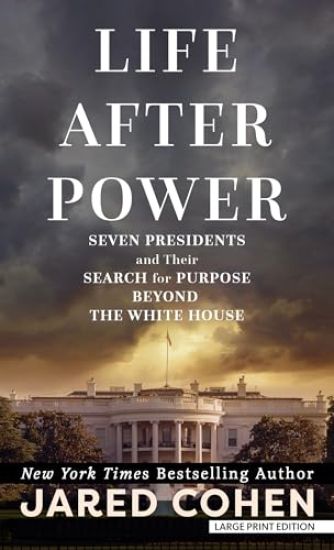
Life After Power

Life After Power

Jared Cohen

SIMON SCHUSTER
2025
pokkari
This “informative…highly readable” (The Wall Street Journal) New York Times bestselling book from the author of the bestseller Accidental Presidents explores what happens after the most powerful job in the world: President of the United States. Former presidents have an unusual place in American life. King George III believed that George Washington’s departure after two terms made him “the greatest character of the age.” But Alexander Hamilton worried former presidents might “[wander] among the people like ghosts.” They were both right. Life After Power tells the stories of seven former presidents, from the Founding to today. Each changed history. Each offered lessons about how to decide what to do in the next chapter of life. This book follows the exceptional lives of past presidents including: -Thomas Jefferson whose time after the White House saw him shaping public debates and founding the University of Virginia, an accomplishment he included on his tombstone, unlike his presidency. -John Quincy Adams who served in Congress and became a leading abolitionist, passing the torch to Abraham Lincoln. -Grover Cleveland who was the only president in American history to serve a nonconsecutive term. -William Howard Taft who became Chief Justice of the Supreme Court. -Herbert Hoover who shaped the modern conservative movement, led relief efforts after World War II, reorganized the executive branch, and reconciled John F. Kennedy and Richard Nixon. -Jimmy Carter who had the longest post-presidency in American history, advancing humanitarian causes, human rights, and peace. -George W. Bush who made a clean break from politics, bringing back George Washington’s precedent, and reminding the public that the institution of presidency is bigger than any person. Jared Cohen explores the untold stories in the final chapters of these presidents’ lives, offering a “unique and fascinating look at how seven individuals made the transition from the most powerful position in the world to consequential and fulfilling lives post-presidency” (Condoleezza Rice, 66th Secretary of State). He tells how they handled very human problems of ego, finances, and questions about their legacy and mortality. He shows how these men made history after they left the White House.

Speaking of America

Speaking of America

Jared Cohen

SIMON SCHUSTER
2024
sidottu
A New York Times bestseller! From New York Times bestselling author Jared Cohen comes an encouraging and engaging debut children’s book that brings United States history to life through forty-five compelling presidential quotes, demonstrating the power of words and inspiring hope for the future of America. From 1776 to the present day, the Presidents of the United States have been America’s most important public speakers. Their words have inspired change throughout the highs and lows of history, from the Declaration of Independence to declarations in support of civil rights, and everything in between. Why did George Washington call for “good faith and justice towards all nations” in his farewell address? What did it mean for Franklin D. Roosevelt to proclaim, in the middle of the Great Depression, that “the only thing to fear is fear itself?” And in one of the most famous presidential speeches ever given, the Gettysburg Address, why did Abraham Lincoln choose to begin with math (“four score and seven years ago”)? In Speaking of America, the meaning and historical impact of quotes from the first forty-five American presidents are illuminated with wit and warmth. Full of fascinating facts that take listeners behind the scenes of American history, this captivating nonfiction book shows how US presidents have used their words to encourage, explain, assert, and defend—while equipping future leaders with the knowledge that they too have the power to change the world.
Speaking of America: United States Presidents and the Words That Changed History
From New York Times bestselling author Jared Cohen comes an encouraging and engaging debut children's book that brings United States history to life through forty-five compelling presidential quotes, demonstrating the power of words and inspiring hope for the future of America. From 1776 to the present day, the Presidents of the United States have been America's most important public speakers. Their words have inspired change throughout the highs and lows of history, from the Declaration of Independence to declarations in support of civil rights, and everything in between. Why did George Washington call for "good faith and justice towards all nations" in his farewell address? What did it mean for Franklin D. Roosevelt to proclaim, in the middle of the Great Depression, that "the only thing to fear is fear itself?" And in one of the most famous presidential speeches ever given, the Gettysburg Address, why did Abraham Lincoln choose to begin with math ("four score and seven years ago")? In these pages, the meaning and historical impact of quotes from the first forty-five American presidents are illuminated with wit, warmth, and immersive illustrations. Full of fascinating facts that take readers behind the scenes of American history, this captivating nonfiction book shows how US presidents have used their words to encourage, explain, assert, and defend--while equipping future leaders with the knowledge that they too have the power to change the world.
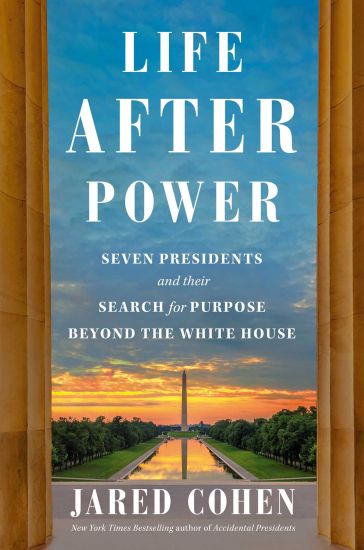
Life After Power: Seven Presidents and Their Search for Purpose Beyond the White House
New York Times Bestseller New York Times bestselling author of Accidental Presidents explores what happens after the most powerful job in the world: President of the United States. Former presidents have an unusual place in American life. King George III believed that George Washington's departure after two terms made him "the greatest character of the age." But Alexander Hamilton worried former presidents might " wander] among the people like ghosts." They were both right. Life After Power tells the stories of seven former presidents, from the Founding to today. Each changed history. Each offered lessons about how to decide what to do in the next chapter of life. Thomas Jefferson was the first former president to accomplish great things after the White House, shaping public debates and founding the University of Virginia, an accomplishment he included on his tombstone, unlike his presidency. John Quincy Adams served in Congress and became a leading abolitionist, passing the torch to Abraham Lincoln. Grover Cleveland was the only president in American history to serve a nonconsecutive term. William Howard Taft became Chief Justice of the Supreme Court. Herbert Hoover shaped the modern conservative movement, led relief efforts after World War II, reorganized the executive branch, and reconciled John F. Kennedy and Richard Nixon. Jimmy Carter had the longest post-presidency in American history, advancing humanitarian causes, human rights, and peace. George W. Bush made a clean break from politics, bringing back George Washington's precedent, and reminding the public that the institution of the presidency is bigger than any person. Jared Cohen explores the untold stories in the final chapters of these presidents' lives, offering a gripping and illuminating account of how they went from President of the United States one day, to ordinary citizens the next. He tells how they handled very human problems of ego, finances, and questions about their legacy and mortality. He shows how these men made history after they left the White House.
Accidental Presidents

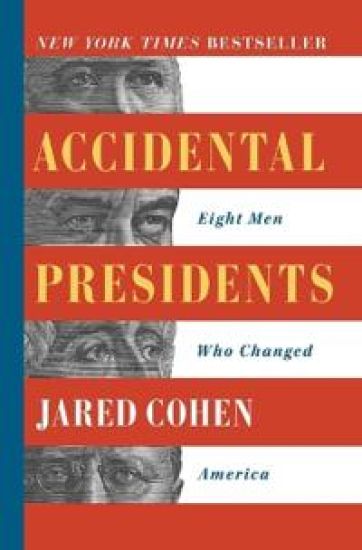
Accidental Presidents

Jared Cohen

SIMON SCHUSTER
2020
pokkari
This New York Times bestselling “deep dive into the terms of eight former presidents is chock-full of political hijinks—and déjà vu” (Vanity Fair) and provides a fascinating look at the men who came to the office without being elected to it, showing how each affected the nation and world. The strength and prestige of the American presidency has waxed and waned since George Washington. Eight men have succeeded to the presidency when the incumbent died in office. In one way or another they vastly changed our history. Only Theodore Roosevelt would have been elected in his own right. Only TR, Truman, Coolidge, and LBJ were re-elected. John Tyler succeeded William Henry Harrison who died 30 days into his term. He was kicked out of his party and became the first president threatened with impeachment. Millard Fillmore succeeded esteemed General Zachary Taylor. He immediately sacked the entire cabinet and delayed an inevitable Civil War by standing with Henry Clay’s compromise of 1850. Andrew Johnson, who succeeded our greatest president, sided with remnants of the Confederacy in Reconstruction. Chester Arthur, the embodiment of the spoils system, was so reviled as James Garfield’s successor that he had to defend himself against plotting Garfield’s assassination; but he reformed the civil service. Theodore Roosevelt broke up the trusts. Calvin Coolidge silently cooled down the Harding scandals and preserved the White House for the Republican Herbert Hoover and the Great Depression. Harry Truman surprised everybody when he succeeded the great FDR and proved an able and accomplished president. Lyndon B. Johnson was named to deliver Texas electorally. He led the nation forward on Civil Rights but failed on Vietnam. Accidental Presidents shows that “history unfolds in death as well as in life” (The Wall Street Journal) and adds immeasurably to our understanding of the power and limits of the American presidency in critical times.