Kirjojen hintavertailu – 12 903 724 kirjaa ja 27 kauppaa

Kirjailija

Jared Compton

Kirjat ja teokset yhdessä paikassa: 5 kirjaa, julkaisuja vuosilta 2015–2020, suosituimpiin kuuluu Biblical Theology According to the Apostles. Vertaile teosten hintoja ja tarkista saatavuus suomalaisista kirjakaupoista.

5 kirjaa

Kirjojen julkaisuvuodet: 2015–2020.

Biblical Theology According to the Apostles

Biblical Theology According to the Apostles

Chris Bruno; Jared Compton; Kevin McFadden

IVP Academic
2020
nidottu
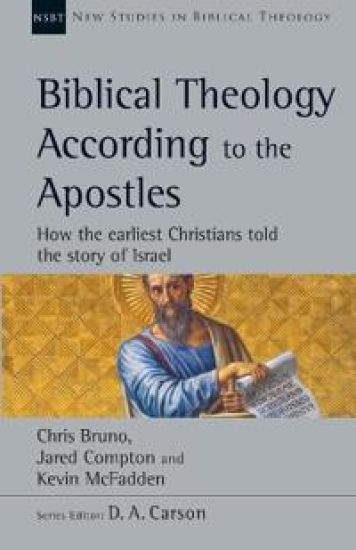
Biblical Foundations Book Awards Runner up and FinalistHow did the apostles understand the Old Testament? Although relatively few in number, the New Testament's explicit summaries of the Old Testament story of Israel give readers direct access into the way the earliest Christians told this story--that is to say, into the way they did biblical theology. This stimulating New Studies in Biblical Theology volume examines the passages in the Synoptic Gospels, Acts, Paul's letters, and Hebrews which recount the characters, events, and institutions of Israel's story in chronological order and at substantial length. The authors demonstrate just how valuable a lens these summaries provide for a clearer vision of the earliest Christians' practice of biblical theology. In doing so, they also show how contemporary readers can and should follow the apostles' example. Addressing key issues in biblical theology, the works comprising New Studies in Biblical Theology are creative attempts to help Christians better understand their Bibles. The NSBT series is edited by D. A. Carson, aiming to simultaneously instruct and to edify, to interact with current scholarship and to point the way ahead.
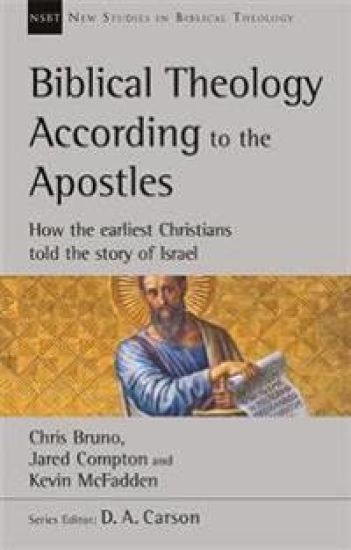
Biblical Theology According to the Apostles

Biblical Theology According to the Apostles

Chris Bruno; Jared Compton; Kevin McFadden

Apollos
2020
nidottu
Although relatively few in number, the New Testament’s explicit summaries of the Old Testament story of Israel give readers direct access to the way the earliest Christians told this story -- which is to say, to the way they did biblical theology. These curiously overlooked summaries are the subject of this stimulating study. Bruno, Compton and McFadden examine the passages in the Synoptic Gospels, Acts, Paul's letters and Hebrews that recount the characters, events, and institutions of Israel’s story in chronological order and at substantial length. They demonstrate just how valuable a lens these summaries provide for a clearer vision of the earliest Christians’ practice of biblical theology. The authors' ultimate goal is to move beyond the descriptive to the prescriptive, to show how contemporary readers can and should follow the apostles' example.
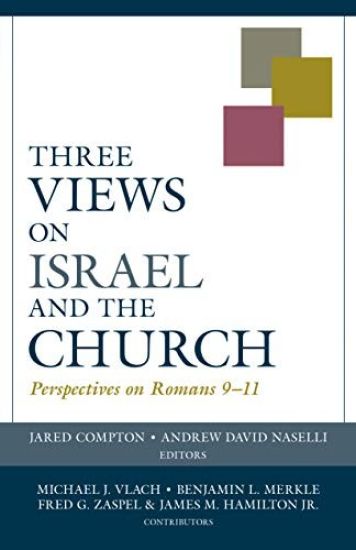
Three Views on Israel and the Church – Perspectives on Romans 9–11

Three Views on Israel and the Church – Perspectives on Romans 9–11

Jared Compton; Andrew Naselli

Kregel Publications,U.S.
2019
nidottu
A comparison of three major views on the relationship between Israel and the church The relationship between Israel and the church is a long-standing debate in Christian theology, and Romans 9-11 are the most important chapters for understanding it. How one interprets these chapters determines how one understands biblical theology, how the New Testament uses the Old Testament, and how the old and new covenants are related. To help readers draw their own conclusion, four leading scholars on this issue present a case for their viewpoint, followed by a response and critique from the others. Michael Vlach argues for a future mass conversion and a role for ethnic Israel in the church. Fred Zaspel and Jim Hamilton present a case for a future mass conversion that does not include a role for ethnic Israel. And Benjamin Merkle contends that Romans 9 - 11 promises neither a future mass conversion nor a role for ethnic Israel. General editor Andrew David Naselli helpfully sets the debate in its larger biblical-theological context in the introduction, while Jared Compton provides a useful summary of the views and interactions at the end of the volume.
Psalm 110 and the Logic of Hebrews

Psalm 110 and the Logic of Hebrews

Jared Compton

T. T.Clark Ltd
2018
nidottu
A neglected area of study of the letter to the Hebrews is the function of the Old Testament in the letter’s logic. Compton addresses this neglect by looking at two other ideas that have themselves received too little attention, namely (1) the unique and fundamental semantic contribution of Hebrews’ exposition (vis-à-vis its exhortation) and (2) the prominence of Ps 110 in the author’s exposition. The conclusion becomes clear that Hebrews’ exposition—its theological argument—turns, in large part, on successive inferences drawn from Ps 110:1 and 4. Compton observes that the author uses the text in the first part of his exposition to (1) interpret Jesus’ resurrection as his messianic enthronement, (2) connect Jesus’ enthronement with his fulfillment of Ps 8’s vision for humanity and, thus, (3) begin to explain why Jesus was enthroned through suffering. In the second and third parts of his exposition, the author uses the text to corroborate the narrative initially sketched. Thus, he uses the text to (1) show that messiah was expected to be a superior priest and, moreover, (2) show that this messianic priest was expected to solve the human problem through death.
Psalm 110 and the Logic of Hebrews

Psalm 110 and the Logic of Hebrews

Jared Compton

T. T.Clark Ltd
2015
sidottu
A neglected area of study of the letter to the Hebrews is the function of the Old Testament in the letter’s logic. Compton addresses this neglect by looking at two other ideas that have themselves received too little attention, namely (1) the unique and fundamental semantic contribution of Hebrews’ exposition (vis-à-vis its exhortation) and (2) the prominence of Ps 110 in the author’s exposition. The conclusion becomes clear that Hebrews’ exposition—its theological argument—turns, in large part, on successive inferences drawn from Ps 110:1 and 4. Compton observes that the author uses the text in the first part of his exposition to (1) interpret Jesus’ resurrection as his messianic enthronement, (2) connect Jesus’ enthronement with his fulfillment of Ps 8’s vision for humanity and, thus, (3) begin to explain why Jesus was enthroned through suffering. In the second and third parts of his exposition, the author uses the text to corroborate the narrative initially sketched. Thus, he uses the text to (1) show that messiah was expected to be a superior priest and, moreover, (2) show that this messianic priest was expected to solve the human problem through death.