Kirjojen hintavertailu – 12 859 819 kirjaa ja 27 kauppaa

Kirjailija

Jas Elsner

Kirjat ja teokset yhdessä paikassa: 6 kirjaa, julkaisuja vuosilta 2004–2026, suosituimpiin kuuluu How to Describe a Painting. Vertaile teosten hintoja ja tarkista saatavuus suomalaisista kirjakaupoista.

6 kirjaa

Kirjojen julkaisuvuodet: 2004–2026.

How to Describe a Painting

How to Describe a Painting

Jas Elsner; Michael Squire

Cambridge University Press
2026
sidottu
How should we talk about material objects, especially the virtual two-dimensional impressions of painting? A particularly sophisticated answer is provided by Philostratus' Imagines, one of the world's earliest and greatest works of art criticism. Jas Elsner and Michael Squire situate this Imperial Greek text in its various 'Second Sophistic' contexts, especially in relation to Graeco-Roman traditions of image-making, aesthetics, rhetoric and the evocation of visual impressions (so-called 'ecphrasis'). They also champion its extraordinarily rich significance for anyone interested in perception, subjective imagination and the emotional leverage of art. If the Imagines remains unsurpassed as one of the western tradition's most creatively original, scintillating and self-reflexive works of art criticism, Elsner and Squire argue, its relevance is also pressingly contemporary: there are modern lessons to be learnt from this ancient project of educating the young – lessons that have a particular urgency in our own dawning digital age.
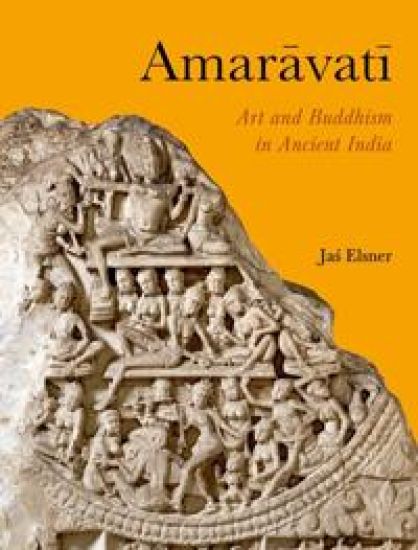
Amaravati

Amaravati

Jas Elsner

REAKTION BOOKS
2024
sidottu

Halvin toimitettuna 62,00 €

This exploration of the exceptional Buddhist stupa (reliquary mound) at Amaravati, one of ancient India’s most extraordinary monuments, presents a fresh perspective on the rich visual culture of ancient South Asia viewed through the lens of art history, connecting the stupa’s artistic innovations with advancements in Buddhist philosophy and rituals. Jas Elsner offers new insights into early Buddhist art in South India, as well as a new understanding of the relationship between early Buddhism and its material culture. The excellent newly taken photographs, particularly those featuring objects from the British Museum in London, show in detail how the stupa communicated Buddhist teachings and practices to its followers, making this book an invaluable resource for students and scholars alike.
The Art of the Roman Empire

The Art of the Roman Empire

Jas Elsner

Oxford University Press
2018
nidottu

Halvin toimitettuna 32,60 €

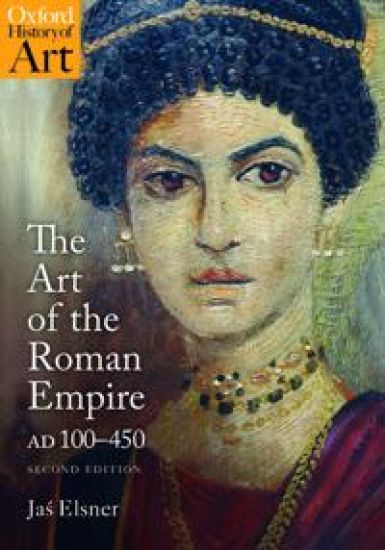
The passage from Imperial Rome to the era of late antiquity, when the Roman Empire underwent a religious conversion to Christianity, saw some of the most significant and innovative developments in Western culture. This stimulating book investigates the role of the visual arts, the great diversity of paintings, statues, luxury arts, and masonry, as both reflections and agents of those changes. Jas' Elsner's ground-breaking account discusses both Roman and early Christian art in relation to such issues as power, death, society, acculturation, and religion. By examining questions of reception, viewing, and the culture of spectacle alongside the more traditional art-historical themes of imperial patronage and stylistic change, he presents a fresh and challenging interpretation of an extraordinarily rich cultural crucible in which many fundamental developments of later European art had their origins. This second edition includes a new discussion of the Eurasian context of Roman art, an updated bibliography, and new, full colour illustrations.
Seeing the Face, Seeing the Soul

Seeing the Face, Seeing the Soul

George Boys-Stones; Jas Elsner; Antonella Ghersetti; Robert Hoyland; Ian Repath; Simon Swain

Oxford University Press
2007
sidottu
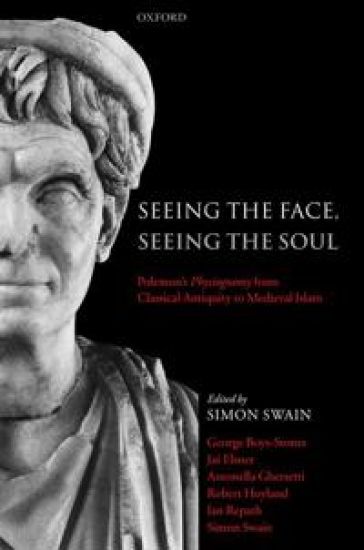
Polemon of Laodicea (near modern Denizli, south-west Turkey) was a wealthy Greek aristocrat and a key member of the intellectual movement known as the Second Sophistic. Among his works was the Physiognomy, a manual on how to tell character from appearance, thus enabling its readers to choose friends and avoid enemies on sight. Its formula of detailed instruction and personal reminiscence proved so successful that the book was re-edited in the fourth century by Adamantius in Greek, translated and adapted by an unknown Latin author of the same era, and translated in the early Middle Ages into Syriac and Arabic. The surviving versions of Adamantius, Anonymus Latinus, and the Leiden Arabic more than make up for the loss of the original. The present volume is the work of a team of leading Classicists and Arabists. The main surviving versions in Greek and Latin are translated into English for the first time. The Leiden Arabic translation is authoritatively re-edited and translated, as is a sample of the alternative Arabic Polemon. The texts and translations are introduced by a series of masterly studies that tell the story of the origins, function, and legacy of Polemon's work, a legacy especially rich in Islam. The story of the Physiognomy is the story of how one man's obsession with identifying enemies came to be taken up in the fascinating transmission of Greek thought into Arabic.
The Language of Images in Roman Art

The Language of Images in Roman Art

Tonio Hölscher; Jas Elsner

Cambridge University Press
2004
pokkari
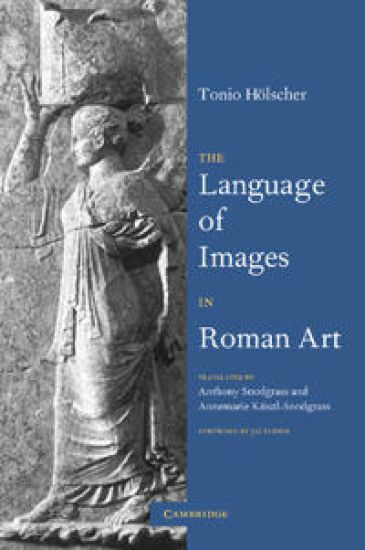
This book, first published in 2004, develops a theory for the understanding of Roman pictorial art. By treating Roman art as a semantic system it establishes a connection between artistic forms and the ideological messages contained within. The history of Roman art traditionally followed the model of a sequence of stylistic phases affecting the works of their era in the manner of a uniform Zeitgeist. By contrast, the author shows different stylistic forms being used for different themes and messages. The reception of Greek models, a key phenomenon of Roman art, thus appear in a new light. The formulations of specific messages are established from Greek art types of different eras serving to express Roman ideological values: classical forms for the grandeur of the state, Hellenistic forms for the struggling effort of warfare. In this way a conceptual and comprehensible pictorial language arose, uniting the multicultural population of the Roman state.
The Language of Images in Roman Art

The Language of Images in Roman Art

Tonio Hölscher; Jas Elsner

Cambridge University Press
2004
sidottu
This book, first published in 2004, develops a theory for the understanding of Roman pictorial art. By treating Roman art as a semantic system it establishes a connection between artistic forms and the ideological messages contained within. The history of Roman art traditionally followed the model of a sequence of stylistic phases affecting the works of their era in the manner of a uniform Zeitgeist. By contrast, the author shows different stylistic forms being used for different themes and messages. The reception of Greek models, a key phenomenon of Roman art, thus appear in a new light. The formulations of specific messages are established from Greek art types of different eras serving to express Roman ideological values: classical forms for the grandeur of the state, Hellenistic forms for the struggling effort of warfare. In this way a conceptual and comprehensible pictorial language arose, uniting the multicultural population of the Roman state.