Kirjojen hintavertailu – 12 903 724 kirjaa ja 27 kauppaa

Kirjailija

Jason King

Kirjat ja teokset yhdessä paikassa: 18 kirjaa, julkaisuja vuosilta 2007–2026, suosituimpiin kuuluu The Green Mister Rogers. Vertaile teosten hintoja ja tarkista saatavuus suomalaisista kirjakaupoista.

18 kirjaa

Kirjojen julkaisuvuodet: 2007–2026.

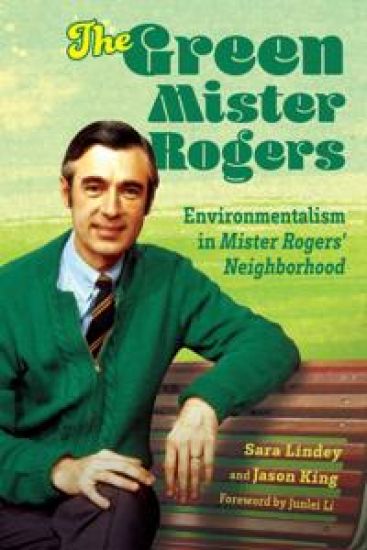
The Green Mister Rogers

The Green Mister Rogers

Sara Lindey; Jason King; Junlei Li

UNIVERSITY PRESS OF MISSISSIPPI
2022
pokkari
Fred Rogers was an international celebrity. He was a pioneer in children’s television, an advocate for families, and a multimedia artist and performer. He wrote the television scripts and music, performed puppetry, sang, hosted, and directed Mister Rogers’ Neighborhood for more than thirty years. In his almost nine-hundred episodes, Rogers pursued dramatic topics: divorce, death, war, sibling rivalry, disabilities, racism. Rogers’ direct, slow, gentle, and empathic approach is supported by his superior emotional strength, his intellectual and creative courage, and his joyful spiritual confidence. The Green Mister Rogers: Environmentalism in "Mister Rogers’ Neighborhood" centers on the show’s environmentalism, primarily expressed through his themed week "Caring for the Environment," produced in 1990 in coordination with the twentieth anniversary of Earth Day. Unfolding against a trash catastrophe in the Neighborhood of Make-Believe, Rogers advances an environmentalism for children that secures children in their family homes while extending their perspective to faraway places, from the local recycling center to Florida’s coral reef. Rogers depicts animal wisdom and uses puppets to voice anxiety and hope and shows an interconnected world where each part of creation is valued, and love is circulated in networks of care. Ultimately, Rogers cultivates a practical wisdom that provides a way for children to confront the environmental crisis through action and hope and, in doing so, develop into adults who possess greater care for the environment and a capacious imagination for solving the ecological problems we face.
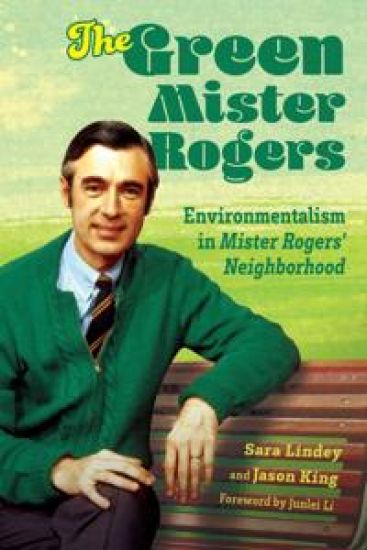
The Green Mister Rogers

The Green Mister Rogers

Sara Lindey; Jason King; Junlei Li

UNIVERSITY PRESS OF MISSISSIPPI
2022
sidottu
Fred Rogers was an international celebrity. He was a pioneer in children’s television, an advocate for families, and a multimedia artist and performer. He wrote the television scripts and music, performed puppetry, sang, hosted, and directed Mister Rogers’ Neighborhood for more than thirty years. In his almost nine-hundred episodes, Rogers pursued dramatic topics: divorce, death, war, sibling rivalry, disabilities, racism. Rogers’ direct, slow, gentle, and empathic approach is supported by his superior emotional strength, his intellectual and creative courage, and his joyful spiritual confidence. The Green Mister Rogers: Environmentalism in "Mister Rogers’ Neighborhood" centers on the show’s environmentalism, primarily expressed through his themed week "Caring for the Environment," produced in 1990 in coordination with the twentieth anniversary of Earth Day. Unfolding against a trash catastrophe in the Neighborhood of Make-Believe, Rogers advances an environmentalism for children that secures children in their family homes while extending their perspective to faraway places, from the local recycling center to Florida’s coral reef. Rogers depicts animal wisdom and uses puppets to voice anxiety and hope and shows an interconnected world where each part of creation is valued, and love is circulated in networks of care. Ultimately, Rogers cultivates a practical wisdom that provides a way for children to confront the environmental crisis through action and hope and, in doing so, develop into adults who possess greater care for the environment and a capacious imagination for solving the ecological problems we face.

The Soul of Catholic Higher Education

The Soul of Catholic Higher Education

Jason King

BLOOMSBURY PUBLISHING PLC
2026
sidottu
Everyone realizes higher education is in crisis—and nowhere is this crisis more urgent than among Catholic institutions. Among the many dynamics that Catholic higher ed is forced to reckon with is the valuing of college degrees only on financial terms. Student debt increases, so people worry if the degree is worth it. Will they get a job? Will they get a job that pays enough to cover their debt? Major news outlets run stories asking, “Was your degree really worth it?” and “Is College Worth It?” This is not an environment in which Catholic colleges and universities thrive. Catholic higher education holds that students should have more than job training. They should have an opportunity to learn and think about themselves, their families and neighbors, the common good, and the transcendent end of humanity. Catholic education is not just about getting a job but also about living a meaningful life, about educating the whole person. Trying to maintain this approach in higher education, however, is extremely difficult when nothing seems to matter but money. Too many Catholic schools have bought into this narrow economic focus and have aligned their programs with employment trends, while focusing marketing efforts on the employment rates of their graduates. They have suppressed their religious identity to remove any obstacle to student recruitment. And yet this is not working. Schools are still closing at the rate of about five per year. This book proposes a different model for addressing the struggles of Catholic higher education. Based on the author’s Higher Education Holistic Impact Report (HIR), it sees the soul of Catholic higher education in the areas where their graduates come out ahead: meaningful lives, community engagement, and ethical decision making. Then, drawing from the author’s previous research, Jason King takes a bottom-up approach that focuses on what shapes students. Doing so enables the different ways that the soul of Catholic higher education can be embodied on Catholic campuses and pushes back against the narrow, financial view of higher education that has become part of the identity of Catholic institutions.
The Soul of Catholic Higher Education

The Soul of Catholic Higher Education

Jason King

BLOOMSBURY PUBLISHING PLC
2026
nidottu
Everyone realizes higher education is in crisis—and nowhere is this crisis more urgent than among Catholic institutions. Among the many dynamics that Catholic higher ed is forced to reckon with is the valuing of college degrees only on financial terms. Student debt increases, so people worry if the degree is worth it. Will they get a job? Will they get a job that pays enough to cover their debt? Major news outlets run stories asking, “Was your degree really worth it?” and “Is College Worth It?” This is not an environment in which Catholic colleges and universities thrive. Catholic higher education holds that students should have more than job training. They should have an opportunity to learn and think about themselves, their families and neighbors, the common good, and the transcendent end of humanity. Catholic education is not just about getting a job but also about living a meaningful life, about educating the whole person. Trying to maintain this approach in higher education, however, is extremely difficult when nothing seems to matter but money. Too many Catholic schools have bought into this narrow economic focus and have aligned their programs with employment trends, while focusing marketing efforts on the employment rates of their graduates. They have suppressed their religious identity to remove any obstacle to student recruitment. And yet this is not working. Schools are still closing at the rate of about five per year. This book proposes a different model for addressing the struggles of Catholic higher education. Based on the author’s Higher Education Holistic Impact Report (HIR), it sees the soul of Catholic higher education in the areas where their graduates come out ahead: meaningful lives, community engagement, and ethical decision making. Then, drawing from the author’s previous research, Jason King takes a bottom-up approach that focuses on what shapes students. Doing so enables the different ways that the soul of Catholic higher education can be embodied on Catholic campuses and pushes back against the narrow, financial view of higher education that has become part of the identity of Catholic institutions.
The Equity Planner

The Equity Planner

Jason King

TAYLOR FRANCIS LTD
2023
sidottu
Economic development is intended to benefit everyone in a community; however, in many cases, increased public and private investment can result in the pricing out and displacement of existing residents and businesses. How do we achieve more equitable outcomes? The Equity Planner provides a toolkit of practical solutions for planners and all those involved in placemaking to promote thoughtful, inclusive planning. Each chapter of The Equity Planner examines one particular aspect of inequity in the urban planning sphere, covering issues such as identity retention, affordability, and the protection and enhancement of local assets. While each chapter offers practicable solutions to these issues, the "Notes from the Field" sections describe how these same tools have been used (either successfully or unsuccessfully) in projects the author has been involved in, with a particular focus on the local resistance each project encountered. These real-world case studies are used to suggest methods to overcome such resistance, which the reader can then apply to their present initiatives. This book is written for urban planners, local activists, social scientists, policymakers, and anyone with an interest in equity planning. This book will be of use to both practicing and training urban planners and architects who seek to add equity planning to their professional repertoire.
The Equity Planner

The Equity Planner

Jason King

TAYLOR FRANCIS LTD
2023
nidottu
Economic development is intended to benefit everyone in a community; however, in many cases, increased public and private investment can result in the pricing out and displacement of existing residents and businesses. How do we achieve more equitable outcomes? The Equity Planner provides a toolkit of practical solutions for planners and all those involved in placemaking to promote thoughtful, inclusive planning. Each chapter of The Equity Planner examines one particular aspect of inequity in the urban planning sphere, covering issues such as identity retention, affordability, and the protection and enhancement of local assets. While each chapter offers practicable solutions to these issues, the "Notes from the Field" sections describe how these same tools have been used (either successfully or unsuccessfully) in projects the author has been involved in, with a particular focus on the local resistance each project encountered. These real-world case studies are used to suggest methods to overcome such resistance, which the reader can then apply to their present initiatives. This book is written for urban planners, local activists, social scientists, policymakers, and anyone with an interest in equity planning. This book will be of use to both practicing and training urban planners and architects who seek to add equity planning to their professional repertoire.
Model-Driven DevOps

Model-Driven DevOps

Steven Carter; Jason King; Mike Younkers; Josh Lothian

PEARSON EDUCATION (US)
2022
nidottu
Develop Network Infrastructure More Rapidly, and Operate It More Effectively Using model-driven DevOps and the Infrastructure as Code (IaC) paradigm, teams can develop and operate network infrastructure more quickly, consistently, and securely--growing agility, getting to market sooner, and delivering more value. Now, two leading practitioners walk you step by step through successfully implementing model-driven DevOps for infrastructure. In this practical guide, they share lessons learned, help you avoid common pitfalls, and illuminate key differences between DevOps for infrastructure and conventional application-based DevOps. You'll learn why network infrastructure operations must change, what needs to change, and how to work together to change it. The authors guide you through creating consistent data models to manage massive numbers of network elements, organizing huge quantities of network data, and applying DevOps to infrastructure repeatably and consistently. Your journey includes a complete, hands-on reference implementation, detailed use cases, many examples based on open source tools, and sample code downloadable at GitHub.* Normalize and organize network infrastructure data consistently, to gain the same benefits from DevOps as cloud operators do * Replace legacy command lines with APIs, then leverage and scale them * Use configuration management, templates, and other tools to program infrastructure without coding * Safely implement Continuous Integration/Continuous Deployment for infrastructure Succeed with key human factors: break down silos, change culture, and address skills gaps Whether you're a network or cybersecurity engineer, architect, manager, or leader, this guide will help you suffuse all your network operations with greater efficiency, security, responsiveness, and resilience.
The Climate Planner

The Climate Planner

Jason King

Taylor Francis Ltd
2021
nidottu
The Climate Planner is about overcoming the objections to climate change mitigation and adaption that urban planners face at a local level. It shows how to draft climate plans that encounter less resistance because they involve the public, stakeholders, and decisionmakers in a way that builds trust, creates consensus, and leads to implementation. Although focused on the local level, this book discusses climate basics such as carbon dioxide levels in the atmosphere, the Intergovernmental Panel on Climate Change, the Paris Agreement of 2015, worldwide energy generation forecasts, and other items of global concern in order to familiarize urban planners and citizen planners with key concepts that they will need to know in order to be able to host climate conversations at the local level. The many case studies from around the United States of America show how communities have encountered pushback and bridged the implementation gap, the gap between plan and reality, thanks to a commitment to substantive public engagement. The book is written for urban planners, local activists, journalists, elected or appointed representatives, and the average citizen worried about climate breakdown and interested in working to reshape the built environment.
The Climate Planner

The Climate Planner

Jason King

Taylor Francis Ltd
2021
sidottu
The Climate Planner is about overcoming the objections to climate change mitigation and adaption that urban planners face at a local level. It shows how to draft climate plans that encounter less resistance because they involve the public, stakeholders, and decisionmakers in a way that builds trust, creates consensus, and leads to implementation. Although focused on the local level, this book discusses climate basics such as carbon dioxide levels in the atmosphere, the Intergovernmental Panel on Climate Change, the Paris Agreement of 2015, worldwide energy generation forecasts, and other items of global concern in order to familiarize urban planners and citizen planners with key concepts that they will need to know in order to be able to host climate conversations at the local level. The many case studies from around the United States of America show how communities have encountered pushback and bridged the implementation gap, the gap between plan and reality, thanks to a commitment to substantive public engagement. The book is written for urban planners, local activists, journalists, elected or appointed representatives, and the average citizen worried about climate breakdown and interested in working to reshape the built environment.
Faith with Benefits

Faith with Benefits

Jason King

Oxford University Press Inc
2017
sidottu
Hookup culture has become widespread on college campuses, and Catholic colleges are no exception. Indeed, most studies have found no difference between Catholic colleges and their secular counterparts when it comes to hooking up, despite the fact that most students report being unhappy with casual sexual encounters. Drawing on a survey of over 1000 students from 26 institutions, as well as follow-up interviews, Jason King argues that religious culture on Catholic campuses can, in fact, have an impact on the school's hookup culture, but the relationship is complicated. In Faith with Benefits, King shows the complex way these dynamics play out at Catholic colleges and universities. There is no straightforward relationship, for example, between orthodoxy and hookup culture--some of the schools with the weakest Catholic identities also have weaker hookup cultures. And not all students see hookup culture the same way. Some see a hookup is just a casual encounter, but others see hooking up as a gateway to a relationship. Faith with Benefits gives voice to students and so reveals how their faith, the faith of their friends, and the institutional structures of their campus give rise to different hookup cultures. In doing so, King addresses the questions of students who don't know where to turn for practical guidance on how to navigate an ever-shifting network of hookups.
Cross-Platform .NET Development

Cross-Platform .NET Development

Jason King; Mark Easton

APress
2013
nidottu
. NET is not just for Windows anymore! This unprecedented book examines the advantages of building portable, cross-platform. NET code. Even if you are only vaguely familiar with . NET, with the aid of this book, you'll quickly learn how to run . NET code on different platforms. You may run code among the Linux, Unix, Mac OS X, and Windows platforms. And you'll get to choose among Mono (for Linux), Portable. NET (for Mac OS X), and of course, . NET for Windows. What's more, authors Mark Easton and Jason King pack the book with example code and wisdom, providing you a well-rounded skill set. Based on years of personal . NET experience, the authors share years of expertise—dos, don'ts, pitfalls, gotchas, and insights in the convenience of a single, handy book.
The Cannabible Collection

The Cannabible Collection

Jason King

Ten Speed Press
2007
pokkari
At last, the choicest herb from renowned pot connoisseur Jason King's popular CANNABIBLE books is now rolled together in one potently psychotropic package. Asian Fantasy, Diesel, Haze, HP13, Mothership, Purple Urkel--all the legendary strains are here (plus hundreds more), illustrated with stunning photos of dank nugs, lush crop, and mind-blowing microscopic plant details. Packed with enlightened commentary on growing, smoking, and enjoying the Kind, as well as detailed notes on flavors, aromas, and effects, THE CANNABIBLE COLLECTION is the perfect bongside companion. This three-volume mini gift edition contains the greatest hits from the CANNABIBLE series, housed in a slipcase box.