Kirjojen hintavertailu – 12 859 829 kirjaa ja 27 kauppaa

Kirjailija

Jason Roach

Kirjat ja teokset yhdessä paikassa: 8 kirjaa, julkaisuja vuosilta 2013–2025, suosituimpiin kuuluu Queer Power. Vertaile teosten hintoja ja tarkista saatavuus suomalaisista kirjakaupoista.

8 kirjaa

Kirjojen julkaisuvuodet: 2013–2025.

Queer Power

Queer Power

Nicole Givens-Kurtz; John G Hartness; Jason Roach

Gold Dust Publishing LLC
2025
Nidottu
Tervetuloa Pohjoismaiden suurimpaan verkkokirjakauppaan! Adlibris kannattaa sananvapautta, ja haluamme edistää kirjallisuuden ja tiedon saatavuutta.
Queer Power

Queer Power

Nicole Givens-Kurtz; John G Hartness; Jason Roach

Gold Dust Publishing LLC
2025
Kangassidos
Etsitkö jännitystä, uusia näkökulmia tai rentouttavaa lukuelämystä? Tutustu kirjakategorioihimme ja löydä seuraava suosikkikirjasi.
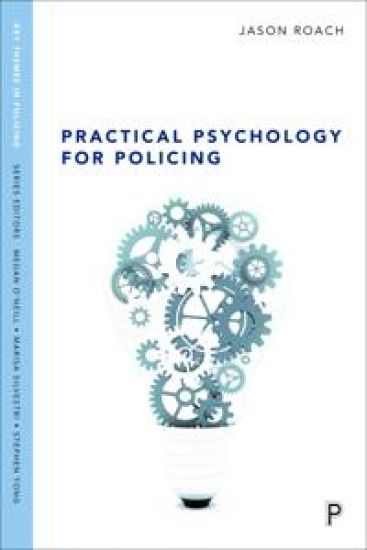
Practical psychology for policing

Practical psychology for policing

Jason Roach

Policy Press
2022
nidottu
This book is the first to explore how psychological knowledge and research can be used to enhance police performance on a range of operational tasks, ranging from better identification of those giving false personal details, to the minimisation of cognitive bias in criminal investigations. Part of a textbook series designed to incorporate `evidence based policing' within Higher Education curriculums, each chapter encourages critical reflection followed by suggested further reading. Of benefit to both police practitioners and students of criminology, psychology, and policing, this unique book will help readers understand complex topics and point them in the direction of further avenues for research.
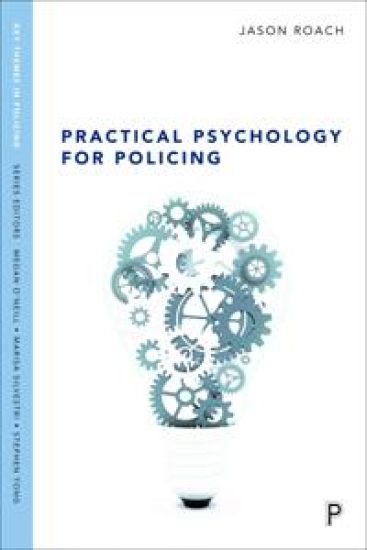
Practical psychology for policing

Practical psychology for policing

Jason Roach

Policy Press
2022
sidottu

Halvin toimitettuna 119,80 €

This book is the first to explore how psychological knowledge and research can be used to enhance police performance on a range of operational tasks, ranging from better identification of those giving false personal details, to the minimisation of cognitive bias in criminal investigations. Part of a textbook series designed to incorporate `evidence based policing' within Higher Education curriculums, each chapter encourages critical reflection followed by suggested further reading. Of benefit to both police practitioners and students of criminology, psychology, and policing, this unique book will help readers understand complex topics and point them in the direction of further avenues for research.
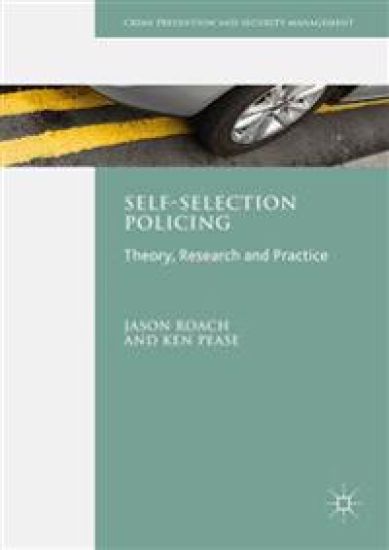
Self-Selection Policing

Self-Selection Policing

Jason Roach; Ken Pease

Palgrave Macmillan
2016
sidottu
Self-Selection Policing introduces and explores an approach for crime control which seeks to identify active, serious offenders by attending to the minor offences they commit. A foundation of theory and evidence is first supplied for the assertion that ‘those who do big bad things also do little bad things’. Original research presented in the book includes a study of offending by visitors to a prison, and the concurrent criminality of those committing common driving offences and failure to produce driving documents as required. It illustrates how self-selection can complement other police methods of identifying active, serious criminals by focusing on what offenders do rather than who they are and what they have done in the past. Concentrating on the ‘usual suspects’ in the conventional way is often criticised as harassment and self-selection policing largely bypasses the issue of fairness this raises. The book concludes with a call for the consideration, development and wider adoption of the self-selection approach, and particularly the identification of other common minor offences which flag concurrent active criminality. The authors make important suggestions for the progression of SSP research and practice, including the identification of barriers to the implementation of the approach in wider police thinking, practice and policy. Practical guidance is also provided for those thinking of developing, testing and implementing the approach. In doing so, the book will be of particular interest for policing practitioners, as well as students and scholars of policing and crime control.

Evolution and Crime

Evolution and Crime

Jason Roach; Ken Pease

Willan Publishing
2013
sidottu
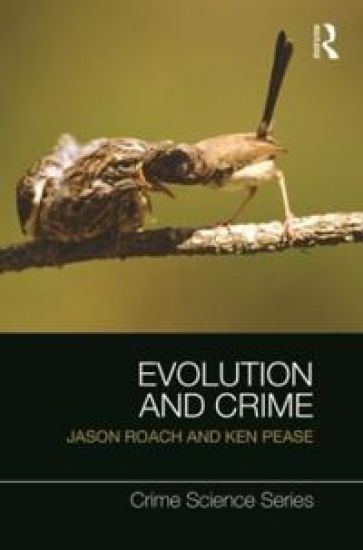
Human physique and behaviour has been shaped by the pressures of natural selection. This is received wisdom in all scientifically informed circles. Currently, the topic of crime is rarely touched upon in textbooks on evolution and the topic of evolution rarely even mentioned in criminology textbooks. This book for the first time explores how an evolution informed criminology has clear implications for enhancing our understanding of the criminal law, crime and criminal behaviour. This book is directed more towards students of criminology than students of evolution. It is suggested that there is scope for more collaborative work, with criminologists and crime scientists exposed to Darwinian thought having much to gain. What is suggested is simply that such thinking provides a fresh perspective. If that perspective yields only a fraction of the understanding when applied to crime as it has elsewhere in science, the effort will have been worthwhile. The authors attempt to provide a modest appraisal of the potential contribution that a more welcoming approach to the evolutionary perspective would make to criminology; both theoretically (by expanding understanding of the complexity of the origins of behaviour labelled criminal) and practically (where the evolutionary approach can be utilised to inform crime control policy and practice). An evolutionary lens is applied to diverse criminological topics such as the origins of criminal law, female crime, violence, and environmental factors involved in crime causation.
Evolution and Crime

Evolution and Crime

Jason Roach; Ken Pease

Willan Publishing
2013
nidottu
Human physique and behaviour has been shaped by the pressures of natural selection. This is received wisdom in all scientifically informed circles. Currently, the topic of crime is rarely touched upon in textbooks on evolution and the topic of evolution rarely even mentioned in criminology textbooks. This book for the first time explores how an evolution informed criminology has clear implications for enhancing our understanding of the criminal law, crime and criminal behaviour. This book is directed more towards students of criminology than students of evolution. It is suggested that there is scope for more collaborative work, with criminologists and crime scientists exposed to Darwinian thought having much to gain. What is suggested is simply that such thinking provides a fresh perspective. If that perspective yields only a fraction of the understanding when applied to crime as it has elsewhere in science, the effort will have been worthwhile. The authors attempt to provide a modest appraisal of the potential contribution that a more welcoming approach to the evolutionary perspective would make to criminology; both theoretically (by expanding understanding of the complexity of the origins of behaviour labelled criminal) and practically (where the evolutionary approach can be utilised to inform crime control policy and practice). An evolutionary lens is applied to diverse criminological topics such as the origins of criminal law, female crime, violence, and environmental factors involved in crime causation.